

Camp mugs explained: durable drinkware for outdoor adventures
That chipped ceramic mug sitting in your kitchen cabinet looks perfectly fine for a morning coffee at home. But bring it on a backpacking trip, set it on an uneven rock, or try to sip from it while wearing gloves in 30-degree weather, and you’ll quickly realize it was never built for this life. The outdoors demands gear that can take a beating, retain heat through cold mornings, and travel well inside a loaded pack. This guide breaks down exactly what a camp mug is, which features actually matter, how to pick the right one for your adventures, and how to keep it going strong for years.
Table of Contents
- What is a camp mug?
- Key features that set camp mugs apart
- Choosing the right camp mug for your adventure
- Camp mug materials and their pros and cons
- Caring for your camp mug to make it last
- Why the best camp mug is the one that fits your camp style
- Find your next camp mug (and the perfect camp coffee!)
- Frequently asked questions
Key Takeaways
| Point | Details |
|---|---|
| Camp mugs are specialized | They are designed for durability, comfort, and practicality in rugged outdoor environments. |
| Choose features wisely | Prioritize spill-resistant lids and convenient handles for camp use. |
| Material matters | Single-wall and enamel mugs are best for direct heating, while insulated mugs keep drinks hot or cold. |
| Match your mug to your style | Select a mug based on your actual camp routine and beverage preferences, not just trends. |
What is a camp mug?
Most people assume any mug can do the job at a campsite. That assumption has cost a lot of campers a burned hand, a shattered cup, or a cold drink by the time they reach their destination. The reality is that camp mugs are a distinct category of drinkware, purpose-built for the outdoors.
A camp mug is a drinking mug designed for camping and outdoor use to hold coffee or tea, and it is built to be durable and portable in rougher conditions than a typical kitchen mug.
That simple definition covers a lot of ground. Camp mugs come in several types of camp mugs, from classic enamel to double-wall stainless steel, and each is built around the core idea that outdoor life is unpredictable. A camp mug needs to survive drops, temperature extremes, getting tossed in a pack with other gear, and washing in cold creek water or with minimal soap.
Here are the core traits that define a proper camp mug:
- Durable construction: Camp mugs are made from materials that resist dents, chips, and cracks under rough handling.
- Lightweight and packable: They are designed to take up minimal space and add as little weight as possible to your load.
- Comfortable handle design: Most feature a full, ergonomic handle that is easy to grip even with gloves on.
- Lid options: Many camp mugs come with or accommodate a lid to prevent spills and retain heat while on the move.
- Wide mouth opening: Easier to clean in the field and better for soups, oatmeal, and other camp foods.
A regular kitchen mug fails outdoors because it is typically made from ceramic, which is heavy and brittle. Drop it once on a trail and it may chip or shatter entirely. It also provides zero insulation, meaning your coffee goes cold in minutes on a brisk morning.
Key features that set camp mugs apart
Understanding what separates a camp mug from a travel mug or a kitchen mug is the key to making a smart purchase. These are not interchangeable categories. Each type is designed around a very different set of priorities.
| Feature | Kitchen mug | Travel mug | Camp mug |
|---|---|---|---|
| Durability | Low (ceramic) | Medium | High |
| Insulation | None | High | Varies |
| Lid included | Rarely | Yes (often sealed) | Often optional |
| Pack-friendly | No | Sometimes | Yes |
| Stove-safe | No | No | Some (enamel, single-wall) |
| Handle design | Standard | Slim or none | Wide, grip-friendly |
Camp mugs are typically differentiated from travel mugs by simpler, sturdier designs aimed at camp use. The emphasis is on comfort while sipping, durability, and spill prevention rather than the complex commuting features you find on travel mugs.
That distinction matters in practice. Travel mugs prioritize sealed lids for commuter use and maximum insulation for long transits. Camp mugs prioritize sipping ease, ruggedness, and versatility at a campsite where you are not cramming them into a car cupholder.
Here are the four features to prioritize when comparing your options:
- Sip comfort: Can you drink from it easily without burning your lips or making a mess? A wide mouth and smooth rim make this much easier, especially in a camp setting.
- Ruggedness: Will it survive a tumble off a picnic table or the inside of a stuffed pack? Stainless steel and enamel win here.
- Spill resistance: Does it have a lid that at least slows spills, even if it is not fully sealed? At camp, lids also keep insects and debris out.
- Heat management: Does the handle stay cool enough to grip? Does the exterior stay comfortable to hold? This separates a thoughtfully designed camp mug from a cheap imitation.
You can also explore travel mug options if you need something that bridges the gap between camp and commute.
Pro Tip: If you camp in colder climates, prioritize a full loop handle over a minimal grip. Cold fingers need as much contact surface as possible, and a chunky handle makes your morning coffee a lot more enjoyable at 25 degrees.
Choosing the right camp mug for your adventure
The right camp mug for a weekend car camper is not the same as the right one for a solo backpacker or a canoe tripper. Matching your mug to your actual camp style will save you frustration and money.
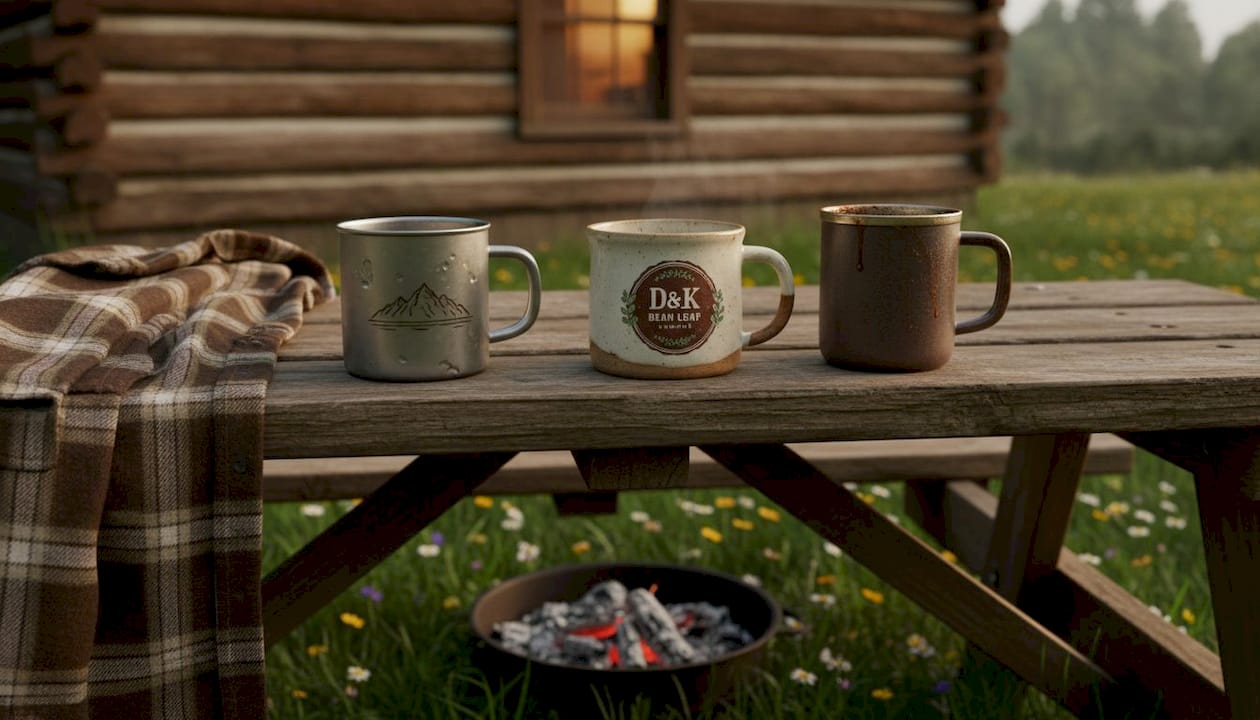
Choosing a camp mug often centers on two mechanics: leak-proof or at least spill-resistant lids, and ease of drinking, because carrying and sipping conditions vary so much at camp. Those two factors should be your starting point.
Here is a quick reference table to match common camp scenarios to the right mug type:
| Camp scenario | Best mug type | Key reason |
|---|---|---|
| Backpacking (ultralight) | Titanium single-wall | Lightest option available |
| Car camping with family | Enamel with lid | Durable, classic, easy to clean |
| Winter camping | Double-wall stainless | Keeps drinks hot in freezing temps |
| Canoe or kayak trips | Stainless steel with sealed lid | Spill-resistant during paddling |
| Festival or basecamp | Enamel or ceramic-coated | Style plus function |
Beyond the scenario, think about what you actually drink. Coffee drinkers who want every sip as hot as the first will benefit most from insulated options. Tea drinkers who steep and sip immediately can get away with single-wall mugs that are lighter and easier to handle. Campers who use their mug for soups, ramen, or oatmeal want a wide mouth and a material that handles food safely.
Consider these questions before you buy:
- How far are you carrying it? Weight becomes a real factor over distance. Every ounce adds up on a long hike.
- Will you heat directly in the mug? If yes, you need single-wall or enamel, not a double-wall vacuum mug.
- Do you need a fully sealed lid? Canoe and kayak campers almost always do. Car campers may not care.
- What temperature conditions will you face? Cold climates demand more insulation. Mild summer trips can get by with less.
For camp coffee essentials that pair well with any mug, instant coffee is one of the most practical options on the trail. And if you want the rugged, nostalgic look that matches a true wilderness setup, enamel mugs for camp are hard to beat.
Pro Tip: Fill your camp mug with hot water for a minute before adding your coffee or tea. This simple pre-warming step keeps your drink hotter for longer, especially important with non-insulated enamel or single-wall mugs on cold mornings.
Camp mug materials and their pros and cons
The material your camp mug is made from affects everything: how long your drink stays hot, whether you can heat it over a stove, how much it weighs, and how long it will last. Getting this decision right is the difference between a great tool and a frustrating piece of gear.
Here is a breakdown of the most common camp mug materials:
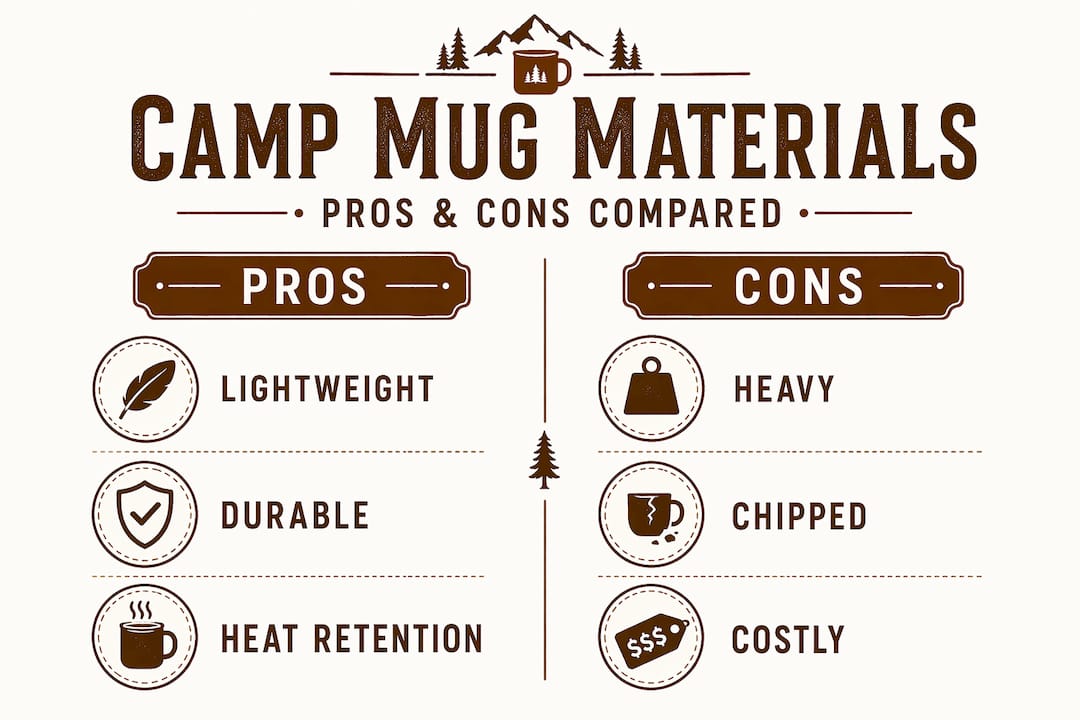
- Stainless steel (double-wall, vacuum-insulated): Excellent heat retention, very durable, does not transfer flavors. Heavy side and cannot be heated directly over a flame without damaging the vacuum insulation.
- Stainless steel (single-wall): Lighter than double-wall, safe for direct heating, affordable. Gets hot to the touch and loses heat faster.
- Enamel: Tough, classic camp aesthetic, safe for direct heat on stove or fire. Chips if dropped hard, handle can get hot.
- Titanium: The ultralight choice, single-wall, safe for direct heating, virtually indestructible. Expensive and does not retain heat well.
- Plastic or BPA-free polymer: Very light and inexpensive. Not suitable for direct heating, can absorb odors over time, and some plastics degrade with UV exposure.
Ceramic mug options are better suited to basecamp setups where you have more space and less concern about breakage.
Two important points that surprise a lot of campers:
If you want to heat directly over a camp stove or cook in the same vessel, a double-wall insulated camp mug is a poor fit because insulation designs are built for drinking and heat retention, not for direct heating over flames.
This is a mistake that can ruin a perfectly good insulated mug. The outer shell can warp, and the vacuum seal can fail completely if exposed to direct heat.
On the other end of the spectrum, not everyone needs maximum insulation:
Some camp setups prioritize immediate enjoyment and simplicity over maximum insulation, and single-wall or non-vacuum options work well if you are drinking soon after filling or optimizing pack weight.
If you drink your coffee fast, which many campers do because hot coffee in cold air does not last long anyway, a lighter single-wall mug makes total sense. You save weight, you can heat directly in the mug, and you spend less money.
Caring for your camp mug to make it last
A well-made camp mug can last for decades if you treat it right. Most camp mugs are simple to maintain, but a few consistent habits will dramatically extend the life of your gear and keep every drink tasting clean.
- Rinse immediately after use. Dried coffee and tea residue is much harder to remove and can permanently stain enamel interiors if left overnight.
- Use a soft sponge or cloth. Steel wool and abrasive scrubbers scratch stainless steel interiors and chip enamel coatings. Scratches create surfaces where bacteria and odors can hide.
- Skip the dishwasher for vacuum-insulated mugs. The high heat and strong detergents used in dishwashers can degrade the vacuum seal over time, reducing insulation performance.
- Air-dry fully before storing. A mug stored with moisture trapped inside will develop musty odors and can grow mold in the lid or threads.
- Deodorize with baking soda. If your mug starts to hold onto coffee smell, fill it with warm water and a tablespoon of baking soda, let it sit for 30 minutes, then rinse clean.
For making coffee outdoors, cold brew is a surprisingly practical option that produces less residue and is gentler on your mug than repeatedly brewing hot coffee, especially when water is scarce.
Pro Tip: At camp where water is limited, a few drops of biodegradable soap, a small amount of water, and a quick shake with a pebble or two inside can clean your mug better than a full rinse. Shake, dump, rinse once, and you are done.
Why the best camp mug is the one that fits your camp style
Here is something the gear world rarely admits: there is no universally best camp mug. Every recommendation list will push you toward a $40 vacuum-insulated stainless steel option with a sealed lid, and for many campers, that is genuinely the right call. But for just as many campers, a $12 enamel mug or a basic stainless single-wall cup is the better tool.
We have seen backpackers obsess over insulated mugs only to complain the whole trip that their pack is too heavy. We have watched car campers bring ultralight titanium cups because they read a gear review, only to realize they hated drinking from a mug with no handle in cold weather.
The honest answer is that experience teaches you more than any guide ever can. Your first camp mug teaches you what you actually need. Your second one is usually much better because you know yourself. If you start with something versatile mug choices that handles multiple scenarios, you give yourself a fair baseline.
What we genuinely believe is this: a camp mug is one of the most personal pieces of gear you own. You hold it every morning. You fill it at golden hour. It shows up in every good camp memory. Prioritize what your hands feel comfortable with, what your pack can carry, and what your typical drink routine looks like. Sometimes good enough really is perfect, and a beat-up enamel mug that has been on a hundred trips is worth more than a shiny insulated one that stays on a shelf because it is too good to bring.
Find your next camp mug (and the perfect camp coffee!)
Ready to upgrade your camp drinkware setup and stop settling for gear that was never built for the outdoors?
At DK Beanleaf, we carry outdoor-ready drinkware built for real adventures. Browse rugged shop enamel mugs that handle campfire mornings beautifully, or explore a travel mug for camping that moves seamlessly from the trail to the car. And no great camp mug goes far without great coffee to fill it. Try our unique camp coffee dark roast with mushrooms, a bold and functional brew designed for adventurers who want something more from their morning cup. Your next great camp morning starts here.
Frequently asked questions
Can you use a camp mug for both hot and cold drinks?
Yes, camp mugs handle both hot and cold beverages well, though how long each stays at your preferred temperature depends on whether the mug has single-wall or vacuum insulation.
Can you put a camp mug directly on a camp stove?
Only single-wall or enamel camp mugs are safe for direct flame use; double-wall vacuum-insulated mugs are not designed for direct heating and can be damaged permanently by open flame.
How do I prevent leaks with a camp mug?
Choose a mug with a well-fitting lid that is at minimum spill-resistant, and keep it closed whenever you are moving around camp or carrying the mug in your pack.
Are enamel mugs safe for hot drinks?
Yes, enamel camp mugs are safe for hot beverages and can even be placed directly on a camp stove or over a campfire, though the handle will heat up and should be handled with a cloth or glove.