

Explore every coffee roast: types, tastes, and brewing tips
Standing in front of a wall of coffee bags, each labeled with a different roast level, can feel genuinely overwhelming. Light, medium, dark, French, Italian — the choices pile up fast, and the stakes feel high when you know the wrong pick can turn your morning ritual into a disappointment. Roast type shapes everything you taste, smell, and feel in your cup, from the bright citrus snap of a lightly roasted Ethiopian to the smoky, syrupy weight of a French roast. This guide breaks down each roast category with real detail so you can stop guessing and start brewing with confidence.
Table of Contents
- What defines a coffee roast? The science and signals
- Light roast: Delicate aromas and bright acidity
- Medium roast: Balance in flavor and versatility
- Dark and specialty roasts: Intensity, oil, and boldness
- Side-by-side: Comparing roast types and choosing the right one
- Our take: Why roast type is just the start of your coffee journey
- Find your next favorite coffee (and gear)
- Frequently asked questions
Key Takeaways
| Point | Details |
|---|---|
| Roast color cues | Lighter colors mean higher acidity and origin flavors; darker colors bring out body and boldness. |
| Cracks matter | First and second crack are critical for determining flavor development and roast level. |
| DTR as control | Development Time Ratio guides the flavor profile from light to dark by adjusting post-crack roast duration. |
| Brewing match | Choose roast types based on your brew method and taste preference for the best coffee experience. |
| Experimentation wins | Trying different roast styles yourself is the most reliable way to find your favorite cup. |
What defines a coffee roast? The science and signals
Roasting transforms green coffee beans through heat, time, and chemistry. As beans absorb heat, they change color from pale green to yellow, then tan, then brown, then deep mahogany or near black. The color you see on the outside reflects real chemical reactions happening inside, including the Maillard reaction (the browning process that creates complex flavors) and caramelization of sugars.
Roasters use objective tools to measure these changes. Agtron numeric scales measure roast darkness precisely: higher numbers correspond to lighter roast color and lower numbers to darker roast color. A light roast might score 70 or above, while a dark roast could land at 35 or lower. This takes the guesswork out of labeling and gives roasters a consistent language.
Two audible events guide every roaster’s decisions:
- First crack: Around 385°F to 400°F, water vapor and CO2 inside the bean build enough pressure to cause an audible pop. This marks the beginning of drinkable coffee.
- Second crack: Around 435°F to 450°F, the cell structure of the bean begins to fracture again. First crack and second crack are practical, audible landmarks that separate lighter, brighter profiles from darker, more roast-driven profiles.
Roasters also track Development Time Ratio (DTR), which is the percentage of total roast time spent after first crack. DTR directly influences how developed the flavor becomes. A short DTR keeps origin flavors bright and acidic. A longer DTR pushes toward sweetness, body, and roast character.
“Knowing your DTR is like knowing your recipe. You can repeat a great roast or fix a bad one, but only if you’re tracking what happens after that first crack.”
Pro Tip: When buying pre-roasted coffee, look for roasters who publish their Agtron scores or roast dates. Freshness and roast level together determine what lands in your cup.
Light roast: Delicate aromas and bright acidity
Light roast is where origin shines loudest. These beans finish roasting shortly after first crack, preserving the natural characteristics of the growing region, the soil, the altitude, and the processing method. A light roast from Ethiopia might taste like blueberries and jasmine. The same roast level applied to a Colombian bean might bring out peach, honey, and a clean citrus finish.
Key characteristics of light roast:
- High acidity: Bright, sometimes sharp, often described as fruity or wine-like
- Light body: Thinner mouthfeel compared to darker roasts
- Complex origin flavors: Floral, fruity, and herbal notes dominate
- No surface oil: The bean surface stays dry
- High Agtron values: Typically 65 and above
The DTR for light roast is typically around 15 to 20% of total roast time, keeping development short and origin character intact.
Light roasts perform best in brewing methods that highlight clarity and nuance. Pour-over (like a Hario V60 or Chemex) and Aeropress are ideal because they use filtered water at a slightly lower temperature, around 195°F to 200°F, which extracts the delicate compounds without burning them off.
Where light roasts struggle: espresso machines and French presses. The high pressure of espresso can amplify sourness in an underdeveloped light roast, making it taste sharp rather than bright. French press immersion can pull out grassy or vegetal notes that don’t flatter the bean.
Pro Tip: Brew your light roast at 200°F instead of a full boil. That 12-degree difference can be the gap between a sour cup and a beautifully complex one.
If you’re curious about lighter roasts with added wellness benefits, the medium mushroom coffee from D&K Bean and Leaf is a great bridge between light and medium profiles with functional mushroom extracts added.
Medium roast: Balance in flavor and versatility
Medium roast is the most popular roast level in the United States for good reason. It sits in the sweet spot between the brightness of light roast and the boldness of dark roast, offering a cup that satisfies a wide range of palates without demanding much adjustment to brewing technique.
Beans roasted to medium level finish after first crack but well before second crack. The result is a richer body than light roast, reduced acidity, and a noticeable sweetness from caramelized sugars. You still get some origin flavor, but roast character starts to show up as chocolate, caramel, or toasted nut notes.
Key characteristics of medium roast:
- Balanced acidity and body: Neither too sharp nor too heavy
- Caramel and chocolate notes: From sugar caramelization during roasting
- Dry to slightly oily surface: Depending on how far into medium the roaster pushes
- Versatile brewing compatibility: Works well in drip, filter, batch brew, and espresso
- DTR of 20 to 25%: Roast timing and development at this range balances body and flavor complexity effectively
Medium roasts also adapt beautifully to milk and cream. The body holds up without getting lost, and the sweetness complements dairy or plant-based alternatives. This makes medium roast the go-to for lattes, cappuccinos, and flat whites at home.
| Feature | Light roast | Medium roast |
|---|---|---|
| Acidity | High | Moderate |
| Body | Light | Medium |
| Sweetness | Low | Moderate to high |
| Origin flavor | Prominent | Present but balanced |
| Best brew method | Pour-over, Aeropress | Drip, espresso, batch brew |
Explore the medium roast coffee lineup at D&K Bean and Leaf if you want a reliable, crowd-pleasing daily drinker.
Dark and specialty roasts: Intensity, oil, and boldness
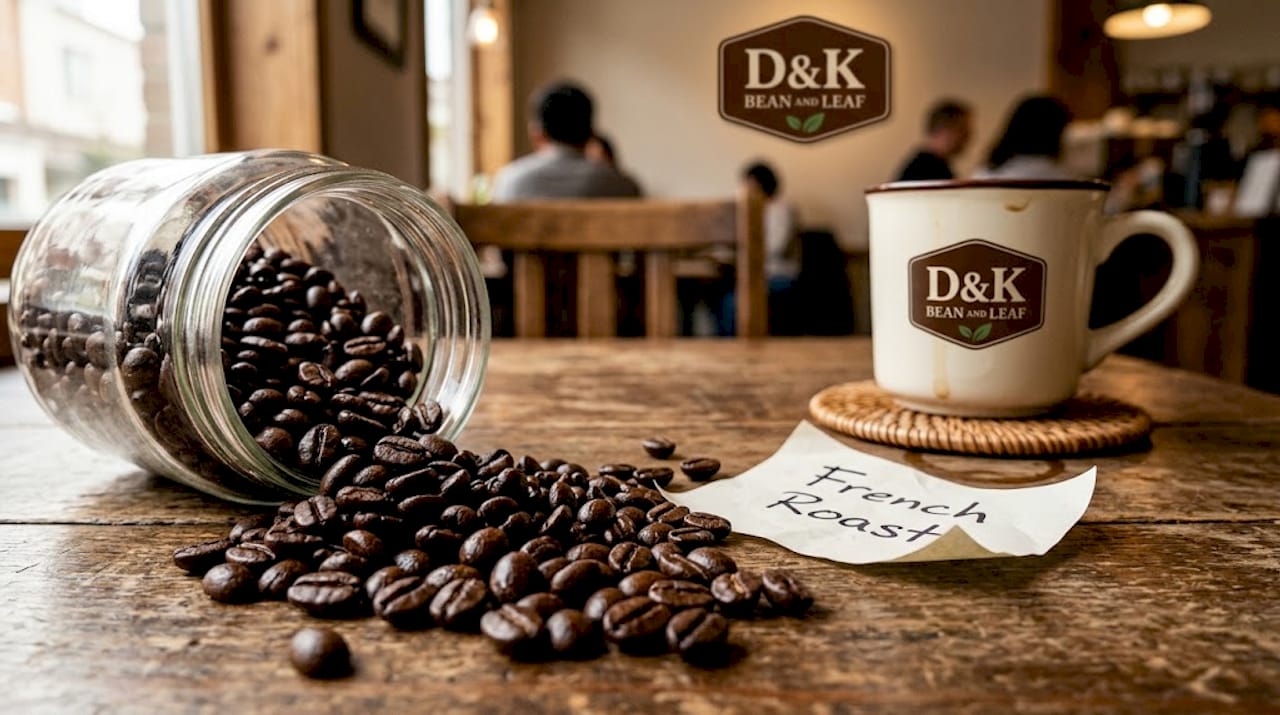
Dark roast is where the roast itself becomes the dominant flavor. By the time beans reach dark roast territory, they have pushed through or past second crack. Surface oils appear, Agtron numbers drop below 40, and the flavors shift decisively toward smoky, bitter, and bittersweet notes. Origin character largely disappears, replaced by the flavor of the roasting process itself.
Key characteristics of dark roast:
- Low acidity: Most of the bright acids have been driven off by heat
- Full, heavy body: Rich and coating on the palate
- Surface oils: Visible sheen on the bean
- Roast-forward flavors: Dark chocolate, smoke, char, molasses
- DTR of 25 to 30% or higher: Longer development time pushes beans further into roast character
Second crack introduces sharper sounds and signals darker roasts, with lower Agtron numbers and surface oil becoming visible. Roasters who push past second crack are deliberately trading origin flavor for roast intensity.
Dark roasts shine in espresso and full-immersion methods like French press and moka pot. The bold flavor cuts through milk, cream, and sweeteners without disappearing. If you’re making a latte with oat milk or a heavily sweetened iced coffee, dark roast holds its ground.
Specialty dark roasts include:
- French roast: Very dark, smoky, and slightly sweet. Explore the French roast coffee from D&K Bean and Leaf for a classic example of this profile.
- Italian roast: Even darker than French, with a more pronounced char and near-black beans. The Italian roast coffee pushes intensity to its maximum.
“A great dark roast isn’t just burnt coffee. It’s a deliberate transformation. The roaster is trading origin for depth, and when done right, the result is something bold, complex, and deeply satisfying.”
For those who want the boldness of dark roast with added functional benefits, the dark mushroom coffee combines a rich dark roast base with adaptogenic mushrooms.
Side-by-side: Comparing roast types and choosing the right one
Now that you understand each roast level individually, here is how they stack up directly against each other. Roast timing and development interact with sensory outcomes, allowing roasters to hold color constant or development time constant to highlight differences between profiles.
| Feature | Light roast | Medium roast | Dark roast |
|---|---|---|---|
| Acidity | High | Moderate | Low |
| Body | Light | Medium | Full |
| Sweetness | Low | Moderate | Low to moderate |
| Bitterness | Low | Low to moderate | High |
| Surface oil | None | Minimal | Heavy |
| Agtron score | 65+ | 45 to 65 | Below 45 |
| Best for | Pour-over, Aeropress | Drip, espresso, latte | Espresso, French press, moka pot |
How to choose your ideal roast in 5 steps:
- Identify your flavor preference. Do you love bright, fruity, and complex? Start with light roast. Prefer smooth, balanced, and slightly sweet? Medium is your match. Want bold, rich, and intense? Go dark.
- Consider your brewing equipment. Pour-over and Aeropress reward light roast. Drip machines and espresso makers work well with medium. French press and moka pot amplify dark roast’s strengths.
- Think about how you drink your coffee. Black coffee drinkers often appreciate the nuance of light or medium roast. If you add milk or sweeteners, dark roast holds up better.
- Factor in caffeine expectations. Contrary to popular belief, lighter roasts retain slightly more caffeine by weight. The difference is small, but it’s worth knowing.
- Experiment across the spectrum. Buy a small bag of each and brew them side by side using the same method. Your palate will tell you more than any guide can.
If you want to explore a bold, distinctive dark profile, the French roast profile is a great starting point for dark roast newcomers.
Our take: Why roast type is just the start of your coffee journey
Here’s something most roast guides won’t tell you: knowing the difference between light, medium, and dark roast is useful, but it can also become a cage. We’ve seen home brewers get so locked into “I’m a dark roast person” that they never try a naturally processed light roast that might genuinely blow their minds.
The most interesting discoveries happen when you break the rules. Try a light roast as espresso. Yes, it will be different, more acidic and tea-like, but some people find it revelatory. Pull a dark roast through a pour-over and notice how the smoky notes soften into something almost chocolatey and approachable. These experiments cost you one bag of coffee and maybe 15 minutes, but they can permanently expand what you think coffee can be.
We also want to push back gently on the idea that expert opinion or packaging claims define the “best” roast. Specialty coffee culture sometimes treats dark roast as less sophisticated, and that’s just wrong. A perfectly roasted French roast is as technically demanding and enjoyable as a precision light roast. What matters is whether it delights you in your cup, on your couch, at your pace.
Real coffee enjoyment comes from curiosity, not credentials. Explore our coffee selection and treat each new bag as an experiment rather than a commitment. The best roast for you is the one you keep reaching for.
Find your next favorite coffee (and gear)
You’ve done the work of understanding roast levels. Now it’s time to taste the difference for yourself. At D&K Bean and Leaf, we carry roasts across the full spectrum so you can explore without committing to a giant bag of something you’ve never tried.
Start with the medium mushroom roast for a balanced, approachable daily drinker, or go bold with the dark mushroom roast if you want intensity with functional benefits. And when you find your roast, brew it right. Our white glossy mug is designed to hold heat and feel good in your hand, because the vessel matters as much as what’s in it. Great coffee deserves great gear.
Frequently asked questions
What does Agtron number mean in coffee roasting?
Agtron numeric scales measure roast darkness objectively: higher values indicate lighter roasts, and lower numbers indicate darker roasts, giving roasters and buyers a consistent way to describe color.
How do first crack and second crack affect coffee flavor?
First crack and second crack are audible turning points in roasting where first crack produces lighter, brighter flavors and second crack leads to darker, oilier, and more roast-forward profiles.
Is medium roast better for espresso than light roast?
Medium roast offers more body and lower acidity than light roast, making it a more forgiving and popular choice for espresso, though some coffee lovers enjoy the tea-like brightness of a well-pulled light roast shot.
Do darker roasts have more caffeine?
Darker roasts actually have slightly less caffeine by weight than lighter roasts because heat breaks down caffeine over time, but the difference is so small in a typical cup that taste preference should drive your choice.
What is Development Time Ratio (DTR)?
DTR is the percentage of total roast time spent after first crack, and roasters use it as a key tool to control flavor development and roast profile outcomes across light, medium, and dark categories.