

Find Your Perfect Coffee Mug Size: A Guide
Every coffee drinker knows that sinking feeling: you pour a fresh brew into a massive mug, take one sip, and realize it’s already cooling down faster than you can enjoy it. Or you grab a tiny cup, and it’s empty in two minutes flat. The mug you choose is not just a vessel. It shapes flavor concentration, temperature retention, and how much pleasure you actually get from that first sip. This guide walks you through everything you need to know about coffee mug sizes, from understanding industry standards to matching the perfect cup to your favorite drink style.
Table of Contents
- Understanding standard coffee mug sizes
- How mug size affects coffee taste and temperature
- Pairing mug size to coffee style
- Personal preferences and practical tips
- Why most mug size recommendations miss the mark
- Upgrade your coffee experience with the right mug
- Frequently asked questions
Key Takeaways
| Point | Details |
|---|---|
| Standard sizes explained | Most mugs range from 8-16 oz with 12 oz as the everyday favorite. |
| Smaller mugs for better taste | Expert guidance favors 6-10 oz for enhanced aroma and stable temperature. |
| Match size to coffee style | Espressos need tiny cups, lattes larger mugs, cold brews the biggest. |
| Comfort and ergonomics matter | Handles and shape are key for safe, enjoyable drinking at any age. |
| Optimize for your routine | Choose mug size and style to fit how and what you drink most. |
Understanding standard coffee mug sizes
Walk into any kitchen supply store and you’ll see mugs ranging from tiny espresso cups to giant oversized novelty vessels that could double as soup bowls. It’s a lot to sort through. The good news is that most coffee mugs fall into a few well-defined size categories that cover nearly every drinking situation.
Standard coffee mug sizes range from 8 to 12 oz for regular brewed coffee, with common industry standards at 8 oz, 12 oz, and 16 oz. Each size serves a different purpose, and knowing which one matches your habit can completely change how your coffee tastes and how long it stays enjoyable.
Here’s a quick breakdown of the most common sizes and what they’re best used for:
| Mug size | Best use | Who it’s for |
|---|---|---|
| 2 to 4 oz | Espresso, demitasse | Espresso purists |
| 5 to 8 oz | Cappuccino, cortado | Traditional coffee lovers |
| 8 to 10 oz | Black coffee, pour-over | Enthusiasts, flavor focused |
| 12 oz | Drip coffee, Americano | Most everyday drinkers |
| 16 oz | Lattes, larger drinks | Milk-based drink fans |
| 20 oz | Cold brew, all-day sipping | Casual, high-volume drinkers |
For most households, the 12 oz mug is the workhorse. It holds a full cup of drip coffee with a little room to spare, and it works with almost every standard coffeemaker. But size preferences vary quite a bit depending on how seriously you take your coffee. Casual drinkers often prefer 11 to 12 oz standard mugs, while enthusiasts tend to reach for smaller cups when drinking black coffee to preserve both aroma and temperature.
A few things to keep in mind when shopping for everyday mugs:
- 8 oz mugs keep coffee concentrated and aromatic, ideal for savoring a strong brew.
- 12 oz mugs offer the most flexibility and work well for most brewing methods.
- 16 oz mugs are great if you like lattes, mochas, or adding lots of milk.
If you want a reliable everyday option, our white glossy mug hits a comfortable size that suits most brewing styles, and our mug with color inside adds a fun visual contrast while still delivering practical volume. For something a little more rugged, enamel mug options bring a vintage feel with solid heat retention.
How mug size affects coffee taste and temperature
Having established the main standards, let’s examine how these sizes influence your coffee drinking experience. This is where things get genuinely interesting, because mug size is not just about how much coffee you’re pouring. It directly impacts how your coffee tastes, smells, and feels from the first sip to the last.

Coffee experts generally agree that smaller mugs between 6 and 14 oz deliver optimal flavor because coffee tastes best at around 130°F. Oversized mugs keep coffee too hot at the start, which can actually mute flavor and scald your palate, then cool off too fast once you’ve drunk half the cup.
Here’s a comparison of how different mug sizes handle temperature over time:
| Mug size | Initial temp behavior | Mid-drink temp | Finish temp |
|---|---|---|---|
| 6 to 8 oz | Reaches ideal quickly | Stays in sweet spot | Warm finish |
| 10 to 12 oz | Slightly slower cool | Good drinking range | Slightly cool |
| 16 oz | Stays hot longer | Noticeable drop | Often cold |
| 20 oz + | Very slow start | Big temp swing | Frequently cold |
The physics here are straightforward once you think about it. Larger mugs have more thermal mass but cool faster after each sip because of increased surface area exposed to air. A small mug holds heat more evenly from start to finish because the ratio of volume to surface area is more balanced.
Surface area is the key concept here. A wide, shallow mug loses heat faster than a tall, narrow one of the same volume. That’s why specialty coffee shops often use taller, narrow cups for single origin pour-overs. They’re designed to keep the drink in its ideal temperature window as long as possible.
Aroma is another factor that rarely gets mentioned. Smaller mugs create a more concentrated aromatic environment right at nose level when you hold the cup. This is why black coffee drinkers often swear that the same beans taste better in a smaller cup. It’s not just psychological. The aroma is physically more concentrated.
Pro Tip: Before you pour, fill your mug with hot water and let it sit for 60 seconds, then dump it out. This preheating step keeps your coffee in the ideal temperature range for several extra minutes. It takes almost no effort and makes a real difference, especially in cooler kitchens.
Pairing the right mug size with the right single serve capsules can sharpen this effect significantly. A single serve capsule brewed into a smaller cup gives you richer, more intense flavor than the same capsule brewed into a 16 oz mug. And if you’re exploring bold or unusual flavors, trying a flavored coffees sample pack in different mug sizes is a genuinely fun experiment.
Pairing mug size to coffee style
With a clear understanding of flavor and temperature impact, let’s match mug sizes to different coffee styles. This is the practical payoff: knowing not just what sizes exist, but which one belongs in your hand for each specific drink.
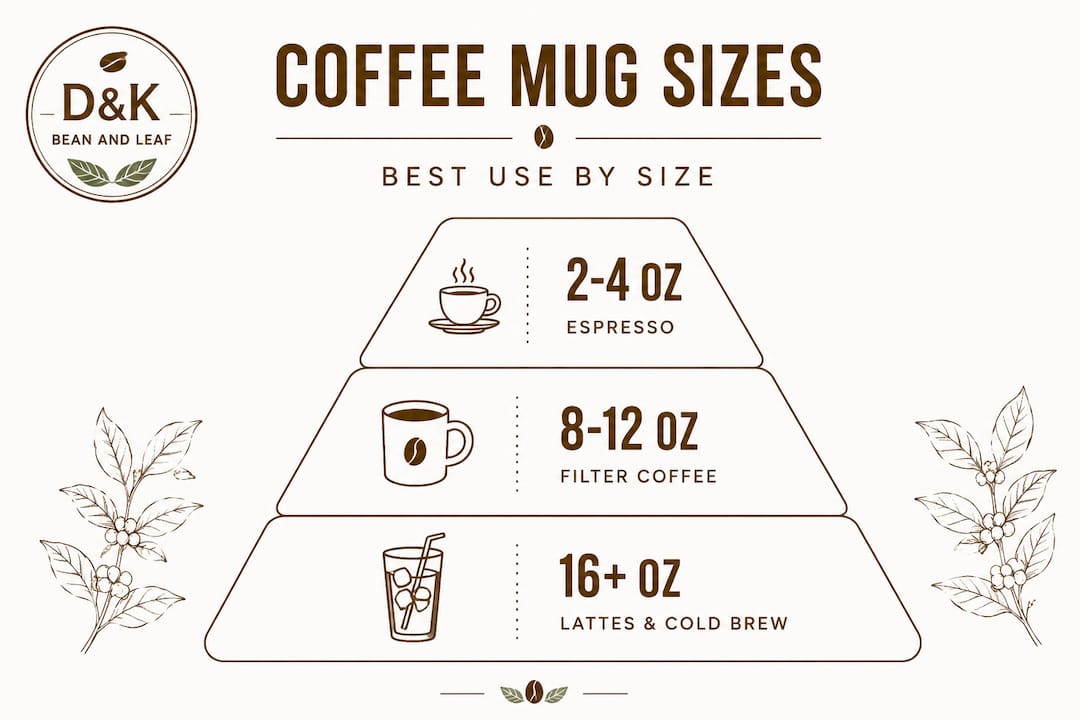
Different drinks require dramatically different sizes. Espresso calls for a 2 to 4 oz demitasse cup. Cappuccinos fit best in 5 to 8 oz cups. Lattes need 12 to 16 oz. Cold brew and all-day sipping drinks work best in 16 to 20 oz vessels.
Here’s a step-by-step guide to picking the right mug for your drink:
- Identify your drink. Espresso, cappuccino, latte, drip coffee, cold brew, and Americano all have different ideal volumes.
- Measure your actual pour. Pull a shot of espresso and see exactly how many ounces land in the cup. Add any milk or liquid you normally use.
- Add headroom. You want roughly half an inch to three quarters of an inch of space at the top. This prevents spills and gives steam room to move.
- Check your mug. Fill your current mug with water to the headroom line and measure it. Compare it to your drink volume.
- Adjust for extras. Adding ice? Go up a size. Drinking it straight? Stick close to your actual pour volume.
- Consider your pace. Drinking quickly? A perfectly sized mug keeps things hot. All-day sipper? An insulated option at 16 to 20 oz is your best move.
Quick stat: 16 to 20 oz mugs have become the standard for cold brew and iced coffee at most specialty cafes, primarily because ice displacement and flavor dilution require extra volume to maintain the intended drink ratio.
For anyone who enjoys instant coffee, mug size matters just as much. Instant coffee brewed in too large a cup tastes watery and flat. A tight 10 to 12 oz mug gives you the right concentration without having to guess at powder ratios. And for versatility across multiple drink styles, the enamel mug is a great all-rounder that handles both hot and cold drinks with ease.
Personal preferences and practical tips
Now, let’s factor in personal style, comfort, and practical details so your mug fits your life. Because even the most perfectly sized mug for your coffee type will frustrate you if it’s uncomfortable to hold or doesn’t match how you actually drink throughout the day.
One area that gets surprisingly little attention is handle design. Ergonomic handles benefit elderly drinkers and children the most, making mugs safer and significantly more comfortable for daily use. A thick, chunky handle is easier to grip with arthritic hands. A smaller, lighter mug is easier for a child to manage without spilling.
Here’s a set of practical tips based on common coffee habits:
- Quick morning espresso drinker: Stay in the 2 to 3 oz range. Tiny cups concentrate flavor and encourage you to enjoy the shot at its peak temperature before it cools.
- Slow morning ritual person: An 8 to 10 oz mug with a narrow top keeps your pour hot longer while you take your time.
- Desk coffee drinker: Go for an insulated travel mug with a handle at 14 to 16 oz. It stays warm through a morning meeting without needing a microwave.
- Casual afternoon sipper: A 12 oz mug is your sweet spot. Versatile, easy to refill, and manageable for both hot and warm coffee.
- Cold brew or iced coffee fan: Size up to 16 to 20 oz with room for ice.
There’s also a real tension between what cafes serve and what actually tastes best. Cafes standardize around 8, 12, and 16 oz sizes for efficiency and profit, but experts tend to favor 6 to 10 oz cups for taste. The reason? Smaller cups encourage better coffee-to-milk ratios, which preserves the character of the espresso rather than drowning it.
“The mug you choose should match the drink you’re making, not the size that looks most impressive on your shelf.”
For home use, narrow mugs with a comfortable handle give you the most control over temperature and ergonomics. For travel, insulated options protect your investment in good coffee beans by keeping the drink in its ideal temperature range much longer than a standard ceramic mug would.
You can even find a practical coffee companion at a coffee partner page if you’re exploring pairing options to enhance your overall experience.
Why most mug size recommendations miss the mark
Here’s the honest truth: most mug size guides, including the ones from major kitchen brands, are written around what sells well in retail stores. Not around what actually tastes best in your cup.
The conventional wisdom is that bigger is better. More coffee, more value, more mug. But that thinking is backwards if you care about flavor. A 20 oz mug might feel satisfying to hold, but half that coffee is going to be cold and flat before you finish it. You’re not getting more enjoyment. You’re getting more disappointment.
There’s a subtler problem too. When you use an oversized mug for a drink that doesn’t need the volume, you unconsciously adjust your brewing. You add more water. You use more grounds. You dilute the ratios. And slowly, without realizing it, your daily coffee gets weaker and less interesting.
What we’ve found, through years of watching how people actually drink coffee at home, is that a deliberate mismatch between mug size and drink style is one of the biggest reasons people feel underwhelmed by their coffee. They blame the beans. They blame the grind. But often it’s the cup.
The enamel mug is a good example of a mug that gets this right. It’s sized appropriately, holds heat well, and feels good in the hand without being oversized. Choosing mugs with intention, not just grabbing whatever’s on sale at 20 oz, is one of the simplest upgrades you can make to your daily coffee routine.
The real recommendation is this: own two or three mugs in different sizes and use each one intentionally. A small 8 oz for your morning black coffee. A 12 oz for weekend drip coffee sessions. A larger insulated option for travel or all-day sipping. That range covers almost every situation without the frustration of using the wrong tool for the job.
Upgrade your coffee experience with the right mug
Ready to put everything you’ve learned into practice? The right mug is waiting.

At D&K Bean and Leaf, we believe the mug matters as much as the beans. Our white glossy mug is a clean, classic choice for everyday coffee drinking, sized to hit that ideal 11 to 12 oz range. If you want a little personality in your morning routine, the mug with color inside adds a vibrant pop that makes your cup feel a bit more special. And for those who drink on the go or at their desk, the travel mug with a handle keeps your coffee in its ideal temperature zone far longer than a standard ceramic mug. Browse our full collection and find the size, style, and feel that matches how you drink.
Frequently asked questions
What size mug is best for black coffee?
Coffee enthusiasts recommend 8 to 10 oz mugs for black coffee because smaller sizes preserve aroma and temperature better than larger vessels, keeping each sip in the ideal flavor range.
Is a larger mug better for cold brew?
Yes, 16 to 20 oz mugs are ideal for cold brew because cold brew and large drinks need the extra volume to accommodate ice, dilution, and all-day sipping without running low.
What is the standard coffee mug size for everyday use?
The most common everyday mug is 12 oz, which aligns with industry standards and works well for drip coffee, Americanos, and most everyday brewing methods.
How can I keep my coffee hot in a large mug?
Preheat your mug before pouring and switch to an insulated option if possible. Oversized mugs cool too fast when half-empty, so insulation and preheating are the most effective fixes.
Are mug handles important for comfort?
Absolutely. Ergonomic handles benefit elderly users and children the most, reducing the risk of drops and making daily use more comfortable for hands of all sizes and strengths.