

Why Graphic Tees Are Popular: Identity, Nostalgia, and Style
Graphic tees are popular because they let people signal identity, nostalgia, and personal taste in one affordable, wearable object. Three forces keep driving that appeal: the Y2K and 2000s nostalgia wave that Gen Z has fully claimed as its own, the social-media mechanics that turn a single celebrity outfit into a trend overnight, and the fashion industry’s own endorsement of the tee as a legitimate statement piece. The result is a garment that works at every price point, in every context, and for every subculture.
The top drivers, in short:
- Self-expression and identity signaling — a tee broadcasts fandom, politics, or humor before you say a word
- Nostalgia — Y2K and 2000s-era prints carry emotional weight that plain basics never will
- Celebrity and luxury validation — when Chanel and Givenchy put graphics on the runway, the “too casual” stigma disappears
- Affordability and availability — print-on-demand and resale platforms like Depop put niche designs within reach of any budget
- Social-media virality — TikTok and street-style photography compress trend cycles so a single post can spike demand in days
- Katharine Hamnett’s legacy — her 1980s political slogan tees proved the garment could carry serious cultural weight, a lesson every designer since has borrowed
Key Takeaways
Graphic tees remain popular because they sit at the intersection of identity, nostalgia, and accessibility — three forces that reinforce each other across every demographic and price point.
| Point | Details |
|---|---|
| Identity is the core driver | Graphic tees signal fandom, politics, and community membership faster than any other garment. |
| Nostalgia fuels the current revival | Y2K and 2000s-era prints carry emotional weight that Gen Z has claimed as its own aesthetic. |
| Celebrity and luxury permission expanded the tee’s reach | Runway placements and editorial styling removed the “too casual” stigma for elevated contexts. |
| Resale and print-on-demand keep it accessible | Depop searches for graphic tee styles rose 107%, reflecting both demand and the affordability of the resale market. |
| Dkbeanleaf applies the same principles to coffee merch | Story-driven, specific graphics on tees and mugs outperform generic logo prints for community-building and gifting. |
Table of Contents
- 1. Why graphic tees are popular: the main reasons explained
- 2. A short history of how graphic tees got here
- 3. How Gen Z, social media, and meme culture accelerated the comeback
- 4. What different graphic tees actually communicate
- 5. How tees are made and why they stay affordable
- 6. How graphic tees are styled right now
- 7. What Dkbeanleaf notices about graphic tees as merch
- The real reason graphic tees never actually go away
- Dkbeanleaf’s graphic tees for coffee and tea lovers
- Sources
1. Why graphic tees are popular: the main reasons explained
Self-expression is the engine. A graphic tee does in seconds what a conversation might take minutes to accomplish. A band tee tells the room you were at the show. A slogan tee announces a political stance. An inside-reference print signals membership in a micro-community that outsiders simply won’t decode. That social shorthand is genuinely useful, and it costs the wearer almost nothing extra.
Harper’s Bazaar describes the emotional appeal of a great graphic tee as that of a wearable memory object — a garment that organizes personal history and taste in a way a plain white tee never could. That framing explains why people hold onto certain tees for decades.
Nostalgia is the accelerant. The Y2K and 2000s revival has given Gen Z a specific aesthetic vocabulary: Britney-era baby tees, Paris Hilton’s rhinestone logos, oversized band shirts worn off one shoulder. These aren’t random throwbacks. They carry the emotional charge of a cultural moment that Gen Z experienced secondhand through streaming and social media, which makes the longing for them feel fresh rather than recycled.
Celebrity and luxury permission matter more than most people admit. When luxury houses put graphics on the runway and editors style tees with satin skirts and tailored blazers, the garment’s social permissibility expands. WWD’s 2026 trend analysis frames this as a shift toward personality-driven dressing, where authenticity and self-expression outrank polished uniformity. That cultural shift benefits graphic tees directly.
Affordability closes the loop. Depop searches for graphic tee styles rose 107% in one fashion-press report, a figure that reflects both the resale economy’s growth and the fact that the trend is accessible to buyers who can’t spend luxury prices. Print-on-demand platforms compound this by letting small designers produce niche graphics without minimum order quantities.
2. A short history of how graphic tees got here
The graphic tee’s path from utilitarian undergarment to cultural artifact is faster than most people expect.
- Pre-1950s origins. Plain cotton undershirts became outerwear during World War II when soldiers wore them in the heat. By the early 1950s, Marlon Brando’s white tee in A Streetcar Named Desire had already made the garment aspirational.
- 1960s–1970s: political and promotional printing. Screen printing became cheap enough for mass runs. Campaign tees, concert merch, and university prints turned the blank shirt into a communication surface.
- 1984: Katharine Hamnett’s turning point. Vogue documents how Hamnett met Prime Minister Margaret Thatcher wearing an oversized tee printed with “58% DON’T WANT PERSHING” — a protest against nuclear missiles. That single moment established the slogan tee as a vehicle for serious political speech, not just promotional noise.
- 1990s–2000s: mainstream saturation. Band tees, celebrity slogan shirts, and branded logo tees flooded the market. Paris Hilton, Britney Spears, and the Hilton sisters made the baby tee a tabloid staple. Junk Food Clothing built a business licensing vintage-era graphics for mass retail.
- 2010s: the quiet luxury dip. Minimalism and “normcore” pushed graphics to the margins. Solid basics and logo-free dressing dominated aspirational fashion for most of the decade.
- 2020s–2026: the revival. Nostalgia cycles, pandemic-era comfort dressing, and Gen Z’s appetite for Y2K references brought graphics back hard. Vogue’s resurgence coverage traces the comeback to celebrity sightings and a broader cultural appetite for expressive, personality-forward dressing.
3. How Gen Z, social media, and meme culture accelerated the comeback
Gen Z’s aesthetic preferences are the single biggest structural reason the graphic tee came back when it did. Stylist commentary from Who What Wear identifies Gen Z’s embrace of ironic and irreverent slogan tees as a deliberate reaction against the hyper-curated, filter-heavy social-media aesthetic that dominated the 2010s. An intentionally “off” or lo-fi tee reads as more authentic than a perfectly coordinated outfit — and authenticity is the currency Gen Z actually values.
TikTok compressed the trend cycle. A single street-style video of a celebrity in a vintage band tee can generate thousands of “where to find this” comments within hours, sending resale searches spiking before any retailer has restocked. That’s the mechanism behind the 107% Depop search increase — not a slow trend build, but a platform-amplified demand spike.
Celebrities and stylists provided that permission. When editors pair a vintage tee with a structured blazer for an editorial shoot, they’re not just showing an outfit. They’re signaling that the combination is socially acceptable in contexts where a tee alone might not have been. WWD’s analysis calls this the “permission economy” — luxury and celebrity validation unlocking archived consumer garments as fashionable again.
4. What different graphic tees actually communicate
Not all graphics send the same message. The design, its source, and how it’s worn together form a social signal that most people read intuitively.
- Band and artist tees signal cultural capital. Wearing a tee from a show you attended carries more credibility than one bought at a chain retailer — and most wearers know the difference.
- Slogan tees broadcast opinion or attitude. Katharine Hamnett’s political prints are the archetype; today’s versions range from activist statements to deadpan humor.
- Logo and brand tees function as affiliation markers. A Junk Food Clothing vintage-license tee signals nostalgia and pop-culture literacy simultaneously.
- Meme and inside-reference tees work as community passwords. If you get the reference, you’re in. If you don’t, the tee still looks fine as a graphic.
- Artist collaboration and limited-edition pieces carry scarcity value. A tee from a designer drop or a brand collab reads differently from a mass-market print, even when the garment itself is identical cotton.
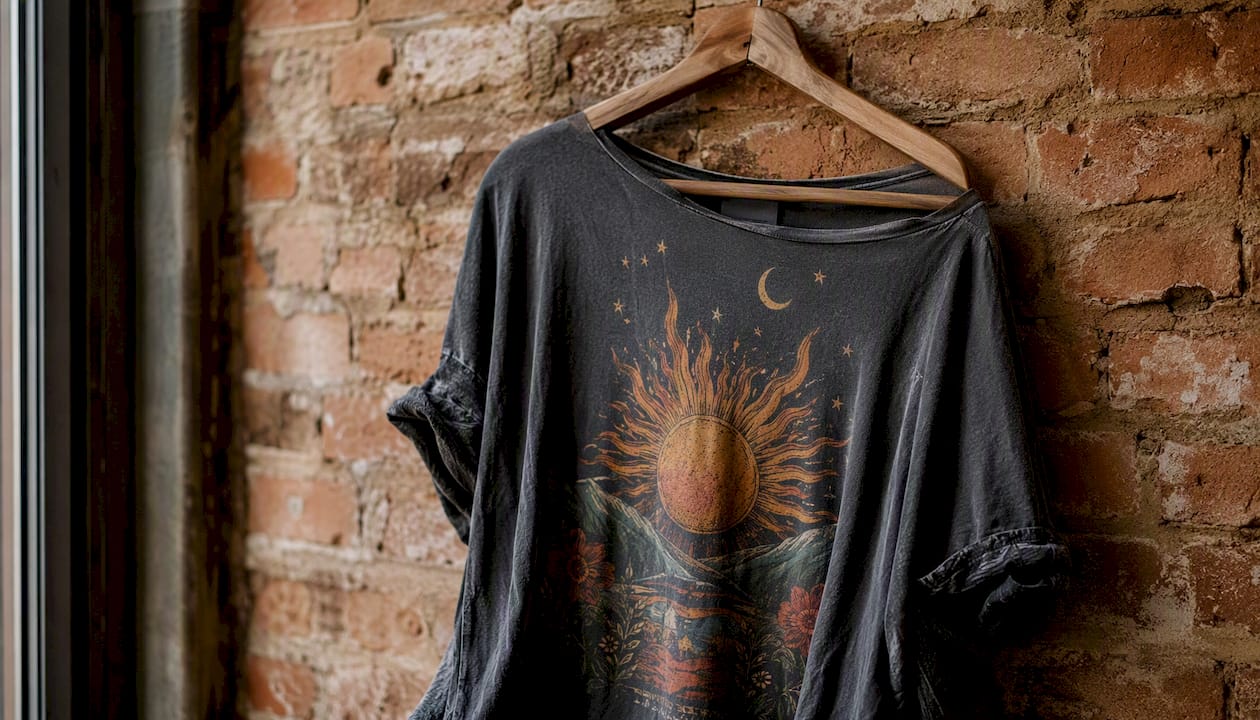
- Vintage-wash and distressed prints signal authenticity. Vogue notes that fit, wash, and print technique now matter to consumers who want a tee that looks “already lived-in” rather than fresh off a shelf.
On Depop, the resale platform, the most sought-after pieces tend to be genuine vintage or limited-run items — not reproductions. That preference for provenance is what separates a tee that reads as intentional from one that reads as filler.
Pro Tip: When choosing a graphic tee to wear in an elevated context, look for one where the graphic is specific enough to invite a question. A tee that references a niche band, a film, or a place you actually know gives you something to say — and that specificity is what separates a statement from a slogan.
5. How tees are made and why they stay affordable
Screen printing and direct-to-garment (DTG) printing are the two dominant methods. Screen printing suits large runs — the setup cost is high but the per-unit cost drops fast at volume, which is why band merch and licensed tees like Junk Food Clothing’s catalog remain cheap at scale. DTG prints directly onto the fabric with inkjet technology, making single-unit and small-batch production viable. That’s the backbone of print-on-demand platforms, which let independent designers sell niche graphics without holding inventory.
Print-on-demand lowered the barrier for micro-sellers dramatically. A designer with a specific inside-reference idea can list it, sell it, and ship it without ever touching a box of shirts. That’s why the variety of niche graphics has exploded — the economics now reward specificity rather than punishing it.
The sustainability trade-off is real. Cotton cultivation is water-intensive, synthetic dyes create runoff, and fast-fashion tees often have short lifecycles before they reach landfill. The resale and thrift market is the most practical counterweight: buying a used tee extends its life, reduces demand for new production, and often surfaces better-quality vintage pieces than anything currently in production.
| Metric | Detail |
|---|---|
| Depop search increase for graphic tee styles | Up 107% per Grazia reporting |
| Primary print methods | Screen print (volume runs), DTG (small batch/on-demand) |
| Resale advantage | Extends garment life; surfaces vintage pieces unavailable in retail |
Pro Tip: When buying for sustainability, prioritize secondhand first — Depop, ThredUp, and local thrift stores regularly surface genuine vintage tees at lower prices than reproduction versions. If buying new, look for water-based inks and organic cotton certifications, which reduce the environmental footprint of the print process.
6. How graphic tees are styled right now
The styling shift that made graphic tees fashion-forward rather than just casual is contrast. A tee worn with something structured or luxe creates intentional tension; the same tee with sweatpants reads as loungewear. Glamour’s fall 2026 styling guide documents exactly this principle in practice.
- Oversized tee with relaxed trousers or wide-leg jeans. The silhouette reads deliberately casual rather than accidentally sloppy. Proportion matters: if the tee is very oversized, keep the bottom fitted or cropped.
- Tucked into a tailored trouser or midi skirt. A half-tuck adds structure without losing the tee’s casual energy. This is the move that makes a graphic tee work in an office-adjacent setting.
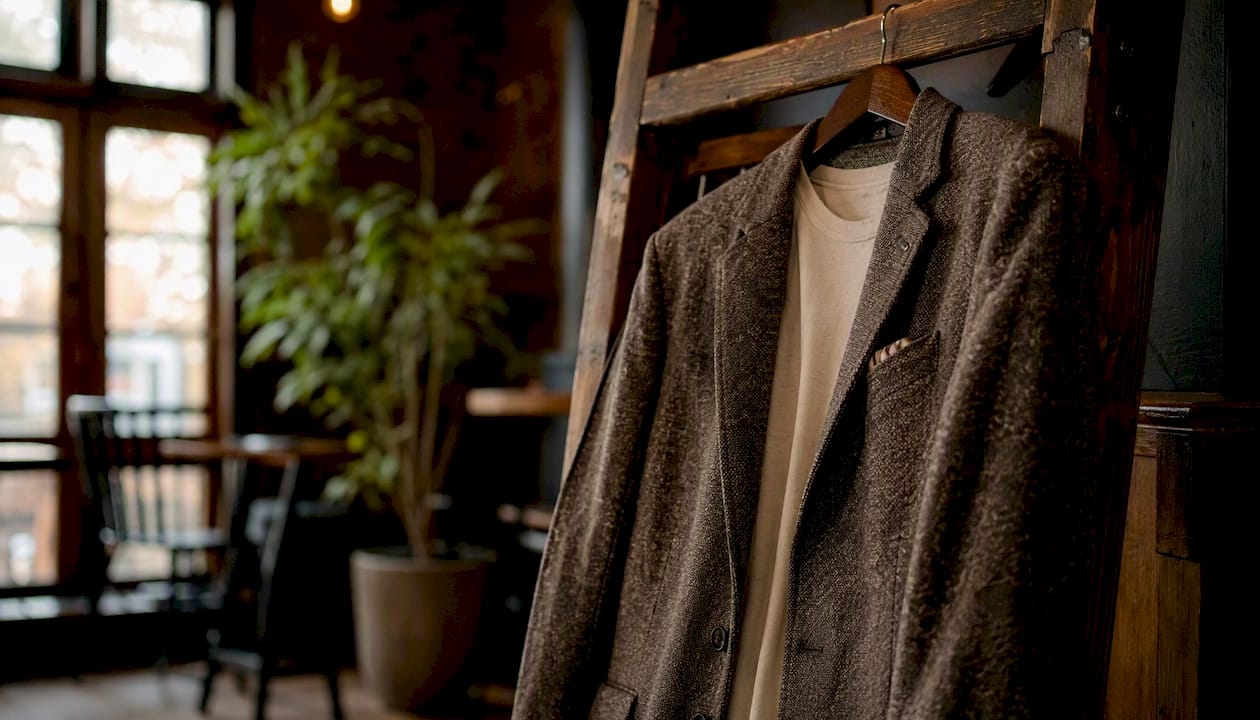
- Layered under a blazer or structured jacket. The blazer does the heavy lifting. The tee underneath can be as graphic as you want — the contrast is the point.
- Worn with a satin or slip skirt. The high-low pairing that fashion editors have been shooting for two years. The tee’s casualness and the skirt’s formality cancel each other out into something that reads as intentional.
- Knotted or cropped at the hem. Works for oversized vintage tees that are too long to tuck cleanly. A front knot creates shape without cutting the shirt.
- Layered under a slip dress. The tee peeks out at the neckline and hem. Gen Z styling, very Y2K, and surprisingly easy to pull off with the right proportions.
Pro Tip: Fit is the variable most people underestimate. An oversized tee should be intentionally oversized — meaning you chose it that way — not just a size too large. If the shoulders drop past your arm, the sleeves hit your elbows, and the hem sits at your hip, that’s the silhouette. If it just looks like you grabbed the wrong size, size down or tuck it.
7. What Dkbeanleaf notices about graphic tees as merch
At Dkbeanleaf, graphic tees aren’t just apparel — they’re the same identity-signaling tool that drives the broader trend, applied to a specific community: coffee and tea drinkers who want their passion visible. The tee assortment at Dkbeanleaf reflects exactly what the fashion data shows: customers respond to specificity. A tee that references a brewing method, a roast profile, or an inside joke about morning rituals outperforms a generic logo print every time.
The same dynamic that makes a band tee more credible than a chain-store graphic applies to branded merch. Customers who buy a Dkbeanleaf tee are signaling membership in a community, not just wearing a brand. That’s why the unisex classic tee and the women’s relaxed fit are designed with the kind of specific, story-driven graphics that invite conversation rather than just display a logo.
Tees also function as gifts. Customers regularly pick them up alongside mugs and coffee bundles as part of a gifting set — the same behavior the best coffee and tea gifts guide documents in detail.
Pro Tip: For small sellers designing merch tees, resist the urge to put your logo large and centered. A specific graphic that references your product’s world — a flavor note, a ritual, a community in-joke — will generate more organic conversation and repeat purchases than a brand name alone.
The real reason graphic tees never actually go away
The conventional take on graphic tee popularity treats it as a trend cycle: they’re in, then they’re out, then nostalgia brings them back. That framing misses the structural reason they keep returning. Graphic tees are one of the only garments that function simultaneously as a communication tool, a memory object, and an affordable fashion statement. Those three functions don’t go away when minimalism is in vogue — they just go underground, waiting for the next cultural moment to make expressive dressing feel relevant again.
What’s genuinely underrated in most coverage is the role of specificity. The tees that generate real cultural traction — Hamnett’s protest prints, a genuine vintage band tee, a Junk Food Clothing licensed graphic — are specific enough to mean something. The ones that don’t land are generic. That’s the actual lesson for anyone buying, wearing, or selling graphic tees: the graphic has to earn its place. A tee that references something real, something the wearer actually cares about, carries weight that no amount of trend validation can manufacture.
The Y2K revival will eventually exhaust itself, as all nostalgia cycles do. What won’t exhaust itself is the human desire to wear something that says something. That’s why graphic tees have been culturally relevant since Brando, and why they’ll still be relevant when the next nostalgia wave arrives.
Dkbeanleaf’s graphic tees for coffee and tea lovers
If you’ve been thinking about adding a graphic tee that actually means something to your rotation, Dkbeanleaf’s coffee and tea-themed tee collection is built on exactly the principle this article keeps returning to: specificity wins. Every design references the world of specialty coffee and tea in a way that resonates with people who actually live in that world — not a generic mug graphic, but something with a story behind it.
The unisex classic tee and the statement oversized fit both work as standalone pieces or as part of a gifting set alongside Dkbeanleaf’s fresh-roasted coffees and loose-leaf teas. If you want a tee that functions as a genuine identity signal — not just branded apparel — browse the full collection and pair it with whatever’s in your cup. The tea collection is a good place to start if you’re building a gift bundle.
Sources
- How the Graphic T-Shirt Made a High Fashion Comeback
- Behold: A Graphic Tee Revival! | Vogue
- Graphic T-Shirts Are Back—In the Britney, Paris and Nicky Way | Who What Wear
- Why Is a Good Graphic T‑Shirt So Deeply Satisfying? | Harper’s Bazaar
- How to style graphic tees for fall 2026 | Glamour