

Flavored Coffee Calories: 2 vs 100+, Tips for Calorie Counters
Plain flavored coffee, whether it’s beans flavored before roasting or a black cup brewed from them, contributes virtually no extra calories compared with regular black coffee. An 8-ounce cup lands around 2 calories either way. The calories that show up in your average “flavored coffee” order come almost entirely from what gets poured or pumped into the cup afterward: sugar, syrup, milk, cream, and whipped toppings.
TL;DR:
- Flavored coffee made through oil or extract contact adds virtually no calories, with an 8-ounce cup containing about 2 calories unless mixed with sugar or creamer.
- Most calorie increase in flavored coffee comes from added ingredients such as pumps of syrup, milk, cream, or toppings, which can quickly add dozens or hundreds of calories.
- Ordering black or flavoring beans brewed without additives preserves low calorie counts, while choosing unsweetened milk alternatives and requesting fewer syrup pumps helps control intake.
- Pre-sweetened pods and flavored creamers often contain hidden sugar and calories, making it essential to check labels and avoid excessive pumps or toppings.
- Using spices, unsweetened extracts, or flavored beans brewed black offers a natural way to enjoy flavor without significant calorie addition.
Table of Contents
- How Flavored Coffee Is Made (and Why That Process Adds Almost No Calories)
- How Many Calories Are in a Cup of Brewed Flavored Coffee?
- What Sugar, Syrup, Milk, and Cream Actually Add to Your Cup
- Calorie Ranges for Popular Flavored Coffee Drinks
- How to Flavor Coffee Without Adding Calories
- How to Order Lower-Calorie Flavored Coffee at a Coffee Shop
- A Brewer’s Take on Flavor Without the Calorie Trade-Off
- Try D&K Bean and Leaf’s Flavored Coffee Without the Calorie Guesswork
- Sources
- FAQ
How Flavored Coffee Is Made (and Why That Process Adds Almost No Calories)
Flavored coffee gets its taste one of two ways: direct contact flavoring, where oils or extracts are misted onto roasted beans before they’re bagged, or infusion during brewing, where flavor is added to grounds or brewed liquid. Neither method adds meaningful calories on its own, because the flavoring oils and extracts used are potent enough that only a trace amount touches each bean.
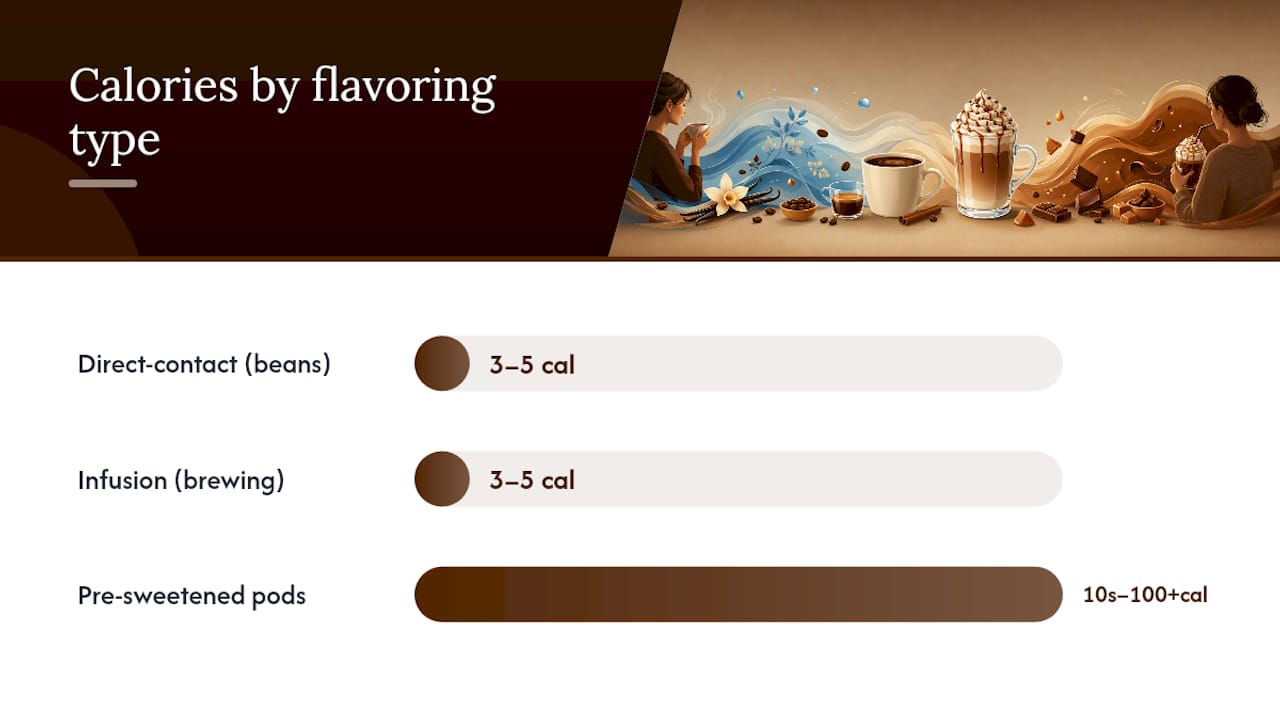
Think of it the way a chef uses vanilla extract. A few drops flavor an entire batch of cookie dough without noticeably changing its calorie count, because the volume is so small relative to the whole. Coffee flavoring works the same way. According to Keurig’s explanation of how flavored coffee is made, the process typically adds only trace amounts beyond the standard 3 to 5 calories found in a 6-ounce cup of black coffee. There’s no added sugar or fat in the flavoring itself, which is why flavored coffee and regular coffee score nearly identically on a nutrition label when both are brewed black.
The exceptions matter, though:
- Pre-sweetened single-serve pods often include powdered creamer or sugar baked right into the pod, which changes the math entirely.
- Flavored K-Cups with mix-ins can carry dozens to over a hundred calories per cup once you factor in the added creamer, according to Keurig.
- Coated flavored espresso beans, the kind rolled in chocolate or sugar glaze as a snack item, aren’t really “coffee” nutritionally. They’re candy with caffeine, and nutrition databases confirm they carry real calorie and sugar loads per serving.
Always check the label if you’re buying anything pre-mixed. Whole beans and loose grounds flavored through direct contact are the safest bet for staying near zero calories.
How Many Calories Are in a Cup of Brewed Flavored Coffee?
An 8-ounce cup of brewed coffee, flavored or not, contains fewer than 5 calories, according to Healthline’s breakdown of coffee calories. A single shot of espresso runs about 1 to 3 calories on its own, since the whole point of espresso is concentrating flavor into a tiny volume rather than adding substance.
By the numbers: An 8-ounce black or flavored brewed coffee averages roughly 2 calories. A single espresso shot averages 1 to 3 calories. Neither changes meaningfully once flavoring oils are added during roasting, according to Keurig.
Brewing method shifts these numbers only slightly, and mostly through what gets added rather than the coffee itself:
- Cold brew steeps grounds in cold water for 12 to 24 hours, producing a smoother, less acidic cup. The base calorie count stays near zero unless it’s bottled with added sweeteners.
- Nitro coffee infuses cold brew with nitrogen for a creamy texture and mouthfeel without cream. It’s one of the few “indulgent-feeling” options that still lands near zero calories black.
- Espresso-based drinks (lattes, cappuccinos, macchiatos) start from a low-calorie base, but every one of them adds milk, which is where the real calorie count begins.
The takeaway: serving size and concentration don’t move the needle much on their own. A double shot of flavored espresso still sits under 10 calories. What changes everything is the next step, which is what actually goes into the cup after the coffee is brewed.
What Sugar, Syrup, Milk, and Cream Actually Add to Your Cup
This is where flavored coffee calories really come from, and the numbers add up faster than most people expect. A single pump of flavored syrup, the kind used at most coffee shops, adds roughly 10 to 20 calories depending on the brand and dispenser size, according to Mayo Clinic. Order a drink with four pumps, which isn’t unusual at some chains, and you’ve already added 40 to 80 calories before the milk goes in.
| Add-In | Typical Serving | Approximate Calories |
|---|---|---|
| Granulated sugar | 1 teaspoon | about 16 kcal |
| Flavored syrup | 1 pump | roughly 10 to 20 kcal |
| Half-and-half | 2 tablespoons | approximately 40 kcal |
| Heavy whipping cream | 2 tablespoons | about 100 kcal |
| Whipped cream topping | 2 tablespoons | can add from 50 up to 100 kcal |
| Unsweetened almond milk | 1 cup | in the range of 40 kcal |
| Whole milk | 1 cup | close to 150 kcal |
Run a quick example: two pumps of vanilla syrup plus two tablespoons of half-and-half adds roughly 60 to 80 calories to a cup that started at 2 calories. Swap the half-and-half for heavy whipping cream and you’re closer to 120 to 140 calories added, before you’ve touched the whipped cream on top.
A few things to watch for:
- Multiple pumps compound fast. Most default recipes at coffee shops use three to four pumps for a 16-ounce drink, not one.
- Flavored creamers double-dip on calories. They combine dairy or dairy-alternative fat with added sugar, so a splash isn’t as harmless as it sounds.
- Pre-sweetened pods hide their sugar. Since there’s no pump or spoon involved, it’s easy to assume a flavored pod is calorie-free when it isn’t, according to Keurig.
Standard pump sizes vary by chain, and independent shops often use different syrup dispensers entirely, so the 10 to 20 calorie range is a reasonable estimate rather than a fixed rule. Asking your barista is never a bad idea.
Calorie Ranges for Popular Flavored Coffee Drinks
Café and bottled flavored coffee drinks span an enormous range, from nearly nothing to a full meal’s worth of calories, depending almost entirely on milk type, syrup pumps, and toppings.
- Flavored lattes typically run 150 to 300 calories for a medium size, driven mostly by whole milk and two to three syrup pumps.
- Mochas climb higher, often 250 to 400 calories, since chocolate syrup or cocoa adds on top of the milk and flavor syrup.
- Frappes and blended drinks are usually the highest of the bunch, sometimes exceeding 400 to 500+ calories once whipped cream and blended ice with syrup are factored in.
- Bottled ready-to-drink flavored coffees vary wildly. Some sit around 100 calories per bottle; others, especially the creamier or larger-format ones, push past 300.
- Flavored cold brews stay lower when ordered black or with a splash of milk, often in the 20 to 90 calorie range, but a sweetened bottled version can climb into the 150 to 250 range.
According to Mayo Clinic’s data on common coffee drinks, café flavored beverages can range from about 100 calories on the low end to well over 500 on the high end, and the difference almost never comes from the coffee itself. It comes from the milk fat content, the number of pumps, and whether whipped cream made it onto the drink. A “skinny” version of the same drink, using nonfat milk and sugar-free syrup, can cut that number by more than half.
How to Flavor Coffee Without Adding Calories
You don’t have to give up flavor to keep your coffee near zero calories. A few swaps do most of the work.
- Steep whole spices directly with your grounds. Cinnamon sticks, a strip of orange peel, or a few cloves added to the coffee grounds before brewing infuse real flavor with no calories at all.
- Use unsweetened extracts sparingly. A drop of vanilla or almond extract stirred into a finished cup adds flavor without the sugar load of syrup, though it can taste slightly different from a shop’s syrup blend.
- Try sugar-free syrup, but taste-test first. Zero-calorie syrups work for many people, but some notice an aftertaste, so it’s worth trying a small amount before committing to a full pump.
- Choose unsweetened milk alternatives over flavored creamers. A splash of unsweetened almond or skim milk adds body without the 100+ calories a flavored creamer can carry.
- Replace a pump with a pinch. Swapping one syrup pump for a dash of cinnamon or nutmeg on top preserves the seasonal flavor people actually want without the added sugar.
Steeping spices with the grounds rather than sprinkling them on top after brewing tends to preserve aroma better, since the oils release slowly during contact with hot water instead of sitting on the surface. It’s a small technique, but it’s the difference between a cup that tastes seasoned throughout and one that tastes like it was garnished.
Pro Tip: Buy a flavored bean and brew it completely black for a week before deciding you need syrup. Most people are surprised how much flavor a well-roasted flavored bean carries on its own, and the brewing techniques that preserve that flavor matter more than any added sweetener.
How to Order Lower-Calorie Flavored Coffee at a Coffee Shop
Ordering out doesn’t have to blow your calorie budget — consider low-calorie beverage alternatives to manage overall calorie intake effectively. A few specific phrases and habits make a real difference:
- Ask for “one pump” instead of the default. Most shops default to three or four pumps for a standard size; requesting one or two cuts the syrup calories by more than half.
- Request unsweetened milk alternatives by name. Saying “unsweetened almond milk” instead of just “almond milk” avoids an automatically sweetened version.
- Skip the whipped cream unless you really want it. That’s an easy 50 to 100 calories saved with zero effort.
- Ask for the nutrition information. Many chains publish full nutrition menus online or in-store, and Mayo Clinic recommends checking these before ordering if you’re tracking intake closely.
- Watch for menu language like “sweetened,” “creamer included,” or “pumps included.” These phrases usually signal a drink built around sugar rather than coffee flavor.
If a full nutrition label isn’t posted, a rough estimate works: start from a 2-calorie base, add 15 calories per syrup pump, 40 calories per 2 tablespoons of half-and-half or comparable milk, and 75 calories if whipped cream is involved. It won’t be exact, but it gets you in the right range.
A Brewer’s Take on Flavor Without the Calorie Trade-Off
The biggest misconception people bring to flavored coffee is that the flavoring itself is the problem. It almost never is. The real work happens in what gets added after the pot is done brewing, and that’s the part within your control every single time you make a cup.
What’s underrated is how much flavor a well-made flavored bean can carry on its own, brewed completely black. Most people default to syrup out of habit, not necessity, because that’s what they’ve always ordered. Try running the same flavored bean black for a few days before deciding it needs help. Preserving that flavor comes down to brewing technique as much as bean choice, and a few adjustments during brewing go further than most people expect.
If you’re tracking calories seriously, run a small experiment: log exactly what goes into your usual order for a week, pump by pump, splash by splash. The number that comes out usually surprises people, and it’s rarely the coffee’s fault.
— Kristopher
Try D&K Bean and Leaf’s Flavored Coffee Without the Calorie Guesswork
D&K Bean and Leaf roasts flavored coffee the direct way, with flavoring applied to the bean itself rather than baked into a pre-mixed pod loaded with creamer or sugar. That means the coffee is close to a near-zero-calorie baseline whether brewed black or with additions.
Sample packs are one way to explore different coffee flavors. Brewing a few flavored beans black, side by side, tells you fast which ones carry enough natural flavor that you won’t reach for syrup at all. Once coffee’s covered, D&K Bean and Leaf’s tea collection is worth a look too, since some blends make an easy lower-calorie swap on days you want flavor without the espresso kick.
Ready to test it yourself? Order flavored beans and brew a plain black cup this week. It’s the simplest way to see exactly how much flavor comes from the bean, not the syrup.
Sources
- Mayo Clinic — Calories in coffee extras and common drink examples
- Healthline — How many calories are in coffee?
- Keurig — How is flavored coffee made?
FAQ
Does flavored coffee have any calories?
Plain brewed flavored coffee has about 2 calories per 8-ounce cup, nearly identical to regular black coffee. Any real calorie count comes from added sugar, syrup, milk, or cream.
Is flavored coffee high in sugar?
Flavored coffee beans and grounds themselves don’t contain added sugar; the flavoring is done with oils and extracts. Pre-sweetened pods, flavored creamers, and syrup pumps are where sugar actually enters the picture.
What is the healthiest flavored coffee?
A flavored bean brewed black, with the flavor coming from oils applied during roasting rather than syrup or creamer, keeps calories and sugar closest to zero. Checking for pre-sweetened pods or added creamer on the label helps confirm this before buying.
How do I flavor coffee without adding calories?
Steep whole spices like cinnamon or citrus peel with your grounds while brewing, or add a drop of unsweetened extract to the finished cup. Both add real flavor without the calories that syrup or flavored creamer bring.
Is flavored coffee gluten free?
Plain flavored coffee beans and grounds are naturally gluten free, since coffee itself contains no gluten. Flavored syrups, creamers, or specialty drink mix-ins can occasionally include gluten-containing additives, so it’s worth checking labels on pre-mixed products.