

6 Tee Shirt Layering Best Practices for Stylish Outfits
Six rules separate intentional layering from the accidental kind: control fit and proportion, stagger hem and sleeve lengths, progress from thinnest fabric closest to skin outward to heavier, vary necklines so the eye has a clear focal point, use color or texture contrast rather than exact matches, and keep visible layers to three or fewer. Sources like The Tie Bar and British GQ have been making this case for years, and the logic holds whether you’re building a casual weekend look or a considered streetwear outfit.
Here’s the quick checklist:
- Fit: Base layer fitted or semi-fitted; outer tee one size roomier
- Length: Outer hem sits at least 1–2 inches longer or shorter than the inner, so edges read as deliberate
- Fabric weight: Lightest layer against skin, heavier outward
- Neckline: Two identical crew necks look confused; vary height, cut, or texture
- Color/texture: Neutral foundation with one accent, or a tonal gradient
- Layers: Three visible layers maximum to avoid bulk
Key Takeaways
The single most important rule in tee shirt layering is this: assign every layer a clear role, keep the outer tee as the visual anchor, and let inner layers contribute only a small, deliberate peek of neckline, sleeve, or hem.
| Point | Details |
|---|---|
| Fabric weight progression | Lightest layer against skin, heavier outward; prevents bulk and keeps drape clean. |
| Hem and sleeve steps | Aim for at least 1–2 inches of hem difference so each layer reads as intentional. |
| Three-layer ceiling | Keeping visible layers to three maintains silhouette clarity and avoids compression. |
| Neckline variation | Two identical crew necks look accidental; vary height, cut, or texture between layers. |
| Dkbeanleaf as a base | The Unisex Classic Tee and Short-Sleeve Unisex T-Shirt are built for the layering roles this guide describes. |
Table of Contents
- What are the core tee shirt layering best practices?
- How do you layer one t-shirt over another without it looking accidental?
- How do you pair a tee with sweaters, vests, button-downs, and jackets?
- What fabric weight and fit actually prevent bulk?
- Common layering mistakes and quick fixes
- How do you adapt layered tees for different occasions?
- Why intentional layering beats the maximalist approach
- Dkbeanleaf tees as a starting point for your layering wardrobe
- Sources
What are the core tee shirt layering best practices?
Fit is where most people go wrong first. The base layer should hug the body without pulling, which keeps it flat under everything else. The outer tee can afford to be slightly roomier, creating a small but readable silhouette difference. That gap between fitted and relaxed is what makes the combination look considered rather than random.
Hem length is the second lever. British GQ describes using hem, collar, and sleeve “gradients” so each layer forms a deliberate step rather than a compressed stack. A rough guide: aim for the hems and sleeves of layers to differ visibly. One cuff edge showing is a styling choice; multiple stacked cuffs create clutter.
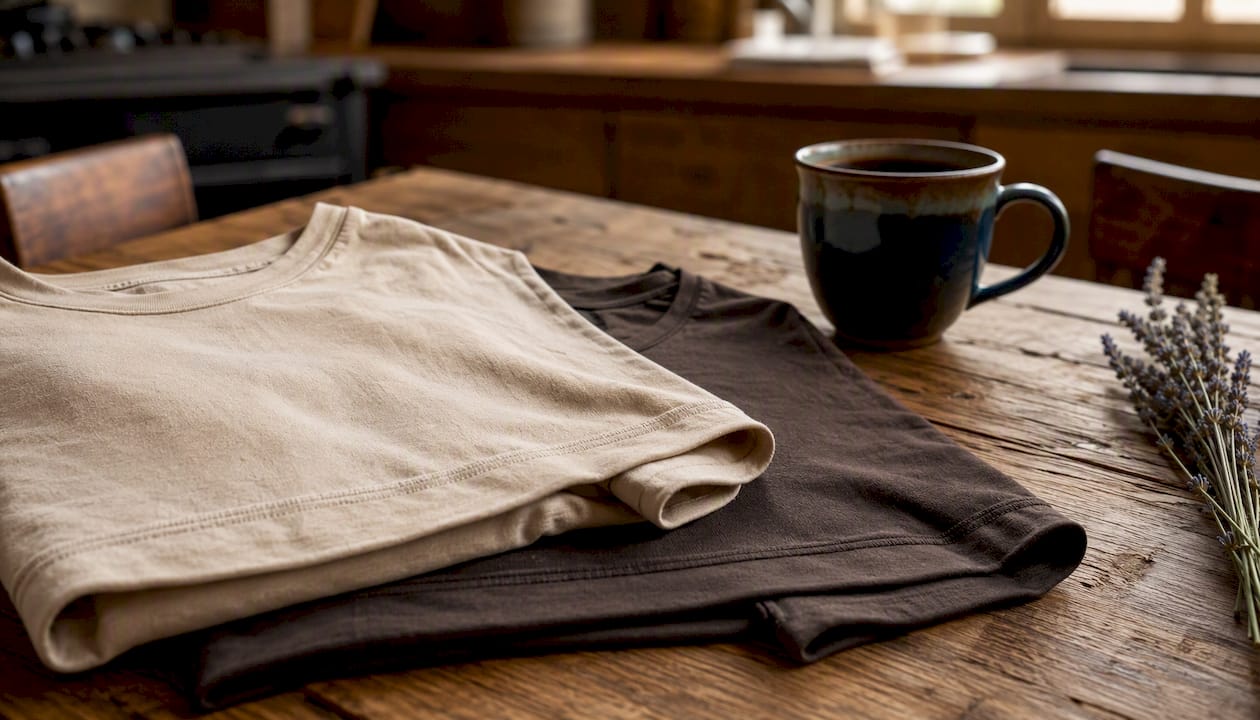
Pro Tip: Roll the outer tee’s sleeves once or twice to expose the inner sleeve cleanly. It takes ten seconds and immediately signals that the layering is on purpose.
Fabric weight is the rule with the most structural impact. Start with the thinnest, lightest fabric against the body and add weight as you move outward. This prevents bulk and lets each layer drape properly instead of bunching. A lightweight cotton jersey base under a slightly heavier mid-weight tee is the standard starting point.
On necklines: two identical crew necks worn together tend to look accidental. The fix is simple. Change one neckline (V-neck inner, crew outer), or choose tees where the collar height differs enough to create a visible step. Color and texture contrast follow the same logic. A neutral base, like white, gray, or black, gives the outer tee room to be the focal point. Tonal gradients (navy over light blue) work too, as long as the shades are distinct enough to read as a choice.
- Keep the palette to a few complementary colors across all visible layers
- Use texture differences (ribbed vs. jersey, slub vs. smooth) when colors are close
- Limit visible layers to three; The Tie Bar’s layering guide recommends this ceiling for a clean silhouette
How do you layer one t-shirt over another without it looking accidental?
Tee-on-tee is the combo that trips people up most, because the margin between “styled” and “forgot to change” is narrow. The key is making the outer tee the clear main character while the inner tee supports with a peek of neckline, sleeve, or hem.
Short-sleeve over long-sleeve is the most reliable pairing. The long-sleeve cuff shows below the short-sleeve hem, and the collar peeks at the neck. Both signals are small and deliberate. Choose contrasting colors or at least a clear tonal difference.
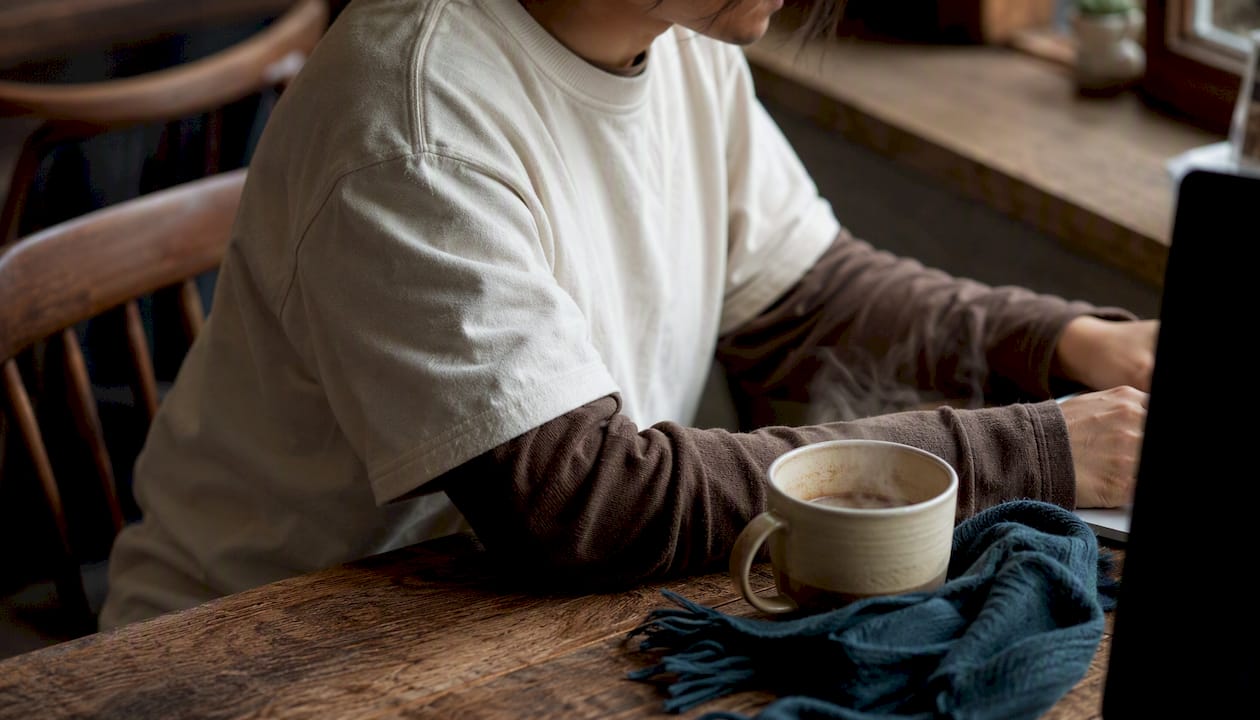
Short-sleeve over short-sleeve only works when the necklines differ or the hem lengths create a visible step. Two identical crew-neck tees in similar colors read as a mistake. Swap one for a V-neck or scoop neck, or choose an outer tee that’s noticeably longer.
Long-sleeve over long-sleeve requires thin fabrics on both pieces. Any bulk here compounds fast. Keep both layers lightweight and let the inner cuff show by about half an inch.
Turtleneck combos are the most graphic version of tee layering. A fitted turtleneck under a short-sleeve tee creates a strong vertical line at the neck. The turtleneck should be thin enough that the outer tee sits flat across the shoulders.
The outer tee is the main character. The inner layer’s only job is to add a small peek of neckline, sleeve, or hem that makes the combination look considered rather than coincidental. Coveteur frames it exactly this way: use inner layers for texture, proportion, or color peeks, not to compete for attention.
Rolling the outer sleeve once or twice to expose the inner sleeve is one of the fastest micro-styling moves available. Coveteur’s editorial examples repeatedly show this as a shortcut for making tee-on-tee combinations read as deliberate.
- Keep the inner tee’s hem exposure to 1–2 inches below the outer hem
- Limit visible cuff layers to two edges maximum
- When in doubt, the outer tee should be the bolder or more graphic piece
How do you pair a tee with sweaters, vests, button-downs, and jackets?
A tee under a crewneck sweater works best when the tee’s neckline sits just below the sweater’s collar, creating a thin band of contrast. V-neck sweaters give more flexibility since the tee’s neckline can show more without competing. Fexwear’s fit guidance points to stable neck ribs and appropriate hem length as the construction details that determine whether a tee bunches or lies flat under knitwear.
With a sweater vest, the tee’s sleeves become the visible layer. A slim or semi-fitted tee works under a structured vest; a slightly oversized tee can work under a relaxed-fit vest, but watch the shoulder seam. If the tee’s shoulder seam slides off the shoulder, the whole silhouette collapses.
Under a button-down shirt worn open, the tee becomes the inner layer and the shirt acts as a light jacket. The tee hem should sit at or slightly below the shirt hem. Avoid graphic tees here unless the shirt is very casual; a solid or subtly textured tee reads cleaner.
With jackets (denim, bomber, leather), the tee hem length matters most. A tee that hits at the hip or slightly below the jacket hem creates a clean step. Too much tee hem hanging below a cropped jacket looks unfinished.
- Tee + crewneck sweater + jeans: fitted base tee, medium-weight sweater, slim or straight jeans
- Tee + button-down + trousers: solid tee, open button-down as overshirt, tapered trousers
- Tee + sweater vest + chinos: semi-fitted tee, structured vest, straight-leg chinos
What fabric weight and fit actually prevent bulk?
The thin-to-thicker progression is the structural rule that everything else depends on. Lightweight fabrics sit flat against the body and don’t add visual mass. As you move outward, slightly heavier fabrics have enough body to drape over the inner layers without compressing them.
A practical way to gauge this in a store: hold the fabric up to light. If it’s nearly sheer, it’s a good base layer candidate. If it has clear body and opacity, it belongs as an outer layer. TEENetwork’s layering overview describes this as assigning each tee a role: base, visible supporting layer, or main outer layer.
Pro Tip: Check the armhole and shoulder seam before buying a tee for layering. A tight armhole restricts movement and creates drag lines across the chest when a second layer goes on top.
For tees worn under cardigans or structured pieces, Fexwear recommends paying attention to neck rib stability and hem length. A neck rib that stretches out loses its shape quickly under repeated layering.
Quick mirror test before leaving the house:
- Put on all layers and raise both arms overhead. If the inner tee rides up and stays up, it’s too short or too fitted.
- Turn sideways. Check that hem steps are visible and intentional, not compressed.
- Move your arms forward. No pulling across the back means the armhole fit is correct.
- Check the neckline from the front. The inner layer’s collar should show as a clean line, not a bunched ring.
- Lightweight cotton jersey (around 140–160 GSM) works well as a base layer
- Mid-weight jersey (around 180–200 GSM) suits outer tees
- Avoid two heavy fabrics together; swap one for a lighter option
The Dkbeanleaf DryBlend® T-Shirt is worth considering as a base layer for warmer months, since its fabric blend manages moisture without adding bulk.
Common layering mistakes and quick fixes
Too many visible layers or competing hems. Remove the least intentional layer. If you can’t tell which one that is, it’s usually the middle layer.
Two similar crew necks. Change one neckline, roll one sleeve to expose the other, or add a thin chain or scarf to break the visual repetition.
Bulk from two heavy fabrics. Swap the inner layer for something lighter. Two mid-weight tees together almost always read as too thick.
Wrong sleeve peeks. British GQ’s sleeve rule is clean: limit visible cuff edges to two at most, staggered by a small, deliberate increment.
Color chaos. Pull one layer neutral. White, black, or gray will ground almost any combination.
How do you adapt layered tees for different occasions?
Casual: Two tees plus an open overshirt or hoodie. Keep contrast and texture playful. The Dkbeanleaf Hoodies & Sweatshirts collection has outer layers that work well here.
Streetwear: Boxy short-sleeve over a long-sleeve is the current go-to silhouette. WhoWhatWear’s trend coverage notes designers like The Row have amplified this proportion. Keep the color contrast controlled; the silhouette does the work.
Office-casual: Minimal visible layering. A fitted base tee under a structured blazer or cardigan, with just a sliver of neckline showing. Neutral colors only.
Transitional weather: Thin turtleneck or long-sleeve under a short-sleeve tee. TEENetwork notes that lightweight cottons handle spring and fall layering well, while mid-weight merino suits fall and winter.
- Warmer months: lightweight cotton base, short-sleeve outer, open jacket optional
- Cooler months: thin merino or ribbed long-sleeve base, heavier outer tee, structured jacket
- The Dkbeanleaf Crop Hoodie works as a cropped outer layer over a longer tee for a proportional contrast in casual and streetwear contexts
Why intentional layering beats the maximalist approach
The loudest argument against Y2K-style overloading isn’t aesthetic, it’s practical. When every layer competes for attention, none of them win. The outfit reads as busy, and the individual pieces lose their value. Intentional layering, by contrast, treats each tee as having a specific job: one anchors the look, one adds a supporting detail, and everything else stays out of the way.
What I find most underestimated is the power of restraint at the neckline. Most people focus on hem length and color when they think about layering, but the neck is where the eye goes first. A clean, deliberate collar peek does more for a layered outfit than any color combination. That’s the move that separates a styled look from a dressed look.
The brand’s own approach to tee design, keeping silhouettes clean and fabrics honest, reflects the same logic. A tee that does its job quietly is more useful than one that demands attention. Kristopher covers garment care and construction in detail on the Dkbeanleaf blog, including practical guides on tee folding and storage that extend the life of layering basics.
Dkbeanleaf tees as a starting point for your layering wardrobe
The tees that layer best are the ones built with clean construction and honest fabric weight. Dkbeanleaf’s Unisex Classic Tee is a reliable base layer: the fit is semi-fitted without being restrictive, and the fabric weight sits in the range that lies flat under outer layers. For an outer tee with a slightly relaxed silhouette, the Women’s Relaxed T-Shirt and the Short-Sleeve Unisex T-Shirt both give you the roomier outer-layer fit the proportion rules call for.

For a layering capsule, start with two or three neutrals (white, black, one mid-tone) in different fits, then add one or two pieces with texture or a graphic. Browse the full Dkbeanleaf tees collection to find the silhouettes that match your base and outer layer needs.
Sources
The following sources informed the fabric, fit, and styling guidance throughout this article:
- How to Layer Clothes for Men: A Complete Guide | The Tie Bar
- How to Layer Your T-Shirts | Coveteur
- T-shirt layering trend report | WhoWhatWear
- How to layer clothes without going full Michelin Man | British GQ
- Master T-Shirt Layering: Complete Guide to Perfect Combinations | TEENetwork
- The Ultimate Guide to Shirts for Layering Under Cardigans | Fexwear