

Vintage Tee Shirt Examples: 10 Categories to Know
This article covers ten vintage tee shirt examples collectors and style enthusiasts actually use, paired with the visual cues that separate a genuine 1980s screen print from a factory-distressed reproduction. Quick authenticity check before you dig in: look for a single-stitch hem, a paper-thin cotton hand, a tag from Hanes or Screen Stars with no care symbols, and a print that shows natural crazing rather than uniform cracking. Research-backed sourcing from GQ, design galleries on Behance, and auction records at Sotheby’s inform every section.
At a glance, the ten categories covered:
- Concert and band tees
- Sports and athletic tees
- College and varsity tees
- Americana and logo tees
- Motorcycle and racing tees
- Brewery and beer tees
- Tourism, state, and city tees
- Nature and regional tees
- Novelty and character tees
- Classic typography and lettering tees
Four fast authenticity cues:
- Single-stitch hem (one row of stitching at sleeve and bottom)
- Tissue-thin, ring-spun cotton that drapes rather than holds shape
- Print crazing: fine, irregular cracks in the ink, not a uniform grid
- Black ink faded to olive-brown, especially at fold lines
Key Takeaways
Genuine vintage tees are identified by construction first and graphics second: single-stitch hems, tissue-thin cotton, irregular print crazing, and olive-brown ink fade are the cues that matter most.
| Point | Details |
|---|---|
| Identify by construction | Check single-stitch hems, tag era, fabric weight, and irregular print crazing before trusting the graphic. |
| Start sourcing at thrift tier | Thrift stores and flea markets offer $2–$20 finds that build your eye before you spend more. |
| Style with modern layers | Pair vintage tees with straight-leg trousers, blazers, or thermals; let the graphic stay the focal point. |
| Preserve with cold and flat | Hand-wash cold, air-dry flat, store in acid-free tissue, and never machine-dry on heat. |
| Dkbeanleaf for new vintage-inspired pieces | The Dkbeanleaf tee collection offers badge-style, craft-rooted designs with consistent fit and no condition risk. |
Table of Contents
- What the best vintage tee shirt examples actually look like
- How to spot genuine vintage versus modern reprints
- Where to find authentic vintage tees in the U.S.
- How to style vintage tees for modern wear
- Caring for vintage tees without losing the patina
- When a vintage tee becomes collectible
- Why the story inside a vintage tee matters more than the graphic
- Dkbeanleaf’s vintage-inspired tees are worth a look
- Sources
What the best vintage tee shirt examples actually look like
The ten categories below are the ones collectors and resellers return to most. Each entry describes the era, the visual signature, and one styling shortcut.
| Category | Era and visual cues | Quick styling tip |
|---|---|---|
| Concert and band | 1970s–80s; oversized single-color or two-color screen print, tour dates on back, faded lettering | Tuck front into high-waist jeans; leave back untucked to show the tour list |
| Sports and athletic | 1980s; bold team name arched across chest, thick felt or plastisol print, raglan sleeves common | Knot at the hip over bike shorts or layer under an open flannel |
| College and varsity | 1970s–80s; crewneck, school name in block or serif type, often heather gray or navy | Wear oversized with straight-leg trousers for a clean, campus-meets-city look |
| Americana and logos | 1970s–80s; brand mascots, state seals, patriotic eagles, limited palette of red, white, and navy | Tuck into raw-hem denim shorts; add a canvas belt for a workwear edge |
| Motorcycle and racing | 1970s–80s; flame graphics, rally names, bold gothic or block type, often black or charcoal base | Layer under a moto jacket; roll the sleeves once to show the cuff print |
| Brewery and beer | 1980s; regional brewery logos, hop-and-grain illustrations, earthy amber or forest green | Wear loose over a long-sleeve thermal; works with chinos or cargo pants |
| Tourism, state, and city | 1970s–80s; destination name arched over a landmark illustration, sunset palette | Knot at the waist over a midi skirt or wear relaxed with wide-leg pants |
| Nature and regional | 1980s; wildlife illustrations (bears, eagles, fish), national park names, muted earth tones | Pair with olive cargo pants and trail runners for an outdoors-casual look |
| Novelty and character | 1980s; cartoon mascots, TV characters, humor slogans, bright primary colors | Keep the rest of the outfit neutral so the graphic does the talking |
| Classic typography and lettering | 1970s–80s; hand-lettered or varsity-style type as the sole graphic, minimal color | Works with almost anything; the cleaner the bottom half, the better |
99designs’ retro t-shirt gallery shows clearly that the strongest vintage-inspired designs lean on typography and hand-drawn illustration rather than simulated distressing. The palette discipline is what makes them read as authentic. For editorial images, Behance’s vintage t-shirt project archive is a practical reference for era-appropriate lettering and composition.
How to spot genuine vintage versus modern reprints
Construction tells the story faster than graphics do. A modern “vintage-style” shirt can copy the artwork, but it rarely replicates forty years of material history.
Tag and stitching. Pre-1994 shirts almost always use a single-stitch hem: one row of stitching at the sleeve cuff and shirt bottom. Double-stitch became standard after the mid-1990s. Tags from Fruit of the Loom, Hanes, or Screen Stars without a care-symbol row (the washing-machine icon system) indicate pre-1971 manufacture. A tag with a care symbol but no barcode narrows the window to roughly 1971–1994.
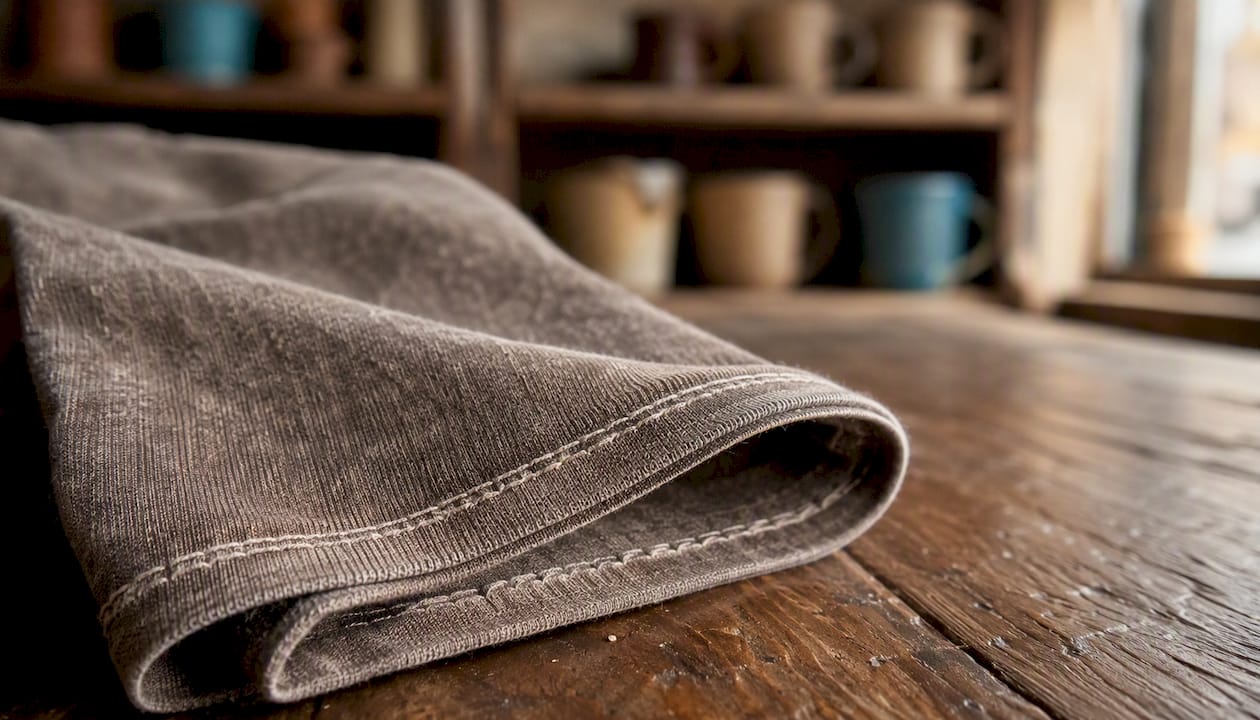
Fabric. Authentic vintage cotton thins over decades of washing. VintageReveries documents the tissue-like feel and specific fade gradients, including black ink shifting toward olive-brown at fold lines, as high-value authenticity markers. Modern blends hold their weight and color differently; even “pre-washed” reproductions feel denser.
Print behavior. Real screen-print crazing is irregular: the cracks follow the weave of the fabric and cluster around stress points. Factory-applied distressing tends to produce a uniform grid pattern or a too-even fade. Pinholes near the collar or underarm seams are another genuine road-wear sign that manufacturers rarely bother to fake.
Five fast yes/no checks:
- Single-stitch hem? (Yes = older)
- Tag without care symbols? (Yes = pre-1971)
- Ink faded to olive-brown at fold lines? (Yes = authentic aging)
- Fabric thinner than a modern tee? (Yes = genuine wear)
- Crazing irregular, not grid-patterned? (Yes = real screen print)
Pro Tip: Ask the seller three questions: Where did you source it? How was it stored? Has it been washed recently? A seller who can answer all three with specifics is more credible than one who can only describe the graphic.
Where to find authentic vintage tees in the U.S.
Sourcing vintage tees works best as a tiered strategy. Start wide and cheap, then move toward curated and expensive as your eye develops.
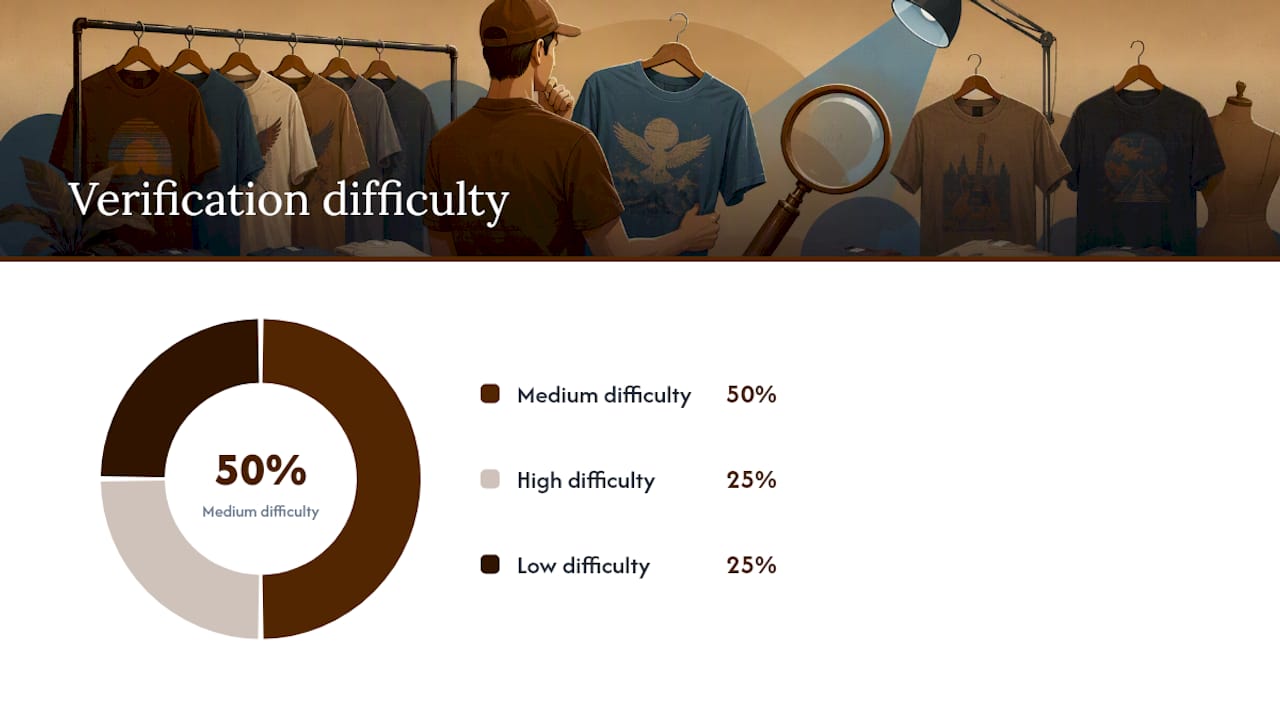
| Tier | Examples | Cost range | Rarity | Verification difficulty | Best for |
|---|---|---|---|---|---|
| Thrift and flea markets | Goodwill, Salvation Army, local flea markets | $2–$20 | Low to medium | High (no provenance) | Beginners building an eye |
| Curated vintage boutiques | Local vintage shops, pop-up markets | moderate price range | Medium to high | Medium | Collectors wanting pre-vetted pieces |
| Specialty online resellers | Grailed, Depop, specialty vintage stores | varying prices from mid to higher range | High | Medium (photos only) | Specific category hunters |
| Auctions and estate sales | Sotheby’s, local estate auctions | prices from mid to very high | Very high | Low (provenance documented) | Serious collectors and investors |
GQ’s sourcing guide highlights curated shops such as Moth Food for Americana and regional artifacts, noting that these pieces tend to read as more timeless than single-event tour merch. For online searches, filter by decade (“1980s tee”), construction detail (“single stitch”), or graphic type (“concert tee 1970s”) to cut through noise. At estate sales, ask the executor whether the deceased was a collector or a casual keeper; that one question changes what you find in the boxes.
At the top of the market, a 1973 Grateful Dead concert tee from the Watkins Glen festival has been offered at Sotheby’s, illustrating that rare, historically significant pieces can reach auction-house territory.
How to style vintage tees for modern wear
Three looks that respect the shirt’s history without making you look like you raided a time capsule.
-
Casual layered. Wear a boxy 1980s concert tee over a white long-sleeve thermal, with straight-leg jeans and clean white sneakers. The thermal adds structure without competing with the graphic. Size up one if the original is already oversized; the silhouette should feel relaxed, not swamped.
-
Streetwear elevated. Tuck a slim 1990s sports tee into high-waist wide-leg trousers. Add a statement oversized piece or a structured blazer on top. The contrast between the worn graphic and the tailored bottom half is the whole point.
-
Smart-casual pairing. A classic typography tee in heather gray works under an unstructured linen blazer with chinos and loafers. Keep accessories minimal so the lettering reads clearly.
Fit note. 1980s tees run boxy with a high armhole; size down if you want a fitted look, or embrace the boxy cut as the silhouette. 1990s tees tend to run slimmer and longer. Knowing the decade before you buy saves a lot of guesswork at the thrift store.
Pro Tip: Use one accessory to anchor the era: a vintage-style cuffed beanie or a worn canvas belt keeps the vintage tee as the focal point without the outfit reading as costume.
Caring for vintage tees without losing the patina
The goal is to clean the shirt without accelerating the aging it took decades to earn.
Washing. Hand-wash in cold water with a mild detergent (Woolite or a pH-neutral soap). If machine-washing, use a mesh laundry bag, the delicate cycle, and cold water only. Never wring. Air-dry flat on a clean towel, away from direct sunlight, which bleaches ink faster than washing does.
Storage. Fold flat in acid-free tissue paper rather than hanging, which stretches the collar and shoulders over time. If you must hang, use a padded hanger and store in a cool, dark space. For folding methods that protect the print, keep the graphic facing inward to reduce friction.
Do/don’t list:
- Do spot-treat stains immediately with cold water and mild soap.
- Do store away from humidity and direct light.
- Don’t use bleach or enzyme-based detergents; both degrade vintage ink and thin fabric faster.
- Don’t machine-dry on heat; even one cycle can shrink a tissue-thin tee permanently.
- Don’t iron directly on the print; use a pressing cloth or iron inside-out.
Pro Tip: If a shirt has a small hole near a seam, a conservator can reinforce it with a fine cotton patch from the inside without touching the exterior. For anything you suspect is worth over $200, get a condition report before attempting any repair yourself.
When a vintage tee becomes collectible
Most vintage tees are wearable nostalgia. A smaller number are genuine collector assets. The difference usually comes down to five factors.
- Age and rarity. Pre-1980 tees, especially from single events with small print runs, are scarcer than mass-produced 1990s shirts.
- Graphic significance. A shirt tied to a culturally important moment (a landmark concert, a defunct brand, a historic sports season) commands more interest than a generic logo tee.
- Condition. Collector-grade pieces show authentic wear without structural damage: fading and crazing are fine; holes through the graphic or collar blowout reduce value sharply.
- Provenance. A shirt with a documented history (original owner, purchase receipt, photographs) is worth more than an identical shirt with no story.
- Cultural moment. Late 1960s and 1970s rock memorial tees, for example, are described in specialist listings as “museum-level grails” because the cultural figures they reference are irreplaceable.
The Sotheby’s listing for a 1973 Grateful Dead Watkins Glen concert tee is the clearest public example of how far the upper end of this market reaches. That shirt checks every box: documented event, small original print run, and cultural significance that only grows.
Pro Tip: If you own a pre-1975 tee in clean condition with a documented origin, consult a specialist appraiser before selling. Auction houses and specialist vintage dealers can assess condition and market timing in ways a resale platform cannot.
Why the story inside a vintage tee matters more than the graphic
Collectors and stylists often talk about vintage tees as if the graphic is the whole point. It isn’t. The graphic is a door. What’s behind it is the reason a worn, faded shirt from 1979 can stop a room.
Every category covered here carries a different kind of narrative weight. A brewery tee from a regional operation that closed in 1991 is a piece of local economic history. A state tourism tee from the 1970s captures a specific moment in American road-trip culture. A concert tee from a tour that never happened again is a document. The graphic design community on Behance and 99designs understands this: the best vintage-inspired designs work because they encode a story through type, palette, and illustration, not because they look artificially aged.
That story also changes how you style and care for a shirt. A tee you know belonged to someone who wore it to the actual show gets treated differently than a thrift-store find with no history. It gets hand-washed. It gets folded flat. It gets worn on the right occasion. That’s not precious behavior; it’s proportionate to what the object actually is.
Dkbeanleaf’s vintage-inspired tees are worth a look
Dkbeanleaf makes vintage-inspired tees that carry the same warm, badge-style aesthetic the best classic graphic tees are known for: earthy tones, clean lettering, and a design sensibility rooted in craft rather than trend. The difference from hunting thrift racks is straightforward: you get a well-produced shirt with a consistent fit, no condition uncertainty, and a design that holds up wash after wash.

The Dkbeanleaf tee collection includes the unisex classic tee and the women’s relaxed tee, both built for the kind of easy layering this article covers. Dkbeanleaf also sells fresh-roasted coffee, loose-leaf tea, and mugs, so if you want to pair a great shirt with a great cup, the shop has both. Browse the collection and pick the fit that works for how you wear vintage-inspired pieces.
Disclosure: Dkbeanleaf publishes this article and sells apparel, including the tees linked above.
Sources
- Vintage T-Shirts for Men: The Best Places to Buy Secondhand Tees Online 2023 | GQ
- Retro T-shirt Designs - 568+ Retro T-shirt Ideas in 2026 | 99designs
- Vintage T-shirt Projects :: Photos, videos, logos, illustrations and branding :: Behance