

What Is a Zip-Up Hoodie: Definition, Features, and When to Wear One
A zip-up hoodie is a hooded sweatshirt with a full-length zipper running down the center front, according to the Hoodie entry on Wikipedia. You’ll also hear it called a zippered hoodie or full-zip hoodie. The Cambridge Dictionary defines “zip-up” as a garment fastened with a zipper and notes it can double as a jacket depending on context. That front zipper is what sets it apart from every other hooded sweatshirt on the market, and it’s the reason the style has stayed popular for decades.
Key Takeaways
A zip-up hoodie’s front zipper is its defining feature, making it more versatile for layering and temperature control than a pullover.
| Point | Details |
|---|---|
| Core definition | A zip-up hoodie is a hooded sweatshirt with a full-length separating zipper down the center front. |
| Main advantage | The front zipper allows quick on/off and adjustable ventilation without removing the garment. |
| Warmth tradeoff | Pullovers retain more chest warmth; zip-ups compensate with layering flexibility and split pockets. |
| Material cue | Fabric weight (gsm) is the most reliable warmth indicator; medium-weight fleece suits most U.S. climates. |
| Dkbeanleaf option | Dkbeanleaf’s Hoodies & Sweatshirts collection includes unisex and organic options designed for everyday wear. |
Table of Contents
- How does a zip-up hoodie differ from a pullover?
- What are the parts and features of a zip-up hoodie?
- What are the pros and cons of zip-up hoodies?
- What materials make a zip-up hoodie warm enough?
- How do you style a zip-up hoodie and when should you wear one?
- How do you wash and care for a zip-up hoodie?
- What do Americans call a zip-up hoodie?
- Where did the zip-up hoodie come from?
- Why do so many people prefer zip-up hoodies for daily wear?
- What styles and variations of zip-up hoodies are available?
- A note from the Dkbeanleaf team on why we carry zip-up hoodies
- Dkbeanleaf hoodies: quality apparel for coffee and tea lovers
- Sources
How does a zip-up hoodie differ from a pullover?
The zipper is the defining functional difference, and it shapes nearly every other tradeoff between these two styles. According to Modaknits, the front zipper makes zip-ups easier to layer, adjust ventilation, and remove, which explains much of their everyday appeal.
- Ease of layering and on/off convenience: Zip-up opens fully so you can throw it over a shirt without messing up your hair or collar. Pullover requires pulling it over your head, which is slower and less forgiving over bulky layers.
- Warmth and insulation: Pullover wins here. No zipper gap means more consistent heat retention across the chest. A zip-up can lose warmth at the center front if the zipper isn’t fully closed or the teeth don’t seal tightly.
- Pocket style and accessibility: Zip-ups typically have split pockets on either side of the zipper, which keeps items more secure. Pullovers use a single kangaroo pouch across the front, which is roomy but offers less security for phones or keys.
- Versatility and formality: A zip-up can be worn open like a light jacket, giving it a slightly more put-together look. Pullovers read as more casual and athletic.
- Fit and silhouette: Pullovers tend to look cleaner and more streamlined since there’s no zipper hardware breaking the front. Zip-ups, especially oversized cuts, can look bulkier depending on the zipper weight.
What are the parts and features of a zip-up hoodie?
The front zipper plus the hood and pockets define the basic anatomy. Everything else is a variation that affects warmth, durability, and how the garment wears over time.
Zipper types:
- Separating (full-length) zipper: Standard on zip-up hoodies. The two halves detach completely at the bottom, so the garment opens flat.
- Two-way zipper: Opens from both the top and bottom, useful for venting while seated or driving.
- Molded plastic teeth: Lighter, snag-resistant, and common on athletic styles.
- Metal teeth: More durable and premium-feeling, but heavier and can snag delicate fabrics.
Pocket styles:
- Split kangaroo pockets: One pocket on each side of the zipper. More secure than a single pouch.
- Side-seam pockets: Cut into the side seams, nearly invisible, and common on slim-fit styles.
- Zippered hand pockets: Add security for valuables; found on athletic and outdoor-oriented styles.
Hood and lining:
Most hoods include a drawstring for fit adjustment. Lined hoods (brushed fleece or jersey) feel warmer and more finished. Unlined hoods are lighter and dry faster. Lining options for the body range from brushed fleece to Polartec TKA fabrics, which vary by weight and warmth level.
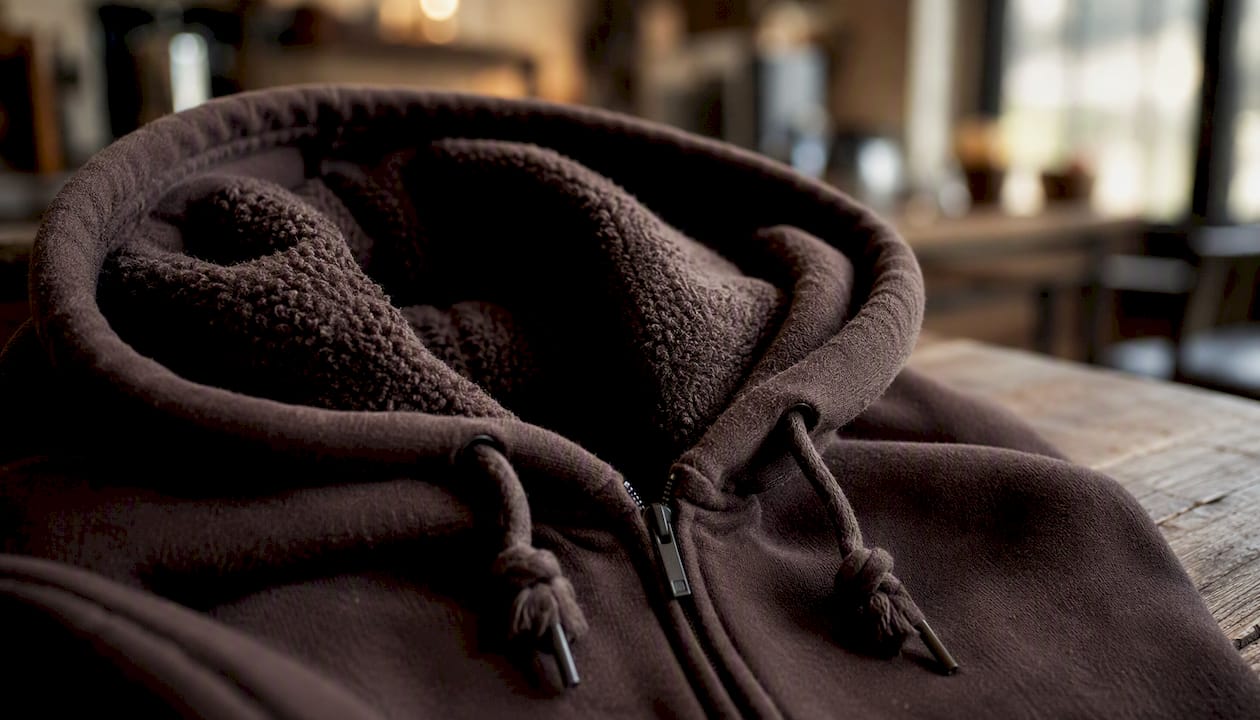
Pro Tip: When buying for cold-weather layering, check both the zipper type and the lining. A two-way zipper plus a brushed or Polartec lining gives you the most control over temperature without adding bulk.
What are the pros and cons of zip-up hoodies?
The main advantage is adjustable ventilation combined with easy on/off. That single feature makes a zip-up more practical than a pullover in most active or commuting scenarios.
Pros:
- Unzip partially or fully to regulate temperature without removing the garment
- Easier to put on and take off over layers
- Split pockets offer better security for phones and keys than a kangaroo pouch
- Can be worn open as a light jacket, adding styling flexibility
Cons:
- The zipper gap reduces chest insulation compared to a pullover
- Zipper hardware can break, snag, or corrode over time
- Heavier zipper teeth add weight and can affect drape on lightweight fabrics
- Some fits look less streamlined than a pullover due to the center-front hardware
What materials make a zip-up hoodie warm enough?
Fabric type and weight determine warmth more than the zip-vs-pullover distinction. Two zip-ups made from different fabrics can perform completely differently in cold weather.
- Cotton fleece: Soft and breathable, but absorbs moisture and loses warmth when wet. Best for mild temperatures and indoor wear.
- Polyester fleece: Dries faster than cotton, holds warmth better when damp, and resists pilling with quality construction. A reliable all-around choice.
- Brushed-back fleece: A cotton-poly blend with a smooth outer face and soft interior. Warmer feel than standard fleece, good for casual daily wear.
- Recycled polyester and Polartec fabrics: Higher-performance options. Polartec TKA weights (100, 200, 300) indicate increasing warmth and thickness, making them useful buying cues for outdoor or cold-weather use.
- Cotton-poly blends: The most common hoodie fabric. Balances softness, durability, and moderate warmth.
Fabric weight, measured in grams per square meter (gsm), is the most reliable indicator of standalone warmth. A lightweight hoodie (under 280 gsm) works best as a mid-layer. Medium weight (280–350 gsm) handles most casual wear. Heavy fleece (above 350 gsm) can substitute for a light jacket in mild cold. Most zip-ups don’t block wind on their own, so for outdoor use in breezy conditions, look for a tightly woven outer face or a shell layer on top.
How do you style a zip-up hoodie and when should you wear one?
Zip-up hoodies work best for casual, layered, or active scenarios where quick temperature adjustment matters. The open-front option gives them more styling range than a pullover.
Activity-based use cases:
- Commuting: Layer a zip-up over a long-sleeve tee under a coat. You can unzip at the office without removing your outer layer.
- Light workouts and gym sessions: Wear open over a tank or fitted tee; zip up between sets or on the walk to the car.
- Travel: Zip-ups pack flat and double as a pillow layer. The pockets keep a boarding pass or earbuds accessible.
- Coffee shop or casual workplace: A fitted zip-up in a neutral color reads as put-together without being formal. Pair with dark jeans and clean sneakers.
Style-based tips:
- Slim fit + chinos: Gets close to smart-casual territory, especially in solid colors or muted tones.
- Oversized zip-up + leggings or joggers: The go-to athleisure combination. Works for errands, weekend wear, or a busy professional’s morning routine.
- Layered under a blazer: A thin zip-up in gray or navy under a structured blazer gives texture without bulk.
Pro Tip: Wear your zip-up open with a graphic tee underneath for a casual layered look, or zip it fully and skip the undershirt for a cleaner silhouette. Both work. The zipper gives you the option.
How do you wash and care for a zip-up hoodie?
Follow the garment’s care label, but these zipper-aware steps apply to almost every zip-up hoodie regardless of fabric.
- Zip the hoodie fully before washing to protect the teeth and prevent snagging other garments
- Close any Velcro tabs or fasteners on other items in the same load
- Use a gentle or delicate cycle with cold water to reduce shrinkage and fabric stress
- Air-dry when possible; if using a dryer, tumble on low heat to prevent pilling and shrinkage on heavy fleece
- If a metal zipper sticks, run a graphite pencil tip or a small amount of zipper lubricant along the teeth
- Replace a broken slider before the zipper tape frays; most sliders are inexpensive and easy to swap
Pro Tip: Use a mesh laundry bag for zip-ups with delicate or lightweight zippers. It keeps the zipper from catching on other fabrics during the spin cycle and extends the life of the teeth.
What do Americans call a zip-up hoodie?
In the U.S., the standard terms are “zip-up hoodie,” “zippered hoodie,” or simply “zip-up,” according to Modaknits. The Cambridge Dictionary also notes that “zip-up” functions as both a noun and an adjective in everyday speech, so “a zip-up” and “a zip-up hoodie” are both correct.
- “Zip-up hoodie” vs. “hooded jacket”: When the fabric is heavier or the garment has a shell layer, Americans often call it a hooded jacket. The distinction is informal and context-dependent.
- “Zip-up” vs. “pullover”: Pullover refers to any hoodie without a front opening. The two terms are not interchangeable.
- “Sweatshirt” vs. “hoodie”: A sweatshirt has no hood. A hoodie does. A zip-up hoodie is always a hoodie, never just a sweatshirt.
- Regional note: In the UK and Australia, the same garment is sometimes called a “hooded top” or “zip-through hoodie.” In the U.S., “zip-up hoodie” is the dominant term in product listings and everyday conversation.
Where did the zip-up hoodie come from?
The hoodie traces its roots to workwear and athletic apparel from the early 20th century, when hooded sweatshirts were practical gear for cold-weather laborers and athletes. The zip-front version followed as sportswear brands adapted the design for easier on/off during training. By the 1970s and 1980s, the style had moved from locker rooms into mainstream casual wear, and by the 2000s it was a staple of streetwear, tech culture, and athleisure alike.
The zip-up’s functional features, specifically the adjustable front opening and split pockets, drove that cultural spread. It wasn’t just a fashion choice; it was a practical one that fit the pace of daily life. Today it’s as common as a coffee run, worn everywhere from airport terminals to coffee shops to casual offices.
Why do so many people prefer zip-up hoodies for daily wear?
Convenience and adjustable ventilation explain most of the zip-up’s enduring popularity. The ability to regulate temperature without removing the garment is a small thing that adds up across a full day of commuting, working, and moving around.
- Zipper type drives daily usability: A smooth-running separating zipper means you can go from fully zipped to open in seconds. A stiff or cheap zipper negates that advantage quickly.
- Pocket design affects security: Split pockets on either side of the zipper keep phones and keys in place better than a single kangaroo pouch, which matters during commutes or light activity.
- Lining determines versatility: A mid-weight brushed fleece lining handles most U.S. climates as a standalone layer from early fall through late spring.
For coffee shop staff, baristas, or anyone whose day involves moving between warm interiors and cooler outdoor temperatures, the zip-up is a practical uniform piece. Branded zip-ups also work well as coffee shop merchandise because they’re worn regularly and visible in public.
Pro Tip: If phone and key security matter to you, look specifically for zippered hand pockets rather than open split pockets. The extra hardware is worth it for commuters and travelers.
What styles and variations of zip-up hoodies are available?
The basic silhouette stays the same, but cut, weight, and construction vary enough to make some styles genuinely different garments in practice.
Slim fit: Cut close to the body with a tapered hem and sleeves. Works well under a coat or blazer without adding bulk. Common in cotton-poly blends and lightweight fleece.
Oversized: Dropped shoulders, a longer body, and wide sleeves. The dominant casual and streetwear cut right now. Pairs naturally with fitted bottoms to balance the volume.

Athletic or performance cut: A slightly tapered fit with moisture-wicking fabric, often polyester or recycled polyester. Designed for movement, with flatlock seams to reduce chafing. Usually features zippered pockets.
Crop zip-up: A shorter body that hits at or above the hip. Popular in women’s athleisure and streetwear styling. Dkbeanleaf carries a crop hoodie option for readers who want that silhouette.
Heavyweight fleece: Thick, often 400+ gsm fabric that functions closer to a jacket than a sweatshirt. Usually features a more structured collar and heavier zipper hardware.
Organic or sustainable options: Made from organic cotton or recycled polyester. The construction is the same as a standard zip-up, but the material sourcing differs. Worth considering if fabric origin matters to you.
A note from the Dkbeanleaf team on why we carry zip-up hoodies
At Dkbeanleaf, we built our apparel line around the same idea that drives our coffee and tea selection: things that work well in daily life, without overcomplicating it. A zip-up hoodie fits that perfectly. It layers over a tee on a cool morning, unzips when the espresso machine heats up the room, and looks good whether you’re behind the counter or sitting across from it.
Dkbeanleaf hoodies: quality apparel for coffee and tea lovers
If you’re looking for a zip-up or sweatshirt that fits the coffee-shop lifestyle, Dkbeanleaf’s Hoodies & Sweatshirts collection is a good place to start. The designs are clean, the fits are practical, and they’re made to layer well for the kind of day that starts with a great cup and keeps moving.

The Unisex Hoodie is a solid everyday option, and if you prefer an eco-conscious choice, the Unisex Organic Sweatshirt uses organic materials without sacrificing comfort. Browse the full collection and find the fit that works for your routine.