

Winter Teas: Warming Blends and How to Brew Them
The best winter teas for cold weather are spiced black and chai blends, rooibos and herbal tisanes, roasted oolong, and pu-erh. Each brings a different kind of warmth: chai for a spiced kick, rooibos for a caffeine-free evening cup, roasted oolong for toasty depth, pu-erh for earthy richness. If you only do one thing after reading this, grab a D&K Bean and Leaf seasonal sample pack or pick a single spiced blend and brew it tonight.
Three picks to start with:
- Morning warmth: a spiced chai black tea with cinnamon and cardamom
- Evening wind-down: rooibos with vanilla or orange peel (caffeine-free)
- Dessert replacement: roasted oolong or a cocoa-spiced herbal blend
Key Takeaways
Winter tea is really a spice-and-body equation: pick a tea base for caffeine and richness, then layer spices that match the mood you’re brewing for.
| Point | Details |
|---|---|
| Match tea to time of day | Black and pu-erh for mornings, rooibos and herbal tisanes for caffeine-free evenings. |
| Read ingredient lists | Named spices like cinnamon bark and ginger outperform vague “natural flavor” labels. |
| Use the right steep time | Black and chai need 3 to 5 minutes; rooibos tolerates 5 to 7 without turning bitter. |
| Store blends properly | Keep spiced tea in an airtight, opaque container to preserve aromatic oils. |
| Start with a sample pack | D&K Bean and Leaf’s seasonal sample pack lets you compare multiple winter blends before buying a full bag. |
Table of Contents
- Winter Tea Types: What to Choose and Why
- Winter Spices and Flavor Families That Define Cold-Weather Tea
- Recommended Winter Picks and How to Choose a Seasonal Blend
- How to Brew a Winter Cup That Actually Tastes Balanced
- Pairings, Tea-Ware, and Gift Ideas for a Cozy Winter Table
- Why These Blends Work: Sourcing and Flavor Reasoning
- Health Benefits and Warming Effects of Winter Teas and Spices
- Try D&K Bean and Leaf’s Seasonal Sample Pack This Winter
- Sources
Winter Tea Types: What to Choose and Why
Black tea is the workhorse of winter drinking. It’s oxidized fully, so it carries enough body to stand up to milk, sugar, and heavy spice without disappearing. Chai builds on that base, folding in ginger, clove, and cardamom until the tea itself becomes almost secondary to the spice blend riding on top of it.
Rooibos and herbal tisanes solve a different problem: what to drink after 6 p.m. without wrecking your sleep. Rooibos has a naturally sweet, woody flavor that takes to vanilla, orange, and baking spices well, and it contains no caffeine at all.
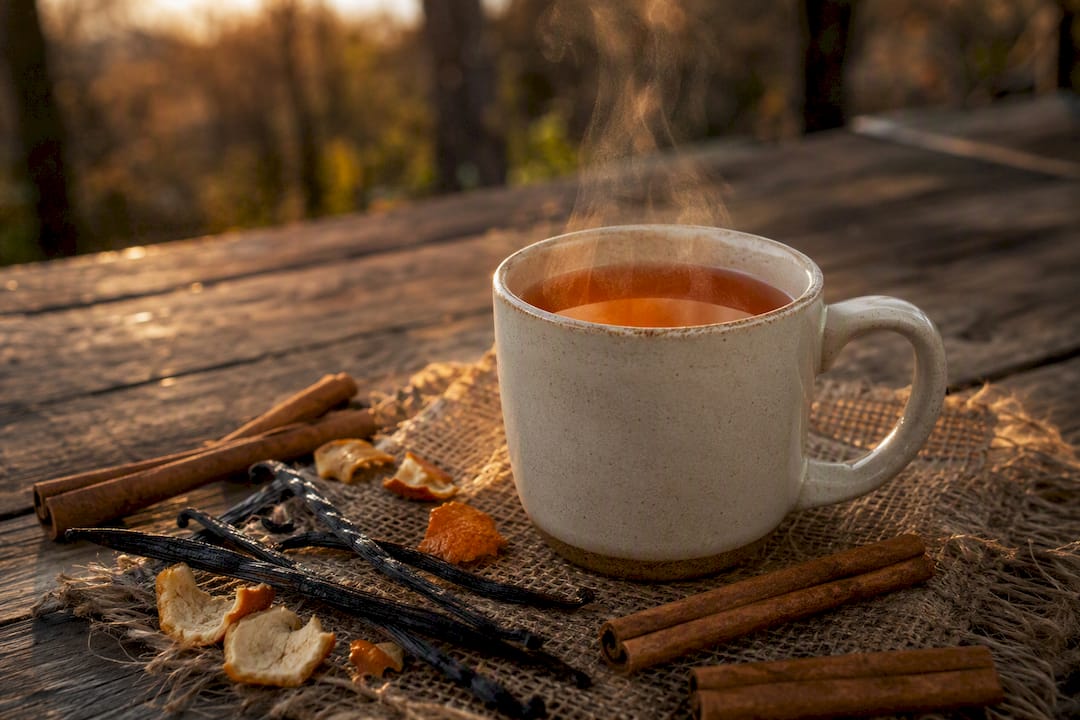
Roasted oolong sits in its own category. The roasting process (rather than just oxidation) gives it a nutty, almost toasted-marshmallow quality that makes it feel like a treat rather than a beverage. Pu-erh, aged and earthy, is the one to reach for after a heavy meal. Its fermentation gives it a depth that some compare to good coffee, minus the acidity.
For a decaf option with real warmth, rooibos beats most herbal blends on body alone. When shopping, look for labels that say “spiced” or “holiday,” and actually read the ingredient list. Real cinnamon and ginger taste different from “natural flavor” additives, and you can usually tell within the first sip.
Pro Tip: If a blend lists “flavoring” high up without naming the actual spice, expect a thinner, more one-note cup than a blend built with real cinnamon bark, clove buds, or dried ginger.
Winter Spices and Flavor Families That Define Cold-Weather Tea
Spice choice does more to shape a winter cup than the tea base does. Here’s what each one contributes:
- Ginger: sharp heat that cuts through richness and helps with digestion
- Cinnamon: sweet warmth, the backbone of most chai and holiday blends
- Clove: intense, slightly medicinal depth, used in small amounts
- Cardamom: floral and citrusy, softens the harder edges of ginger and clove
- Star anise: licorice-like sweetness common in mulled and chai-style blends
- Orange peel: bright acidity that lifts heavier, darker teas
- Cocoa: adds body and a dessert-like richness, especially with black tea or rooibos
- Chili: rare but effective in small doses, adding a slow-building warmth
These combine into recognizable flavor families. Chai leans on cinnamon, cardamom, and clove together. Citrus-spiced blends pair orange peel with ginger for something brighter. Chocolate-warmed blends mix cocoa with cinnamon or chili for a mocha-adjacent cup, and smoky-maple blends use roasted tea bases with a touch of natural maple flavoring for something closer to dessert than drink.
A splash of whole milk or oat milk softens spicier blends, while honey works better than white sugar because it carries its own warm, slightly floral notes.
Recommended Winter Picks and How to Choose a Seasonal Blend
Rather than guess at what “winter tea” means, start with a shortlist built around distinct flavor goals.
- A seasonal sample pack from D&K Bean and Leaf is the easiest entry point. It lets you taste multiple styles (spiced black, rooibos, roasted oolong) before committing to a full bag.
- A spiced chai blend built on a strong black tea base suits anyone who wants milk and sugar tolerance plus a caffeine lift. Look for visible cinnamon bark and cardamom pods in the ingredient list, not just “chai flavor.”
- A rooibos dessert blend with vanilla, orange, or cocoa notes works as an after-dinner, caffeine-free pour. It fits anyone winding down for the evening.
- A roasted oolong suits tea drinkers who want something toasty and moderate in caffeine, without the heavy spice load of chai.
When comparing product descriptions, pay attention to three things: roast level (lighter roasts taste brighter, darker roasts taste heavier), spice balance (a good blend names its spices, not just “warming spice”), and caffeine level, since that determines whether it’s a morning or evening pour. For gifting, single-serving sample packs beat full-size bags. They let the recipient try several styles instead of committing to one they might not love. D&K Bean and Leaf’s guide to buying tea online breaks down how to read those descriptions without getting lost in marketing language.
Pro Tip: If you’re buying for someone else, skip the single large bag and go with a sample pack instead. Taste preference in tea is personal, and one bold spiced blend can be a miss where three smaller options usually land at least one hit.
How to Brew a Winter Cup That Actually Tastes Balanced
Hot tea rewards precision more than people think. Too short a steep and you get watery flavor; too long and spiced blends turn bitter and astringent.
- Black and chai: use 1 teaspoon of loose leaf (or one bag) per 8 ounces of water just off the boil, and steep 3 to 5 minutes.
- Roasted oolong: use slightly cooler water, around 195°F, and steep 3 minutes to start, tasting before extending.
- Rooibos and herbal tisanes: these tolerate full boiling water and a longer steep, 5 to 7 minutes, without turning bitter since they contain no tannins that cause astringency.
- Pu-erh: rinse the leaves briefly with hot water first, discard that water, then steep 3 to 4 minutes in near-boiling water.
For spiced lattes, steep a double-strength cup (use twice the leaf in the same water volume), then combine it half-and-half with steamed milk or a milk alternative. Oat milk froths well and adds its own gentle sweetness that plays nicely with cinnamon and clove.
America’s Test Kitchen’s hybrid steeping method, built for iced tea, works surprisingly well as a shortcut for concentrated spiced batches too: steep tea hot and strong for a short window, which pulls out aromatic oils fast without dragging in the tannins that cause bitterness over longer steeps.
Pairings, Tea-Ware, and Gift Ideas for a Cozy Winter Table
Chai and spiced blacks pair naturally with gingerbread, spice cake, or anything with molasses. Rooibos and its vanilla and citrus notes go well with shortbread or mild cheeses like brie. Roasted oolong holds its own next to dark chocolate, matching richness for richness.
A double-walled ceramic mug or a cast-iron teapot keeps a cup warm far longer than a thin glass mug, which matters more than people expect once the tea drops below drinking temperature. Insulated travel mugs solve the same problem for tea on the go.
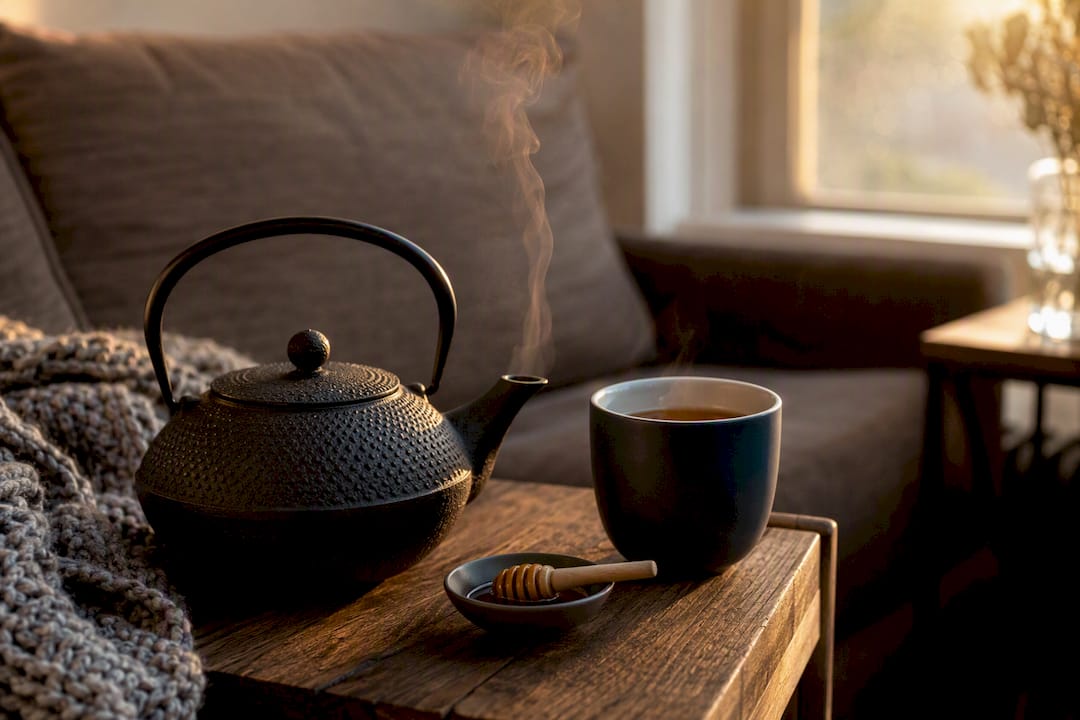
For gifts, pair a sample pack with a sturdy mug, or build a small curated set around one flavor family, like all-chai or all-citrus-spiced. D&K Bean and Leaf’s tea gift roundup has more assembly ideas if you want to go beyond a single box.
Why These Blends Work: Sourcing and Flavor Reasoning
Blend quality starts with the base leaf, not the spice. A single-origin black tea gives a cleaner, more consistent backbone than a generic “flavored blend” built on lower-grade cuttings, because the leaf itself carries real malt and body instead of relying entirely on added flavoring to carry the cup.
Roast level and oxidation change mouthfeel directly: more oxidation means more body and less brightness, which is why fully oxidized black teas take spice better than lighter oolongs. Spice ratio matters just as much. Too much clove or star anise overwhelms the tea underneath it, while a balanced blend lets you taste both the leaf and the spice.
A well-built spiced blend should still taste like tea first. If you can’t tell there’s a tea base under the cinnamon and clove, the blend was built backward.
Pro Tip: Store spiced blends in an airtight, opaque container away from heat and light. The volatile oils in cinnamon, clove, and orange peel fade fast once exposed to air, sometimes within a few weeks, so a loose bag left open on the counter loses its punch quickly.
Health Benefits and Warming Effects of Winter Teas and Spices
Part of why winter tea feels so restorative comes down to simple physiology: hot liquid raises your body’s surface temperature and can ease a stuffy nose or dry winter throat almost immediately. That’s separate from the tea itself, but it’s real, and it’s part of why a mug of anything hot feels good on a cold day.
The spices layered into winter blends add their own effects. Ginger has a long history of use for settling digestion and easing nausea, which is part of why it shows up in chai and after-dinner blends. Cinnamon and clove both carry warming, aromatic compounds that many people associate with a soothing effect on scratchy throats, though that’s more sensory comfort than a medical treatment.
Rooibos, being caffeine-free, gives you a way to keep the ritual of hot tea going into the evening without disrupting sleep, which matters more in winter when you’re reaching for warm drinks more often throughout the day. Black tea and pu-erh both carry caffeine, so they’re better suited to morning or early afternoon.
None of this replaces medical care for a real cold or flu, but a warm, spiced cup does double duty as comfort and mild support for a scratchy throat or sluggish digestion. If you’re looking for a caffeine-free way to feel more alert without relying on stimulants, caffeine-free energy alternatives are worth a look alongside a rooibos habit.
A Small Ritual Worth Repeating
Some of my best winter mornings start the same way: kettle on, chai steeping while I check the weather, mug warmed in both hands before the first sip. The takeaway isn’t the tea itself. It’s picking one moment each day and letting a hot cup anchor it.
Try D&K Bean and Leaf’s Seasonal Sample Pack This Winter
The fastest way to find your winter tea is to try several at once instead of committing to one full bag blind. D&K Bean and Leaf’s seasonal sample pack does exactly that: a handful of spiced and warming blends in smaller portions, so you can compare a chai, a rooibos, and a roasted oolong side by side before deciding what to reorder.

Gift bundles work the same way. Pair a sample pack with a mug or a coffee-and-tea combo, and checkout takes minutes through the tea collection page, where every seasonal blend and bundle option lives in one place. If you’re already narrowing down flavor families from this list, that’s the page to browse next. Pick two or three that match the flavor notes above, add them to your cart, and have a winter tea rotation on your counter within days.
Sources
- How to Brew the Best Iced Tea