

Coffee Brewing Methods List: Best Ways to Brew at Home
The coffee brewing methods list every home brewer needs covers six core techniques: Pour Over, French Press, Espresso, AeroPress, Cold Brew, and Drip. Each method produces a distinct flavor profile and suits a different skill level, routine, and taste preference. Whether you pull shots on a dedicated espresso machine or steep grounds overnight in a mason jar, the method you choose shapes everything in your cup. This guide covers the most popular coffee preparation styles with grind sizes, brew times, and practical tips so you can brew with confidence from day one.
1. What are the most popular coffee brewing methods?
The six methods below represent the core of how coffee enthusiasts brew at home. Each one differs in extraction style, equipment, and the flavor it produces.
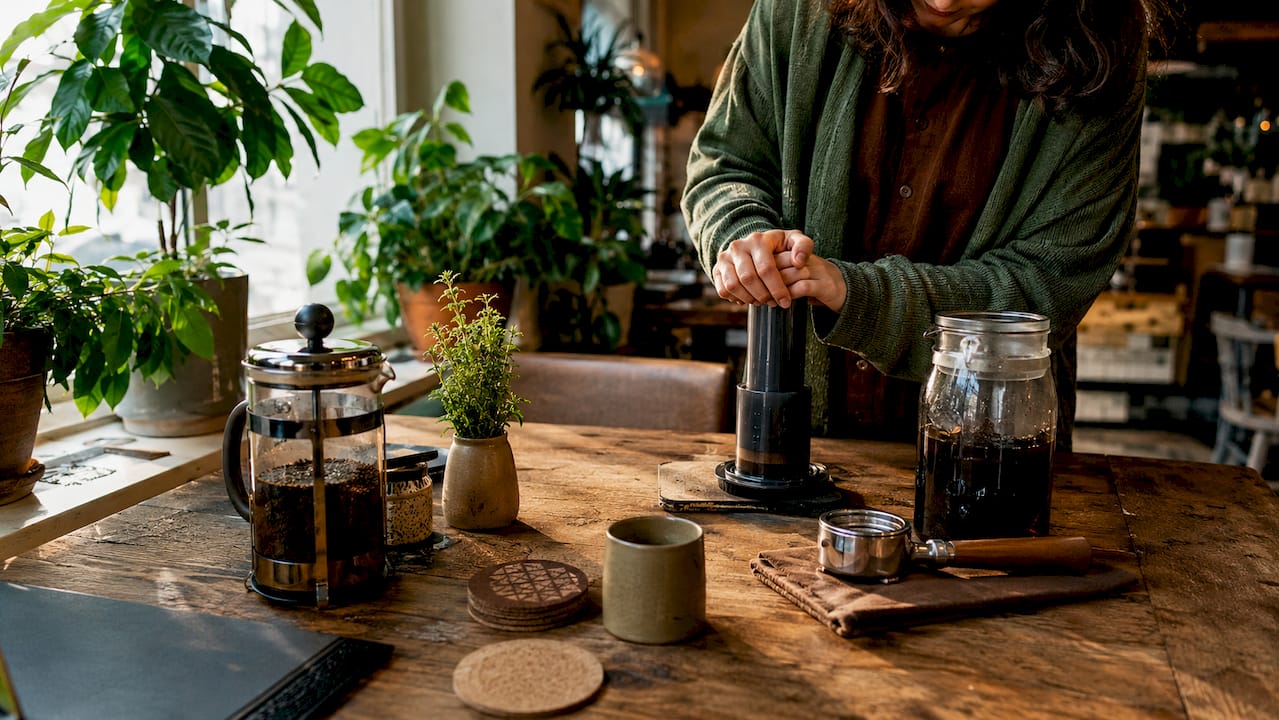
Pour Over
Pour Over is a percolation method where hot water flows through grounds and a filter into a vessel below. The filter removes oils and fine particles, producing a clean, bright cup that highlights origin notes and delicate flavors. Popular Pour Over brewers include the Hario V60, Chemex, and Kalita Wave. Each uses a slightly different filter and flow rate, but all reward careful pouring technique.
Grind size for Pour Over runs medium-fine to medium. Brew time lands between 2.5 and 4 minutes. The result is a transparent, tea-like cup with pronounced acidity and clarity.
Pro Tip: Bloom your grounds first. Pour just enough water to saturate the bed, wait 30 seconds, then continue. This releases trapped CO2 and improves even extraction.
For a deeper look at technique, the Pour Over best practices guide from Dkbeanleaf covers flow rate, grind adjustments, and water temperature in detail.
French Press
French Press is an immersion method. Grounds steep fully submerged in hot water, then a metal mesh plunger separates them from the liquid. Immersion brewing produces fuller-bodied coffee because the grounds stay in contact with water for the entire brew time. The metal filter allows oils and fine particles to pass through, giving the cup a rich, textured mouthfeel.
Grind size is coarse. Brew time is 4 minutes. French Press suits beginners well because the process is forgiving and requires no special pouring skill.
Pro Tip: Pull the plunger up slightly after pressing, then pour immediately. Leaving coffee on the grounds after pressing causes over-extraction and bitterness.
The Dkbeanleaf French Press beginner guide explains the full process, including how to dial in steep time for different roast levels.
Espresso
Espresso uses 9 bars of pressure to force hot water through finely ground, tightly packed coffee in 25–30 seconds. That pressure extracts a syrupy, concentrated shot topped with crema, the golden foam that signals proper extraction. Espresso is the base for lattes, cappuccinos, and Americanos.
Grind size is extra fine. The method demands precise dosing, tamping, and machine calibration. Espresso machines range from entry-level manual levers to fully automated super-automatics, so the skill ceiling is high.
Pro Tip: Dial in your grind before changing anything else. A shot that runs too fast tastes sour. A shot that runs too slow tastes bitter. Grind adjustment fixes both.
AeroPress
AeroPress combines immersion and pressure in a compact plastic brewer. Grounds steep briefly, then you press a plunger to force the liquid through a paper or metal filter. The result is a smooth, low-acid cup with a concentrated body similar to espresso but without the machine cost.
Brew time is 1–2 minutes. Grind size is medium-fine, though AeroPress tolerates a wide range. The brewer is portable, nearly indestructible, and easy to clean, making it a favorite for travelers and daily home brewers alike.
Pro Tip: Try the inverted method. Flip the AeroPress upside down during steeping so no liquid drips through before you press. It gives you more control over contact time.
Cold Brew
Cold Brew steeps coarsely ground coffee in cold or room-temperature water for 12–24 hours. The long, slow extraction produces a concentrate that is smooth, naturally sweet, and significantly lower in acidity than hot-brewed coffee. Cold Brew suits people who find hot-brewed coffee harsh on the stomach.
No heat is required. The concentrate keeps in the refrigerator for up to two weeks, making it the most batch-friendly method on this list. Dilute with water or milk before drinking.
Pro Tip: Use a 1:4 coffee-to-water ratio for concentrate, then dilute to taste. Starting too weak means you cannot strengthen it later without re-brewing.
Drip Coffee Maker
Automated drip machines offer set-it-and-forget-it convenience that suits busy mornings. You load grounds, add water, press a button, and the machine handles temperature, flow rate, and timing. The result is consistent and approachable, though you sacrifice the fine control that manual methods provide.
Grind size is medium. Brew time is 5–8 minutes depending on batch size. Drip machines are the most common coffee brewer in American households for good reason: they are reliable, affordable, and require almost no learning curve.
2. What are the differences between immersion, percolation, and pressure brewing?
Understanding these three categories explains why different methods taste so different, even when you use the same beans.
Immersion methods submerge grounds in water for the full brew time. French Press and AeroPress both fall here. Because grounds stay in contact with water longer, the cup is fuller-bodied and more textured. Extraction is even but less selective, meaning more oils and solids end up in the cup.
Percolation methods pass water through grounds continuously. Pour Over, Chemex, and drip machines all use percolation. Percolation produces cleaner, brighter coffee because filters separate liquid from solids as brewing progresses. The cup is lighter in body but more expressive of origin character and acidity.
Pressure methods force water through grounds at high speed. Espresso is the primary example. High pressure extracts flavor compounds that neither immersion nor percolation can reach, producing a syrupy, intense shot with crema.
| Method | Category | Grind size | Brew time | Flavor profile |
|---|---|---|---|---|
| French Press | Immersion | Coarse | 4 min | Full-bodied, rich, textured |
| AeroPress | Immersion + pressure | Medium-fine | 1–2 min | Smooth, concentrated, low-acid |
| Pour Over (Hario V60) | Percolation | Medium-fine | 2.5–4 min | Clean, bright, origin-forward |
| Chemex | Percolation | Medium-coarse | 4–5 min | Very clean, light-bodied |
| Drip Machine | Percolation | Medium | 5–8 min | Consistent, mild, balanced |
| Espresso | Pressure | Extra fine | 25–30 sec | Intense, syrupy, complex |
| Cold Brew | Immersion | Coarse | 12–24 hrs | Smooth, sweet, low-acid |
Pro Tip: If your cup tastes flat or muddy, switch from immersion to percolation. The paper filter removes the oils that create that heavy, dull sensation.
3. Which brewing methods suit different skill levels?
Choosing the right method for your experience level prevents frustration and keeps brewing enjoyable. Ease of cleanup and consistency often matter more to daily home brewers than technical complexity.
Beginner-friendly methods:
- French Press. Minimal technique required. Coarse grind, hot water, 4 minutes, press and pour.
- Drip Coffee Maker. Fully automated. Consistent results with zero manual skill.
- AeroPress. Forgiving grind range and short brew time. Easy cleanup. Excellent starting point.
Intermediate methods:
- Pour Over (Hario V60, Kalita Wave). Requires controlled pouring speed and bloom technique. Rewards practice with exceptional clarity.
- Chemex. Similar to V60 but uses a thicker filter and larger batch size. Slightly more forgiving pour rate.
Advanced methods:
- Espresso machine. Demands precise grind, dose, tamp, and machine calibration. High reward but steep learning curve.
- Siphon brewer. Uses vapor pressure and vacuum to brew. Theatrical and technically demanding. Best for enthusiasts who enjoy the process as much as the cup.
For everyday brewing, the French Press and AeroPress win on the combination of flavor quality and low effort. Espresso machines deliver the highest ceiling but require the most investment in both equipment and skill. Knowing your coffee-to-water ratio matters across every method and is the single fastest way to improve consistency.
4. How to choose the right brewing method for your taste and routine
Personal taste determines the best brewing method more than any other factor. Flavor clarity, body, acidity, and brew time all point toward different methods for different people.
Match your flavor preference to a method:
- Bright, clean, origin-forward cup: Pour Over with Hario V60 or Chemex
- Rich, full-bodied, textured cup: French Press
- Smooth, low-acid, easy-drinking cup: Cold Brew or AeroPress
- Intense, concentrated, espresso-style: Espresso machine or AeroPress with fine grind
- Traditional, thick, strong cup: Turkish coffee brewed in an ibrik over direct heat
Practical factors to weigh:
- Brew time. Espresso takes 30 seconds. Cold Brew takes up to 24 hours. Match the method to your morning pace.
- Equipment cost. A French Press costs under $30. A quality espresso machine starts near $300 and climbs fast.
- Portability. AeroPress and a hand grinder fit in a carry-on bag. Espresso machines do not.
- Cleanup. AeroPress cleans in 30 seconds. Espresso machines require backflushing and regular maintenance.
Water temperature matters across every method. The Specialty Coffee Association recommends 195°F to 205°F for most hot-brew methods. Water below 195°F under-extracts and tastes sour. Water above 205°F over-extracts and tastes bitter. A simple kettle thermometer solves this immediately.
If you are unsure where to start, pick French Press or AeroPress. Both deliver excellent cups, require minimal gear, and teach you the fundamentals of extraction that apply to every other method on this list. Once you understand how grind size and contact time affect flavor, upgrading to Pour Over or Espresso becomes a natural next step rather than a frustrating leap.
Key takeaways
The most effective approach to home coffee brewing is matching your method to your flavor preference, skill level, and daily routine rather than chasing the most complex technique.
| Point | Details |
|---|---|
| Method determines flavor | Immersion gives body, percolation gives clarity, pressure gives intensity. |
| Grind size is non-negotiable | Each method requires a specific grind; wrong size causes sour or bitter results. |
| Water temperature matters | Brew between 195°F and 205°F to avoid under or over-extraction. |
| Beginners start with French Press or AeroPress | Both are forgiving, fast to clean, and produce excellent cups with minimal skill. |
| Brew time shapes your routine | Espresso takes 30 seconds; Cold Brew takes up to 24 hours. Pick what fits your day. |
What I actually think about picking a brewing method
The advice I give every new home brewer is the same: stop optimizing and start brewing. The AeroPress is the method I reach for most mornings because it is fast, forgiving, and produces a genuinely great cup without demanding 20 minutes of ritual. I can adjust grind size, steep time, and water temperature in real time and see the result immediately. That feedback loop teaches you more about extraction in two weeks than reading about it for a year.
That said, I think the Pour Over gets unfairly labeled as “advanced.” The Hario V60 rewards patience, not expertise. If you can pour water slowly and consistently, you can brew a stunning cup on your first attempt. The bitter taste problem most beginners hit with Pour Over almost always traces back to water that is too hot or a grind that is too fine. Fix those two variables and the method becomes approachable.
My honest recommendation: use this list as a menu, not a prescription. Brew French Press for a week. Then try AeroPress. Then attempt a Pour Over. Your palate will tell you which direction to go faster than any guide can. The goal is a cup you genuinely enjoy, not a method you can brag about.
— Kristopher
Brew better with Dkbeanleaf
Dkbeanleaf carries everything you need to put these methods into practice at home. Whether you are setting up your first French Press station or adding a quality mug to your Pour Over ritual, the collection covers the essentials.
Pair your brewing setup with a white glossy mug built for daily use, or grab a durable enamel mug that holds heat through a long morning session. Coffee drinkers who also enjoy tea will find a solid selection in the Dkbeanleaf tea collection, including the Hibiscus Berry Tea for a caffeine-free afternoon option. Browse the full Dkbeanleaf store at dkbeanleaf.com and find the gear that fits your brew style.
FAQ
What is the easiest coffee brewing method for beginners?
French Press and AeroPress are the easiest methods for beginners. Both require minimal technique, tolerate grind size variation, and clean up quickly.
How long does each coffee brewing method take?
Brew times vary significantly: Espresso takes 25–30 seconds, AeroPress 1–2 minutes, Pour Over 2.5–4 minutes, French Press 4 minutes, and Cold Brew 12–24 hours.
What grind size should I use for different brewing methods?
Grind size depends on the method. Turkish coffee uses extra fine, Espresso uses fine, Pour Over uses medium-fine to medium, Drip uses medium, and French Press and Cold Brew use coarse.
Does water temperature affect coffee flavor?
Water temperature directly controls extraction. The Specialty Coffee Association recommends 195°F to 205°F for most methods. Water outside that range produces sour or bitter results.
Which brewing method produces the least acidic coffee?
Cold Brew produces the least acidic cup because the cold water extraction process draws fewer acidic compounds from the grounds compared to any hot-brew method.