

How to Brew Loose Leaf Tea Without an Infuser
Yes, you can brew loose leaf tea without an infuser, and most people already own everything it takes. The fastest options: pour the leaves right into your mug and strain into a second cup, fold a coffee filter into a pouch, or steep loose and pour the finished tea through a fine-mesh kitchen sieve.
Pick based on what you need most:
- In a hurry, one cup only: the double-cup pour method wins on speed.
- Zero leaf bits, don’t care about a little muted aroma: a coffee filter pouch gives you the cleanest cup.
- Already own one: a fine-mesh sieve is the fastest daily habit to build.
Expect a few stray leaf fragments no matter which method you choose. Coarser, whole-leaf teas settle and separate far more easily than fine or broken leaf, so leaf selection matters as much as technique.
Key Takeaways
Loose leaf tea brews just as well without an infuser as with one, provided you match your method to your leaf size and pour with a little patience.
| Point | Details |
|---|---|
| Pick your method by need | Use double-cup pour for speed, coffee filter for a clean cup, sieve for daily habit. |
| Match leaf size to method | Coarse, whole-leaf teas settle and strain far more easily than fine or dusty grades. |
| Respect temperature ranges | Green and white teas need cooler water (160 to 185°F) than black or herbal (200 to 212°F). |
| Pull leaves out promptly | Fish leaves from the cup with a spoon once steeped to avoid bitterness building up. |
| Rinse tools right away | Clean sieves, cheesecloth, and French press screens immediately to stop tannin staining. |
Table of Contents
- How Do You Brew Loose Leaf Tea Without an Infuser?
- What Water Temperature and Steep Time Work Best?
- How Do You Clean Up After Brewing Without an Infuser?
- Notes From D&K Bean and Leaf’s Kitchen Testing
- Ready to Brew Loose Leaf Tea Tonight?
- Which No-Infuser Method Actually Deserves Your Time?
- Frequently Asked Questions
- Sources
How Do You Brew Loose Leaf Tea Without an Infuser?
Here are seven methods that work, ranked roughly by how likely you are to already have the tools on hand.
- Double cup / pour-and-strain. Drop loose leaf directly into your mug, add hot water, steep, then slowly pour the tea into a second cup while holding back the leaves with a spoon at the rim. It works because gravity does the separating for you, and it’s the fastest option when you just want one cup, right now.
- Coffee filter or paper pouch. Cut a coffee filter into a square, place your leaf in the center, fold it into a pouch, and tie it with kitchen string or a twist tie before dropping it in hot water. Kitchen items such as coffee filters, sieves, and mason jars are consistently recommended as reliable infuser substitutes, and this one leaves the cleanest cup of the bunch. Toss the pouch when you’re done. The trade-off: coffee filters trap some of the volatile aromatic oils, so the tea tastes a shade quieter than it would loose.
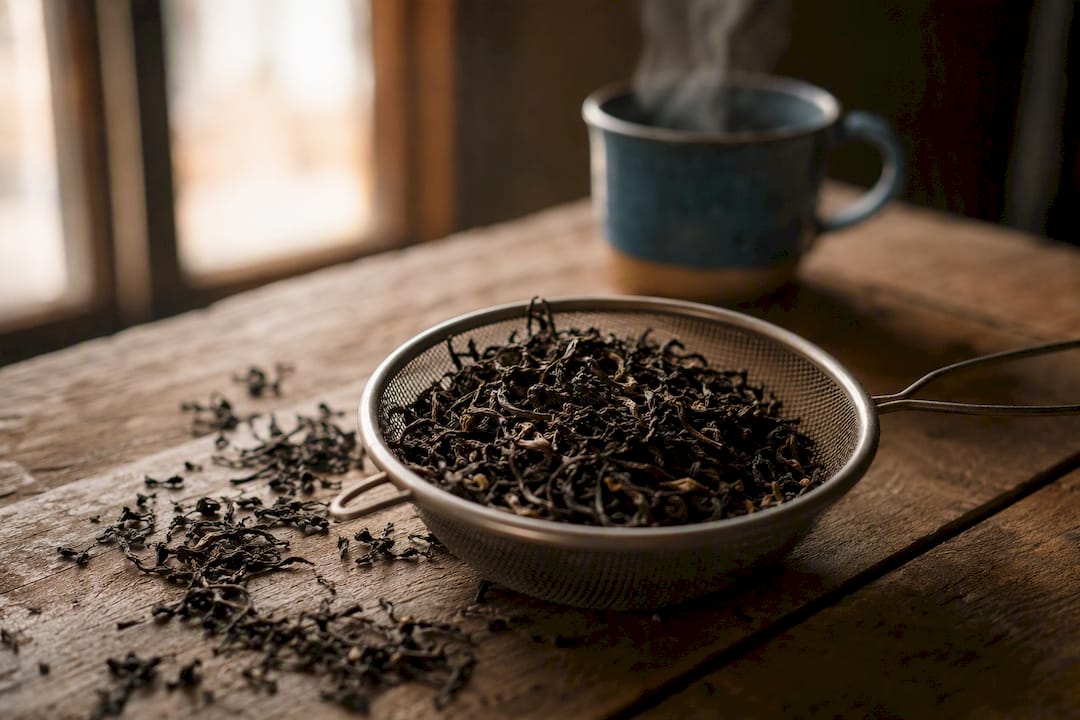
- Fine-mesh sieve. Steep the leaves loose in your mug or a small pot, then pour the finished tea through a fine-mesh kitchen strainer into your drinking cup. Skip the colander. Its holes are built for pasta, not tea dust, and you’ll end up chewing your Earl Grey.
- Mason jar. Add leaves and hot water straight to the jar, screw the lid on loosely, and steep. Mason jars show up in nearly every kitchen-hack tea list because the lid holds back most leaves when you tilt to pour, and it travels well if you’re steeping on the go.
- French press. Add tea to the empty carafe, pour water, steep, then push the plunger down slowly and fully. A French press gives you real steep control because the mesh plunger physically separates leaf from liquid on your schedule, not the leaf’s. Push too fast and you’ll churn the leaves and stir up bitterness. Rinse the mesh screen right away or old tea tannins will linger into your next pot of coffee.
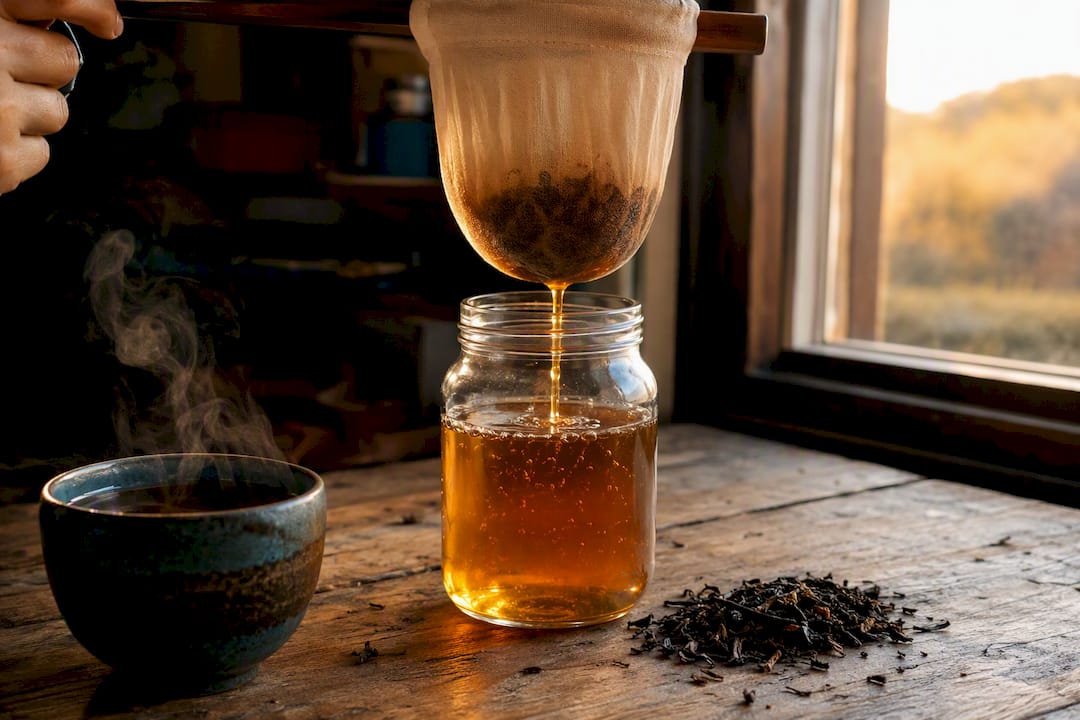
- Cheesecloth pouch. Cut a square of cheesecloth, spoon in your leaf, and tie it into a bundle with kitchen twine, then steep it like a giant tea bag. Unlike the paper filter, cheesecloth is reusable. Just rinse it in hot water immediately after steeping and let it air dry.
- Gravity, or “grandpa style.” Drop leaves straight into your cup, add hot water, and sip carefully once most of the leaf has sunk to the bottom. This gravity approach works best with larger whole leaves that settle fast rather than fine, dusty grades that stay suspended in the water.
Pro Tip: If nothing above is available, fold a piece of aluminum foil into a small pouch, poke a dozen tiny holes in it with a toothpick, fill it with leaf, and steep. It’s a one-time emergency fix, not a daily habit. Foil can react with acidic or citrus-blended teas over repeated use.
What Water Temperature and Steep Time Work Best?
Getting the brew right without an infuser comes down to the same variables you’d control with one: temperature, leaf amount, and timing.
- Black tea: 200 to 212°F, steeped 3 to 5 minutes.
- Green tea: 160 to 180°F, steeped 2 to 3 minutes. Hotter water scorches green tea and turns it bitter fast.
- White tea: 160 to 185°F, steeped 4 to 5 minutes.
- Oolong: 180 to 200°F, steeped 3 to 5 minutes depending on how rolled the leaf is.
- Herbal tea: a full 212°F boil, steeped 5 to 7 minutes.
Use roughly one teaspoon of loose leaf per 8-ounce cup, bumping it up a bit for coarser leaves or a stronger cup. If you’re leaving the leaf in the same cup you drink from (gravity method), pull it toward the shorter end of the steep window since the leaves keep working the whole time you sip. If you’re pouring off into a second vessel, you can push closer to the longer end. Fine leaf or “dust” grades sometimes need two passes through a sieve or filter to catch every last fragment.
How Do You Clean Up After Brewing Without an Infuser?
Spent leaves compost well; scrape them out of your mug with a spoon and into a compost bin rather than the trash if you have one.
- Rinse sieves and cheesecloth in hot water immediately, before the tannins set in and stain the mesh.
- Take the French press apart and scrub the plunger screen separately. Leftover tea residue there will sour your next cup of coffee.
- If you left leaves in the cup too long and the tea turns bitter, remove the leaves right away with a spoon and dilute with a splash of hot water rather than starting over.
Pro Tip: Keep a small dedicated spoon by your kettle just for fishing leaves out of cups. It sounds minor, but it’s the single habit that makes gravity-style brewing painless instead of messy.
Notes From D&K Bean and Leaf’s Kitchen Testing
Coarser, whole-leaf teas are simply easier to manage without a strainer. Fine or broken leaf grades slip through more, so if you know you’ll brew without an infuser, buy accordingly. Dkbeanleaf’s guide on tea bags versus loose leaf breaks down how leaf grade affects both flavor and how easy a tea is to strain.
- French press brewing preserved the most body and aroma in side-by-side cups, at the cost of a slightly fussier cleanup.
- The coffee filter pouch produced the visually cleanest cup, but it noticeably muted some of the more delicate floral notes.
- Readers who already brew coffee at home without extra gadgets will recognize most of these same principles; a French press and a fine-mesh sieve pull double duty for both drinks.
Ready to Brew Loose Leaf Tea Tonight?
None of these methods require a special purchase, but the tea itself still matters. A tightly rolled, high-fines tea will fight you in a mason jar or under gravity brewing, while a loose, whole-leaf tea practically strains itself. Dkbeanleaf’s loose leaf tea collection is built around exactly that kind of leaf: larger, whole-leaf grades that settle fast and hold up well to French press, sieve, or filter pouch brewing. If you’re setting up a no-infuser routine at home, start with a tea that’s actually suited to it rather than fighting a fine-leaf blend every single cup.
Which No-Infuser Method Actually Deserves Your Time?
Most advice treats every no-infuser method as roughly equal, which misses the actual trade-off: cleanup effort versus flavor payoff. The coffee filter pouch gets recommended constantly because it’s foolproof, but it also flattens the aromatics that make good loose leaf worth buying in the first place. If you’re brewing a $20-a-bag oolong, a coffee filter is the wrong tool for it.
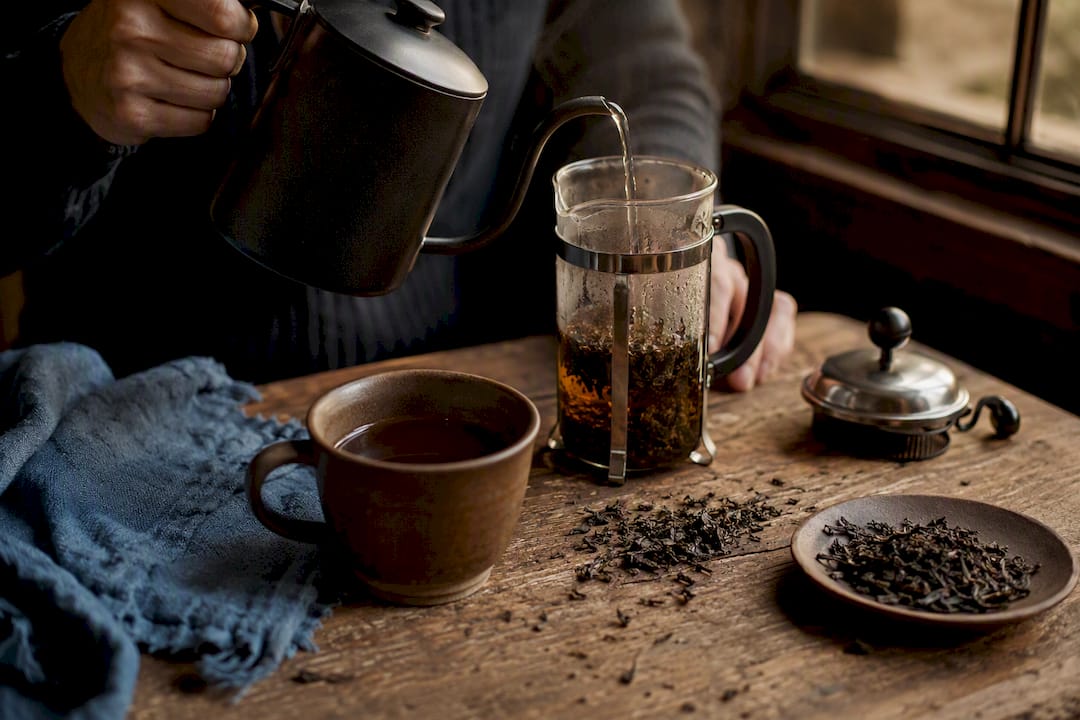
The French press deserves more credit than it usually gets in tea guides. It’s built for exactly this job (controlled separation on demand) and most people already own one for coffee. The gravity method gets oversold for anything except large, whole-leaf teas; try it with a broken-leaf blend and you’ll be chewing your last sip. Buy leaf sized for the method you’ll actually use, not the other way around.
Frequently Asked Questions
Can you really steep loose leaf tea without any special tool? Yes. A mug, a spoon, and patience get you most of the way there, and a coffee filter or fine-mesh sieve handles the rest.
Does brewing without an infuser make tea taste worse? Not necessarily. A French press often preserves more aroma and body than a paper filter does, though gravity brewing risks over-extraction if you leave the leaves in too long.
What’s the easiest infuser-free method for daily use? A fine-mesh sieve is hard to beat for a repeatable daily habit since you steep loose and just pour through it.
Is it safe to brew tea with a homemade foil pouch? It works in a pinch, but treat it as an emergency fix rather than a regular routine, especially with acidic or citrus-blended teas.
Should I buy different tea for no-infuser brewing? Yes, favor coarser, whole-leaf grades. They settle faster under gravity and are far easier to strain than fine or dusty leaf.
Sources
- 5 Ways to Brew Loose Leaf Tea Without an Infuser
- How To Brew Loose Leaf Tea Without An Infuser: 6 Simple Kitchen Hacks That Work - Steep Bean
- How To Make Tea Without A Tea Strainer 2026