

2–3 oz Solo, 3–4 oz Doppio: Espresso Cup Size Rules for Home Baristas
A single espresso runs about 1 ounce (30 ml), and a double runs about 2 ounces (60 ml). The right cup holds more than that: typically 2 to 3 ounces for a single, and 3 to 4 ounces for a double, leaving headspace above the shot to preserve crema. That margin keeps crema intact and gives you room to swirl the cup without splashing your counter.
TL;DR:
- Using a standard doppio shot of about 2 ounces requires a cup capacity of 3 to 4 ounces to accommodate crema without overflow.
- Cups with tapered, cone-shaped interiors better protect crema and preserve aroma, especially when the rim is around 2.25 inches.
- Porcelain and stoneware retain heat longer, which enhances perceived sweetness and body, compared to thin glass that cools rapidly.
- Measure your typical shot volume and add 25 to 30 percent to determine the right cup size, considering your machine’s portafilter clearance.
- Confirm cup fit by checking rim diameter and height before purchase, ensuring the portafilter streams land centrally and avoid splatter.
Table of Contents
- What Is Standard Espresso Cup Size, In Ounces and Milliliters?
- How Does Cup Shape Affect Crema and Aroma?
- Does Cup Material Change How Espresso Tastes?
- How Do You Pick the Right Cup for Your Machine?
- Notes From Testing Cups at D&K Bean and Leaf
- A Home Barista’s Take on Choosing the Right Cup
- Cups Built for the Ranges This Guide Recommends
- Sources
What Is Standard Espresso Cup Size, In Ounces and Milliliters?
The coffee world throws around a handful of Italian and industry terms for shot volumes, and they get confusing fast if nobody defines them. Here’s the breakdown that actually matters when you’re standing at a cup display trying to decide what to buy.
A ristretto is a restricted, short pull, usually less than 1 ounce. A solo, the standard single shot, is about 1 ounce (30 ml). A doppio, the double shot most home machines are calibrated for, is about 2 ounces (60 ml). A lungo stretches the dose of grounds with more water, varying in volume depending on extraction time.
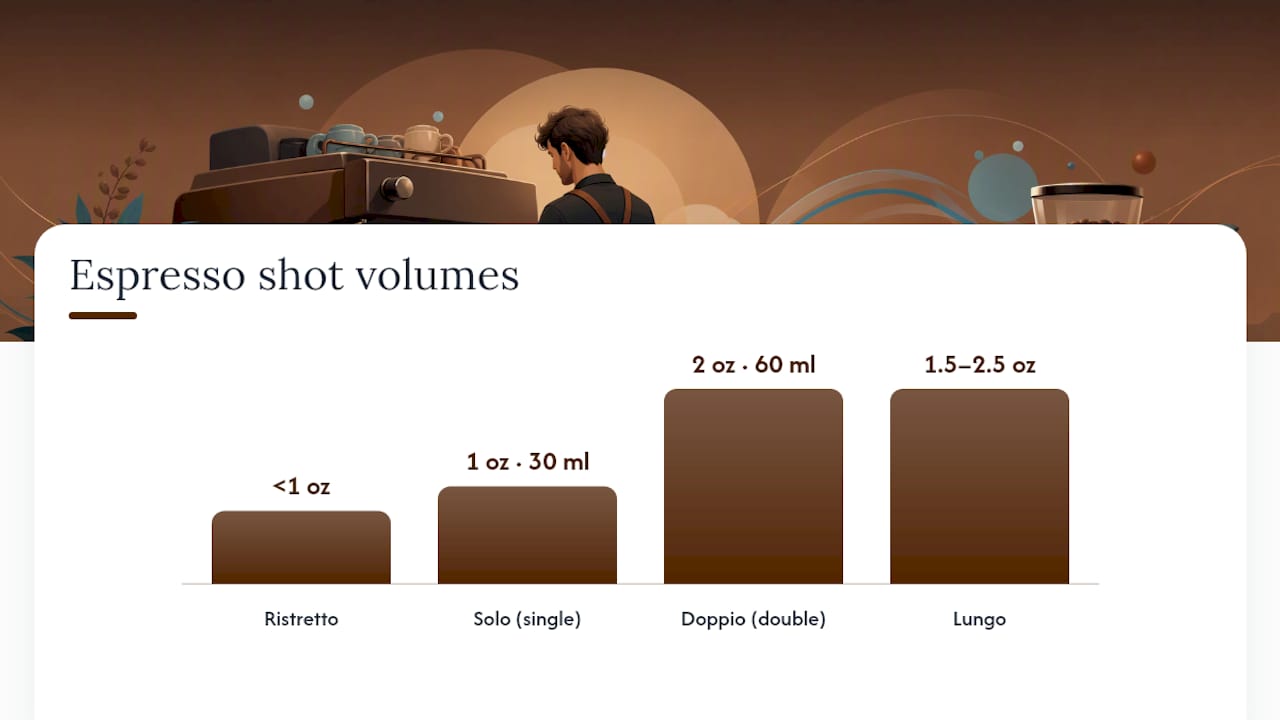
Cup capacity should always sit above the shot itself, not match it exactly. That extra room is what separates a cup that handles crema gracefully from one that overflows the second the shot hits. Rethink Cafe’s sizing guide lays out the same math: single shot cups run 2 to 3 ounces (60 to 90 ml), and double shot cups run 3 to 4 ounces (90 to 120 ml).
Here’s how that plays out with real cups:
- A 1 ounce solo pours cleanly into a 2 to 3 ounce demitasse, the classic espresso cup shape you’ll see at most cafés.
- A 2 ounce doppio wants a 3 to 4 ounce cup, giving crema room to sit without lapping the rim.
- A 1.5 to 2.5 ounce lungo does best in a cup on the larger end of that doppio range, since the added water volume needs somewhere to go.
- Cortados and macchiatos, which add a splash of milk to espresso, typically need 4 to 5 ounce cups to hold both components without crowding.
Skip these ranges and you’ll notice it immediately. Too small, and pulling a double into a 2 ounce cup means the shot climbs right to the rim and crema spills over the second you set it down. Too large, and a 1 ounce solo in a 6 ounce cup goes cold before you finish it, since there’s too much surface area and too much cold ceramic pulling heat out of a tiny volume of liquid.
How Does Cup Shape Affect Crema and Aroma?
Shape does more work than most people give it credit for. The interior profile of a cup, not just its capacity, decides whether your crema survives the pour and whether the aroma actually reaches your nose before it disperses.
A tapered or cone-shaped interior guides the espresso stream down the sloped walls instead of letting it slam into a flat base. That matters because a flat base creates turbulence right where the crema forms, breaking it up into bubbles before you’ve even picked up the cup. Serious Eats’ testing found tapered interiors consistently protected crema better than straight-walled or flat-bottomed designs.
Rim diameter is the other variable worth measuring before you buy. Most espresso machines pull through a dual-spout portafilter, meaning two separate streams hit the cup at slightly different points.
Wide rimmed cups disperse aroma faster but also cool the shot faster, since more surface area is exposed to open air. Narrower rims hold heat and concentrate aroma into a tighter column, though they demand more precise aim when you’re pouring.
- Tapered interiors protect crema by controlling how the stream lands.
- A rim around 2.25 inches catches dual portafilter streams without splatter.
- Wider rims release aroma faster but cool the shot sooner.
- Narrower rims retain heat but need careful positioning under the group head.
Pro Tip: Set your empty cup under the portafilter before you ever pull a shot and check the spout alignment. If the streams land near the cup’s edge instead of its center, you’ll know before you waste a shot chasing splatter across your counter.
Does Cup Material Change How Espresso Tastes?
Material changes temperature retention more than almost any other single variable, and temperature drives how you perceive bitterness, sweetness, and body in that first sip. Serious Eats recommends porcelain and stoneware specifically because they hold heat longer than thinner materials or glass, which matters more than it sounds given how small an espresso pour actually is.
Glass cups look striking, especially for showing off crema color and layering in a cortado, but thin glass sheds heat quickly. A 1 ounce shot in a thin glass vessel can drop several degrees within the first minute, noticeably faster than the same shot in a thick walled porcelain demitasse. Research on vessel geometry and sensory perception backs up what most espresso drinkers notice intuitively: temperature shifts change how sweetness and acidity read on the palate, not just how hot the liquid feels.
Rim thickness affects mouthfeel more than people expect. A thick, rounded rim delivers a heavier, more deliberate first contact, while a thin rim lets the liquid hit your tongue faster and more directly, closer to how a barista tastes for quality control.
- Porcelain and stoneware hold heat longest and suit daily espresso drinking.
- Thin glass cools fast but shows crema and layering best for visual drinks.
- Thick rims slow the sip; thin rims deliver a quicker, sharper first taste.
- Double wall cups look sleek and add some insulation, but check that the inner surface is still easy to wipe clean, since gaps between walls can trap residue over time.
Double wall designs, similar in concept to an insulated stainless drinkware piece, split the difference by adding an air gap between two glass or metal layers. That gap slows heat transfer without fully replicating porcelain’s thermal mass, and it keeps the exterior cool to the touch, which some home baristas prefer for handling without a saucer.
How Do You Pick the Right Cup for Your Machine?
Buying the wrong cup usually isn’t about taste, it’s about measurements nobody checked first. Walk through these steps before you order anything, and you’ll skip the return shipping most people end up dealing with.
- Measure your typical shot output. Pull a shot into a measuring glass once and note the actual volume, since machines vary and your “double” might run closer to 1.75 or 2.25 ounces depending on your grind and dose.
- Add your headspace buffer. Take that measured volume and add 25 to 30% to find your target cup capacity, matching the ranges from the sizing section above.
- Check portafilter clearance. Food & Wine’s testing found that cups larger than about 5 ounces can be too tall to fit under many home machines’ group heads., so measure the gap between your portafilter’s resting position and your counter before buying anything larger than a standard doppio cup.
- Match the cup to your drink style. Straight espresso favors a smaller demitasse in the 2 to 4 ounce range, while a macchiato or cortado needs 4 to 5 ounces to hold the milk without crowding the crema.
- Factor in daily handling. Decide whether you want a handle for grip, whether stacking matters for your cabinet space, and whether the cup is dishwasher safe if you’re not hand washing every day.
Pro Tip: Keep a small kitchen scale or measuring shot glass near your machine for the first week with a new cup. Weighing or measuring your pour once a day for a few days tells you exactly where your real shot volume lands, instead of guessing based on what the recipe card says it should be.
Notes From Testing Cups at D&K Bean and Leaf
Checking fit matters more than checking marketing copy. Before recommending any cup, Kristopher runs the same basic test at home: pull a standard doppio, set the empty cup under the group head, and confirm the portafilter clears the rim with room to spare. If a cup looks generous online but crowds the machine in person, it gets ruled out fast.
Capacity labeling on packaging is often rounded or vague, so a quick water fill test with a kitchen measuring cup settles the real number. Rim diameter gets checked with calipers against that 2.25 inch benchmark, since a fraction of an inch can mean the difference between catching both portafilter streams cleanly or not. These are small checks, but they’re the difference between a cup that works every morning and one that ends up in the donation pile.
A Home Barista’s Take on Choosing the Right Cup
Cup choice sounds like a minor detail until you’ve had a good shot ruined by a cup that’s too cold or too small. The ritual of espresso at home is partly about the coffee and partly about the object you drink it from, and getting that object wrong undercuts the whole experience.
Don’t trust a single measurement online. Pull your usual shot, measure it, and try one or two cups in the ranges above. You’ll know within a week which size actually fits how you drink.
— Kristopher
Cups Built for the Ranges This Guide Recommends
Some retailers offer porcelain and stoneware mugs and cups sized around the same headspace math covered above, so you’re not stuck eyeballing capacity against a shot glass.

Look for cups with rim diameters that catch dual portafilter streams cleanly and tapered interiors that keep crema intact rather than churned into bubbles. Capacity should run in ranges that match standard solo and doppio pours with the buffer this guide recommends, so a shot fits the cup rather than testing its limits. If you’re stocking a home bar cart or just replacing a cup that’s seen one too many chips, our tea collection and mug lineup pair well with fresh roasted beans if you’re building out a full morning setup. Browse the current lineup and measure your own portafilter clearance against the specs listed on each product page before you order.