

Is Gluten Free Coffee a Real Concern or Just Careful Labeling?
Plain coffee, brewed or ground from whole beans, is naturally gluten-free. The real risk for anyone with celiac disease or gluten sensitivity comes from what gets added to it: flavoring systems, instant mixes, creamers, and cross-contact in shared equipment. The FDA’s <20 ppm gluten-free threshold is the baseline standard to know before you buy or order.
TL;DR:
- Most coffee is naturally gluten-free because it comes from a fruit seed that does not contain gluten, which is specific to grains like wheat and barley.
- Risk of gluten contamination in coffee primarily occurs through flavoring additives, instant mixes, creamers, or cross-contact with equipment that processed gluten-containing products.
- Flavored coffee and processed products with vague ingredients such as “natural flavor” or unspecified extracts carry higher uncertainty, especially if sourced from barley or other gluten-containing ingredients.
- To minimize risk, order plain drip or espresso drinks, ensure alternative milks are gluten-free, and verify that equipment like grinders and steamers are not cross-contact points.
- Grinding beans at home with separate containers and opting for labeled gluten-free products enhances safety, especially for those with severe celiac reactions.
Table of Contents
- Why Plain Coffee Is Gluten-Free by Nature
- Where Gluten Risk Actually Sneaks Into Coffee
- Ordering Safely at a Coffee Shop
- Buying and Brewing at Home for the Lowest Risk
- When “Gluten-Free” on the Label Isn’t Enough
- How D&K Bean and Leaf Thinks About Ingredient Transparency
- Where to Shop for Documented, Safe Coffee Options
- Sources
Why Plain Coffee Is Gluten-Free by Nature
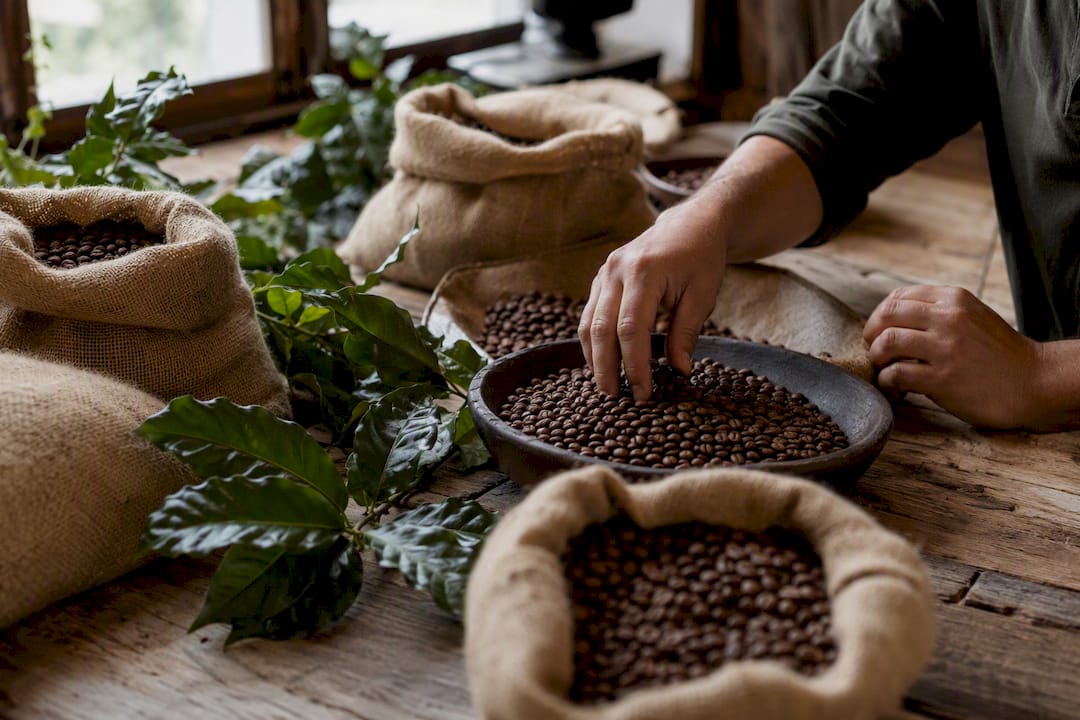
Coffee beans are actually seeds, pulled from the pit of the coffee cherry, a fruit that grows on a shrub with zero botanical connection to wheat, barley, or rye. Gluten is a storage protein found specifically in those grains. Coffee doesn’t carry the gene family that makes it, so there’s nothing for roasting, grinding, or brewing to “remove.” Coffee is gluten-free the same way an apple is gluten-free: the plant never had it to begin with.
That’s the botanical answer. The regulatory answer matters just as much. The FDA requires any product labeled “gluten-free” to contain gluten below a specific low threshold, set to protect people with celiac disease while still being detectable by standard lab testing. Contamination risk in coffee almost never comes from the bean itself. It comes from what’s blended in afterward or from equipment that’s touched gluten-containing products before touching your cup.
Where Gluten Risk Actually Sneaks Into Coffee
Flavored coffee is where things get less predictable. Many flavoring systems rely on oils and extracts that are gluten-free by formulation, but “natural flavor” on a label is a vague enough term that it can occasionally originate from a barley-derived source. Schär’s guidance on coffee and gluten points out that flavored coffees, instant mixes, and some creamers carry more uncertainty than a plain bag of roasted beans.
Watch for these red flags on packaging and menus:
- Malted barley or barley malt syrup, sometimes used as a flavor base in specialty blends
- Unspecified “natural flavor” or “flavoring” with no source disclosed
- Instant 3-in-1 mixes and powdered creamer blends, which have more ingredients and more manufacturing steps than whole beans
- Ready-to-drink bottled coffees with added syrups or dairy alternatives
Pro Tip: If a flavored coffee’s label doesn’t specify where its “natural flavor” comes from, email the manufacturer directly. A reputable company will tell you within a day or two, and if they won’t answer clearly, that’s your answer.
Ordering Safely at a Coffee Shop
The espresso grinder that just ground beans for a barley-based drink, the steamer wand that frothed regular milk before your oat milk, the shared bins at a topping station. These are the actual cross-contact points in a café, not the coffee itself.
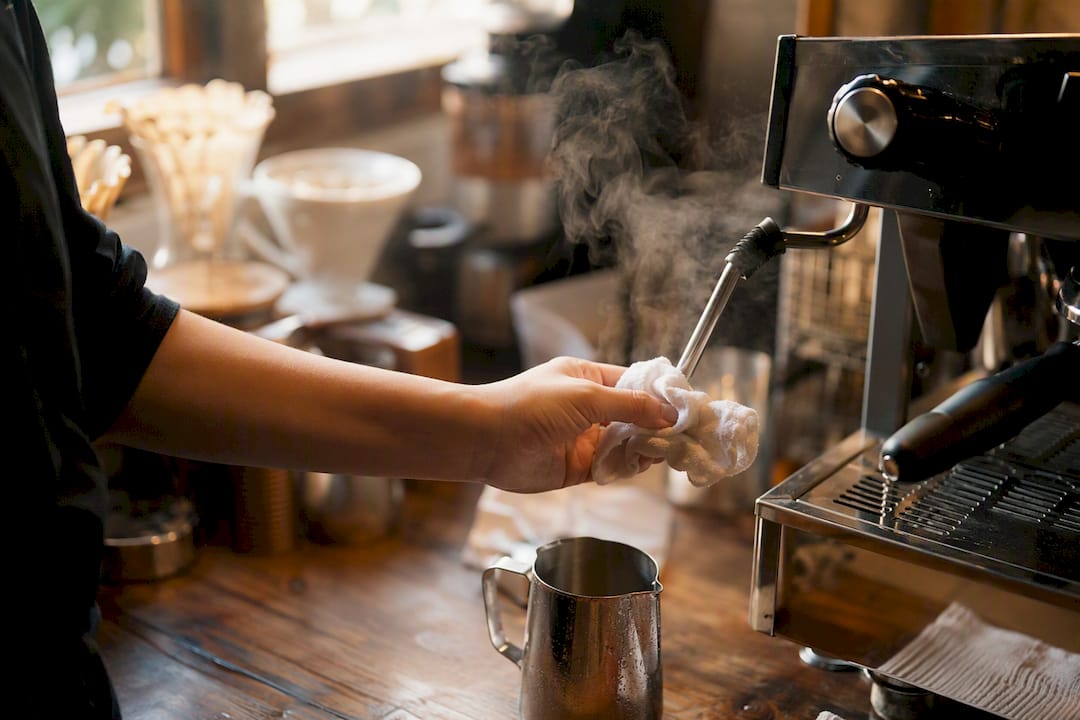
Here’s the more reassuring part: the exposure from most of these scenarios is small. One estimate-based analysis of ppm-to-milligram exposure found that residual transfer from something like a steamer wand typically falls well under the roughly 10 mg daily threshold researchers discuss for celiac safety. That doesn’t make it zero risk, but it reframes the panic.
Before you order, run through this short checklist:
- Ask if the espresso machine and grinder are used exclusively for coffee, not for flavored syrups with unclear ingredients
- Ask whether the oat milk or other alternative milk is a certified gluten-free brand, since not all oat milks carry that certification
- Choose plain drip coffee or a straightforward espresso drink over syrup-heavy specialty menu items when you’re unsure
- Ask if steamer wands and frothers get rinsed between different milk types
Buying and Brewing at Home for the Lowest Risk
Whole beans you grind yourself are the safest starting point. Grinding at home instead of using a store’s shared grinder removes the biggest single contamination variable, since coffee shop grinders often process flavored beans, mixed blends, and sometimes non-coffee products in the same hopper.
A few habits make a real difference:
- Keep a dedicated scoop for your beans and clean the grinder hopper on a regular schedule
- Store flavored and unflavored beans in separate containers, even at home
- Check plant milks carefully. Some oat milk producers make certified gluten-free versions, but not all do, and watchdog groups have flagged inconsistent labeling in that category specifically
- For sweeteners, plain sugar, honey, and pure maple syrup carry essentially no gluten risk
Pro Tip: If you love flavored coffee, DIY it. A drop of pure vanilla extract or a cinnamon stick steeped in your grounds gives you flavor control without wondering what’s hiding inside a manufacturer’s proprietary blend. Dkbeanleaf’s guide to flavored coffee options breaks down how different flavoring approaches actually work if you want to compare a DIY method against a pre-flavored bag. Instant and ready-to-drink products are where you should slow down the most and read every line of the ingredient panel.
When “Gluten-Free” on the Label Isn’t Enough
The FDA’s <20 ppm rule is the legal floor, and regulatory sampling has generally found high compliance among products that carry the claim. For most people with mild sensitivity, a product labeled gluten-free under that standard is safe.
For people with more severe celiac reactions, an independently certified gluten-free label offers something the FDA claim alone doesn’t: outside audits of the actual facility and process, not just a self-declared claim on the bag. That distinction matters most with heavily processed items like instant mixes and flavored blends, where more ingredients mean more chances for something to go wrong upstream. When a label leaves you guessing, contacting the manufacturer directly beats assuming.
How D&K Bean and Leaf Thinks About Ingredient Transparency
Coffee sourcing and flavoring decisions get made with one question in front of everyone at the table: what’s actually in this bag, and can we explain it plainly if someone asks? That’s the standard we hold ourselves to, not because a label requires it, but because a customer managing celiac disease shouldn’t have to guess.
Our flavored coffees are built from documented flavoring sources rather than vague blends, and that documentation exists specifically so a customer with a gluten sensitivity isn’t stuck reading a paragraph of unspecified ingredients before their morning cup. If you ever have a question about a specific batch, roast, or flavoring ingredient, our product support team will answer it directly, not point you to a generic FAQ.
Trust in this category gets built one honest answer at a time, not one marketing claim at a time.
— Kristopher
Where to Shop for Documented, Safe Coffee Options
Our whole-bean blends and single origins skip the shared-grinder problem entirely, since you control the grind at home from the moment the bag opens. For flavored coffee, we document what goes into each blend rather than hiding behind a generic “natural flavor” line, and our team answers ingredient questions directly when you ask. If you want to try a few flavors before committing to a full bag, the flavored coffees sample pack is built for exactly that, small enough to test safely, large enough to know if it works for you. Curious how a flavored roast compares to a plain one for your specific sensitivity level? Our breakdown of flavored versus regular coffee walks through the tradeoffs. Browse the tea collection too if you’re looking to round out a gluten-free beverage rotation beyond coffee, and reach out with any ingredient question before you order.
Sources
For deeper label guidance, see the FDA’s gluten labeling rules and Beyond Celiac’s milk alternatives guide. For broader gluten-free shopping resources, Nuka Love’s guide to safe travel products covers certified picks beyond coffee.
- FDA — Gluten and food labeling
- National Celiac Association — confusion about food labeling
- Schär — Is coffee gluten free?