

Pu-erh Tea Aging: How It Works and How to Do It
Pu-erh tea aging is the gradual biochemical and microbial transformation of compressed tea over months to decades, softening astringency and developing woody, sweet, and brothy flavor compounds. HPLC, GC-MS, and metabolomics studies confirm that this transformation is driven by catechin polymerization, theabrownin formation, and microbial succession, not simply the passage of time.
- What changes: flavor, aroma, body, and color shift from sharp and green to mellow, woody, and complex as catechins decline and methoxyphenyl compounds rise.
- What matters more than time: storage conditions, particularly temperature stability and humidity control, shape the final character of a cake more than age alone.
For enthusiasts willing to invest in proper storage, aging Pu-erh is one of the most rewarding long-term projects in tea, though the payoff depends entirely on starting with quality leaf and maintaining a consistent environment.
Key Takeaways
Pu-erh tea aging is driven by microbial succession and chemical transformation, and storage conditions shape the outcome more than elapsed time alone.
| Point | Details |
|---|---|
| Aging definition | Biochemical and microbial transformation softens astringency and builds woody, sweet, and brothy complexity. |
| Storage is the priority | Maintain roughly 25°C (77°F) and 60–75% RH with stability; humidity swings cause more damage than a slightly off target. |
| Sheng vs. shou timelines | Sheng needs 5–10+ years for meaningful change; shou is drinkable immediately and refines over 3–5 years. |
| Sample on a schedule | Taste every six months for the first two years, then annually; keep written notes from the very first brew. |
| Safety first | Fuzzy colored mold or persistent ammonia smell means discard; white powdery bloom on the surface is normal. |
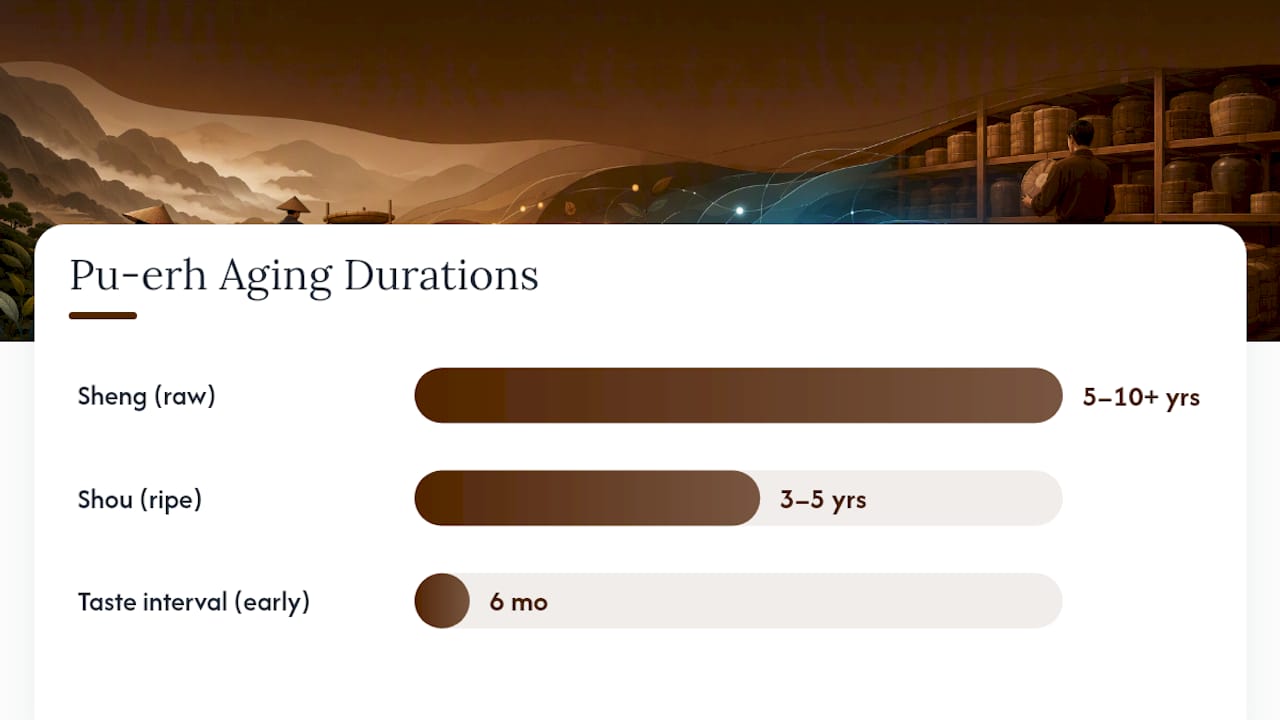
Table of Contents
- How do sheng and shou Pu-erh age differently?
- What actually happens inside a cake during aging?
- How does flavor, aroma, and appearance change as Pu-erh ages?
- What storage conditions does Pu-erh actually need?
- How do you age Pu-erh at home, step by step?
- How long should you age Pu-erh, and when is it ready?
- How do you tell good aging from spoilage?
- How does aging change Pu-erh’s chemical content and health effects?
- Why aging Pu-erh is worth the patience, and what to expect realistically
- Sources
How do sheng and shou Pu-erh age differently?
Pu-erh comes in two distinct forms, and they age along completely different trajectories. According to WebMD, shou (ripe) Pu-erh undergoes a controlled pile-fermentation during processing that compresses years of microbial activity into weeks, making it drinkable almost immediately. Sheng (raw) Pu-erh skips that step entirely, leaving the tea to transform slowly through natural enzymatic and microbial action over years.
The practical consequence is significant. Shou starts mellow and earthy, and its changes over time are more subtle. Sheng starts astringent, sometimes aggressively so, and requires patience before it becomes genuinely pleasant to drink.
Sheng (raw) Pu-erh flavor by age:
- Fresh (0–3 years): Bright, grassy, sometimes bitter and astringent; high catechin content; floral notes possible in quality leaf.
- ~5 years: Astringency softens; stone fruit and light honey notes emerge; color deepens from gold to amber.
- ~10 years: Woody, dried fruit, and camphor notes develop; mouthfeel becomes rounder; huigan (returning sweetness) more pronounced.
- In well-aged samples over a long period: Deep earthy complexity, dried longan, aged wood; color turns dark amber to reddish-brown; bitterness largely gone.
Shou (ripe) Pu-erh flavor by age:
- Fresh (0–3 years): Earthy, sometimes “fishy” or composty from fermentation; dark, opaque liquor.
- ~5 years: Fermentation off-notes fade; smooth, brothy, dark chocolate character.
- ~10 years: Deeper sweetness, dried fruit, subtle spice; texture becomes almost silky.
- After prolonged aging: Refined earthiness, aged wood, minimal bitterness; a long, clean finish.
The Foods (MDPI) review on Pu-erh flavor evolution confirms that raw Pu-erh undergoes multi-stage sensory shifts across years and that storage environment often matters more than elapsed time for final quality. Shou, by contrast, changes more gradually after its initial fermentation, making it a lower-risk entry point for home aging.
What actually happens inside a cake during aging?
The chemistry is where aging gets genuinely interesting. Catechins, the polyphenols responsible for astringency in fresh tea, polymerize into larger, less bitter compounds over time. Some of those polymerized forms contribute to theabrownin formation, the dark pigments that give aged Pu-erh its characteristic deep color and mellow body.
Research published in the Journal of Agricultural and Food Chemistry found that storage conditions strongly influence aroma development, with specific methoxyphenyl compounds including 1,2,3-trimethoxybenzene and (+)-cedrol rising with storage duration and contributing to the woody, aged notes enthusiasts prize. Separately, GC-MS analysis across 1–15 year ripe Pu-erh samples showed that alcohols and aldehydes decline as methoxy compounds build, confirming that the aged aroma is not simply “less fresh” but chemically distinct.
On the microbial side, a metabolomics study tracking ripe Pu-erh across 0, 5, 10, and 15 years found that Aspergillus and Bacillus dominate the microbial succession, playing roles in decomposing larger polyphenols and synthesizing aroma compounds. Common environmental yeasts also contribute, particularly in more humid storage conditions.
Key compound trends at a glance:
- Catechins: decline with storage duration, reducing astringency.
- Theabrownins: increase, driving color darkening and body development.
- Aldehydes and alcohols: decrease, losing fresh and grassy character.
- Methoxyphenyl compounds (1,2,3-trimethoxybenzene, cedrol): increase, building woody and aged aroma.
- Caffeine: gradually declines in long-stored ripe Pu-erh.
Researchers use HPLC, GC-MS, UHPLC-Orbitrap, and targeted metabolomics to track these shifts. The evidence base is growing, and the consistent finding across studies is that microbial activity and storage environment together drive transformation, not time alone.
How does flavor, aroma, and appearance change as Pu-erh ages?
Translating chemistry into the cup is where aging becomes personal. The sensory arc of a well-stored sheng moves from sharp and vegetal to something closer to dried fruit, camphor, and aged wood, with a mouthfeel that shifts from thin and astringent to thick and coating.
Sensory timeline for sheng:
- 0–3 years: Bright, sometimes harsh; high astringency; floral or grassy aroma; pale gold liquor.
- ~5 years: Softening bitterness; stone fruit, light honey; amber color; huigan starts to appear.
- ~10 years: Camphor, dried longan, light earthiness; rounder mouthfeel; reddish-amber liquor.
- ~20+ years: Deep complexity, brothy sweetness, aged wood; dark reddish-brown; long, clean finish.
For shou, the arc is shorter in dramatic range but still meaningful: the composty fermentation notes of a fresh cake typically fade within three to five years, leaving a smooth, dark, almost chocolatey base that deepens with more time.
Pro Tip: When tasting an aging cake, pay attention to huigan, the returning sweetness that rises in the throat after swallowing. It tends to develop before other aged characteristics and is one of the earliest signs that a sheng is moving in the right direction.
The Eastern Stillness overview of Pu-erh aging notes that wet or humid storage accelerates microbial changes and can produce distinct earthy “tong” flavors that differ from the cleaner aged notes of dry-stored cakes. Neither is objectively better; they represent different regional traditions and personal preferences.
What storage conditions does Pu-erh actually need?
Storage is where most home-aging attempts succeed or fail. Wide humidity swings harm long-term potential more than a slightly suboptimal but steady environment.
Numbered storage priorities:
- Temperature: Target 60–77°F (15–25°C). Avoid attics or garages with seasonal extremes.
- Humidity: Keep RH between 60–75%. Below 60% slows aging significantly; above 75% risks mold.
- Airflow: Gentle, indirect airflow helps; stagnant air promotes undesirable microbial growth.
- Light: Keep cakes away from direct sunlight. UV exposure degrades volatile compounds.
- Odor isolation: Pu-erh absorbs surrounding smells aggressively. Never store near coffee, spices, or cleaning products.
What to avoid:
- Sealing cakes in plastic bags or airtight containers. Plastic blocks the slow aerobic exchange that drives beneficial aging.
- Storing directly on concrete floors, which can introduce moisture and odors.
- Mixing strongly scented teas in the same storage space.
- Ignoring insect and rodent access, particularly in humid climates.
Paper wrappers allow slow aerobic change while protecting the cake from dust and odors. Tighter compression ages more slowly because less surface area is exposed to air and microbial action. Looser compression or broken cakes age faster but with less control.
Pro Tip: A digital hygrometer with a min/max memory function costs under $15 and tells you whether your storage space is actually stable or just feels stable. Check it weekly for the first month, then monthly once you have a baseline.
For practical parallels on monitoring a stable storage environment, the same principles that apply to storing coffee beans fresh apply here: darkness, stable temperature, and odor isolation are the non-negotiables.
How do you age Pu-erh at home, step by step?
Home aging is genuinely accessible. You do not need a dedicated tea room or expensive equipment to get started.
Supplies you need:
- A digital hygrometer (with min/max memory)
- Breathable cardboard or wooden boxes (avoid plastic bins)
- Shelving that keeps cakes off the floor
- Paper or bamboo wrapping for individual cakes
- A tasting notebook or simple spreadsheet
Step-by-step process:
- Choose your tea. Start with a sheng cake from a reputable source if you want to observe dramatic change over years, or a shou cake if you prefer a lower-risk, shorter-horizon project. Leaf quality matters: low-grade material rarely improves meaningfully with age.
- Decide on storage style. Dry storage (60–65% RH) produces cleaner, slower aging. More humid storage (68–75% RH) accelerates microbial activity and produces earthier results. Most home enthusiasts in the US start with dry storage because it is easier to control and reverse.
- Set up your space. A closet, cabinet, or dedicated shelf in a climate-controlled room works well. Line wooden boxes with unscented paper. Place a hygrometer inside and record the baseline reading.
- Initial sampling. Brew a small sample before storing and write tasting notes. This is your reference point. Without it, you will have no way to measure change.
- Sample every six months for the first two years. Brew 3–5 grams using the same parameters each time. Note color, aroma, astringency, mouthfeel, and finish. After two years, annual sampling is usually sufficient.
- Adjust as needed. If humidity is consistently above 75%, add a small silica gel packet. If it drops below 60%, a small open dish of water nearby can help. Never make large, sudden changes.
- Decide when to drink or rehome. If a cake has stalled, developed persistent off-notes, or simply reached a profile you enjoy, drink it. There is no obligation to wait longer.
Pro Tip: When you buy a new cake to age, buy tea in multiples of the same pressing if possible. Sampling one cake every year or two while leaving the others undisturbed gives you a real longitudinal record without sacrificing the whole collection.
The Dkbeanleaf guide on buying tea online covers what to look for in leaf quality and sourcing, which directly affects how well a cake will age.
How long should you age Pu-erh, and when is it ready?
There is no universal answer, but there are useful reference points. The Eastern Stillness aging overview stages aging at roughly 5, 10, and 20 years as meaningful turning points, and the MDPI review supports the idea that sheng undergoes distinct sensory cycles rather than a smooth linear progression.
Typical turning points:
- 1–3 years: Sheng often enters an awkward phase where fresh notes fade but aged complexity has not yet developed. Many collectors call this the “hibernation” stage. Shou is usually at its most drinkable in this window.
- ~5 years: Sheng begins to show real development. Astringency softens, fruit notes emerge, and huigan becomes more consistent. A good marker for whether a cake has aging potential.
- ~10 years: The character of well-stored sheng becomes genuinely distinct from its fresh form. Camphor, dried fruit, and woody notes are common. Shou reaches a refined, silky profile.
- 20+ years: Reserved for high-quality leaf in consistent storage. The payoff can be extraordinary, but the risk of storage errors compounds over time.
Decision criteria for your specific cake:
- Leaf quality and origin: plantation-grade leaf rarely transforms as dramatically as old-growth material.
- Compression density: tighter cakes age more slowly and may need more time to reach the same profile.
- Storage style: humid storage compresses the timeline; dry storage extends it.
- Personal taste: if you prefer the fresh, vibrant character of young sheng, there is no reason to wait a decade.
The common belief that older is always better overlooks the fact that some beneficial polyphenols decline with very long storage, and each pressing has its own peak. Drink when it pleases you.
How do you tell good aging from spoilage?
This is the question most home-agers worry about, and the answer is more straightforward than it sounds.
Signs of healthy aging:
- A thin, powdery white bloom on the surface of the cake (this is dried tea oils, not mold).
- Earthy, woody, or slightly musty aroma that dissipates when the cake airs out for a few minutes.
- Dark, clear liquor with no off-putting smell in the cup.
- Mellow, smooth flavor with no sharp chemical or ammonia notes.
Signs of problem storage:
- Fuzzy, colored mold (green, black, or pink) on the cake surface. This is not the same as white bloom.
- A persistent ammonia or “wet dog” smell that does not clear after airing.
- Sour or vinegary taste in the brewed cup.
- Visible insect damage or rodent activity.
If you find fuzzy mold, do not brew the cake. Move it to a drier location, let it air for several days, and inspect again. If the mold returns or the ammonia smell persists, discard the cake. No tea is worth a health risk.
For borderline cases, airing the cake in a clean, odor-free space at moderate humidity for one to two weeks often resolves minor storage issues. If you are unsure, consult an experienced collector or a reputable tea vendor before consuming.
How does aging change Pu-erh’s chemical content and health effects?
The same compound shifts that change flavor also alter the tea’s nutritional profile. Catechins, the primary antioxidant polyphenols in fresh tea, decline with storage. Theabrownins increase, and certain methoxyphenyl compounds rise as the ACS study on storage effects confirms. Caffeine also gradually decreases in long-stored ripe Pu-erh, as the PubMed metabolomics study found across samples spanning 0–15 years.
Key chemical shifts with aging:
- Catechins: decrease, reducing antioxidant activity relative to fresh tea.
- Theabrownins: increase, contributing to the dark color and potential metabolic effects.
- Caffeine: gradually declines in long-stored shou.
- Methoxyphenyl compounds: increase, driving aged aroma.
On health effects, research published in Frontiers in Microbiology found that Pu-erh extracts can influence metabolism, gut microbiota, and adipose function in animal models, but human dose-response data remains limited. The findings are promising but not yet a basis for specific health claims.
Pu-erh contains caffeine and bioactive compounds including theabrownins. People with specific health conditions, including heart conditions, caffeine sensitivity, or pregnancy, should consult a healthcare provider before making Pu-erh a regular part of their diet. This article is general information, not medical advice.
Why aging Pu-erh is worth the patience, and what to expect realistically
The romantic appeal of aging tea is real. There is something genuinely satisfying about opening a cake you stored three years ago and finding it has become something different, something better. But the enthusiasm in collector communities can set unrealistic expectations, and it is worth being direct about that.
Most commercially available Pu-erh in the US is not old-growth material from ancient trees. Plantation-grade leaf can still age pleasantly, but it will not produce the same complexity as high-quality gushu (ancient tree) material. Starting with better leaf matters more than any storage trick.
The other thing collectors underestimate is how long the awkward phase lasts. A sheng that tastes harsh and disjointed at two years is not necessarily a bad cake. It may simply need more time. Sampling on a fixed schedule rather than opening it whenever curiosity strikes is the discipline that separates collectors who build meaningful archives from those who drink everything before it peaks.
Dkbeanleaf carries a selection of loose leaf teas worth exploring if you want to start a small aging project or simply compare fresh and aged profiles side by side. Starting with a sample pack before committing to a full cake is a practical way to calibrate your palate without a large investment.
Sources
These studies and overviews back the claims in this article and are worth bookmarking if you want to go further into the science.
- Journal of Agricultural and Food Chemistry (ACS) – study on storage effects and volatile changes in Pu‑erh
- PubMed entry: Effects of storage time on the quality and microbial community of ripe Pu‑erh tea
- Foods (MDPI) article on Pu‑erh flavor evolution
- WebMD overview: Pu‑erh tea — uses, side effects, precautions