

Coffee Degassing and Freshness: What You Must Know
Degassing is defined as the post-roast release of carbon dioxide (CO₂) trapped inside roasted coffee beans, and it is the single most underestimated factor in coffee freshness and flavor quality. The role of degassing in coffee freshness goes far beyond a simple waiting period. It controls how water interacts with your grounds, how volatile aromatics develop, and whether your cup tastes bright and balanced or harsh and flat. Industry professionals call this process “outgassing,” and understanding it separates a mediocre brew from a precise, repeatable one. Tools like one-way valve bags and timed resting protocols exist specifically to manage this process.
What is the role of degassing in coffee freshness?
CO₂ forms inside coffee beans during roasting through two primary chemical reactions: the Maillard reaction and thermal decomposition of organic compounds. These reactions generate enormous gas pressure inside the bean’s porous cellulose matrix. The bean traps that gas, and the slow release after roasting is what we call the coffee degassing process.
Here is how the process unfolds in stages:
- Active degassing (0–48 hours post-roast): CO₂ exits rapidly. Coffee loses nearly 50% of its total gas volume within the first 24 hours. This phase is too volatile for most brewing methods.
- Primary resting (2 days–4 weeks): Gas release slows. Volatile aromatic compounds stabilize and begin to express themselves more clearly in the cup.
- Stabilization (4+ weeks): CO₂ levels drop low enough that oxidation becomes the dominant threat. Freshness declines without proper storage.
- Staling: Oxygen replaces CO₂ in the bean’s cell structure. Aromatics degrade. The cup goes flat.
Volatile aromatic compounds, including dimethyl sulfide (DMS) and methanethiol (MeSH), evolve continuously during and after roasting. The ratio of DMDS to MeSH signals the coffee’s maturation stage more accurately than a roast date alone. This is why freshness in roasted coffee is a chemistry problem, not just a calendar problem.
How does degassing affect coffee extraction and flavor?
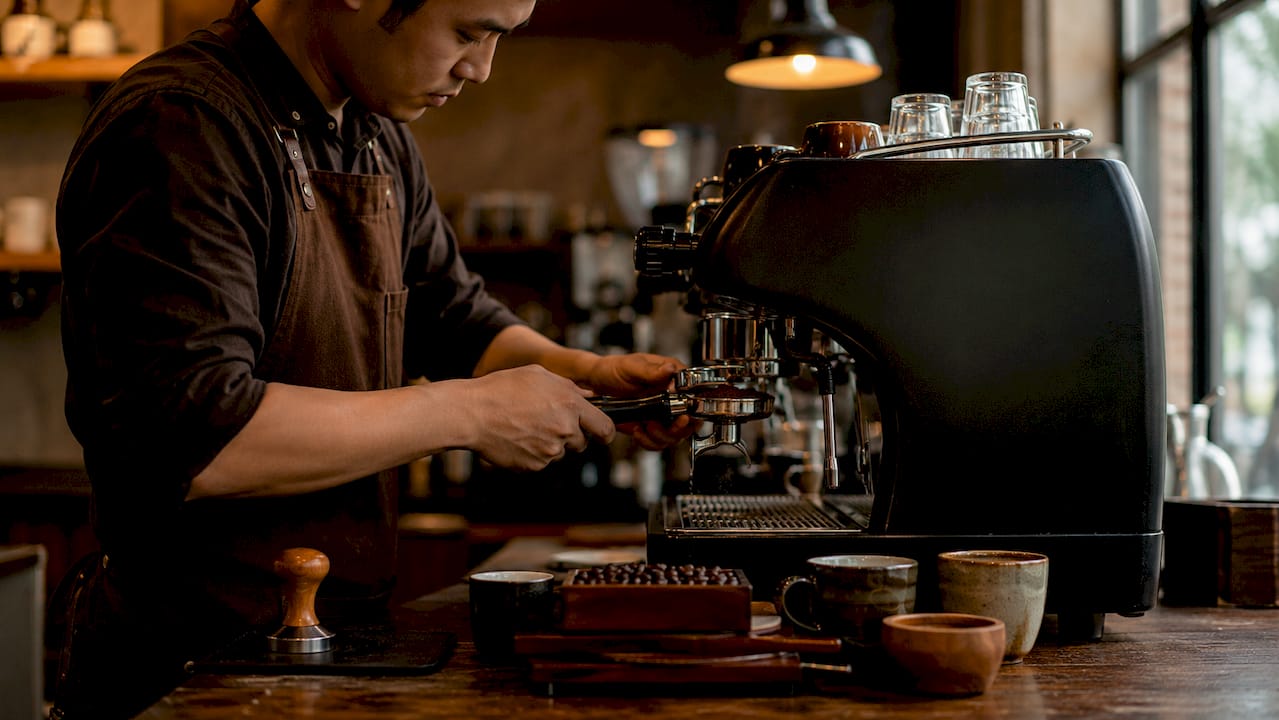
Excess CO₂ physically repels water. When you brew coffee that is too fresh, water cannot saturate the grounds evenly. The result is channeling, uneven extraction, and a cup that tastes sour, metallic, or sharp. Brewing within the first 48 hours post-roast causes violent CO₂ release that pushes water away and creates exactly these off-flavors.
The impact of degassing on coffee is most visible in two places: the bloom and the crema.
- Bloom: The foam that forms when hot water first hits your grounds is CO₂ escaping rapidly. Excessive bloom means the coffee is too fresh; a flat bloom means it has lost gas and aromatics. A healthy bloom is a reliable freshness indicator.
- Crema: Espresso crema depends on moderate CO₂ levels. Too much gas creates unstable, bitter crema. Too little produces a thin, pale layer with no body.
- Acidity and sweetness: As degassing stabilizes, coffee moves from a high-reactivity state to a balanced flavor state. Sharp acidity softens. Sweetness becomes more pronounced.
- Aroma intensity: Early degassing produces bright floral notes. Later stages mute raw intensity but round out the overall flavor structure.
Espresso brewing amplifies every degassing variable. The 9-bar pressure used in espresso extraction magnifies degassing effects dramatically. Waiting at least 3 days post-roast resolves sour or channeled shots by reducing puck turbulence caused by excess gas. Drip and pour-over methods are more forgiving, but they still benefit from a 5–7 day rest. You can read more about how degassing shows up visually in your cup in this complete bloom brewing guide.
Pro Tip: Pre-infuse your grounds for 30–45 seconds before full extraction. This controlled bloom step releases surface CO₂ before the main brew, which reduces channeling and improves extraction consistency regardless of how fresh your beans are.
What are the optimal degassing windows for peak flavor?
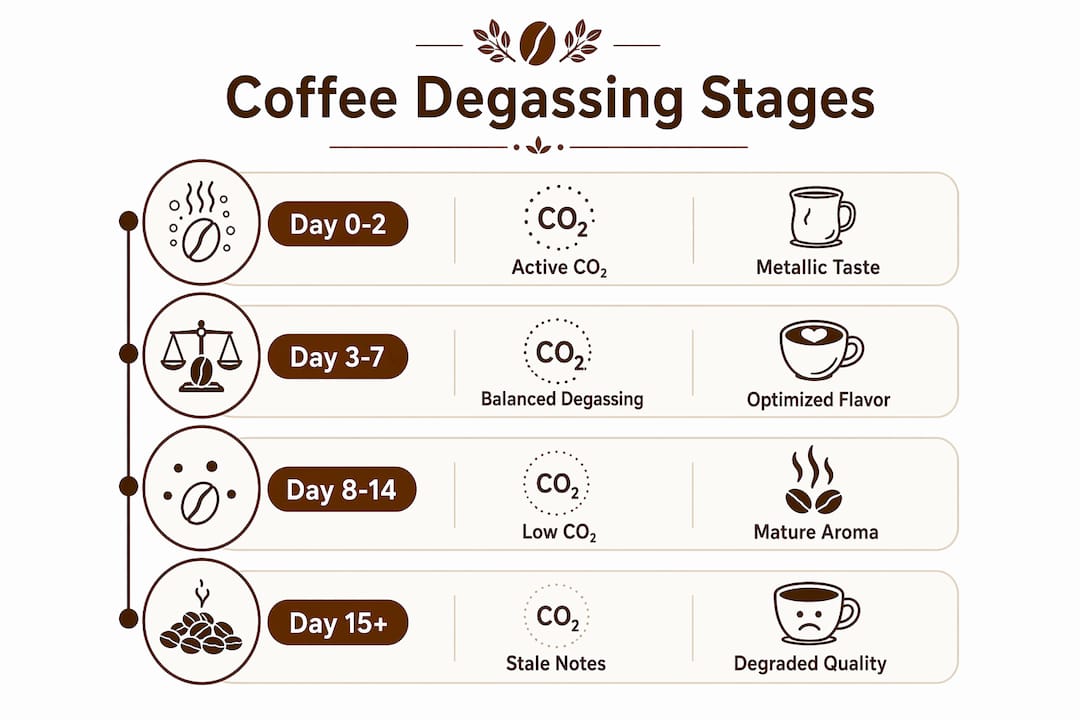
Timing your brew to the right degassing window is the most practical coffee freshness tip you can apply. The table below maps degassing stages to taste states so you can plan your brewing schedule with precision.
| Days Post-Roast | Degassing Stage | Taste Profile |
|---|---|---|
| 0–2 days | Active (high CO₂) | Metallic, harsh, sour, uneven |
| 3–7 days | Primary resting | Brightening acidity, emerging sweetness |
| 7–14 days | Peak flavor window | Balanced, full aromatics, clean finish |
| 14–30 days | Stabilization | Mellow, consistent, lower aromatic intensity |
| 30+ days | Declining freshness | Flat, oxidized, muted |
Resting coffee for 3–7 days post-roast balances degassing to optimize flavor. That resting period reduces extraneous CO₂ and creates a sweeter, more balanced cup. Peak flavor typically occurs between 5 and 14 days post-roast, varying by roast level.
Storage method determines whether you preserve or destroy that flavor window. One-way valve bags allow CO₂ to escape while blocking oxygen entry. They are the best degassing method for the first 48 hours when gas release is most aggressive. Storing fresh beans in a sealed rigid container during this phase risks pressure buildup and can damage the bean’s cell structure.
Freezing is a valid long-term storage option, but timing matters. Freeze only after degassing is largely complete, typically after day 7. Freezing too early traps moisture inside the bean as CO₂ escapes, which degrades flavor. For more on storing beans correctly, Dkbeanleaf has a detailed guide covering containers, timing, and environment.
How do roast level and bean origin affect degassing rate?
Roast level is the biggest variable in how fast a bean degasses. Darker roasts degas faster than lighter roasts. This seems counterintuitive, but darker roasting breaks down more of the bean’s cellulose structure, creating larger pores that release CO₂ more quickly.
- Light roasts: Dense cell structure slows CO₂ release. These beans need a longer rest, often 10–14 days, before hitting peak flavor. Specialty single-origin light roasts from Ethiopia or Colombia reward patience with complex floral and fruit notes.
- Medium roasts: Moderate degassing rate. A 5–10 day rest typically hits the sweet spot for balanced extraction.
- Dark roasts: Fast degassing, often complete within 3–5 days. The trade-off is a shorter peak flavor window before oxidation takes over.
Bean origin and processing method also shape how degassing affects flavor. Natural-processed coffees, where the fruit dries on the bean, carry more fermentation-derived compounds that interact with CO₂ during degassing. These coffees often show more dramatic flavor shifts between days 3 and 10. Washed coffees tend to degas more cleanly and predictably. Understanding how fermentation shapes flavor helps you anticipate these shifts before you even open the bag.
Professional coffee programs use degassing monitoring to hit precise aromatic windows and achieve consistent recipes. Specialty roasters like those working with single-origin Ethiopian naturals often publish recommended rest periods on their bags for exactly this reason.
What mistakes do coffee enthusiasts make with degassing?
Most degassing mistakes come from impatience or from treating all coffee the same regardless of roast or origin. Here are the most common errors and how to correct them.
- Brewing immediately after roasting: The most common mistake. Active degassing produces metallic and harsh notes in the first 48 hours. No brewing technique compensates for this.
- Sealing fresh beans in airtight rigid containers: CO₂ has nowhere to go. Pressure builds, and the bean’s structure suffers. Use one-way valve bags for the first week.
- Misreading bloom intensity: A massive, aggressive bloom does not mean great coffee. It means the coffee is too fresh. Bloom size correlates directly with CO₂ release rate, not with quality.
- Applying the same rest period to every roast: A dark roast ready on day 4 is not the same as a light roast ready on day 12. Adjust your degassing period for beans based on roast level.
- Ignoring storage environment: Heat and humidity accelerate degassing and oxidation. Store beans in a cool, dark location regardless of container type.
Pro Tip: Write the roast date on your bag the day you receive it, not the date you open it. Track your tasting notes against the day count. After a few batches, you will know exactly when your preferred roast hits its peak window.
Key takeaways
Degassing is the controlling variable in coffee freshness, and managing it with precision produces a measurably better cup every time.
| Point | Details |
|---|---|
| Degassing defines freshness | CO₂ release after roasting directly controls aroma, extraction balance, and flavor clarity. |
| Brew timing is critical | Brewing before day 3 produces harsh, sour flavors; peak flavor falls between days 5 and 14. |
| Storage method matters | One-way valve bags protect volatile aromatics during the first 48 hours of aggressive degassing. |
| Roast level changes the timeline | Dark roasts degas in 3–5 days; light roasts need up to 14 days before hitting peak flavor. |
| Bloom is a freshness signal | Bloom size reflects CO₂ levels; use it to judge whether beans are ready to brew. |
Why patience is the most underrated brewing skill
I have tasted the same bean on day 1, day 5, and day 12 more times than I can count. The transformation is not subtle. Day 1 tastes like you are drinking chemistry. Day 5 starts to show you what the roaster intended. Day 12 is often where the real conversation begins.
The hardest thing to accept is that a roast date label does not tell you when to brew. It tells you when the clock started. What you do with the next 7–14 days determines whether you get the coffee the roaster designed or a distorted version of it.
I have found that one-way valve bags are non-negotiable for the first week. They are not a premium option. They are the baseline. Anything rigid and sealed during that active degassing phase is a gamble. I have also learned to stop treating freezing as a shortcut. Freeze after the gas is out, not before.
The most useful habit I have built is tasting the same batch on multiple days and writing down what changes. You start to recognize the exact moment a particular roast opens up. That knowledge compounds. After a few months, you stop guessing and start dialing in with real confidence. Experiment with your rest periods. The data you collect from your own palate is more valuable than any general guideline.
— Kristopher
Brew better with the right gear from Dkbeanleaf
Getting degassing right starts with the beans and ends with what you put in your cup. At Dkbeanleaf, we believe the full coffee experience matters from storage to the first sip.

Once your beans have hit their peak degassing window, you want a mug that holds heat and feels right in your hand. The white glossy mug from Dkbeanleaf is built for exactly that moment. For coffee on the move, the travel mug with a handle keeps your perfectly timed brew at the right temperature wherever you go. Explore the full Dkbeanleaf collection and find the gear that matches how seriously you take your cup.
FAQ
What is coffee degassing and why does it matter?
Coffee degassing is the release of CO₂ trapped inside beans during roasting. It directly controls extraction quality, aroma development, and flavor balance in every cup you brew.
How long should i wait before brewing freshly roasted coffee?
Wait at least 3 days for espresso and 5–7 days for filter methods. Peak flavor occurs between 5 and 14 days post-roast depending on roast level.
What is the best way to store coffee during degassing?
Use one-way valve bags for the first week. They allow CO₂ to escape while blocking oxygen, which protects volatile aromatics during the most aggressive degassing phase.
Does roast level change how fast coffee degasses?
Dark roasts degas in 3–5 days due to their more open cell structure. Light roasts can take 10–14 days to reach their optimal flavor window because their denser structure slows CO₂ release.
What does bloom tell me about my coffee’s freshness?
Bloom size reflects how much CO₂ remains in the bean. An excessive bloom signals the coffee is too fresh; a flat bloom means it has lost gas and likely aromatics as well.