

How to Store Coffee Beans and Stay Fresh Longer
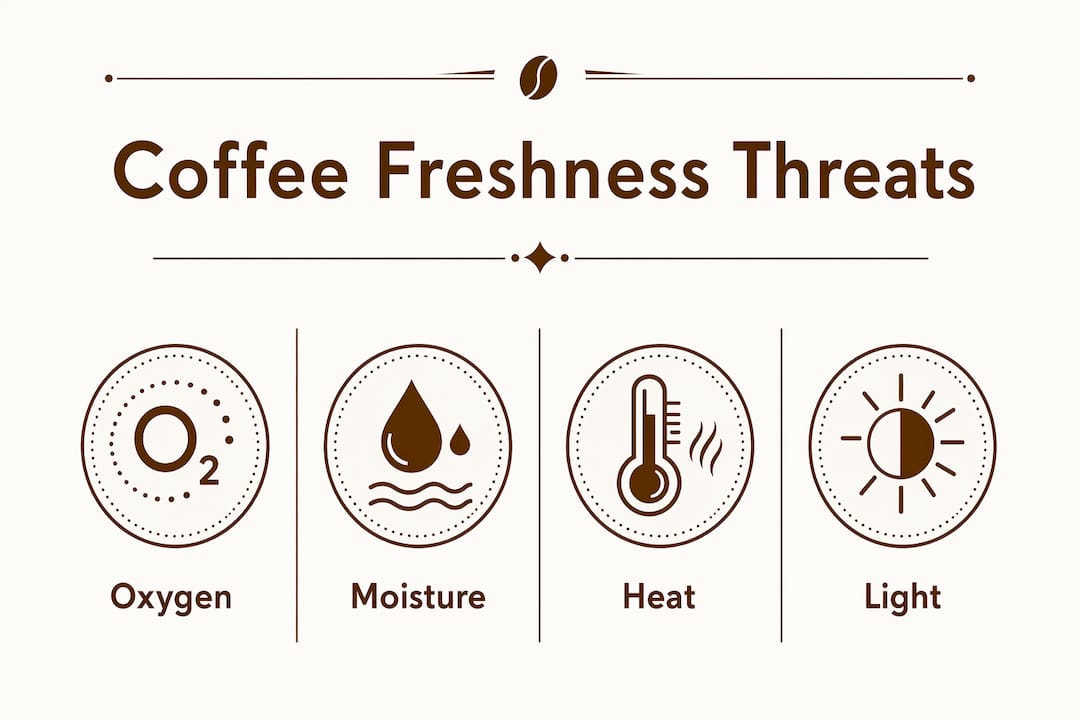
Storing coffee beans correctly means protecting them from four specific threats: oxygen, heat, moisture, and light. Get those four factors under control, and your beans will taste the way the roaster intended. Ignore them, and even a premium bag from a specialty roaster turns flat and bitter within days. The Kitchn and Folgers both confirm that airtight, cool, dark storage at room temperature is the single most effective method. For best results, buy only what you plan to use within one to two weeks and store it properly from the moment you open the bag.
How to store coffee beans stay fresh: the four enemies of flavor
Four environmental factors destroy coffee bean freshness faster than anything else, and understanding each one changes how you think about your kitchen setup.
Oxygen is the primary culprit. The moment roasted beans are exposed to air, oxidation begins breaking down the aromatic compounds responsible for that rich, complex flavor. This is why a bag left open on the counter goes stale in two or three days. Sealing beans in an airtight container after every use is not optional. It is the baseline requirement for maintaining coffee freshness.
Moisture is equally destructive. Moisture damages coffee beans by promoting mold growth, causing clumping, and diluting the flavor compounds that make a good cup distinct. Even the ambient humidity in a kitchen near a sink or dishwasher is enough to degrade beans over time. This is why location matters as much as the container you choose.
Heat accelerates the breakdown of the natural oils in coffee beans. Those oils carry most of the flavor. Heat causes evaporation and breakdown of these oils, producing a stale or bitter taste. The optimal storage temperature sits between 59°F and 77°F. Storing beans on a shelf directly above the stove or next to the toaster oven puts them well outside that range.
Light, particularly UV light, degrades flavor compounds at the molecular level. UV light rapidly degrades coffee bean aroma and taste, which is why transparent glass jars on a sunny countertop are one of the worst storage choices you can make. Opaque containers or a dark cabinet solve this problem completely.
Pro Tip: Place your hand on the shelf or cabinet where you plan to store beans. If it feels warm from a nearby appliance or sunlight, find a different spot. Temperature consistency matters more than most people realize, and your coffee’s sensory experience depends on it.
What containers and locations actually work for coffee storage?
The container you choose and where you put it are equally important decisions. Neither one works without the other.
Container options compared
The table below breaks down the most common coffee storage containers and how they perform against the four freshness threats.
| Container type | Pros | Cons |
|---|---|---|
| One-way valve bag (original roaster bag) | Allows CO2 to escape, blocks oxygen and moisture, purpose-built for beans | Not reusable long-term, can be bulky |
| Opaque airtight canister (ceramic or stainless steel) | Blocks light, seals out air, durable and reusable | Requires transfer from original bag |
| Glass jar with lid | Easy to find, inexpensive | Transparent, exposes beans to light |
| Clip-sealed bag | Convenient, low cost | Poor air seal, does not block light |
The one-way degassing valve bag that most specialty roasters use is actually the best short-term container available. These bags allow CO2 released by freshly roasted beans to escape without letting oxygen or moisture back in. Transferring beans to a different container too early can actually accelerate staling. If your roaster bag has a valve, keep the beans in it until you are ready to use them.
For longer-term daily use, a ceramic or stainless steel airtight canister stored in a dark cabinet is the best way to store coffee at home. These containers block all four freshness threats simultaneously. Brands like Fellow, Airscape, and OXO make canisters specifically designed for coffee with pressure-release lids that push out residual air.
Pro Tip: Buy coffee in quantities you will finish within one to two weeks. Buying smaller quantities more frequently is one of the most underrated coffee storage tips. A half-pound bag used in ten days beats a full pound that sits for a month.
Location rules are straightforward. Store beans in a cool, dark cabinet away from the oven, dishwasher, refrigerator vents, and any window that receives direct sunlight. The inside of a pantry or a closed upper cabinet on an interior wall works well in most kitchens. Countertop storage, no matter how attractive the canister looks, exposes beans to light and temperature swings throughout the day.
Should you freeze or refrigerate coffee beans?
This is the most debated question in coffee storage, and the answer is more specific than most people expect.
Refrigeration is a bad idea. Folgers advises against refrigerating coffee beans because the fridge exposes beans to moisture and absorbs odors from surrounding food. Coffee is porous and picks up smells from everything nearby. A bag of beans stored next to leftover salmon will taste exactly like you would expect. The cold temperature also creates condensation every time you take the bag out, which introduces moisture directly onto the beans.
Freezing, done correctly, works for long-term storage. If you buy in bulk or receive a large shipment of beans, freezing in airtight portions for up to three to four months is a legitimate preservation method. The key is doing it right.
Here is the correct process for freezing coffee beans:
- Divide beans into small portions, enough for one to two weeks of use each.
- Place each portion in a separate airtight freezer bag or vacuum-sealed bag, removing as much air as possible before sealing.
- Label each bag with the roast date and freeze immediately.
- When you are ready to use a portion, remove it from the freezer and leave it sealed at room temperature for several hours before opening.
- Never return thawed beans to the freezer. Use the entire portion within one to two weeks.
Repeated thawing and condensation are the main causes of frozen beans losing flavor and texture. The moisture that forms when cold beans hit warm air gets absorbed into the bean before you ever grind them. Keeping the bag sealed until the beans reach room temperature prevents this entirely.
Pro Tip: Freeze in single-use portions sized for exactly one week of brewing. This eliminates the temptation to dip back into the bag and re-expose the remaining beans to air and temperature changes.
How does grinding affect freshness and storage?
Grinding is where most people unknowingly throw away the freshness they worked to preserve.
Ground coffee stales much faster than whole beans because grinding dramatically increases the surface area exposed to oxygen. A whole bean has a relatively small surface area. Ground coffee has thousands of tiny particles, each one releasing CO2 and absorbing oxygen simultaneously. The flavor compounds that took weeks to develop during roasting can dissipate within 15 to 30 minutes after grinding.
The practical implications for your daily routine are clear:
- Grind only what you need immediately before brewing. This single habit produces a noticeably better cup than any other change you can make.
- If you must store ground coffee, use an airtight container in a cool, dark location and use it within one week.
- Pre-ground coffee from a grocery store is already weeks past its peak by the time it reaches your cup. Whole beans give you control over that timeline.
- Understanding how roast level affects flavor also helps you time your grinding correctly. Darker roasts degas faster and may need slightly less resting time before grinding.
The difference between coffee ground fresh and coffee ground two days ago is not subtle. It is the difference between a cup that tastes like the origin and one that tastes like cardboard. A quality burr grinder from brands like Baratza, Fellow, or Comandante pays for itself in flavor within the first month of use.
Key takeaways
Storing coffee beans correctly requires airtight containers, cool dark locations, and grinding only immediately before brewing to preserve the full flavor the roaster intended.
| Point | Details |
|---|---|
| Block all four freshness threats | Protect beans from oxygen, heat, moisture, and UV light at all times. |
| Use the right container | One-way valve bags and opaque airtight canisters outperform glass jars and clip-sealed bags. |
| Skip the refrigerator | Fridge storage introduces moisture and odor absorption that accelerates staling. |
| Freeze only in sealed portions | Divide beans before freezing and never open the bag until it reaches room temperature. |
| Grind right before brewing | Ground coffee loses peak flavor within 30 minutes of grinding. |
What I have learned after years of paying attention to coffee storage
I have made every mistake in this article at least once. I stored beans in a glass jar on the counter for years because it looked good. I refrigerated bags thinking cold meant fresh. I bought a pound at a time because it felt economical. Every one of those habits was costing me flavor I was paying for.
The shift that made the biggest difference was not buying a fancier canister. It was buying smaller amounts more often. When you commit to buying only what you need for the next ten days, you stop treating coffee like a pantry staple and start treating it like a perishable ingredient. That mental shift changes everything downstream.
The one-way valve bag insight also surprised me. I used to transfer beans immediately into a canister because the roaster bag felt flimsy. Turns out those bags are engineered specifically for the job. Leaving beans in the original valve bag until you are halfway through it, then transferring the remainder to a canister, is a better approach than transferring everything on day one.
The kitchen environment piece is underrated. Most people never think about where heat accumulates in their kitchen. The cabinet above the stove, the shelf next to the toaster, the spot near the refrigerator compressor vent. All of those locations run warmer than the rest of the kitchen, and warmth is a slow, invisible flavor killer. Move your beans to an interior cabinet on a wall that does not face the stove or a window, and you will notice the difference within a week.
Fresh coffee is not a luxury. It is the direct result of a few specific habits done consistently.
— Kristopher
Gear up your coffee ritual with Dkbeanleaf
If you are investing in better storage habits, it makes sense to invest in the rest of your coffee experience too. Dkbeanleaf carries a range of products built for people who take their daily cup seriously.

From the white glossy mug that makes a freshly brewed cup feel like a proper ritual to the enamel mug built for durability and style, Dkbeanleaf has gear that matches how seriously you take your beans. Browse the full collection at dkbeanleaf.com and find the accessories that complete your setup. Because once your beans are stored right, the cup you drink them from matters too.
FAQ
How long do coffee beans stay fresh after opening?
Coffee beans stay fresh for one to two weeks after opening when stored in an airtight, opaque container in a cool, dark location. Flavor degrades noticeably beyond that window even with proper storage.
What is the best container for storing coffee beans?
An opaque airtight canister made from ceramic or stainless steel is the best long-term container. For short-term use, the original one-way valve bag from the roaster performs equally well because it blocks oxygen and moisture while releasing CO2.
Can you freeze coffee beans without ruining them?
Yes, but only if you freeze beans in small airtight portions and leave them sealed until they reach room temperature before opening. Repeated thawing and condensation are what damage frozen beans, not the freezing itself.
Why should you not store coffee beans in the refrigerator?
The refrigerator exposes beans to moisture and absorbs surrounding food odors, both of which accelerate staling. Room temperature storage in a sealed, dark container produces better results than refrigeration.
Does grinding coffee beans affect how long they stay fresh?
Ground coffee loses peak flavor within 15 to 30 minutes of grinding due to increased oxygen exposure across the expanded surface area. Grinding whole beans immediately before brewing is the most effective way to preserve flavor.