

Pair Coffee and Chocolate at Home: 5 Steps to Match Cacao % to Roast
Match intensity first, flavor notes second: pick chocolate by cacao percentage against your coffee’s roast level, and treat everything else as fine tuning. Dark chocolate at higher cacao percentages generally stands up to bold dark roasts and espresso, chocolate in the middle cacao range suits medium roasts, and chocolate with lower cacao typically pairs well with lattes, cappuccinos, and other milk-forward drinks. The rest of this guide breaks down the tasting logic and gives you exact combos to try.
TL;DR:
- High cacao percentage dark chocolates (70%+) pair best with bold dark roasts and espresso, while mid-range chocolates (50-69%) suit medium roasts and pour-overs.
- Lower cacao chocolates (below 50%) are ideal for milk-based drinks like lattes and iced coffees, due to their sweetness and creaminess.
- Light roasts with fruity or floral notes match well with fruit-forward chocolates, whereas dark roasts demand higher cacao content to balance their bitterness.
- Simple tasting flights should start with light roasts and progressively move to darker ones, pairing small portions of chocolate with each coffee for effective comparison.
- Balancing contrast and flavor intensity generally yields better pairings than matching origin or flavor notes directly.
Table of Contents
- The simplest coffee and chocolate pairing rule: match by cacao percentage
- How roast level changes which chocolate wins
- Building a simple tasting flight to test your pairings
- Real pairings to try, sorted by coffee style
- Building a coffee and chocolate gift or tasting set
- Why balance beats matching origin
- Build your own tasting flight with a Dkbeanleaf sample pack
- Sources
- FAQ
The simplest coffee and chocolate pairing rule: match by cacao percentage
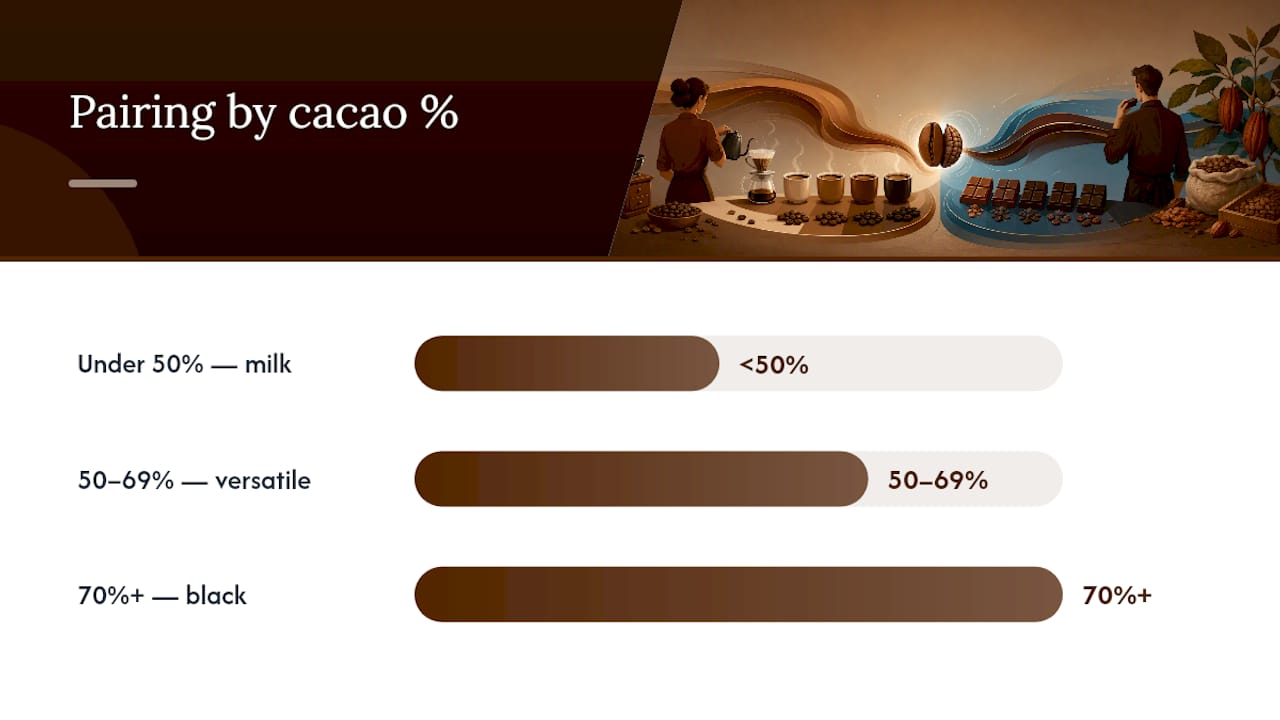
Cacao percentage tells you how much sugar is left in the bar, and sugar level is what determines whether a chocolate will fight your coffee or fold into it. A chocolatier’s breakdown of pairing logic sorts chocolate into three practical bands: dark (70%+), medium (50 to 69%), and below 50%. Each band has a distinct job at the table.
- Dark, 70% and up: bitter, dry, low sugar, often with roasted or earthy notes. This is the only category that can go toe to toe with a double espresso or a French press without disappearing.
- Medium, 50 to 69%: balanced sweetness and bitterness, the most forgiving range for pairing. It works with almost any medium roast and most single-origin pour-overs.
- Under 50% (milk and white chocolate): creamy, sweet, low on bitterness. It’s built for milk-based coffee, not black coffee, since milk and white chocolate mirror the dairy and sugar already in a latte or iced mocha.
Origin and processing (fermentation time, bean variety, terroir) do shape flavor, but they’re a second-order adjustment. Get the cacao percentage right first, then worry about whether the bar has cherry notes or nutty ones.
Pro Tip: If you only remember one number, remember 50. Anything below it wants milk in the cup; anything above it wants black coffee.
How roast level changes which chocolate wins
Cacao percentage sets the sweetness match. Roast level sets the intensity and acidity match, and roast level shapes acidity and body just as much as bean origin does.
- Light roast: bright, often fruit-forward, sometimes floral or citrusy. Pair with mid-range cacao (55 to 65%) that carries its own fruit or red-berry notes. A very dark, smoky bar will just clash.
- Medium roast: balanced, with caramel and nutty tones. This is the widest pairing window of the three: 50 to 70% cacao or a good milk chocolate both work, which makes medium roast the easiest starting point if you’re new to pairing.
- Dark roast: heavier body, roasted or bittersweet notes, sometimes smoky. Match it with high-cacao bars (70%+) that won’t get lost, or swing the other way with a sweet milk-based drink to soften the bitterness.
When you’re stuck, match by tasting note instead of just percentage. Nutty coffee pairs naturally with nutty or caramel chocolate; fruity coffee pairs with fruit-forward or floral bars. That’s also the logic behind a sensory study finding that complementary flavor pairings beat similar or same-origin matches in consumer preference testing. Contrast, done right, reads as balance rather than clash. If you want a deeper breakdown of roast categories before you start pairing, Dkbeanleaf’s guide to coffee roast levels and flavor covers the acidity and body differences in more detail.
Building a simple tasting flight to test your pairings
You don’t need a certified palate to judge a pairing, just a system. Start with a clean mouth (water, no lingering flavors from a meal) and work from the lightest to strongest so nothing gets muted by what came before.
- Brew or prepare 3 to 6 coffee samples, ordered from lightest roast to darkest.
- Sip the coffee alone first and note the body, acidity, and finish before touching any chocolate.
- Eat a small square of the paired chocolate, letting it melt rather than chewing it fast.
- Sip the coffee again immediately after. Note whether the chocolate made it taste sweeter, more bitter, or flat.
- Score each combo on intensity, balance, and enjoyment, then move to the next roast.
Keep portions small: one square and two or three ounces of coffee per round is plenty. Write your scores down, even a rough 1 to 5 grid works, because your memory of round one gets fuzzy by round five. This is the same structure Dkbeanleaf lays out in its guide on how to create a coffee tasting flight at home, which goes into more depth on sample sizing and palate reset tricks between rounds.
Real pairings to try, sorted by coffee style
Theory only gets you so far. Here are combos worth putting in front of you, organized by how you actually drink your coffee.
- Espresso or ristretto: a 70%+ dark chocolate cuts cleanly through the concentrated bitterness, or try a 65 to 70% bar with red-fruit notes for contrast instead of a straight match.
- Dark roast, French press: stick with 70% dark chocolate, or go a step further with a salted dark chocolate. The salt tempers bitterness on both sides.
- Medium roast, pour-over: a 55 to 65% single-origin bar plays well here, and a smooth milk chocolate gives you a creamier, gentler version of the same pairing.
- Light roast, fruit-forward pour-over: look for 60 to 70% bars with their own berry or citrus notes. Skip the very high-cacao bars; their dryness overwhelms a delicate light roast.
- Milk-based and iced drinks: milk chocolate or anything under 50% cacao is the right call, along with salted caramel or nutty truffles that echo the sweetness already in a latte or blended drink.
These aren’t rigid formulas. They’re starting points that reflect the cacao-percentage and roast logic covered above, built to get you tasting instead of guessing.
Building a coffee and chocolate gift or tasting set
Small formats work better than full-size bars for pairing sessions. One or two squares per person per round is enough to taste without spoiling your palate for the next combo, and it stretches a single bar across several tasting rounds.
- Use sample-size bars across a few cacao percentages (40%, 60%, 80%) so a gift set covers the full spectrum in one box.
- Store chocolate somewhere cool and dark; heat and light dull the flavor and cause the white bloom that ruins texture.
- A pre-built set that covers a light roast, a medium roast, and one dark-chocolate bar gives most people enough range to find a favorite without overwhelming them.
- Single-serve coffee capsules pair naturally with sample-size bars since both come pre-portioned for a quick tasting session rather than a full pot.
Why balance beats matching origin
I’d rather see someone grab a fruity Ethiopian pour-over and a salted caramel truffle than chase a same-country match that sounds impressive on paper but tastes flat in the cup. The sensory research on complementary pairing backs this up: contrast and balance consistently beat similarity in blind preference tests, and same-origin matching has more romance than payoff.
That’s the philosophy behind everything above. Cacao percentage and roast level do more practical work than terroir trivia. If you want to go deeper on how roast shapes flavor before you build your own flight, Dkbeanleaf’s roast level guide is worth a read. Then just start tasting. Your palate will tell you faster than any rule ever could.
— Kristopher
Build your own tasting flight with a Dkbeanleaf sample pack
Testing these pairings gets expensive fast if you’re buying full bags of beans just to try one roast against one chocolate bar. Dkbeanleaf’s roasted-to-order approach means you can start with a sample pack built specifically for tasting sessions instead of committing to a full bag before you know what works.
Sample packs let you run the light, medium, and dark roast comparison from this guide without three separate purchases, and single-serve coffee capsules are an easy way to brew small, consistent portions for a multi-round flight without dialing in a whole pot each time. If you’re pairing with tea instead of coffee for a mixed tasting night, Dkbeanleaf’s loose leaf tea collection covers that too. Browse the sample pack options and put together your own flight this weekend.
Sources
- A Chocolatier Explains Exactly How To Pair Coffee And Chocolate — Tasting Table
- These coffee and chocolate origins were made for each other — The Manual
- Coffee & Chocolate: The science behind flavour pairing — Firetree Chocolate
FAQ
Does chocolate pair well with coffee?
Yes, chocolate and coffee pair well when you match intensity: cacao percentage against roast level. The strongest results come from balance rather than trying to match identical flavor notes, since complementary pairings outperform similarity in sensory testing.
What type of chocolate pairs best with coffee?
Milk chocolate under 50% cacao works best with lattes and other milk-based drinks, following the cacao-percentage framework most pairing experts use.
What pairs well with coffee as a gift?
A small sample pack that spans a few cacao percentages alongside a few roast styles makes a strong gift, since it lets the recipient run their own tasting instead of guessing at one bar and one bag of beans. Dkbeanleaf’s sample pack and single-serve coffee capsules are built around that kind of portioned tasting.
Is it good to eat chocolate with coffee?
Eating chocolate alongside coffee is a common and enjoyable pairing when the cacao percentage and roast level are matched deliberately rather than random. Small portions work best, roughly one square per coffee sample, so the sweetness or bitterness of the chocolate doesn’t overwhelm your palate before the next round.