

How to Choose the Best Coffee Roast Level
Roast level is the single biggest variable you control when selecting coffee, and matching it to your brew method and taste preference determines whether your cup is brilliant or forgettable. The three standard roast categories are light, medium, and dark, each producing a distinct flavor profile through different degrees of heat application. Knowing how to choose the best coffee roast level means understanding what happens to a bean during roasting, how your brewing equipment interacts with that chemistry, and what your palate actually wants. This guide covers all three factors with concrete guidance from Coffee Gear Hub, Green Coffee Collective, and real brewing practice.
What are the main coffee roast levels and their flavor profiles?
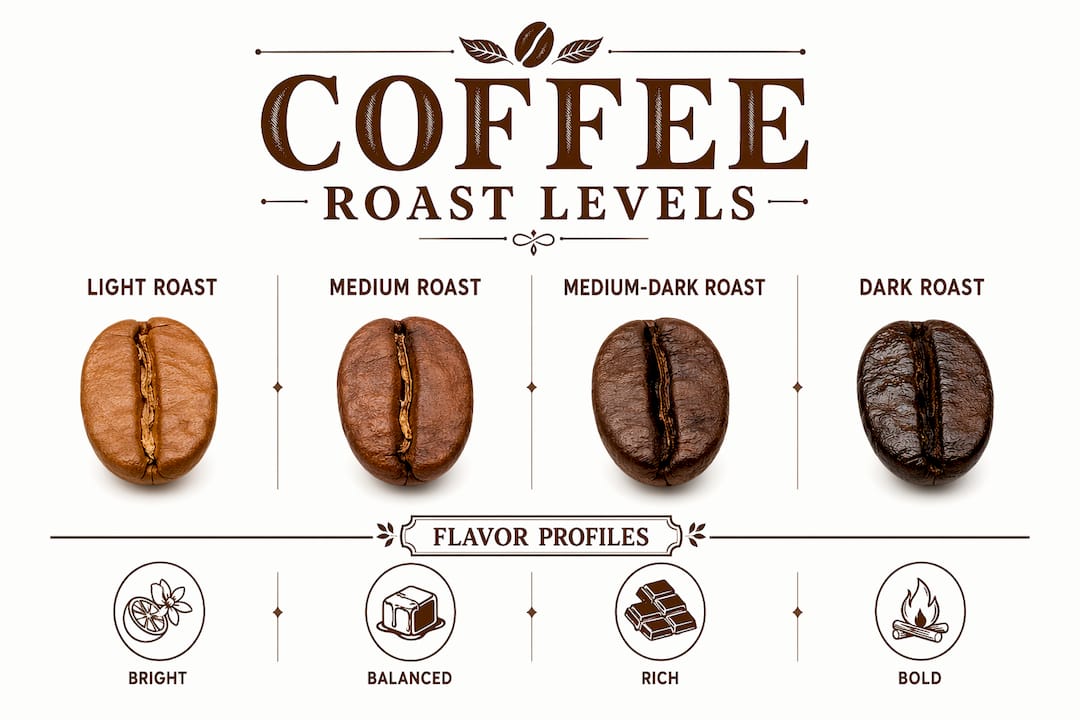
Roast level is the industry term for how long and how hot a green coffee bean is exposed to heat during the roasting process. Each level produces a measurably different flavor, body, and acidity profile.
Light roast retains the most origin character. Expect bright acidity, floral or citrus notes, and a lighter body. Ethiopian Yirgacheffe and Kenyan AA are classic examples where light roasting lets the bean’s natural fruit complexity shine. Light roasts are denser and less soluble, which means they require higher water temperature and precise grind control to extract properly.
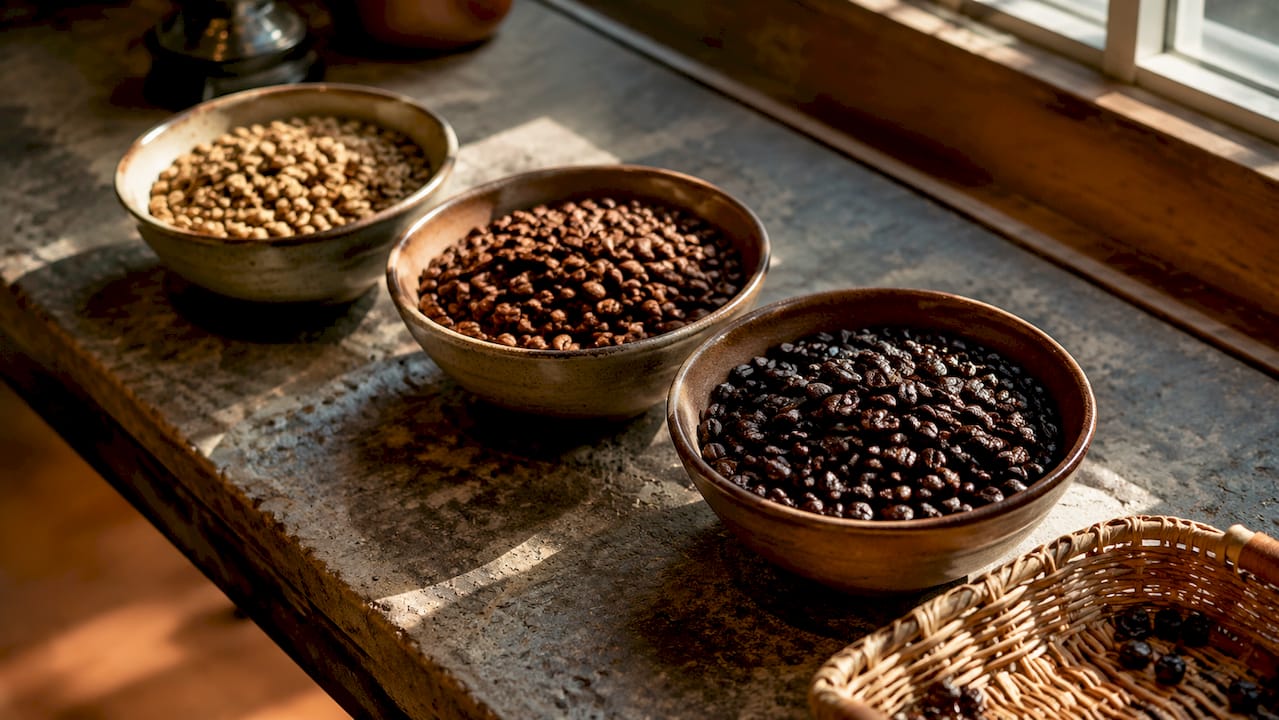
Medium roast is the most versatile starting point for home brewing. It balances origin character with sweetness and extraction consistency across drip, pour-over, and French press. Medium roast’s popularity comes directly from this flexibility. The acidity softens, body increases, and caramel or chocolate notes emerge.
Medium-dark roast pushes further into bittersweet territory. You get a fuller body, lower acidity, and roast-forward flavors like dark chocolate and toasted nuts. This range suits espresso well because the reduced acidity pairs with milk-based drinks without clashing.
Dark roast produces bold, smoky, and sometimes bitter flavors. The bean’s origin character is largely replaced by roast character. Dark roasts are more porous and prone to over-extraction if you are not careful with grind and brew time.
| Roast Level | Acidity | Body | Key Flavors | Best Brew Methods |
|---|---|---|---|---|
| Light | High | Light | Floral, citrus, fruit | Pour-over, V60, Chemex |
| Medium | Balanced | Medium | Caramel, chocolate, nuts | Drip, AeroPress, French press |
| Medium-Dark | Low-medium | Full | Dark chocolate, toasted nuts | Espresso, French press |
| Dark | Low | Heavy | Smoky, bitter, bold | Espresso, cold brew |
One critical warning: roast labels lack standardization across roasters. One brand’s “medium” may be another’s “medium-dark.” Always check the roast date and origin details on the bag rather than relying on color or label language alone.
Pro Tip: Look for the roast date, not just the roast level name. Coffee roasted within the past two to four weeks will taste dramatically fresher than a bag sitting on a shelf for two months, regardless of roast level.
How does brew method affect your roast choice?
Your brewing equipment is not neutral. It actively shapes which roast level will taste best in your cup.
Filter methods like V60, Chemex, and AeroPress suit lighter roasts because the clean extraction highlights origin clarity. The slower, more controlled water flow gives light roast’s complex acids and florals time to develop. If you brew pour-over regularly, check out pour-over best practices to dial in your technique alongside roast selection.
Espresso machines favor medium to medium-dark roasts. The high pressure and short extraction time work better with beans that have lower density and more developed sugars. A light roast in an espresso machine often tastes sour and underdeveloped because the extraction window is too short to pull its flavors properly.
French press suits medium to dark roasts. The immersion brewing method and metal filter allow oils and body to pass through, which complements the fuller texture of darker beans. Light roasts can taste thin and overly acidic in a French press.
Here are four considerations to match roast with brew method:
- Identify your primary brew method first. Your equipment sets the extraction parameters before you pick a bean.
- Match density to extraction time. Light roasts need longer or hotter extraction. Dark roasts need shorter or cooler extraction.
- Consider your grind setting. Light roasts often need a finer grind than dark roasts at the same brew method to achieve the same extraction yield.
- Account for water temperature. Light roasts benefit from water at 200–205°F. Dark roasts extract well at 195–200°F to avoid bitterness.
Pro Tip: If your light roast tastes sour, raise your water temperature by 5°F before switching beans. Most sourness in light roast brews is an extraction issue, not a roast quality issue.
How does coffee origin shape the ideal roast?
Coffee origin and processing method are the two most overlooked factors when selecting roast level. Ignoring them is one of the most common beginner mistakes, and respecting origin and processing consistently produces better flavor outcomes.
High-altitude beans from Ethiopia, Colombia, or Kenya are dense and packed with complex acids and aromatic compounds. Light to medium roasting preserves those floral and citrus notes. Roasting them dark destroys the very characteristics that make those origins worth buying.
Processing method matters just as much as altitude. Here is how the three main processing types interact with roast level:
- Washed (wet-processed) coffees have clean, bright acidity and defined fruit notes. Light and medium roasts let those characteristics express fully. Ethiopian Sidama and Colombian Huila are textbook examples.
- Natural (dry-processed) coffees carry intense fruit and wine-like sweetness from fermentation during drying. Medium to medium-dark roasts complement this sweetness without burning it off. Brazilian naturals are the most widely available example.
- Wet-hulled coffees (common in Sumatra and Indonesia) have earthy, herbal, and full-bodied profiles. Medium-dark to dark roasts align with these characteristics and are traditional for this origin.
Origin descriptors on coffee listings are practical guides for roast selection. When a listing says “jasmine, bergamot, lemon,” that is a signal to buy light or medium. When it says “dark chocolate, tobacco, cedar,” medium-dark or dark roast is the right call. Understanding how altitude shapes bean density gives you an additional layer of confidence when reading those descriptors.
What goes wrong when you pick the wrong roast?
Most home brewing failures blamed on roast level are actually extraction parameter problems caused by applying the wrong grind size or water temperature for that specific roast. Recognizing this distinction saves you money and frustration.
| Problem | Likely Cause | Fix |
|---|---|---|
| Light roast tastes sour | Under-extraction, water too cool | Raise water temp to 202–205°F, grind finer |
| Dark roast tastes bitter | Over-extraction, grind too fine | Coarsen grind, lower water temp to 195°F |
| Flat, no flavor | Stale beans or wrong grind | Check roast date, recalibrate grind size |
| Weak body | Grind too coarse or brew ratio off | Increase coffee dose or grind finer |
| Harsh, astringent finish | Over-extraction on any roast | Shorten brew time or coarsen grind |
Roast labels also mislead buyers regularly. Roast descriptors vary widely across roasters, so a bag labeled “medium” from one roaster may taste like another’s “dark.” The roast date and origin processing details are far more reliable indicators of what you will taste in the cup.
Pro Tip: Before blaming the roast, change one variable at a time. Adjust grind size first, then water temperature, then brew time. Only after ruling out extraction issues should you consider switching roast levels.
How do you find your personal best roast level?
There is no universal best roast. Individual preference drives the right choice, and the fastest path to your ideal cup is structured experimentation rather than guessing.
Follow these steps to identify your preferred roast level:
- Start with medium roast. It works across all common brew methods and gives you a reliable flavor baseline to compare against.
- Hold all brew variables constant. Use the same grind size, water temperature, dose, and brew time for each roast you test. This isolates roast as the only variable.
- Taste light, medium, and dark roasts from the same origin if possible. Some specialty roasters sell the same bean at multiple roast levels, which makes direct comparison accurate.
- Note four things for each cup: acidity level, body weight, sweetness, and whether the finish is clean or lingering. Use a simple notebook or the tasting notes approach to track your observations.
- Adjust brew technique before switching roast. If a roast tastes off, troubleshoot extraction first. Sourness usually means under-extraction. Bitterness usually means over-extraction.
- Revisit your choice after two weeks. Palates shift with exposure. A light roast that tasted too acidic in week one may taste complex and bright after you have adjusted your brewing.
The goal is not to find the “correct” roast. The goal is to find the roast that makes you want another cup.
Key takeaways
Matching roast level to your brew method, coffee origin, and personal taste preference is the most reliable way to consistently brew a great cup.
| Point | Details |
|---|---|
| Start with medium roast | Medium roast works across all brew methods and gives you a reliable flavor baseline. |
| Match roast to brew method | Light roasts suit filter methods; medium-dark to dark roasts suit espresso and French press. |
| Respect origin and processing | Washed high-altitude beans favor light roasts; natural-processed beans favor medium to dark. |
| Check roast date, not label color | Roast labels are not standardized; roast date and origin details give more accurate flavor cues. |
| Fix extraction before switching roast | Sourness and bitterness are usually grind or temperature problems, not roast problems. |
What i have learned after years of chasing the right roast
Most coffee enthusiasts I talk to arrive at roast selection backwards. They pick a roast level based on what sounds appealing, then blame the roast when the cup disappoints. The real issue is almost always extraction.
I spent a long time convinced I did not like light roast. Every cup tasted sharp and thin. Then I raised my water temperature by 8°F and used a slightly finer grind. The same light roast I had dismissed became one of the most interesting cups I had ever made. That experience changed how I think about the whole process.
The other thing I will say plainly: freshness matters more than roast level. A stale dark roast will taste worse than a fresh light roast brewed correctly. Buy from roasters who print the roast date on the bag, and use the coffee within three to four weeks of that date. No roast level compensates for oxidized beans.
My honest recommendation is to stop treating roast level as a fixed preference and start treating it as a variable you adjust alongside grind, temperature, and brew time. Roast level is a tool for flavor control, not a personality statement. The enthusiasts who brew the best cups are the ones who stay curious and keep adjusting.
— Kristopher
Explore more with Dkbeanleaf
If you are ready to put this roast knowledge to work, Dkbeanleaf has everything you need to make each cup count. Whether you are dialing in a light roast pour-over or pulling a rich medium-dark espresso shot, the right mug makes the ritual feel complete.
Browse the full Dkbeanleaf collection for premium coffee mugs that hold up to your best brews, and check out the enamel mug if you want something durable enough for the patio or a camping trip. Dkbeanleaf also carries coffee-themed apparel for enthusiasts who want to wear their passion, from classic tees to cozy hoodies. And if you want to round out your cup with something different, explore the premium tea collection for days when you want a change of pace.
FAQ
What is the best roast level for beginners?
Medium roast is the best starting point for beginners because it works across drip, pour-over, and French press with balanced flavor and forgiving extraction. It gives you a reliable baseline before you experiment with lighter or darker options.
Does light roast have more caffeine than dark roast?
Light roast retains slightly more caffeine by weight because roasting burns off a small amount of caffeine over time. The difference is minor and largely offset by how you measure your dose, by weight versus by volume.
Why does my dark roast taste bitter?
Bitterness in dark roast is almost always an over-extraction issue caused by a grind that is too fine or water that is too hot. Coarsen your grind slightly and lower your water temperature to around 195°F before switching beans.
Can i use light roast in an espresso machine?
You can use light roast in an espresso machine, but it requires precise dialing. Light roasts are denser and less soluble, so you will need a finer grind and possibly a longer extraction time to avoid sourness. Many specialty cafes now offer light roast espresso as a deliberate choice.
How do i read coffee bag labels accurately?
Focus on the roast date and origin processing details rather than the roast level name or bag color. Roast descriptors vary widely across roasters, and a bag labeled “medium” from one brand may taste significantly darker than the same label from another.
Recommended
- Coffee roast levels explained: tasting notes and brewing tips – D&K Bean and Leaf
- Explore every coffee roast: types, tastes, and brewing tips – D&K Bean and Leaf
- How Roasting Shapes Coffee Flavor: a Science Guide – D&K Bean and Leaf
- Types of Coffee Beans Worldwide: Your Flavor Guide – D&K Bean and Leaf