

Stay Under 400 mg: Coffee vs Tea Health and Brewing Tips
Neither coffee nor tea is the universal winner. Both are linked to lower risk of several chronic diseases, and the right choice depends on your caffeine tolerance, how you sleep, and whether you dump sugar and cream into your cup. Moderation matters more than the beverage itself, and most of what we know comes from observational research, not controlled trials.
TL;DR:
- Drinking tea may be a better choice for those sensitive to caffeine, as it contains less and has calming amino acids like L-theanine.
- Both coffee and tea offer antioxidant compounds that help reduce oxidative stress, but they work through different chemical pathways with no clear overall superiority.
- Consuming up to 400 milligrams of caffeine daily is generally safe, but individual responses vary, making moderation and personal monitoring essential.
- Decaf versions still provide most antioxidants, making them suitable for evening consumption, pregnancy, or those limiting caffeine intake.
- Hydration is unlikely to be harmed by moderate coffee or tea consumption, but sensitive individuals should balance intake with water, especially during exercise or hot weather.
Table of Contents
- Coffee vs Tea Health Comparison: Caffeine and Antioxidants Side by Side
- What the Research Says About Coffee, Tea, and Disease Risk
- Which Beverage Fits Your Health Goals?
- How to Drink Coffee or Tea for Better Health
- A Note on the Evidence Behind This Comparison
- Hydration: Does Coffee or Tea Dehydrate You?
- Coffee, Tea, and Your Gut: Digestion Effects Compared
- Caffeine and Medications: What to Watch For
- Coffee, Tea, and Mental Health: Mood, Stress, and Anxiety
- Do Decaf Coffee and Tea Still Offer Health Benefits?
- Finding Your Own Balance
- Try Lower-Caffeine Teas Without Giving Up the Ritual
- Sources
Coffee vs Tea Health Comparison: Caffeine and Antioxidants Side by Side
The gap between coffee and tea starts with dose. An 8-ounce cup of coffee delivers roughly 80 to 100 milligrams of caffeine, while the same amount of tea usually lands at 40 to 70 milligrams, depending on the variety and how long it steeps. That difference explains why coffee hits harder and faster, while tea tends to produce a milder lift that lasts longer without the crash.
Part of that smoother curve comes down to chemistry. Tea contains L-theanine, an amino acid that, paired with caffeine, produces calmer, more sustained alertness instead of the jagged spike coffee drinkers sometimes feel. If you’ve ever noticed that tea keeps you focused without the wired feeling, L-theanine is the reason.
Antioxidants split along different lines too. Coffee’s signature compound is chlorogenic acid, while tea brings catechins and theaflavins to the table, all of which help the body counter oxidative stress and inflammation. Neither compound family has been shown to outperform the other across the board. They just work through slightly different pathways.
A few brewing variables shift these numbers more than people expect:
- Brew strength and time: A longer steep or a stronger grind ratio pulls more caffeine and more antioxidants into the cup, for both coffee and tea.
- Tea type: Black tea usually runs higher in caffeine than green tea, and both sit well below coffee. Check the tea caffeine levels by type if you want exact ranges.
- Coffee brewing method: Cold brew, drip, and espresso don’t extract caffeine at the same rate. Grind size and water temperature both play a role. Our breakdown of coffee strength versus caffeine content covers this in more detail.
- Decaf and herbal options: Decaf coffee and true decaf tea strip out most of the caffeine but keep much of the antioxidant profile intact. Herbal “teas” like chamomile or peppermint aren’t tea at all botanically, and they carry no caffeine or catechins.
Pro Tip: If you’re chasing the calmest possible alertness, a black or green tea steeped four to five minutes gives you a fuller antioxidant pull without pushing caffeine into jittery territory.
What the Research Says About Coffee, Tea, and Disease Risk
Cohort studies consistently link both beverages to a lower risk of several chronic conditions, but the strength of that link varies by disease and by how much you drink. One large prospective study tracking coffee and tea intake against overall and cause-specific mortality found modest associations with reduced death risk among regular drinkers of either beverage. Modest is the operative word. This is not a drug trial with a clean cause-and-effect line. It’s a pattern observed across large populations, and researchers can’t fully separate the coffee or tea habit from everything else healthy drinkers tend to do.
Here’s where the evidence tends to point, disease by disease:
- Type 2 diabetes: Regular coffee and tea drinkers show up in cohort data with lower diabetes incidence, an association researchers partly attribute to chlorogenic acid and catechins improving insulin sensitivity.
- Cardiovascular disease: Moderate intake of either drink correlates with lower rates of certain heart disease endpoints, though the relationship isn’t linear. Very high coffee intake in caffeine-sensitive people can raise blood pressure temporarily.
- Liver disease: Coffee has the more consistent evidence here, with several cohorts linking regular consumption to lower rates of liver fibrosis and liver cancer. Tea’s liver data is thinner but still leans favorable.
- Neurodegenerative disease: Some cohorts associate both beverages with lower rates of cognitive decline, though the effect size is small and inconsistent across studies.
- Cancer and mortality: Broader meta-analytic evidence shows small risk reductions tied to regular consumption of coffee or tea, but the effect size differs by cancer type and population studied.
What ties all of this together is the observational label. These are cohort studies and meta-analyses, which means researchers are watching what people already drink and tracking outcomes over years, not randomly assigning one group to coffee and another to tea in a lab. Confounding is a real problem: people who drink four cups of tea a day might also exercise more, smoke less, or eat differently than people who don’t drink tea at all. Harvard’s own summary on coffee versus tea is upfront that the science supports moderate consumption of either drink as reasonably safe and possibly protective, without crowning one as definitively healthier.
The honest takeaway: both drinks likely contribute a modest protective effect on several chronic disease outcomes. Neither is a substitute for the interventions that actually move the needle on those diseases, like blood pressure control, exercise, or quitting smoking. Coffee and tea are supporting players, not headline treatments.
Which Beverage Fits Your Health Goals?
The science doesn’t crown a universal winner, so the better question is which drink fits your body and your day. Here’s how to think through it based on common situations:
- You’re prone to anxiety or poor sleep. Tea’s lower caffeine dose and L-theanine content make it the gentler option, especially in the afternoon. If coffee is non-negotiable, switch to decaf after noon. Our guide on why coffee causes jitters walks through the sensitivity mechanics if you want the full picture. Persistent anxiety that caffeine seems to trigger is also worth discussing with a professional. Therapy for anxiety can help you sort out whether caffeine is the real trigger or just one factor among several.
- You need a fast performance boost. Coffee wins on speed and dose. Time it 30 to 45 minutes before you need the lift, and keep the serving to one cup if you’re caffeine-sensitive.
- You’re pregnant or breastfeeding. Cap total caffeine intake and lean toward lower-caffeine choices like tea or half-caff coffee. Talk to your obstetrician about your specific limit.
- You’re focused on weight or metabolic health. Either drink can help modestly on its own, but the moment you add flavored syrup or a heavy cream pour, you’ve likely erased whatever benefit the beverage offered.
How to Drink Coffee or Tea for Better Health
Moderation has a number attached to it. FDA guidance puts the safe upper limit for most healthy adults at 400 milligrams of caffeine a day, and many clinicians point to 300 to 400 milligrams as the practical sweet spot for getting benefits without the downside of jitters or disrupted sleep.
A few habits protect the upside:
- Skip the flavored syrups and go light on high-fat creamers. Added sugar and calorie-dense additions can quietly cancel out the metabolic benefits either drink offers on its own.
- If you want the antioxidant boost without the full caffeine load, brew a shorter steep or switch part of your rotation to decaf coffee or true decaf tea.
- Cold brew coffee runs slightly less acidic than hot-brewed coffee, which matters if you deal with reflux. Our rundown of cold brew coffee benefits covers the brewing tradeoffs.
- Track how your body responds for a week. Note sleep quality, resting heart rate, and any stomach upset, then adjust your timing or dose accordingly.
Pro Tip: Move your last caffeinated cup, coffee or tea, to at least six hours before bedtime. Caffeine’s half-life runs five to six hours in most adults, so an afternoon cup can still be circulating at midnight.
A Note on the Evidence Behind This Comparison
This comparison leans on cohort studies, meta-analyses, and guidance from Harvard Health and the FDA rather than single small trials. For deeper dives on specific angles, our own coverage of coffee strength versus caffeine content and cold brew coffee benefits breaks down the brewing science further.
- The research cited here is observational. It shows associations, not proof of cause and effect.
- This article is for general information and isn’t a substitute for personalized medical advice. Talk to a clinician about your own caffeine tolerance and health history.
Hydration: Does Coffee or Tea Dehydrate You?
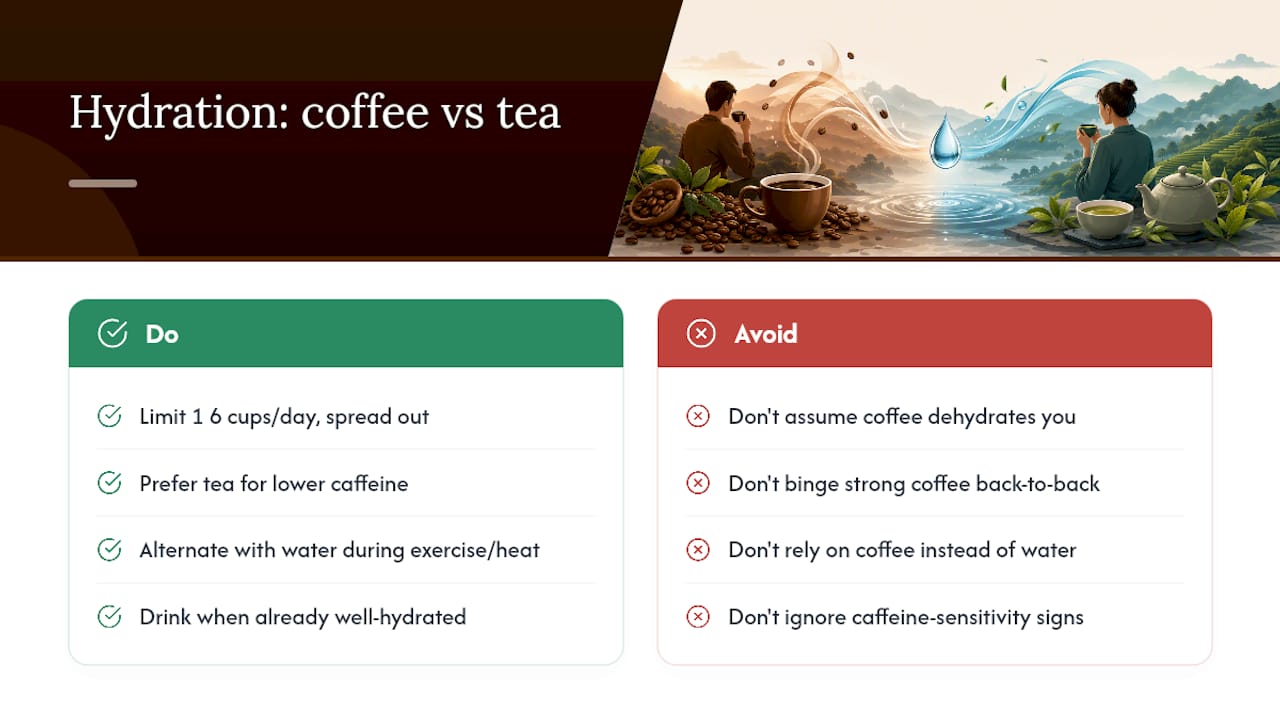
The old myth that coffee dehydrates you doesn’t hold up well under scrutiny. Caffeine has a mild diuretic effect, but at typical intake levels, the fluid volume in your cup outweighs the diuretic pull. You end up net hydrated, not depleted, whether you’re drinking coffee or tea.
Tea has a slight edge here simply because it’s usually consumed in a form closer to plain hot water, with less concentrated caffeine per serving. If you’re drinking several cups of strong coffee back to back, especially in hot weather or during exercise, the cumulative diuretic effect becomes more noticeable. Someone sipping two or three cups of green tea across the day is unlikely to notice any hydration difference at all compared to drinking water.
The practical rule: if you’re already well-hydrated and drinking coffee or tea at a normal pace, moderate one to four cups spread through the day, hydration isn’t something you need to worry about. The exception is regular exercisers or anyone in hot climates who relies heavily on coffee instead of water. In that case, alternating with plain water keeps things balanced. People who notice a diuretic effect strongly, needing frequent bathroom breaks shortly after a cup, tend to be more caffeine-sensitive overall, which loops back to the dosing advice covered earlier.
Coffee, Tea, and Your Gut: Digestion Effects Compared
Coffee’s acidity is the more common digestive complaint. Its natural compounds stimulate stomach acid production, which is great for some people’s morning routine and rough for others, especially anyone with acid reflux or a sensitive stomach. Cold brew tends to run less acidic than hot-brewed coffee because the cold extraction process pulls fewer acidic compounds, which is worth trying if regular coffee leaves you uncomfortable.
Tea, particularly black and green varieties, contains tannins and polyphenols that some early research suggests may support a healthier gut microbiome balance, though this research is still developing and shouldn’t be oversold. Tea is generally gentler on the stomach lining than coffee, which is part of why it’s often the beverage recommended to people recovering from gastrointestinal issues.
Both drinks can trigger a bowel response. Coffee’s laxative effect is well documented and tends to kick in within 20 to 30 minutes for many drinkers, a reaction tied to gut hormone stimulation rather than just the caffeine. Tea’s effect on bowel movements is milder and less universal. If you notice coffee routinely upsets your stomach but tea doesn’t, that’s a reasonable signal to lean toward tea, especially on an empty stomach.
Caffeine and Medications: What to Watch For
Caffeine interacts with more medications than most people realize, and the interaction risk applies to both coffee and tea since the mechanism is the same compound at different doses. Stimulant medications for ADHD, certain asthma medications, and some antibiotics can amplify caffeine’s effects, leading to a faster heartbeat, jitteriness, or elevated blood pressure when combined with a regular caffeine habit.
Caffeine can also interfere with how the body processes certain drugs. It affects the metabolism of some anxiety and antidepressant medications, and it can reduce the absorption of iron supplements when consumed too close together, which matters if you’re managing anemia. Anyone on blood thinners should also talk to their doctor about caffeine intake, since high doses may have a mild effect on platelet function.
If you take any prescription medication regularly, the safest move is asking your pharmacist or doctor whether your specific drug interacts with caffeine, rather than guessing based on general advice. This applies equally whether your regular drink is coffee or tea. The caffeine dose matters more than which beverage delivers it, though tea’s lower typical dose gives you more margin before an interaction becomes noticeable.
Coffee, Tea, and Mental Health: Mood, Stress, and Anxiety
Coffee and tea affect mood through different timelines. Coffee’s higher, faster caffeine dose can sharpen focus and elevate mood in the short term, but that same dose pushes some people, especially those already prone to anxiety, into a jittery, on-edge state. The crash on the back end can also drag mood down a few hours later, which is a pattern many regular coffee drinkers recognize without realizing caffeine is the cause.
Tea’s L-theanine and caffeine combination tends to produce steadier mood support without the same anxious edge. This is part of why tea is often recommended as the gentler choice for people who already feel keyed up or who deal with generalized anxiety. That said, tea is not a treatment for clinical anxiety or depression, and anyone dealing with persistent mood or stress issues should talk to a mental health professional rather than trying to caffeine-manage their way through it.
Stress responses also differ by dose rather than beverage type. Someone drinking one cup of coffee a day may feel no anxiety impact at all, while someone drinking five cups might feel constantly on edge regardless of whether that caffeine came from coffee or a strong black tea. The beverage matters less than the total daily caffeine load and your individual sensitivity to it.
Do Decaf Coffee and Tea Still Offer Health Benefits?
Decaf isn’t a downgrade in every category. Most of the antioxidant content in coffee and tea, chlorogenic acid, catechins, and theaflavins, survives the decaffeination process largely intact, since these compounds aren’t chemically tied to the caffeine molecule. That means decaf drinkers still get a meaningful share of the antioxidant benefit tied to lower rates of certain chronic conditions in the cohort research.
What decaf sacrifices is the alertness effect and, for some people, part of the mood lift tied to caffeine itself. If your main reason for drinking coffee or tea is the antioxidant profile rather than the stimulant kick, decaf is a legitimate way to get most of the benefit while sidestepping sleep disruption or anxiety triggers. This makes decaf a smart pick for evening drinking, for people who are pregnant, or for anyone who has hit their daily caffeine ceiling but still wants the ritual and the health upside.
Herbal teas deserve a separate mention here since they’re often lumped in with “tea” but contain no caffeine and no catechins, because they’re not made from the tea plant at all. Chamomile, peppermint, and rooibos offer their own plant compounds and are worth drinking for variety, but they don’t carry the same antioxidant profile studied in the coffee and tea cohort research.

Finding Your Own Balance
Kristopher’s view: the data doesn’t hand you a winner, and that’s the honest answer. Pay attention to how your body actually responds. Diet, sleep, and movement will always matter more than whether your mug says coffee or tea.
— Kristopher
Try Lower-Caffeine Teas Without Giving Up the Ritual
If this comparison has you leaning toward dialing back caffeine without giving up your daily cup, Dkbeanleaf’s tea collection is built exactly for that shift. You get antioxidant-rich loose leaf blends, from black to green to lower-caffeine options, without hunting through a dozen brands to find quality leaves.

Sample packs make this an easy, low-commitment way to figure out which tea actually fits your goals, whether that’s calmer afternoons, better sleep, or just variety in the cup. This is a purchasing option, not medical advice. If you’re managing a health condition or medication interaction, loop in your doctor before making a big shift in caffeine intake. Otherwise, browse the tea collection and see which blend fits the balance you’re after.
This article is general information, not a substitute for advice from a qualified doctor. Consult a qualified healthcare professional about your own circumstances before acting on anything here.
Sources
- Which is healthier: Coffee or tea? - Harvard Health
- Coffee or Tea? A prospective cohort study on the associations of coffee and tea intake with overall and cause-specific mortality
- Spilling beans: How much caffeine is too much? - FDA