

Why Coffee Causes Jitters: A Science-Backed Guide
Caffeine is the direct cause of coffee jitters, and it works by blocking adenosine receptors in the brain, which triggers a chain reaction in your nervous system that can leave you shaky, anxious, and wired. 36% of American coffee drinkers report experiencing jitters, with younger adults aged 18–24 hitting 58%. That gap exists because caffeine sensitivity is not uniform. The CYP1A2 gene largely determines how fast your body clears caffeine, which means two people drinking the same cup can have completely different reactions. Understanding why coffee causes jitters is the first step toward drinking it smarter.
Why does coffee cause jitters?
Caffeine is classified as a central nervous system stimulant, and its primary mechanism is adenosine receptor blockade. Adenosine is a brain chemical that builds up throughout the day and makes you feel sleepy. When caffeine blocks adenosine receptors, your brain cannot receive the signal to slow down. The result is a surge in alertness, but also a surge in nervous system activity that can tip into overstimulation.
That overstimulation triggers what physiologists call the sympathetic “fight-or-flight” response. Your adrenal glands release adrenaline. Your heart rate climbs. Your muscles tense. Your hands may shake. These are the same physical responses your body uses when it perceives a threat, and caffeine can activate them without any actual danger present.

The clinical term for this experience is caffeine-induced anxiety, and it is dose-dependent. Higher caffeine doses increase anxiety symptoms both directly through central nervous system stimulation and indirectly by disrupting sleep, which compounds the problem the next morning. The jittery feeling is not a quirk or a weakness. It is your nervous system responding exactly as designed, just to the wrong trigger.
Common symptoms of caffeine overstimulation
The physical signs of caffeine jitters are easy to recognize once you know what to look for:
- Rapid heartbeat or pounding pulse, even at rest
- Shakiness or tremors, especially in the hands
- Sweating without physical exertion
- Restlessness and an inability to sit still
- Racing thoughts or difficulty concentrating
- Stomach upset, since caffeine also stimulates gut motility
Pro Tip: If your hands shake while holding your coffee cup, that is a clinical indicator that you have exceeded your personal caffeine tolerance. Set the cup down and drink water instead of pushing through.
How does your genetics determine caffeine sensitivity?
The CYP1A2 enzyme, produced by the CYP1A2 gene, is responsible for metabolizing roughly 95% of the caffeine you consume. CYP1A2 polymorphisms split people into two broad groups: fast metabolizers, who clear caffeine quickly, and slow metabolizers, who keep it in their system far longer. A slow metabolizer drinking the same cup as a fast metabolizer will feel stronger effects for a longer period, even though the dose is identical.
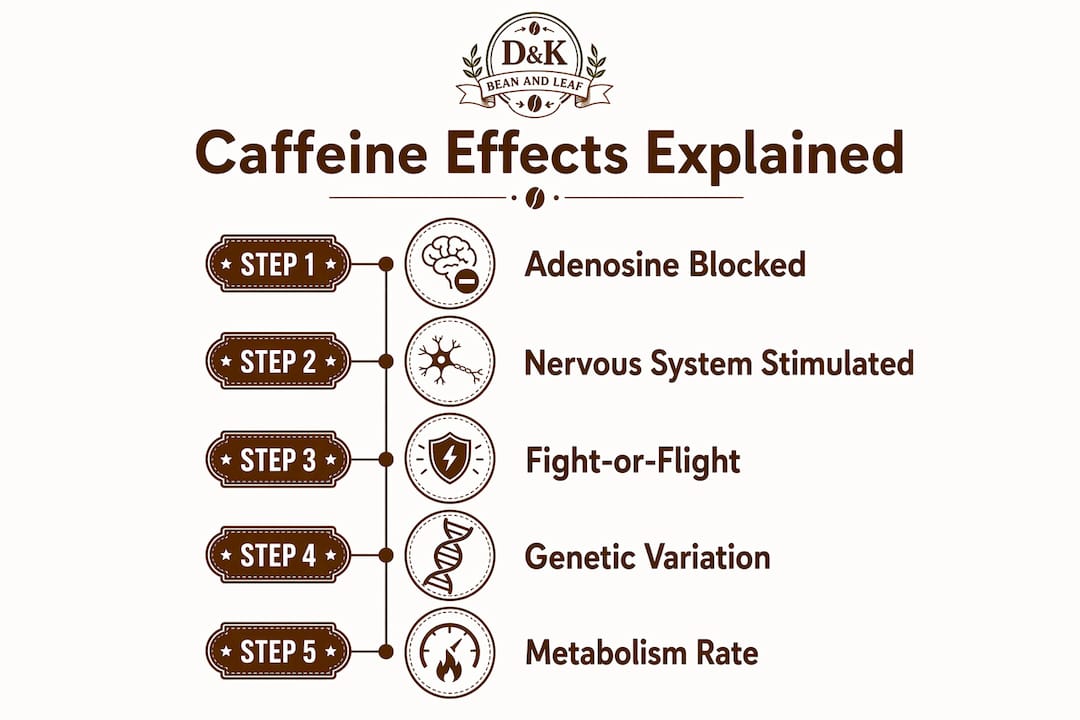
This genetic difference explains why some people drink three cups before noon without a twitch, while others feel wired and anxious after one. Personal caffeine tolerance varies greatly, and that variation is largely written into your DNA. It is not a matter of willpower or habit.
What makes this more complex is that CYP1A2 activity is not fixed. Smoking, pregnancy, and certain drugs all alter how the enzyme functions throughout your life. A person who tolerated coffee well in their twenties may find their sensitivity shifts after starting a new medication or during pregnancy.
Medications that slow caffeine clearance
Oral contraceptives and some antibiotics inhibit CYP1A2 directly, slowing caffeine clearance and extending the window during which jitters can occur. If you recently started a new medication and suddenly feel more sensitive to coffee, the drug interaction is a likely explanation.
| Factor | Effect on caffeine metabolism |
|---|---|
| Fast CYP1A2 variant | Caffeine clears quickly; lower jitter risk |
| Slow CYP1A2 variant | Caffeine stays longer; higher jitter risk |
| Oral contraceptives | Inhibit CYP1A2; slow clearance |
| Smoking | Increases CYP1A2 activity; speeds clearance |
| Pregnancy | Reduces CYP1A2 activity; slows clearance |
Pro Tip: If you started a new prescription and your coffee suddenly hits harder, ask your pharmacist whether the medication affects CYP1A2. A simple dose reduction in the morning may resolve the problem entirely.
What lifestyle habits make coffee jitters worse?
Genetics sets your baseline, but your daily habits determine how close you get to that edge. The 400 mg daily caffeine limit for healthy adults sounds generous until you account for how caffeine stacks up across a typical day. A single cup of filtered coffee contains 60–135 mg of caffeine depending on brew method and bean. Add an afternoon energy drink, a pre-workout supplement, or even a dark chocolate bar, and you can exceed 400 mg without realizing it.
The following patterns consistently amplify the causes of caffeine jitters beyond what the dose alone would predict:
-
Drinking coffee on an empty stomach. Blood sugar drops when caffeine hits a fasted system, and that dip worsens shakiness independently of caffeine’s direct effects. The combination of low blood sugar and high adrenaline is a reliable recipe for severe jitters.
-
Sleep deprivation. Caffeine sensitivity is amplified by sleep deprivation, particularly in young adults with higher baseline anxiety. When you are already running on low sleep, your nervous system is primed to overreact.
-
Irregular meals. Skipping meals destabilizes blood sugar throughout the day. Caffeine on top of an already unstable metabolic state pushes the nervous system further toward overstimulation.
-
Stacking caffeine sources. Coffee before noon, an energy drink at 2:00 PM, and a cup of black tea at 4:00 PM can push total intake well past the safe threshold. Each source adds to the cumulative load your body must process.
-
High baseline stress or anxiety. Coffee and nervousness have a bidirectional relationship. If you are already anxious, caffeine amplifies that state. Caffeine-induced anxiety is not separate from pre-existing anxiety. It feeds it.
Understanding how caffeine content varies by brew method is one of the most practical ways to manage your daily intake without guesswork.
How can you reduce or prevent coffee jitters?
Managing caffeine jitters does not require quitting coffee. It requires adjusting how, when, and how much you drink.
-
Eat before you drink. Food slows caffeine absorption and stabilizes blood sugar. Even a small meal or a handful of nuts before your first cup makes a measurable difference in how hard caffeine hits.
-
Cut your dose, not your habit. If you drink two full cups in the morning, try one full cup and one half-strength cup. Reducing total caffeine by 25–30% often eliminates jitters without affecting alertness.
-
Time your coffee strategically. Cortisol peaks in the morning, typically between 8:00 AM and 9:00 AM. Drinking coffee during that window adds stimulation on top of an already elevated cortisol level. Waiting until 9:30 AM or 10:00 AM lets cortisol drop naturally before caffeine enters the picture. The best timing for coffee matters more than most people realize.
-
Hydrate consistently. Dehydration concentrates caffeine’s effects. Drinking a full glass of water before and after your coffee dilutes the impact and supports faster clearance.
-
Watch for hand tremors. Tremors when holding a cup are a reliable signal that you have crossed your personal threshold. Treat them as a hard stop, not a minor inconvenience.
-
Switch one cup for tea. Green tea and black tea contain caffeine but at lower concentrations, and green tea also contains L-theanine, an amino acid that promotes calm focus without the spike. Replacing one daily coffee with tea reduces total caffeine load while keeping the ritual intact.
Pro Tip: Try a different brewing method if you love strong coffee but hate jitters. Filtered drip coffee removes diterpenes and tends to produce a cleaner, less aggressive caffeine curve than espresso or French press.
Key Takeaways
Caffeine causes jitters by blocking adenosine receptors and triggering a fight-or-flight response, with genetic factors like CYP1A2 variants, lifestyle habits, and daily dose all determining how severe that response becomes.
| Point | Details |
|---|---|
| Adenosine blockade is the root cause | Caffeine blocks adenosine receptors, triggering adrenaline release and nervous system overstimulation. |
| CYP1A2 gene drives individual sensitivity | Slow metabolizers experience stronger, longer-lasting jitters from the same dose as fast metabolizers. |
| 400 mg is the daily upper limit | One cup of filtered coffee contains 60–135 mg, making it easy to exceed the limit across multiple sources. |
| Empty stomach amplifies jitters | Blood sugar drops when caffeine hits a fasted system, compounding shakiness beyond caffeine’s direct effects. |
| Hand tremors signal overconsumption | Visible tremors when holding a cup are a reliable indicator that you have exceeded your personal tolerance. |
What I’ve learned from years of watching people drink coffee wrong
Most people treat caffeine jitters as a sign they need to toughen up or drink more coffee to build tolerance. That is exactly backwards. Jitters are your nervous system telling you that the dose exceeded your current capacity, and pushing through does not build tolerance. It just delays the feedback.
What I have noticed is that the people who manage caffeine best are the ones who treat it like a tool rather than a habit. They know roughly how much they are consuming, they eat before they drink, and they pay attention to how they feel at the two-hour mark. That kind of self-monitoring sounds tedious, but it takes about a week to become automatic.
The other thing most articles get wrong is the idea that caffeine sensitivity is fixed. Your CYP1A2 activity shifts with age, medication, stress load, and sleep quality. The dose that worked fine at 25 may be too much at 35, not because you got weaker, but because your biochemistry changed. Treating your caffeine intake as something to revisit periodically, rather than a permanent setting, is the most practical thing you can do.
Gradual adjustments beat cold turkey every time. Cutting caffeine abruptly causes withdrawal headaches that make the whole experience miserable and unsustainable. Dropping 25 mg at a time over two weeks is boring, but it works.
— Kristopher
A gentler cup worth trying
If coffee jitters have become a regular part of your morning, tea is worth a serious look, not as a consolation prize, but as a genuinely different experience.

Tea delivers caffeine at lower concentrations than most coffee preparations, and green tea adds L-theanine to the mix, a compound that smooths out the stimulant curve and reduces the anxious edge. The result is alert focus without the shakiness. Dkbeanleaf carries a full tea collection built for people who want flavor and a calmer kind of energy. Whether you are cutting back on coffee or just looking for an afternoon alternative, there is a tea in that range worth trying.
FAQ
Why do I get jittery after just one cup of coffee?
You may be a slow CYP1A2 metabolizer, meaning your body clears caffeine more slowly than average, which causes stronger and longer-lasting effects from the same dose.
Does drinking coffee on an empty stomach make jitters worse?
Yes. Caffeine on an empty stomach causes blood sugar to drop, which compounds the shakiness that caffeine already produces through adrenaline release.
How much caffeine per day is considered safe?
400 mg per day is the general upper limit for healthy adults, though individual tolerance varies widely based on genetics, medication use, and sleep quality.
Can anxiety make coffee jitters worse?
Caffeine-induced anxiety feeds pre-existing anxiety directly. If your baseline stress is high, the same dose of caffeine will produce stronger jitter and nervousness effects than it would on a calm day.
What is the fastest way to stop coffee jitters once they start?
Drink water, eat something with carbohydrates and fat, and move your body lightly. Walking helps metabolize adrenaline faster than sitting still, which shortens the duration of the jittery feeling.