

Common Coffee Brewing Mistakes That Ruin Your Cup
The most common coffee brewing mistakes are grind size errors, wrong water temperature, and inaccurate coffee-to-water ratios. Each one directly strips flavor from your cup before you take a single sip. Fixing these errors does not require expensive equipment. It requires attention to a few repeatable variables. Experts agree that small cumulative errors in grind, temperature, and timing degrade coffee more than any single mistake alone. The Specialty Coffee Association (SCA) publishes ratio and temperature guidelines precisely because these variables are that consequential.
1. Common coffee brewing mistakes start with wrong water temperature
Water temperature is the single most controllable variable in brewing, and most home brewers get it wrong. Brewing between 195°F and 205°F optimizes the extraction of flavor compounds from the grounds. Water outside that range forces a trade-off you do not want.
Water that is too hot over-extracts the coffee, pulling bitter compounds that should stay in the grounds. Water that is too cold under-extracts, leaving acids and sugars behind and producing a sour, weak cup. Neither extreme tastes like the coffee you paid for.
Here is what temperature does to your cup at each extreme:
- Too hot (above 205°F): Bitter, harsh, astringent flavor
- Too cold (below 195°F): Sour, thin, underdeveloped taste
- Just right (195°F–205°F): Balanced sweetness, acidity, and body
Pro Tip: If you do not own a thermometer, bring water to a full boil and let it rest for 30 seconds. That drop puts most kettles right in the target range.
Pre-warming your brewing vessel also matters. Thermal decay during brewing drops water temperature faster than most brewers expect, which cuts extraction short and flattens flavor. Rinse your carafe or pour-over dripper with hot water before you brew.
2. Using the wrong grind size for your brew method
Grind size controls how fast water moves through the coffee and how much surface area it contacts. Using the wrong grind size disrupts extraction balance and produces either a bitter or a sour cup, depending on which direction you miss.
Every brew method has a grind size that matches its contact time with water:
- Espresso: Extra fine, like powdered sugar
- Pour-over (V60, Chemex): Medium fine, like table salt
- Drip machine: Medium, like coarse sand
- French press: Coarse, like rough sea salt
- Cold brew: Extra coarse, like breadcrumbs
Brewing a French press with espresso-fine grounds is one of the most common preparation mistakes beginners make. The long steep time combined with fine grounds over-extracts the coffee and produces a bitter, muddy result. Check out pour-over best practices for a detailed look at how grind interacts with brew time.
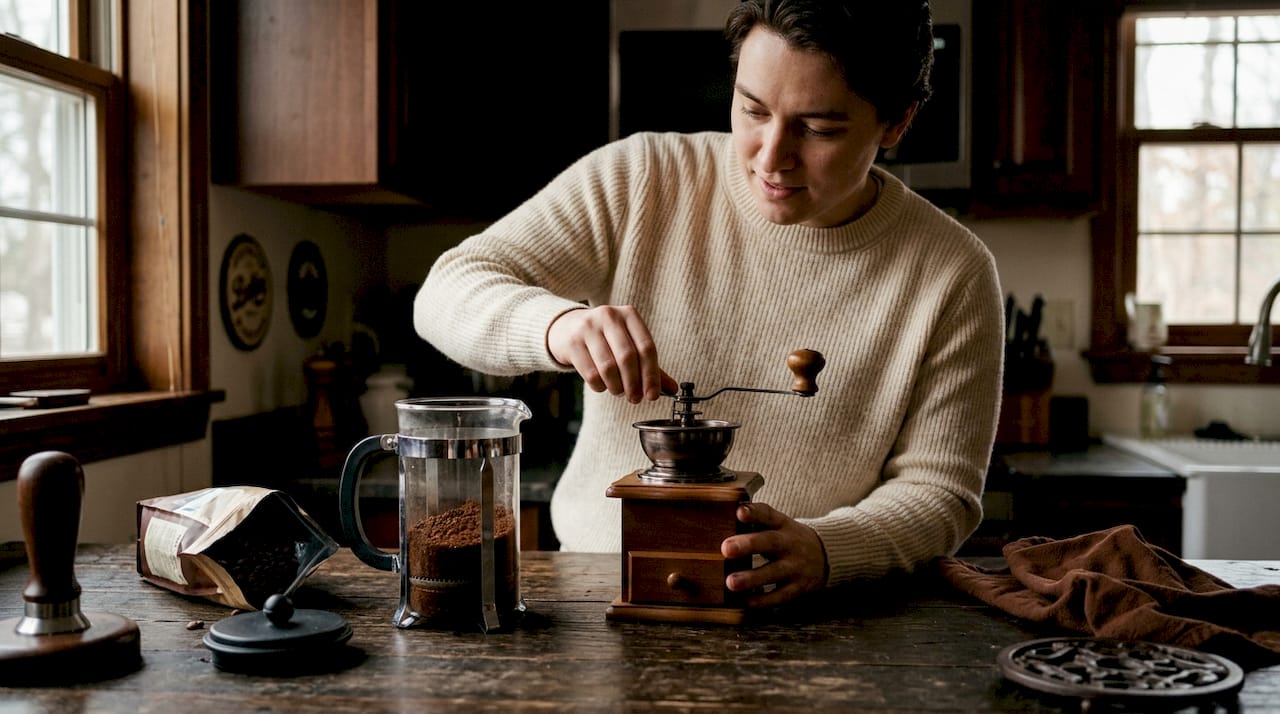
Grind consistency matters as much as grind size. Blade grinders produce uneven particles that include both fine dust and coarse chunks. The fines over-extract and the coarse pieces under-extract in the same brew, creating a muddled, unpredictable cup. A burr grinder, whether flat or conical, cuts each particle to the same size and gives you repeatable results.
Pro Tip: When you change your grind setting, adjust by one step at a time and brew a full cup before adjusting again. Jumping two or three settings at once makes it impossible to know which change fixed the problem.
3. Measuring coffee by volume instead of weight
Measuring coffee with a scoop or tablespoon is one of the most overlooked brewing errors. Weighing coffee on a digital scale to 0.1g accuracy is the only way to get a consistent extraction across different roasts and origins.
Bean density changes with roast level. Dark roast beans lose mass during roasting, so a tablespoon of dark roast contains less coffee by weight than a tablespoon of light roast. The same scoop produces a different strength cup depending on what beans you use.
| Measurement method | Consistency | Accuracy |
|---|---|---|
| Tablespoon or scoop | Low | Varies by roast and bean size |
| Digital scale (0.1g) | High | Repeatable across all roasts |
The SCA’s golden ratio is 1 gram of coffee per 15–18 grams of water, depending on your preferred strength. That ratio only works if you weigh both the coffee and the water. A coffee dose ratio guide walks through how to apply this across different brew sizes and methods.
4. Storing coffee beans incorrectly
Improper storage is a slow, invisible mistake. You will not notice it on day one, but by day seven your beans are already losing the aroma and complexity you paid for.
Oxidation and moisture are the two main enemies of fresh coffee. Opaque, airtight containers at room temperature protect beans better than refrigeration or freezing. The fridge introduces moisture every time you open the door, and coffee absorbs odors from surrounding food.
Common storage mistakes to avoid:
- Clear glass jars: Light accelerates oxidation and stales beans faster
- The original bag left open: Paper bags are not airtight after the first opening
- The freezer (for daily use beans): Condensation forms on beans each time they warm up
- The counter near the stove: Heat and steam from cooking degrade beans quickly
Stale beans also bloom poorly. Oxidized beans degas less CO2, which means the bloom phase during pour-over or drip brewing is weak. A poor bloom leads to uneven extraction and a flat-tasting cup.
Buy beans in smaller quantities and use them within two to three weeks of the roast date. The roast date, not the “best by” date, is the number that matters.
5. Leaving coffee on a warming plate
A warming plate feels convenient. It is actually one of the fastest ways to ruin a cup you just brewed correctly. Continuous heat breaks down flavor compounds within minutes of brewing, producing bitterness and a stale, burnt aftertaste.
The chemical changes are irreversible. Once heat degrades the aromatic compounds in brewed coffee, no amount of cream or sugar fully masks the damage. Coffee left on a warming plate for 20 minutes tastes noticeably worse than coffee poured immediately into a thermal carafe.
The fix is simple. Pour brewed coffee into a preheated thermal carafe right after brewing. A good thermal carafe keeps coffee hot for two hours without applying any additional heat. If you brew a small amount, drink it while it is fresh rather than leaving it to sit.
Pro Tip: Brew only what you plan to drink in the next 20 minutes. Smaller, fresher batches beat a large pot that sits and degrades.
6. Ignoring water quality
Tap water carries chlorine, minerals, and other compounds that compete with coffee’s flavor. Unfiltered tap water introduces unwanted flavors that muddy extraction and reduce flavor clarity, even when every other variable is correct.
Filtered water, either from a pitcher filter or an inline filter, removes chlorine and reduces mineral interference. Completely distilled water is not the answer either. Coffee needs a small amount of dissolved minerals to extract properly. The target is clean, lightly mineralized water, not perfectly pure water.
If your tap water tastes fine on its own, it will likely brew decent coffee. If it has a noticeable chlorine smell or metallic taste, that flavor will carry through into your cup.
7. Skipping brewing notes and adjustments
Brewing coffee without tracking your variables is like cooking without a recipe and then wondering why the dish tastes different every time. Adjusting brewing parameters incrementally and keeping notes helps you identify exactly what changed when your cup improves or gets worse.
A simple log does not need to be complicated. Write down your grind setting, dose in grams, water temperature, and brew time. When the cup tastes off, you have a reference point to work backward from. When it tastes great, you can repeat it exactly.
This habit separates brewers who consistently make great coffee from those who occasionally get lucky. Consistency is a skill, and notes are the tool that builds it. If you want to understand why coffee tastes bitter on some days and not others, your brew log will usually reveal the answer.
Key takeaways
Fixing the most common coffee brewing mistakes comes down to controlling four variables: water temperature, grind size, coffee weight, and bean freshness.
| Point | Details |
|---|---|
| Water temperature | Brew between 195°F and 205°F to extract balanced flavor without bitterness or sourness. |
| Grind size by method | Match grind size to brew method; use a burr grinder for consistent particle size. |
| Weigh your coffee | Use a digital scale to 0.1g accuracy; volume measures vary by roast density. |
| Store beans correctly | Use an opaque, airtight container at room temperature and use beans within two to three weeks of the roast date. |
| Skip the warming plate | Pour brewed coffee into a thermal carafe immediately to preserve flavor compounds. |
What I have learned from years of brewing at home
The first time I fixed my water temperature, I thought I had bought better beans. The cup tasted so different that I assumed something external had changed. It had not. I had just stopped boiling water and pouring it straight onto the grounds.
That experience taught me something I now believe firmly: most bad coffee is not a bean problem. It is a process problem. The beans you already have are probably better than the cup you are currently brewing from them. A small, consistent change in one variable, whether temperature, grind, or dose, produces a noticeably better result faster than switching to a more expensive bag.
The brewers I respect most are not the ones with the most gear. They are the ones who know exactly what they did last time and can repeat it. Start with temperature and grind. Get those two right before you change anything else. The rest of the variables will make more sense once you have a stable baseline to work from.
— Kristopher
The right mug makes a fresh cup even better
You fixed your grind, dialed in your temperature, and brewed a genuinely great cup. Now drink it from something worth using.

Dkbeanleaf carries mugs built for the home coffee ritual. The white glossy mug is clean, durable, and sized right for a proper pour. The enamel mug brings a classic feel that holds heat well and looks good doing it. If you want to branch out from coffee, Dkbeanleaf’s premium tea collection pairs naturally with the same attention to water temperature and brew time you just applied to your coffee routine. Good brewing deserves good gear.
FAQ
What water temperature is best for brewing coffee?
Brew coffee with water between 195°F and 205°F. Temperatures outside this range cause either over-extraction (bitterness) or under-extraction (sourness).
Why does my coffee taste bitter every time?
Bitterness usually comes from over-extraction caused by water that is too hot, a grind that is too fine, or coffee left on a warming plate. Adjust one variable at a time to identify the cause.
Should I use a burr grinder or a blade grinder?
A burr grinder produces consistent particle sizes and gives you repeatable extraction. Blade grinders create uneven particles that cause inconsistent flavor in every cup.
How should I store coffee beans to keep them fresh?
Store beans in an opaque, airtight container at room temperature and use them within two to three weeks of the roast date. Avoid the fridge, which introduces moisture and odors.
Does water quality actually affect coffee flavor?
Yes. Unfiltered tap water with chlorine or strong mineral content introduces off-flavors that reduce clarity in the cup. Use filtered water with a small amount of dissolved minerals for best results.