

Smell, Bloom, Taste: Check Coffee Freshness in Under a Minute
Roasted coffee doesn’t expire the way milk or meat does. Bagged coffee with no mold and no off odor is almost always safe to drink well past its printed date; the real question isn’t safety, it’s taste. Once beans lose their aroma or turn flat and papery on the tongue, that’s staling, not spoilage, and it’s the thing worth actually watching.
TL;DR:
- Whole beans stay at peak flavor for 3 to 4 weeks from roasting and remain drinkable for months, while ground coffee peaks only 1 to 2 weeks after sealing.
- Coffee begins losing its aroma and flavor within days to weeks depending on the form, but spoilage such as mold or insects is rare and visible signs are a clear indicator.
- Storing coffee in airtight, opaque containers and grinding only what is needed immediately can significantly prolong freshness; freezing is effective only if vacuum-sealed and used promptly.
- Brewed black coffee is safest within hours at room temperature or 3 to 4 days refrigerated, but adding dairy reduces safe storage to 24 to 48 hours.
- Repurposing stale coffee grounds for cleaning, deodorizing, or cooking can prevent waste, but spoiled coffee contaminated with mold or moisture should be discarded.
Table of Contents
- How Long Coffee Lasts: Shelf-Life By Form
- How To Tell If Coffee Is Stale, Past Peak, Or Actually Spoiled
- Why Coffee Loses Freshness: The Science In Plain Language
- Practical Storage Rules To Keep Coffee Tasting Its Best
- What To Do With Old Or Stale Coffee
- Brewed Coffee Safety And How Long It Lasts In The Fridge
- D&K Bean And Leaf’s Take On Freshness And Storage
- Fresher Coffee, Fewer Guesses
- Sources
How Long Coffee Lasts: Shelf-Life By Form
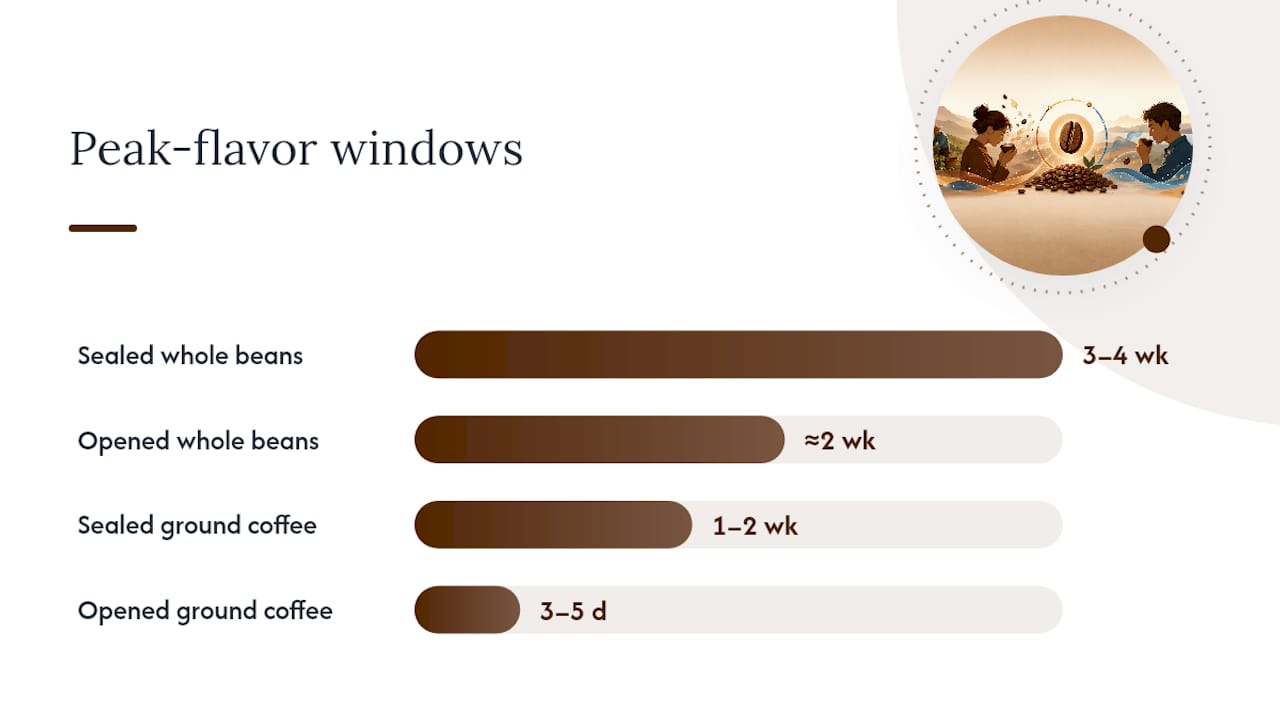
The phrase “does coffee expire” gets used loosely, but every form of coffee has its own timeline for staying safe versus staying good. Whole beans hold up far longer than ground coffee because less surface area is exposed to air. Sealed whole beans hit peak flavor for roughly 3 to 4 weeks from the roast date, and they stay drinkable for months after that, just with a duller flavor profile. Once you crack the bag open, that peak window shrinks to roughly two weeks.
Ground coffee doesn’t get that luxury. Grinding exposes far more surface area to oxygen, so a sealed bag of ground coffee peaks in 1 to 2 weeks, and once opened, you’ve got roughly 3 to 5 days before the best flavor fades. That’s not a hard cutoff. It’s just the window where the coffee tastes like what the roaster intended.
Instant coffee is the outlier here. Because it’s dehydrated and processed differently, it holds its character for a long stretch, often a year or more when sealed and stored somewhere dry. It won’t taste “fresh” in the specialty-coffee sense, but it doesn’t stale the way roasted beans do.
Brewed coffee and cold brew live on a much shorter clock, since both are exposed to air, moisture, and often dairy the moment they’re made:
- Sealed whole beans: peak flavor around 3 to 4 weeks from roast, drinkable for months
- Opened whole beans: peak flavor for about 2 weeks
- Sealed ground coffee: peak flavor for 1 to 2 weeks
- Opened ground coffee: best taste for 3 to 5 days
- Instant coffee: stable for a year or longer when kept dry and sealed
- Brewed black coffee: best within hours at room temperature; 3 to 4 days refrigerated, though flavor drops off well before that
- Cold brew concentrate: 7 to 14 days sealed and refrigerated
A professional roaster’s advice backs this up: buy whole beans and grind right before brewing, because once beans are ground, the clock on peak flavor starts running fast and doesn’t stop.
How To Tell If Coffee Is Stale, Past Peak, Or Actually Spoiled
There’s a real difference between coffee that’s lost its punch and coffee that’s genuinely gone bad, and mixing up the two leads people to either toss good coffee or drink something they shouldn’t. Staling is a flavor problem. Spoilage is a safety problem. You can usually sort out which one you’re dealing with in under a minute using your own senses.
Start with the three-sign sensory test roasters and coffee educators lean on constantly:
- Smell the beans or grounds. Fresh coffee has a noticeable aroma, often nutty, chocolatey, or fruity depending on the roast. Stale coffee smells flat, cardboard-like, or almost like nothing at all.
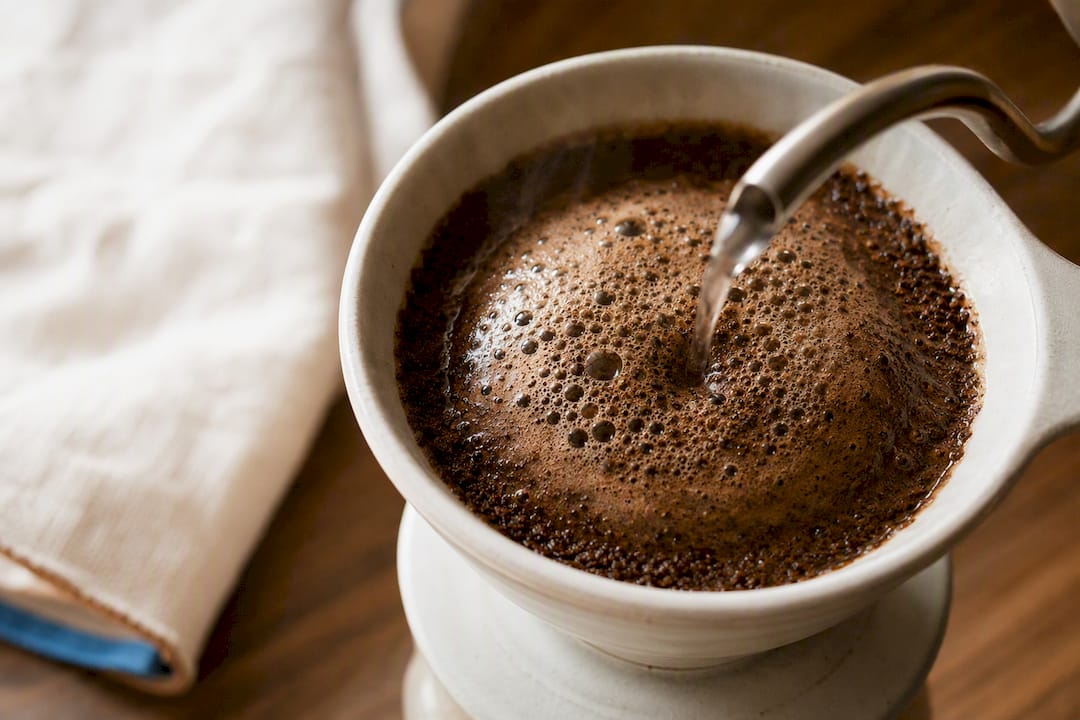
- Watch the bloom. Pour hot water over freshly ground coffee and you’ll see it puff up and bubble as trapped carbon dioxide escapes. That’s the bloom test, and it’s a surprisingly reliable indicator of how recently the beans were roasted. Little to no bloom usually means the beans have been sitting around for weeks, even if they still look fine.
- Taste it. Stale coffee tends to taste dull, sour in a flat way, or papery. It’s not dangerous, it’s just disappointing.
Spoilage looks and smells different from staling, and it’s much rarer. Watch for visible mold (fuzzy spots, usually green, white, or black), a musty or sour smell that goes beyond “stale,” clumping caused by moisture getting into the bag, or small insects in the grounds. Any of those means the coffee goes in the trash, no exceptions.
Pro Tip: Grind a small pinch of beans, cup your hands around it, and inhale right away. If you can’t smell much of anything, the beans have lost most of their aromatic oils and you’re better off using them for a strong pot rather than expecting a bright, nuanced cup.
The dividing line is simple: stale coffee is safe but boring. Spoiled coffee shows physical signs of contamination, mold being the clearest one, and that’s the version you don’t gamble on.
Why Coffee Loses Freshness: The Science In Plain Language
Coffee stales because of oxidation, the same basic chemistry that turns a sliced apple brown. Roasted beans are packed with volatile aromatic compounds and oils, and the moment those compounds meet oxygen, they start breaking down. That process never fully stops. It just speeds up or slows down depending on how the coffee is handled.
Grinding is where staling accelerates dramatically. A whole bean has a relatively small surface area exposed to air, so oxidation happens slowly, over weeks. Grind that same bean and you multiply the exposed surface area many times over, which is why ground coffee’s peak flavor window is measured in days rather than weeks. This is the core reason coffee professionals push people toward buying whole beans and grinding only what they need for that pot.
There’s a second process working alongside oxidation: degassing. Freshly roasted beans release carbon dioxide for days after they come out of the roaster, which is actually why many roasters recommend waiting a short window after the roast date before brewing. That CO2 buildup is also what causes the bloom you see when hot water first hits fresh grounds. As beans sit longer, that stored gas dissipates, and the bloom fades along with it.
Packaging plays into both of these processes. A one-way valve on a coffee bag lets built-up CO2 escape without letting outside oxygen sneak back in, which is why most specialty bags ship with that little valve stamped on the front. It’s a small piece of engineering that buys real time.
Four things accelerate staling faster than anything else: heat, light, moisture, and oxygen exposure. Each one either speeds up oxidation directly or creates conditions, like condensation, that damage the beans in other ways. Understanding that list is really the whole key to smart storage, which is exactly what comes next.
Practical Storage Rules To Keep Coffee Tasting Its Best
Good storage isn’t complicated, but it does require breaking a few habits most people picked up without thinking, like leaving the bag open on the counter or scooping beans into a clear glass jar because it looks nice in the kitchen.
The fundamentals:
- Store coffee in an airtight, opaque container. Light and air are both enemies of flavor, and a clear jar on a sunny counter is doing real damage every single day.
- Keep beans in their original bag if it has a one-way valve, at least until you transfer smaller amounts to a canister for daily use.
- Buy whole beans instead of pre-ground when possible, and grind right before you brew rather than all at once.
- Buy amounts you’ll actually finish within a few weeks. A pound that sits for two months isn’t saving you money if half of it ends up flat.
- Keep coffee in a cool, dark cabinet, not next to the stove or in direct sunlight near a window.
Freezing deserves its own note because it’s one of the most misunderstood storage tricks in home kitchens. Freezing can extend shelf life for long-term storage, but only if the coffee is vacuum-sealed. Tossing an open bag in the freezer door invites condensation, and that moisture ruins beans fast once they thaw, since water exposure is one of the fastest paths from stale to spoiled. If you’re going to freeze coffee, portion it into smaller vacuum-sealed batches so you’re only ever thawing what you’ll use in the next week or two, and never refreeze a batch once it’s thawed.
The fridge is generally a bad idea for whole beans or grounds. It doesn’t get cold enough to meaningfully slow oxidation, but it’s plenty humid enough to introduce moisture through condensation every time you open the door. You’re taking on the risk without the reward.
A vacuum canister with a built-in pump is genuinely one of the better upgrades a home coffee drinker can make. Combined with buying smaller, more frequent bags instead of one giant bulk bag, it keeps most of a batch inside its peak window the entire time you own it.
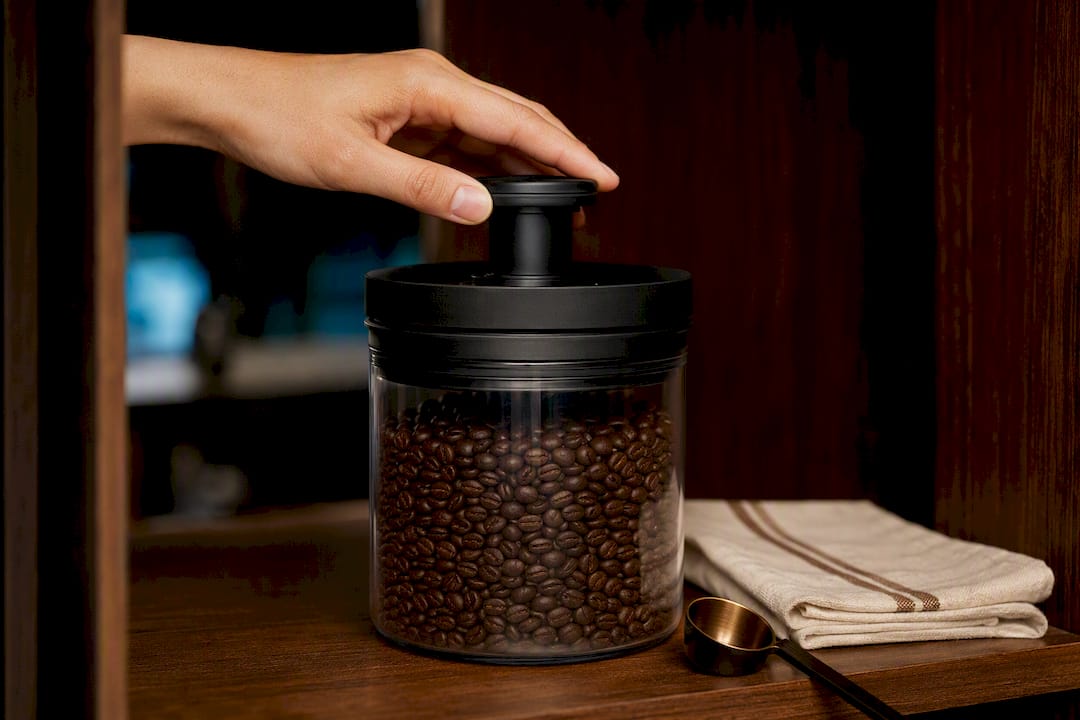
Pro Tip: If you don’t own a vacuum canister, a simple clip-seal on the original bag, pressed flat to push out excess air before sealing, does a surprisingly good job for a few extra dollars.
What To Do With Old Or Stale Coffee
Stale coffee isn’t garbage, it’s just coffee that’s lost its shine for drinking straight. Before you toss a bag that’s been sitting too long, consider a few practical uses that put it to work instead of wasting it.
- Deodorize. Dry coffee grounds absorb odors well; a small open container in the fridge or a closet handles musty smells for weeks.
- Scrub. Used or stale grounds work as a mild abrasive for scouring pots and pans, especially cast iron.
- Compost. Coffee grounds add nitrogen to a compost pile and break down quickly.
- Blend it back in. Mixing older, flatter beans with a smaller portion of fresher ones can rescue a pot that would otherwise taste dull on its own.
- Cook with it. Stale grounds still carry bitterness and roast flavor, which makes them useful in coffee-rubbed meats, mole sauces, or baked goods where bold flavor is the point, not delicacy.
None of that applies once mold, moisture damage, or insects show up. At that point, the only sensible move is to throw it out. No amount of repurposing salvages coffee that’s actually spoiled.
Brewed Coffee Safety And How Long It Lasts In The Fridge
Brewed coffee follows different rules than dry beans, mostly because water and, often, dairy change the equation entirely. Black brewed coffee is fine to leave out for a couple of hours, but flavor drops fast after that as it oxidizes and the aromatics evaporate. If you want to hold onto a pot, refrigerating black coffee keeps it drinkable for about 3 to 4 days, though it starts tasting flatter well before day four.
Dairy changes the safety math completely. Any brewed coffee with milk, cream, or a dairy alternative added should not sit at room temperature for more than two hours. That’s not a coffee-specific rule, it’s the standard food-safety window for perishable dairy products in general, and it applies whether the coffee is hot, iced, or somewhere in between. Once refrigerated, milky coffee is generally best used within 24 to 48 hours, depending on how fresh the dairy itself was to begin with.
Cold brew concentrate holds up noticeably better than a standard brewed pot, mainly because it’s typically stored sealed and cold from the start. A properly sealed, refrigerated batch of concentrate lasts about 7 to 14 days. Diluted cold brew, or a bottle that’s already been opened, doesn’t get nearly that long since it’s picked up more air exposure and, often, added water or milk that shortens the clock.
Safety holds up better than flavor across almost every one of these timelines. That gap is worth remembering: refrigeration buys you a few extra safe days, but it rarely buys you a few extra good-tasting ones, so brewing smaller batches more often usually beats storing large ones.
D&K Bean And Leaf’s Take On Freshness And Storage
Freshness comes down to two habits: buying less at a time and sealing it better once you’ve got it. That’s the whole philosophy behind how Dkbeanleaf thinks about roasted coffee, and it’s echoed in the roaster guidance throughout this piece, buy whole beans, grind close to brew time, and don’t let a bag sit open on the counter for weeks.
If you want the step-by-step version, A guide on how to store coffee beans and stay fresh longer walks through container choices and placement in more detail, and a companion piece on storing roasted coffee the right way covers what to look for in packaging.
Sample packs of whole-bean coffees are available so drinkers can try smaller quantities of single-origin and blended coffees without committing to a pound that might go stale before it’s finished. That’s a direct response to the exact math laid out earlier in this article: a smaller bag finished in two weeks beats a large bag half-forgotten in a cabinet.
— Kristopher
Fresher Coffee, Fewer Guesses
If the storage math above made you realize your current bag has been open on the counter for a month, the fix isn’t complicated: buy less, more often, and let a smaller bag actually get finished inside its peak window. Whole-bean sample packs are built for exactly that kind of testing, small enough that you’re never sitting on stale coffee, varied enough that you can compare origins side by side.

Pair that with a proper airtight canister instead of the clip that came with the bag, and you’ve solved most of the freshness problem in one move. If tea is more your speed some mornings, the tea collection covers that ground too, and for something to sip while your beans are degassing, the Peach Paradise blend is worth a look. A coffee-themed metal sign from our partners at ArtFuzz makes a fun addition to any coffee corner, too. Ready to stop guessing at freshness windows? Browse the current lineup and pick a size you’ll actually finish before it stales.
Sources
- How Long Does Coffee Last? — Healthline
- How long does coffee last? Beans, ground, brewed, and stored — Day9 Coffee
- The Best Way To Store Coffee So It Stays Fresh, According To Experts — Delish
- The right way to store coffee, according to a professional roaster — Food & Wine
- How long does coffee last? — Taste of Home