

Identify coffee bean origins: a guide for enthusiasts
You pick up a bag of coffee. The label says “Ethiopia Yirgacheffe, 1,900m, washed, Heirloom varietal, light roast.” And you think: okay, but what does any of that actually mean for what ends up in my cup? This is exactly where most coffee enthusiasts hit a wall. The information is right there, but making sense of it takes a framework most people never get. This identify coffee bean origins guide walks you through every layer of that label, shows you how modern technology is changing origin verification, and gives you the tools to drink your next cup with real understanding.
Table of Contents
- What you need to identify coffee bean origins
- Step-by-step guide to decoding coffee bean origins from labels
- Common mistakes and challenges in identifying coffee origins
- How to verify coffee bean origins using modern technology
- What to expect after identifying coffee origins
- Why understanding coffee origins transforms your coffee experience
- Explore premium single-origin coffee and brewing essentials from D&K Bean and Leaf
- Frequently asked questions
Key Takeaways
| Point | Details |
|---|---|
| Origins shape flavor | Knowing where coffee beans come from helps predict their unique taste and quality. |
| Read labels carefully | Understanding label elements like altitude, process, and varietal is key to identifying origins. |
| Leverage digital tools | QR codes and AI technologies now offer precise and transparent origin verification. |
| Avoid common mistakes | Don’t rely on country alone or ignore freshness and processing when identifying coffee origins. |
| Mastering origins enhances enjoyment | Combining traditional and modern methods deepens appreciation and improves brewing results. |
What you need to identify coffee bean origins
Understanding coffee origin identification starts with knowing what information to look for and where to find it. Not every bag tells the full story, but the best ones give you enough to paint a clear picture.
Key label elements to look for:
- Origin: Country, region, and ideally a farm or cooperative name
- Altitude: Listed in meters above sea level (masl), usually a range like 1,700 to 2,100m
- Processing method: Washed, natural, honey, or anaerobic
- Varietal: The specific plant cultivar, such as Bourbon, Gesha, or Heirloom
- Roast date: The actual date the coffee was roasted, not a vague “best by” window
- Certifications: Fair Trade, Rainforest Alliance, or Direct Trade labels
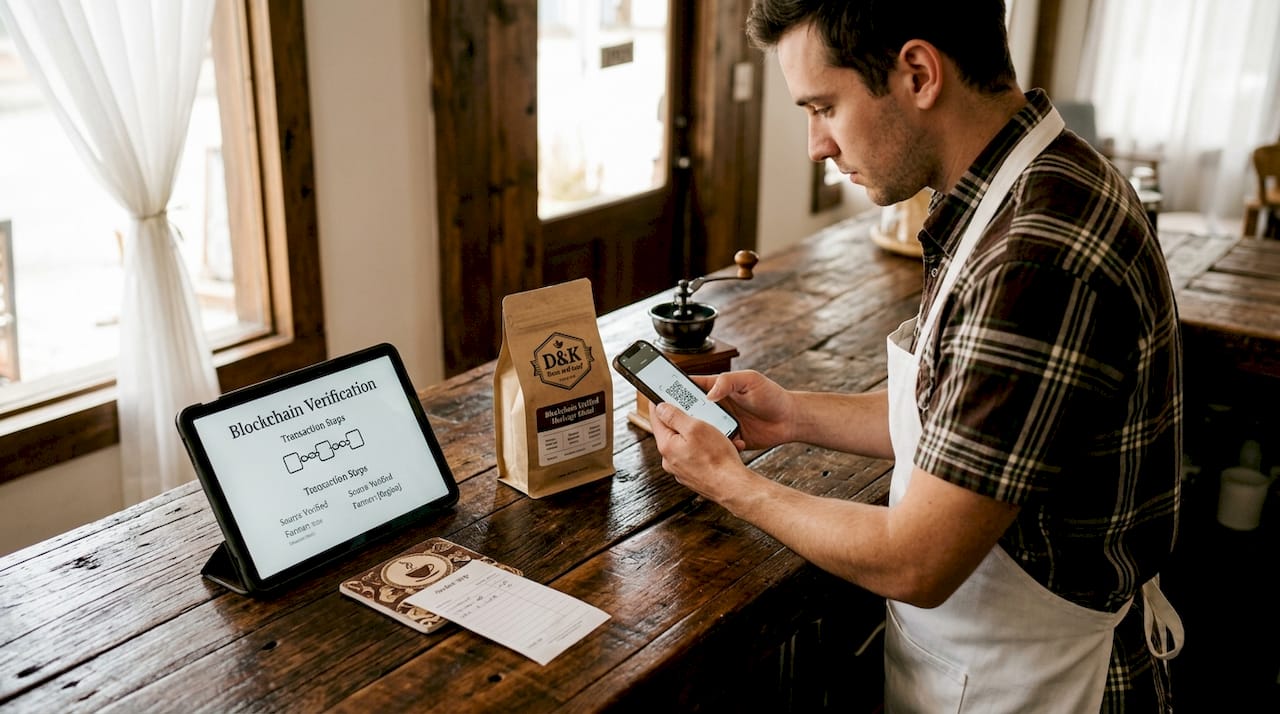
Beyond reading the bag, technology is rewriting how we trace beans. QR codes linked to blockchain allow access to farm-specific data and real-time supply chain updates, meaning you can verify claims the label makes before you buy. Download an app like Bext360 or simply scan the QR code printed on specialty bags and you get processing dates, GPS coordinates for the farm, and sometimes even photos of the harvest.
Label information decoded at a glance:
| Label element | What it tells you | Why it matters |
|---|---|---|
| Country/region | Broad flavor family | Sets expectations for acidity, body, and aroma |
| Altitude (masl) | Bean density and complexity | Higher usually means more nuanced flavor |
| Processing method | Fermentation and drying approach | Shapes sweetness, fruitiness, and clarity |
| Varietal | Genetic lineage of the plant | Determines inherent flavor potential |
| Roast date | How fresh the coffee is | Affects how well origin flavors come through |
| Certification | Supply chain ethics | Signals traceable, responsibly sourced beans |
Pro Tip: If a bag shows only a country name with no region, altitude, or processing details, that is a red flag for a commodity-grade blend marketed as single origin. Specialty roasters are proud of the details and they show them.
Step-by-step guide to decoding coffee bean origins from labels
Now that you know what to look for, here is how to put it together into a real origin identification process. Think of it like reading a map instead of just looking at a dot.
-
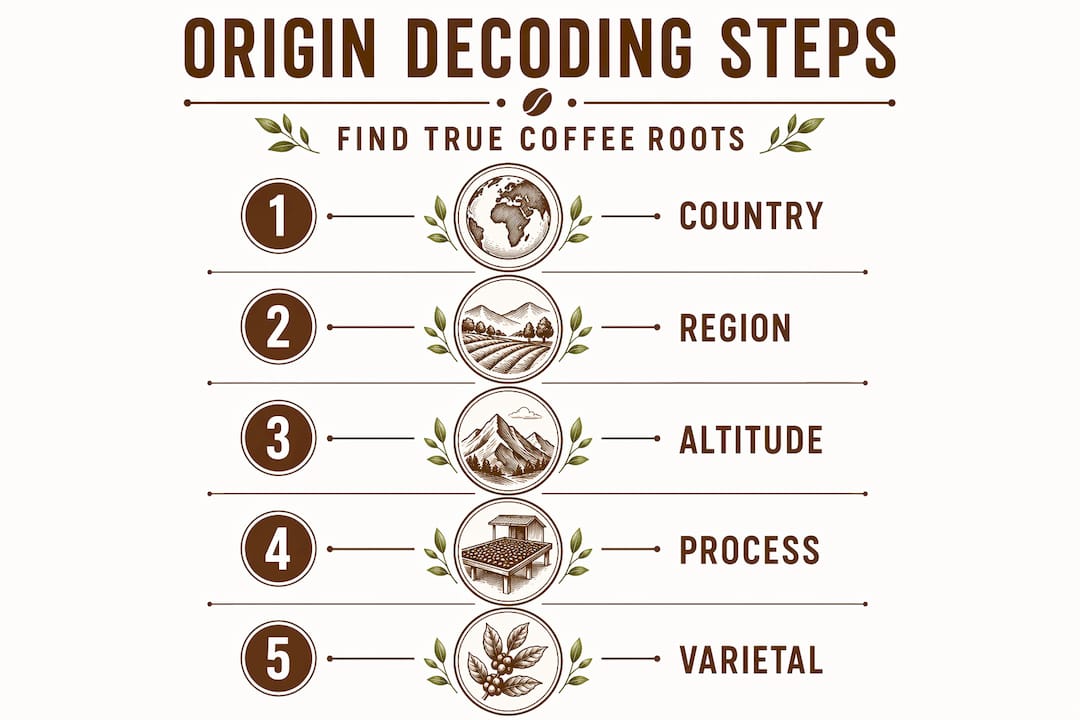
Identify the geographic specificity. Start broad (country), then narrow down to region and farm. “Colombia” is a starting point. “Colombia, Huila, Finca El Paraiso” is a destination. The more specific the origin, the more predictable and distinctive the flavor.
-
Interpret the altitude. Beans grown above 1,500m generally have higher density, more complex sugars, and brighter acidity. Beans from lower elevations (under 1,200m) tend toward earthier, heavier profiles. Altitude alone is not the whole story, but it gives you a fast read on structural complexity.
-
Recognize the processing method. Washed coffees are clean, bright, and let terroir shine. Natural processed coffees ferment inside the fruit and develop intense sweetness and wine-like fruit notes. Honey process lands in between. When you see “anaerobic fermentation,” expect unconventional flavors like tropical fruit or even bubblegum. Understanding this step is critical in how to trace coffee origins through flavor.
-
Check the roast date. A bag roasted in the last two to four weeks is at its peak. Origin characteristics start fading after six weeks as CO2 off-gasses and oxidation takes over. A bag with no roast date is asking you to buy blind. Learn more about how roast levels interact with origin flavors to dial in your brewing.
-
Match the varietal. Gesha from Panama tastes entirely different from Gesha grown in Ethiopia, even at the same altitude and using the same process. Varietals carry genetic flavor tendencies that combine with environment, not override it.
-
Compare to known regional flavor profiles. Origin country and region deliver broad flavor predictions based on shared climate, soil, and altitude. Use the table below as your reference:
| Region | Flavor profile | Typical processing |
|---|---|---|
| Ethiopia | Jasmine, blueberry, bergamot | Natural or washed |
| Colombia | Caramel, red apple, citrus | Washed |
| Guatemala | Dark chocolate, almond, mild spice | Washed or honey |
| Brazil | Nutty, low acidity, milk chocolate | Natural |
| Kenya | Black currant, grapefruit, savory | Washed (double fermented) |
| Sumatra | Earthy, cedar, dark fruit | Wet-hulled |
Pro Tip: Once you have identified the origin, adjust your brewing before you brew. Ethiopian naturals respond beautifully to a coffee bloom technique, which degasses CO2 and opens up the aromatics locked inside the bean.
Common mistakes and challenges in identifying coffee origins
Even dedicated enthusiasts make errors when reading origin information. These are the most common ones and how to sidestep them.
- Treating country as a complete answer. Brazil alone tells you almost nothing useful. Minas Gerais versus Bahia versus Espírito Santo produce coffees that taste like they came from different planets.
- Confusing blends with single origins. A blend labeled “Ethiopian blend” often includes multiple countries. True single origin names a specific farm or cooperative, not just a country.
- Ignoring roast date freshness. A stunning Kenyan lot that was roasted four months ago will taste flat and generic. Origin clarity fades with time.
- Overlooking certifications and traceability data. Some bags claim single origin without the sourcing to back it up. A QR code, a specific farm name, and a verifiable certification separate genuine single origins from marketing language.
- Forgetting that processing shapes as much as place. A natural Ethiopian and a washed Ethiopian from the same farm taste dramatically different. Altitude must be considered together with processing and varietal to accurately predict cup profile.
“The difference between a good coffee experience and a great one often comes down to understanding that origin is not a single variable. It is at least four variables working together.”
Check how roast level choices affect your ability to taste origin characteristics. A dark roast will almost always overwrite the terroir of even the finest single origin bean.
How to verify coffee bean origins using modern technology
Label reading gets you far. Technology gets you all the way.
What modern verification tools offer:
- Chemical fingerprinting via AI. Coffee contains hundreds of volatile compounds that vary by geographic region, processing, and varietal. Support Vector Machine models classify coffee origins by chemical profiles with 91% accuracy, meaning science can now catch mislabeled coffee that the naked eye cannot.
- Blockchain-backed QR codes. QR code and blockchain-based traceability systems improve transparency and authenticity verification by logging every step from harvest to your bag in an immutable record.
- Consumer-facing apps. Some specialty roasters now link bags directly to apps that pull real-time data including altitude maps, harvest dates, and processing notes.
Label reading versus technology verification:
| Method | What you learn | Accuracy | Accessibility |
|---|---|---|---|
| Label reading | Origin, process, varietal | High if labeled honestly | Immediate, requires knowledge |
| QR and blockchain | Full chain of custody | Very high | Requires smartphone |
| AI chemical analysis | Origin by compound profile | 91% | Lab-level, not consumer-facing yet |
| Certification labels | Ethical sourcing compliance | Moderate | Visible on packaging |
This is where coffee bean sourcing becomes genuinely exciting. You are no longer just reading what a roaster tells you. You are verifying it against a system designed to prevent fraud.
What to expect after identifying coffee origins
Once origin identification clicks, your coffee life shifts in ways that are hard to overstate.
- Flavor prediction becomes real. You brew a washed Yirgacheffe and you expect jasmine and lemon. When it shows up in the cup, that is not luck. That is knowledge working.
- Brewing decisions become intentional. Knowing your Guatemalan natural is high in natural sugars, you drop your water temperature slightly to avoid bitterness. You are brewing with origin knowledge instead of just following generic instructions.
- Purchasing confidence grows. You stop falling for clever packaging and start reading what actually matters. You spend less on disappointing bags.
- You trace flavor notes to their source. That strawberry sweetness in your morning cup? That is a natural process Sidama, doing exactly what the region produces at its best.
- Coffee becomes a cultural and geographic experience. Each cup is a place. Once you know how to locate that place, every sip carries context.
Why understanding coffee origins transforms your coffee experience
Here is the part most guides skip. They teach you the vocabulary of origins and leave you there, as if knowing that Kenya is washed and bright means you understand Kenyan coffee. It does not. Not really.
The conventional wisdom in coffee circles treats origin country as the headline and everything else as fine print. That is backwards. The country tells you the chapter. The region, altitude, varietal, and processing tell you the sentence you are actually reading. A light roasted, honey processed, Bourbon varietal coffee from Antigua, Guatemala tastes nothing like a dark roasted, washed Robusta from the lowlands of the same country. Same flag. Completely different cup.
Altitude must be interpreted alongside processing and varietal to accurately predict the cup profile. This is not a detail for obsessives. It is the whole story. A high-altitude Ethiopian Heirloom processed naturally at 2,000 meters produces those famous blueberry notes. Process that same bean washed, and you get clarity, floral notes, and citrus instead. Same origin. Different universe.
What modern AI verification and blockchain traceability add is not just technology. They add trust. When chemical fingerprinting confirms that your Jamaican Blue Mountain is actually from that region and not a mislabeled Central American bean, you are getting what you paid for. That is not a niche concern. Coffee roasting insights show how much roasters work to preserve what origin delivers, and how easily a wrong roast level destroys it.
The enthusiasts who truly master coffee are not the ones who memorize flavor wheels. They are the ones who understand that origin is a system, not a label. Learning to read that system is what separates a good cup from a genuinely great one.
Explore premium single-origin coffee and brewing essentials from D&K Bean and Leaf
Knowing how to identify and appreciate coffee origins is only half the equation. The other half is drinking exceptional coffee that actually gives you something to identify.
At D&K Bean and Leaf, you will find premium single-origin coffee sourced and selected to showcase exactly the regional flavor profiles covered in this guide. Pair your new knowledge with a thoughtfully designed cup from the coffee mugs collection, including the fan-favorite color inside mug that makes every tasting session feel intentional. Whether you are refining your palate with a washed Ethiopian or exploring a Brazilian natural, the right gear elevates the whole ritual. Pro Tip: Match your mug size to your brew method. A wider rim opens up aromatics, especially with light roast single origins.
Frequently asked questions
How can I tell if a coffee is truly single-origin?
Look for specific farm, region, or cooperative names on the label and verify with QR code traceability when available to confirm single-origin authenticity rather than relying on country name alone.
Does altitude guarantee better coffee quality?
Altitude influences bean density and acidity but must be read alongside varietal and processing. Altitude alone does not predict cup quality without those supporting variables.
What technology is used to verify coffee origin?
Machine learning models that analyze volatile chemical compounds and blockchain-based QR systems are the two leading tools, achieving up to 91% classification accuracy for origin verification.
Why do coffee bags have so many technical terms?
Each detail on the label tells you something specific. Origin, varietal, processing, and altitude together communicate the flavor you can expect, the freshness of the roast, and the sourcing standards of the producer.
Recommended
- Coffee roast levels explained: tasting notes and brewing tips – D&K Bean and Leaf
- Explore every coffee roast: types, tastes, and brewing tips – D&K Bean and Leaf
- What is coffee bloom: your complete brewing guide – D&K Bean and Leaf
- Build a coffee mug collection you’ll love and care for – D&K Bean and Leaf