

Match Your Sore Throat Symptom to the Right Tea, Brew It Right
Make this now: fresh ginger simmered for ten minutes with raw honey and a squeeze of lemon, stirred in after it cools slightly. Ginger calms inflamed tissue, honey coats and carries mild antimicrobial activity, and lemon adds vitamin C without extra acidity to irritate the throat. That said, tea soothes symptoms. It does not cure strep throat or a severe bacterial infection, and the CDC is clear that some cases need a doctor, not just a mug.
TL;DR:
- Ginger tea brewed for 5 to 10 minutes provides the highest concentration of anti-inflammatory gingerol, making it more effective for swelling and soreness.
- Demulcent herbal teas like slippery elm, marshmallow root, and licorice form a protective mucilage layer, offering quick but short-lived relief, and should be sipped frequently.
- Green tea can be used both as a drink and a gargle; drinking it provides antimicrobial polyphenols, while gargling targets local symptoms directly.
- Proper steeping time and temperature are crucial since oversteeping green tea increases bitterness, and simmering ginger or turmeric extracts more active compounds.
- Licorice root tea should be used sparingly because high doses can raise blood pressure; always avoid honey for children under one year and consult a doctor if symptoms worsen.
Table of Contents
- Why Tea for a Sore Throat Actually Works
- Best Teas for Sore Throat, Matched to Your Symptoms
- How to Brew and Use Sore Throat Tea Correctly
- Risks, Interactions, and When Tea Isn’t Enough
- What I’ve Learned About Brewing Tea That Actually Helps
- Stock Your Kitchen With Teas That Actually Help
- Sources
- FAQ
Why Tea for a Sore Throat Actually Works
Warmth and moisture do a lot of the heavy lifting. The Mayo Clinic points out that warm liquids keep the throat moist and loosen the mucus that makes swallowing feel raw, which is half the reason tea works better than a cold drink when your throat is on fire.
The rest comes down to what’s actually in the cup:
- Hydration thins mucus and keeps irritated tissue from drying out further.
- Demulcents, the mucilage found in slippery elm, marshmallow root, and licorice, form a temporary coating over inflamed tissue.
- Anti-inflammatory compounds like gingerols in ginger and flavonoids in chamomile reduce the swelling that makes swallowing painful.
- Polyphenols in green tea show antimicrobial activity that can lower bacterial counts locally, though that’s not a substitute for prescribed antibiotics.
A randomized, double-blind trial on demulcent herbal tea found that a licorice, elm, and marshmallow root blend relieved acute pharyngitis pain faster than a placebo. The catch: relief lasted a short time per dose, so one cup won’t carry you through the afternoon.
Best Teas for Sore Throat, Matched to Your Symptoms
Not every sore throat feels the same, and the right tea depends on what’s actually bothering you. Here’s how to match the remedy to the complaint.
1. Ginger tea for swelling and general pain
Simmer fresh sliced ginger in water for 5 to 10 minutes rather than just steeping it. The longer cook time pulls out more gingerol, the compound responsible for its anti-inflammatory punch. This is the workhorse choice for a throat that just feels swollen and sore, and it pairs naturally with honey and lemon.
2. The demulcent group: slippery elm, marshmallow root, licorice
These three work by coating the throat rather than treating inflammation directly. The mucilage forms a protective film, which is why the BMJ-published pharyngitis trial recorded fast relief that faded quickly. Expect to sip these every 30 to 60 minutes rather than drinking one cup and moving on. Licorice root deserves a caution here: it can raise blood pressure with regular high-dose use, so treat it as an occasional remedy, not a daily habit.
3. Chamomile for nighttime relief
Chamomile combines mild anti-inflammatory action with a gentle sedative effect, which makes it the better pick when a sore throat is also wrecking your sleep. It won’t hit as hard as ginger for pain, but it’s the tea to reach for at 9 p.m.
4. Green tea for a gargle-and-drink combo
A clinical study on gargling green tea found it reduced postoperative sore throat symptoms, likely because the catechins act directly on the throat lining rather than working systemically. Brew a cup, let half cool for gargling and drink the rest.
5. Peppermint for a numbing effect
Menthol creates a cooling, mildly numbing sensation that can take the edge off pain fast. Skip it if you deal with acid reflux, since peppermint can relax the esophageal sphincter and make reflux worse.
6. Turmeric for deeper anti-inflammatory action
Turmeric’s curcumin is a strong anti-inflammatory compound, but it’s poorly absorbed on its own. Add a pinch of black pepper and a splash of milk or any fat source to the tea, and simmer rather than just steep, since that improves extraction significantly according to research on curcumin bioavailability.
7. Mullein, horehound, or fenugreek for cough-heavy sore throats
When a nagging cough is part of the picture, these three herbs are traditionally used to loosen mucus and calm the throat’s cough reflex. They’re less studied than the others on this list, but they’re worth trying if coughing is what’s keeping you up.
Pro Tip: If you’re not sure which symptom to target, start with the ginger, honey, and lemon combination. It covers inflammation and mild antimicrobial support in one cup, and you can layer in a demulcent tea later in the day if your throat still feels raw.
How to Brew and Use Sore Throat Tea Correctly
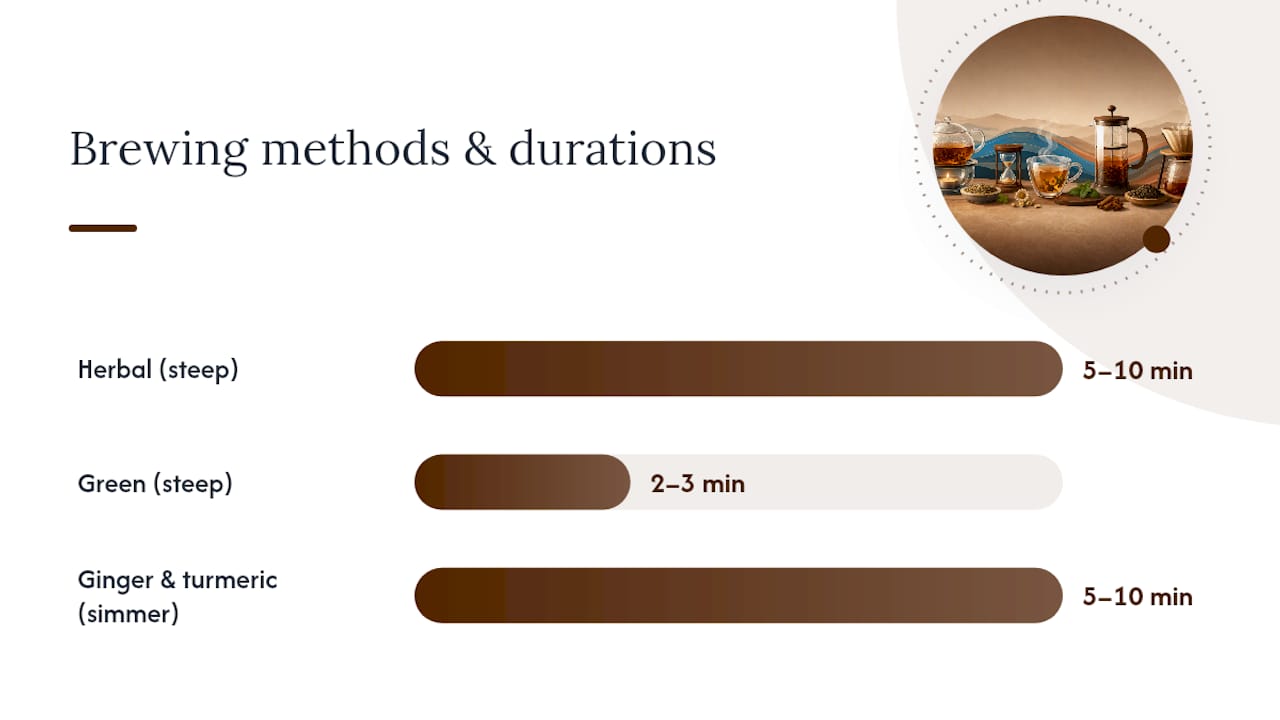
Technique matters here almost as much as the ingredients. Steep herbal teas like chamomile or licorice root for 5 to 10 minutes, and go longer if you want a stronger dose. Green tea is the exception: 2 to 3 minutes is plenty, since oversteeping pulls out excess tannins and makes it bitter. Ginger and turmeric do better simmered for 5 to 10 minutes rather than steeped, since heat helps extract their active compounds.
Add honey only after the tea cools to around 140°F. Raw honey contains glucose oxidase, an enzyme that produces mild antimicrobial hydrogen peroxide, and heat above that threshold breaks it down.
For gargling, let tea cool to a comfortable temperature, take a small mouthful, tilt your head back, and gargle for 10 to 15 seconds. Repeat two to three times, and do this every 4 to 6 hours while symptoms last.
- Sip demulcent teas (licorice, marshmallow, slippery elm) every 30 to 60 minutes since relief fades quickly.
- Drink 3 to 4 cups of ginger, chamomile, or green tea across the day for steadier relief.
- Check a steeping times chart if you’re unsure how long to brew a specific variety.
Pro Tip: Loose leaf tea generally delivers more of the active compounds per cup than bagged tea, since the leaf surface area is larger and steeping is less restricted. If you’re brewing for medicinal effect rather than just flavor, loose leaf is worth the extra step. Our guide on how to steep loose leaf tea walks through the basics.
Risks, Interactions, and When Tea Isn’t Enough
Licorice root is the one herb on this list that deserves real caution. Regular or high-dose use can raise blood pressure and deplete potassium, so anyone on blood pressure medication should check with a doctor first. Herbal supplements also aren’t FDA-regulated the way drugs are, so buy from reputable sources to reduce the risk of contamination or mislabeling, a caution Medical News Today echoes in its own rundown of herbal teas.
A few more limits worth knowing:
- Never give honey to a child under one year old due to infant botulism risk.
- Pregnant or nursing individuals should check with a clinician before using licorice or other concentrated herbal teas.
- Some herbs, including licorice, have shown antibacterial activity against Streptococcus strains in lab settings, but that doesn’t mean tea can treat strep throat on its own.
See a doctor if you have a high fever, severe trouble breathing or swallowing, white or green pus on your tonsils, or a sore throat lasting more than seven days. The CDC’s sore throat guidance treats these as clear signals that home remedies have reached their limit.
What I’ve Learned About Brewing Tea That Actually Helps
Most sore throat advice treats tea like a single category, as if chamomile and licorice root do the same job. They don’t, and treating them interchangeably is why people end up disappointed when “tea” doesn’t fix their symptoms. The mechanism matters. A demulcent coats. An anti-inflammatory reduces swelling. A gargle-grade green tea acts locally. Pick based on what’s actually wrong, not on what’s in your cupboard.
The brewing technique matters. A bagged tea steeped for two minutes in lukewarm water is not the same remedy as loose leaf ginger simmered properly, even if the label says the same thing. If you want to experiment with a few demulcent or ginger blends without committing to a full tin of each, a sample pack is a low-risk way to find what actually works for your throat. Our winter teas guide also covers a few warming blends worth trying when a sore throat hits during cold weather.
— Kristopher
Stock Your Kitchen With Teas That Actually Help
Most sore throat advice tells you what to drink and stops there, leaving you to guess which loose leaf actually has the potency to matter. Dkbeanleaf sources and roasts with freshness as the priority, and that same standard applies across the tea collection, where you’ll find the ginger, chamomile, and green tea varieties covered in this guide.

Not sure which blend fits your symptoms yet? The sample pack lets you try a few demulcent and ginger options before committing to a full bag, and our steeping guide walks you through getting the most out of each one. Browse the tea collection now and pick a blend that matches what your throat actually needs today.
Sources
The claims in this guide draw on a handful of primary sources worth bookmarking. The CDC’s sore throat overview covers when home care is enough versus when to see a doctor. The BMJ-published trial on demulcent herbal tea is the clearest clinical evidence behind the licorice, elm, and marshmallow combination. Mayo Clinic’s guidance backs the case for warm liquids generally, and the gargling green tea study supports the gargle protocol described above.
- CDC - About sore throat
- Herbal tea helps reduce the pain of acute pharyngitis (BMJ/PMC)
- Mayo Clinic - Manage sore throat
- Gargling green tea study (PubMed)
- Medical News Today - Tea for sore throat
FAQ
How can I fix a sore throat quickly?
Sip warm ginger tea with honey and lemon, or gargle cooled green tea for 10 to 15 seconds a few times in a row. Both approaches, backed by clinical research on demulcent teas and green tea gargling, provide relief within minutes, though it’s often short-lived and needs repeating.
What should I avoid drinking with a sore throat?
Skip cold drinks, alcohol, and highly acidic juices like orange or grapefruit, since all three can irritate already inflamed tissue. Caffeinated drinks in excess can also contribute to dehydration, which works against the moisture your throat needs.
What’s the least helpful tea for a sore throat?
Highly caffeinated teas with added sugar or artificial flavoring offer little soothing benefit and can dehydrate you if you’re relying on them instead of water. Plain black tea with a lot of added sugar falls into this category too, since it skips the anti-inflammatory compounds found in ginger, chamomile, or green tea.
What’s the fastest drink for sore throat relief?
Warm ginger tea with honey tends to deliver the quickest noticeable relief, combining anti-inflammatory action with honey’s soothing, mildly antimicrobial coating. For something that works within minutes rather than hours, a green tea gargle is hard to beat, since it treats the throat lining directly rather than working through the whole system.
Does Dkbeanleaf sell tea suited for sore throat remedies?
Yes. The tea collection includes varieties like ginger, chamomile, and green tea covered in this guide, and current prices are listed on the site.