

What Is a Pullover Sweatshirt? A Quick Definition Guide
A pullover sweatshirt is a long-sleeved, no-hood garment made from thick, usually cotton-based fabric, and you put it on by pulling it over your head instead of unzipping or unbuttoning it. That’s the whole idea in one line, but three details separate it from its closest cousins:
- Hood: none, unlike a hoodie.
- Front opening: none. It’s a closed panel, not a zip-up.
- Neckline and material: usually a crew or mock neck, built from cotton fleece, French terry, or a knit blend.
Dictionary defines a pullover along these same lines, and Merriam-Webster makes a similar point: the “pull it over your head” mechanism is the defining trait, regardless of what’s stitched on top of it. Construction details, like how the collar and body panels connect, are what push a garment toward “sweatshirt,” “sweater,” or “hoodie” territory.
Key Takeaways
A pullover sweatshirt is defined by three fixed traits: no hood, no front opening, and a crew or mock neckline made from thick cotton-based fabric.
| Point | Details |
|---|---|
| Core definition | A pullover sweatshirt has no hood or front opening and goes on by pulling it over your head. |
| Hood is the dividing line | A hooded version of the same garment is classified as a hoodie, not a pullover sweatshirt. |
| Material drives feel | Cotton fleece, French terry, and brushed fleece each change warmth, weight, and formality. |
| Fit and care basics | Wash cold or warm, tumble dry low or air-dry, and pick ease vs. fitted based on layering needs. |
| Shop the style | Dkbeanleaf’s unisex organic sweatshirt follows the classic crew-neck, no-hood pullover construction. |
Table of Contents
- What Is a Pullover Sweatshirt vs. a Hoodie vs. a Regular Pullover?
- What Does “Pullover” Actually Mean in Clothing?
- What Materials and Construction Details Define a Pullover Sweatshirt?
- Which Pullover Sweatshirt Style Fits Your Occasion?
- How Do You Choose and Care for a Pullover Sweatshirt?
- Why Sweatshirt Basics Matter to Us
- Ready to Add a Pullover Sweatshirt to Your Closet?
- Frequently Asked Questions
- Sources
What Is a Pullover Sweatshirt vs. a Hoodie vs. a Regular Pullover?
The confusion usually comes down to three garments that get used interchangeably when they shouldn’t be. A pullover sweatshirt, a hoodie, and a knit pullover sweater share the “over the head” entry point, but they part ways on hood, neckline, and fabric weight.
| Feature | Pullover Sweatshirt | Hoodie (Pullover Style) | Knit Pullover (Sweater) |
|---|---|---|---|
| Hood | No | Yes | No |
| Front opening | None | None (zip-up hoodies exist separately) | None |
| Neckline | Crew or mock neck | Hood collar, often with drawstring | Crew, V-neck, or turtleneck |
| Material/weight | Cotton fleece, French terry | Heavier fleece, often with kangaroo pocket | Wool, cotton knit, or acrylic |
| Formality/use-case | Casual to smart-casual | Casual, athleisure | Casual to dressier layering |
| Pockets/construction | Occasionally a small pocket | Kangaroo pocket standard | Rarely has pockets |
A few things matter more than others when you’re actually trying to name what’s in your closet:
- If it has a hood, it’s a hoodie, full stop, even though a pullover hoodie technically qualifies as a “pullover” too. Wikipedia’s entry on hoodies treats the hood as the defining feature separate from sweatshirts generally.
- If it’s thick cotton or fleece with no hood, that’s a pullover sweatshirt, plain and simple.
- If it’s a lighter knit, often wool or acrylic, it’s usually called a pullover sweater or “jumper” rather than a sweatshirt.
Casual usage muddies this constantly. People say “sweatshirt” to mean any thick, casual, cotton-based top, hooded or not, and reserve “hoodie” only when they want to be specific about the hood. Wikipedia’s sweatshirt page backs this up directly: a sweatshirt is a long-sleeved pullover shirt or jacket made from thick cloth, and a hooded version is simply a hoodie by another name.
What Does “Pullover” Actually Mean in Clothing?
“Pullover” is a broader word than most people realize. Technically, it describes anything you put on by pulling it over your head, which covers sweaters, sweatshirts, and even some athletic tops. In everyday apparel talk, though, it usually narrows down to collarless sweaters or sweatshirts with no front zipper or buttons.
Common synonyms include “jumper” (mostly British usage) and “pullover sweater.” Cambridge Dictionary and Collins English Dictionary both define pullover as a knitted garment worn over the head, showing how the term slides between “sweater” and “sweatshirt” depending on context.
- In the US, “sweater” and “pullover” often get used interchangeably for knitwear.
- In the UK, “jumper” is the more common word for the same knitted garment.
- “Pullover sweatshirt” is the phrase people reach for when they mean the thicker, cotton-based, casual version rather than fine-gauge knitwear.
What Materials and Construction Details Define a Pullover Sweatshirt?
Fabric weight and construction do most of the work in separating a pullover sweatshirt from a knit sweater or a hoodie. Cotton fleece is the classic choice: brushed on the inside, soft against skin, warm without being bulky. French terry runs lighter and looser, which is why it shows up in warmer-weather pullovers and athletic-leaning styles. Brushed fleece sits heavier still, built for cold weather, while wool knit blends occupy a dressier lane that blurs into sweater territory.
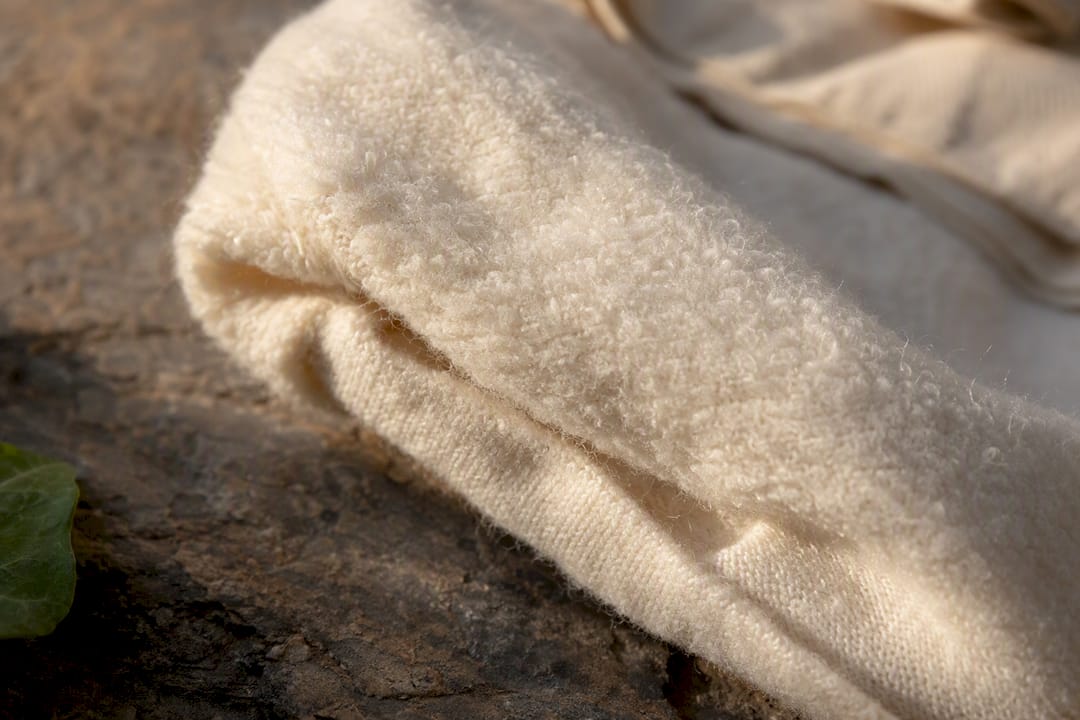
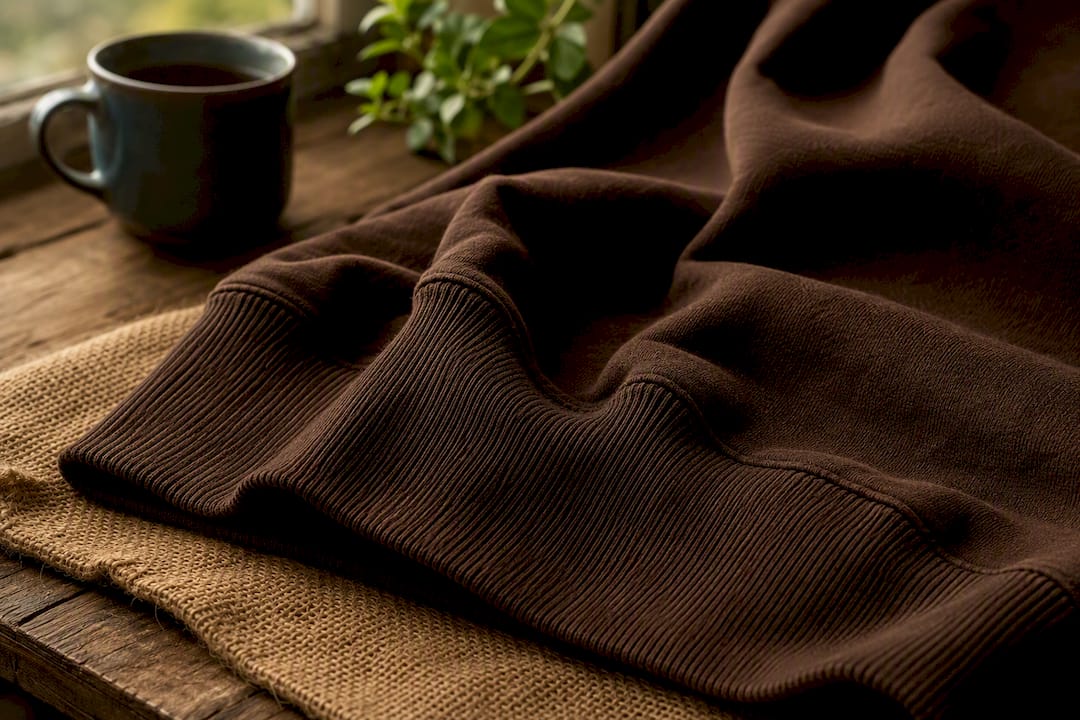
Construction details tell you just as much as the fabric does. Ribbed cuffs and a ribbed hem keep the garment snug at the wrists and waist, trapping warmth and holding the shape after repeated washes. The ribbing on sweatshirt cuffs isn’t decorative; it’s functional stretch-and-recovery fabric. Necklines split mainly into crew (a simple round collar) and mock neck (a small standing collar), and that choice affects how the garment layers under a jacket or over a collared shirt.
One detail most people never think about: hood attachment changes the entire pattern. Sewing in a hood requires a lower, wider neckline to accommodate the extra fabric, which is why pattern makers treat hooded and non-hooded garments as different tech packs entirely. A pullover sweatshirt keeps a simpler, continuous body block, which is part of why it tends to lay flatter and cleaner across the shoulders.
Which Pullover Sweatshirt Style Fits Your Occasion?
Not every pullover sweatshirt serves the same purpose, and picking the right one comes down to matching weight and cut to what you’re actually doing that day.
- Classic crew pullover: the everyday default, works for errands, weekend hangouts, or a casual office.
- Cropped pullover: shorter hem, pairs with high-waisted bottoms, leans more fashion-forward than functional.
- Athletic pullover: lighter French terry or performance blends, built for movement and quick temperature changes.
- Knit pullover: finer gauge, closer to sweater territory, works when you want something that reads slightly dressier.
Layering is where a pullover earns its keep. Wear one under a denim or bomber jacket for added warmth without bulk, or let a button-down collar peek out from underneath for a smart-casual look. Anyone working a customer-facing shift, from a barista to retail floor staff, benefits from the same layering logic covered in tee shirt layering tips, which apply just as well to pullovers.
Pro Tip: If you want a cleaner silhouette than a hoodie provides, a crew or mock-neck pullover sweatshirt skips the bulk of a hood and kangaroo pocket, which reads a step more polished for smart-casual settings.
How Do You Choose and Care for a Pullover Sweatshirt?
Picking the right one takes about five seconds of checking, but skipping that check is how people end up with a sweatshirt that pills after two washes or fits wrong from the start.
- Fabric weight — heavier fleece for cold weather, French terry for mild days.
- Intended use — lounging, layering, or a slightly dressier casual look.
- Neckline — crew for simplicity, mock neck for a bit more structure.
- Sleeve length and cuff finish — ribbed cuffs hold shape better over time than raw hems.
- Pockets — decide if you want a small front pocket or a completely clean front panel.
Care matters just as much as the initial purchase decision. Wash in cold or warm water rather than hot, since heat is what accelerates pilling and shrinkage. Tumble dry on low, or air-dry flat if you want to protect the shape and ribbing longer term. A slightly looser fit (“ease” in sizing terms) gives more room for layering, while a fitted cut reads cleaner on its own, and heavier fleece will always feel a size bulkier than the same size cut in French terry.
Why Sweatshirt Basics Matter to Us
We spend a lot of time thinking about apparel details because, and it shapes how Dkbeanleaf approaches sweatshirt design. .
Ready to Add a Pullover Sweatshirt to Your Closet?
Now that you know exactly what separates a pullover sweatshirt from a hoodie or a knit sweater, picking one out is a lot simpler. Dkbeanleaf’s unisex organic sweatshirt sticks to the crew-neck, no-hood construction covered above, built from cotton for the everyday warmth and clean layering fit this guide walks through.

If you’re still weighing pullover versus hooded styles, browse the full hoodies and sweatshirts collection to compare both side by side before you decide. Pick your size, add it to your cart, and you’re set for whichever layering situation comes up next.
Frequently Asked Questions
Is a pullover sweatshirt the same as a hoodie? No. A pullover sweatshirt has no hood, while a hoodie always includes one. Both go on over the head, but the hood is what pushes a garment into hoodie territory.
What’s the difference between a pullover sweatshirt and a crewneck? They’re usually the same thing. “Crewneck” refers to the neckline style, and most pullover sweatshirts use a crew neck, so the terms overlap heavily in everyday use.
What materials are pullover sweatshirts made of? Most are cotton fleece, French terry, or brushed fleece, with wool knit blends showing up in dressier versions that lean closer to sweater territory.
Can a pullover sweatshirt have a zipper? Not a front one. A zip-front version is a different garment entirely, usually called a zip-up sweatshirt or zip-up hoodie if it also has a hood.
Is “pullover” the same as “sweater”? Often, yes, especially for knitted garments. “Pullover” is the broader term for anything worn over the head, while “sweater” typically refers to finer-gauge knitwear specifically.
Sources
- Dictionary
- pullover | Definition of pullover by Merriam-Webster
- Hoodie
- Zipped vs pull over hoodies: what changes in the tech pack and pattern? | Hook & Eye UK