

What Is a Stoneware Mug: Benefits, Types, and Uses
A stoneware mug is a ceramic vessel made from dense clay fired at temperatures between 2,100°F and 2,300°F, producing a strong, non-porous drinking vessel built for daily use. That firing process, called vitrification, transforms raw clay into a material that holds heat well, resists chipping, and lasts for years. If you drink coffee or tea every morning, the mug you reach for matters more than you might think. Stoneware mugs sit at the intersection of function and craft, and understanding what sets them apart helps you make a better choice at the shelf or the potter’s wheel.
What is a stoneware mug made of?
Stoneware is a category of ceramic defined by its clay body and firing temperature. The clay used for stoneware contains natural minerals that, when exposed to extreme heat, fuse together in a process called vitrification. The result is a dense, glass-like structure that is far less porous than earthenware or standard ceramic.
Stoneware mugs are fired at 2,100°F to 2,300°F. That temperature range is significantly higher than earthenware, which fires around 1,800°F, and it produces a clay body that is harder and more water-resistant. The difference is not cosmetic. A lower-fired mug absorbs moisture and odors over time. A vitrified stoneware mug does not.
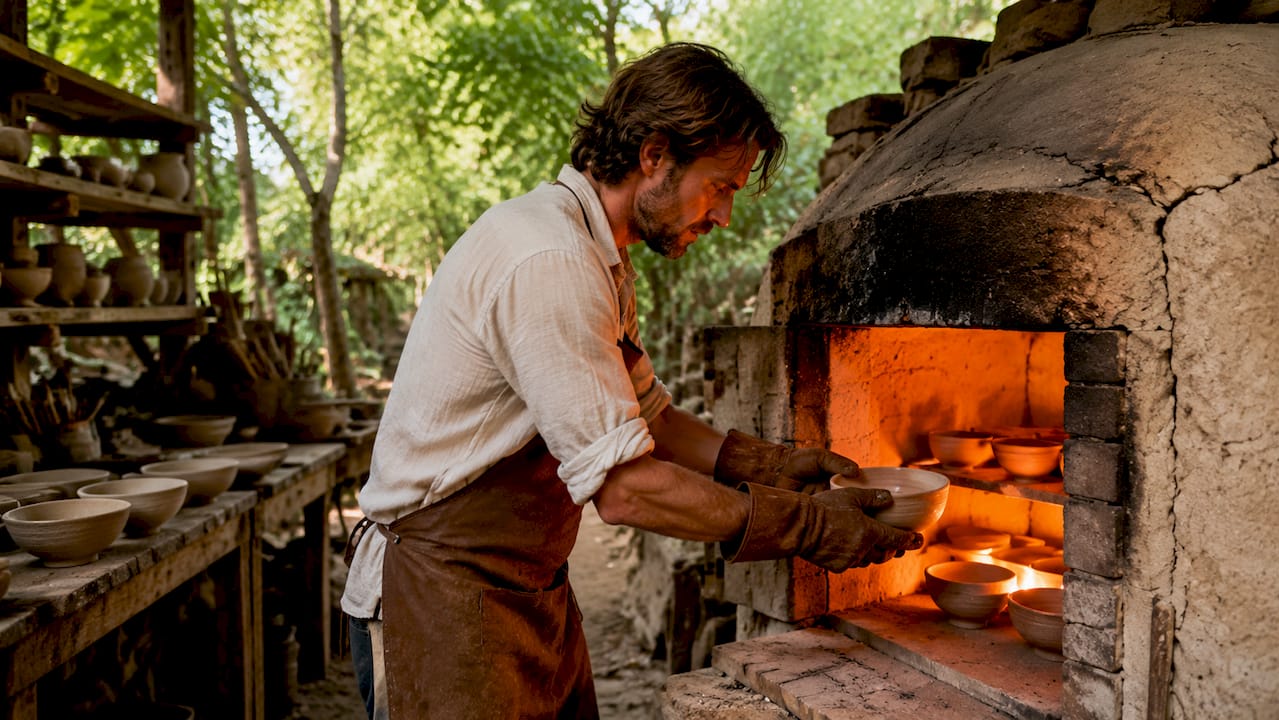
The glaze applied to stoneware also fuses deeply into the clay surface at those temperatures. This creates a bond that holds up to repeated washing and daily handling. Salt glazing, a technique with roots in European pottery traditions, is one method that informs today’s artisanal stoneware and gives many mugs their distinctive matte or speckled finish.
Key properties produced by the firing process:
- Dense clay body: Vitrification closes the pores in the clay, preventing liquid absorption.
- Chip resistance: The hardened structure handles accidental knocks better than earthenware.
- Glaze integration: High-heat glazes bond tightly to the surface, reducing wear over time.
- Thermal mass: The thick walls store heat and release it slowly into your drink.
Pro Tip: When buying stoneware, run your finger along the unglazed base. A smooth, stone-like texture indicates proper vitrification. A chalky or gritty feel suggests lower-quality clay or underfiring.
What are the benefits of stoneware mugs?
The practical case for stoneware mugs is strong. Stoneware’s density keeps drinks warmer longer during daily use compared to earthenware or porcelain. That matters when you pour a cup of coffee and then get pulled away for ten minutes before you can drink it.
Here are the core benefits that make stoneware mugs worth choosing:
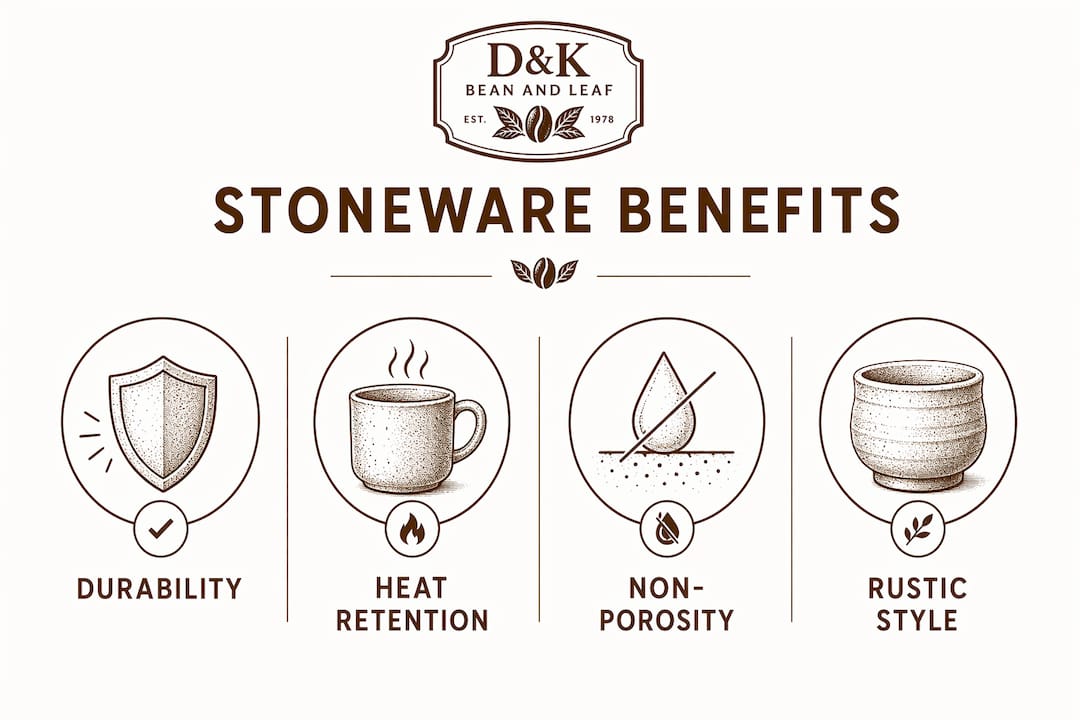
- Heat retention. The thick walls and dense clay act as a thermal buffer. Your coffee or tea stays at a comfortable drinking temperature longer than it would in a thin porcelain cup. You can read more about how mug walls retain heat to understand the physics behind this.
- Durability. Stoneware resists chipping and cracking better than most other ceramic types. It handles the daily routine of being set down on counters, stacked in cabinets, and loaded into dishwashers.
- Microwave and dishwasher safety. Stoneware mugs are generally microwave and dishwasher safe, though artisan pieces with metallic glazes or hand-applied decorations may need gentler care.
- Tactile comfort. The weight and texture of a stoneware mug contribute to the drinking experience. Weight, handle design, and texture all affect how satisfying a mug feels in your hand.
- Artisanal appearance. Stoneware mugs carry a visual warmth that mass-produced glass or plastic cannot replicate. The earthy tones, subtle glaze variations, and handmade irregularities give each piece character.
Pro Tip: If you want maximum heat retention, preheat your stoneware mug by filling it with hot water for 30 seconds before pouring your coffee or tea. The warmed clay holds temperature noticeably longer.
The combination of durability, heat retention, and rustic appeal makes stoneware a practical choice for people who value both function and style. That is not a marketing claim. It is the reason stoneware mugs appear in both artisan coffee shops and everyday kitchen cabinets.
Stoneware versus ceramic, earthenware, and porcelain mugs
The word “ceramic” is an umbrella term. Stoneware, earthenware, and porcelain are all ceramics. What separates them is the clay composition and the firing temperature.
| Mug type | Firing temperature | Porosity | Durability | Best for |
|---|---|---|---|---|
| Stoneware | 2,100°F–2,300°F | Non-porous | High | Daily use, heat retention |
| Earthenware | ~1,800°F | Porous | Moderate | Decorative, casual use |
| Porcelain | 2,200°F–2,600°F | Non-porous | High | Formal settings, thin walls |
| Bone china | ~2,200°F | Non-porous | Moderate | Delicate, formal use |
Earthenware remains more porous and less durable than stoneware, which leads to quicker heat loss and a higher chance of staining. An unglazed earthenware mug will absorb coffee oils and tea tannins over time. A stoneware mug will not.
Porcelain fires at a similar or slightly higher temperature than stoneware, but it uses a refined white clay called kaolin. The result is a thinner, lighter, and more translucent material. Porcelain mugs look elegant but feel fragile. Stoneware mugs feel substantial and grounded. Neither is objectively better. The right choice depends on what you prioritize.
If you want a mug for a formal tea service, porcelain makes sense. If you want a mug you can grab every morning without worrying about it, stoneware wins. For buyers focused on building a durable mug collection, stoneware is the most practical starting point.
Bone china sits between porcelain and stoneware in terms of feel. It is lighter than stoneware but more delicate. It is not a strong candidate for everyday use in a busy household.
How to use and care for stoneware mugs
Stoneware mugs work well for coffee, tea, hot chocolate, and any hot beverage you drink regularly. Their thermal mass makes them less ideal for cold drinks, since the thick walls do not chill as quickly as a thin glass would. That said, many people use stoneware mugs year-round without issue.
Choosing the right stoneware mug comes down to a few practical factors:
- Size. Standard mugs hold 10–12 oz. If you prefer a larger pour, look for mugs in the 14–16 oz range. A wide mouth mug also affects how quickly your drink cools. You can learn more about wide mouth mug benefits to decide what shape fits your routine.
- Handle design. A thick, looped handle gives you a secure grip on a heavy mug. Thin or narrow handles feel uncomfortable with a full pour.
- Glaze finish. Matte glazes show fingerprints less. Glossy glazes are easier to wipe clean. Both are equally durable on well-fired stoneware.
Care makes a real difference in how long a stoneware mug lasts. Artisan or handmade stoneware mugs may have subtle glaze variations that are sensitive to thermal shock. Handwashing is the safest approach for those pieces. For factory-produced stoneware, the dishwasher is generally fine. You can check dishwasher safety guidelines for mugs to understand what affects long-term durability.
Extreme thermal shocks can damage artisan stoneware even when the mug looks intact. Avoid moving a cold mug directly into a hot oven or pouring boiling water into a mug that just came out of the freezer. Gradual temperature changes protect the glaze and the clay body underneath.
A few habits that extend the life of any stoneware mug:
- Avoid stacking mugs directly on top of each other without padding between them.
- Do not use abrasive scrubbers on glazed surfaces.
- Store mugs in a cabinet rather than leaving them exposed to temperature swings near a window.
- Rinse promptly after use to prevent coffee or tea staining on any micro-surface variations.
Key takeaways
Stoneware mugs are the most practical everyday ceramic choice because they combine non-porous durability, superior heat retention, and an artisanal appearance that no other mug material fully replicates.
| Point | Details |
|---|---|
| Firing temperature defines quality | Stoneware fired at 2,100°F–2,300°F produces a dense, non-porous, chip-resistant mug. |
| Heat retention beats earthenware | Stoneware’s thick walls keep beverages warmer longer than earthenware or porcelain. |
| Microwave and dishwasher safe | Most stoneware mugs handle everyday appliance use; artisan pieces need gentler care. |
| Thermal shock is the main risk | Avoid sudden temperature changes to protect glaze and extend mug lifespan. |
| Material choice matches priorities | Choose stoneware for durability and daily use; porcelain for formal settings. |
Why I reach for stoneware every single morning
Kristopher here. I have used porcelain, bone china, glass, and enamel mugs at various points. None of them feel the way a good stoneware mug does in your hands at 6 a.m.
The weight is the thing people underestimate. A stoneware mug has a presence. It feels intentional. When you wrap both hands around it on a cold morning, the thermal mass works in your favor. The mug is already warm from the coffee inside, and it stays that way.
The misconception I hear most often is that stoneware is fragile because it is ceramic. That is the opposite of the truth. I have dropped stoneware mugs on tile floors and walked away with a chip at worst. The same drop with a porcelain cup ends differently.
What I tell anyone shopping for a first serious mug: skip the novelty shapes and the ultra-thin porcelain. Get a well-fired stoneware mug with a handle you can actually grip. You will stop thinking about your mug entirely, which is exactly the point. A good mug disappears into your routine.
— Kristopher
Mugs and tea worth drinking from Dkbeanleaf
If this article has you thinking about upgrading your morning cup, Dkbeanleaf has options worth looking at.

The mug collection at Dkbeanleaf covers a range of styles, from clean glossy finishes to everyday designs built for regular use. Pair any mug with something worth drinking. The tea selection at Dkbeanleaf includes options like Hibiscus Berry Tea, which brews beautifully in a wide, warm stoneware mug. Quality drinkware and quality tea belong together. Dkbeanleaf makes it easy to find both in one place.
FAQ
What is the stoneware mug definition?
A stoneware mug is a ceramic drinking vessel made from dense clay fired at 2,100°F–2,300°F, producing a non-porous, durable, and heat-retaining mug suitable for daily use with coffee, tea, and other hot beverages.
Are stoneware mugs microwave safe?
Most stoneware mugs are microwave safe due to their thermal stability. Artisan pieces with metallic glazes or hand-applied decorations should be checked individually before microwaving.
How does stoneware differ from regular ceramic mugs?
Stoneware is a type of ceramic fired at higher temperatures than standard earthenware, resulting in a denser, less porous, and more durable material. The term “ceramic mug” covers all clay-based mugs, while stoneware refers specifically to the high-fired category.
Do stoneware mugs keep drinks warmer than porcelain?
Yes. Stoneware’s thicker walls and denser clay body retain heat longer than thin porcelain. The thermal mass of stoneware acts as a buffer, slowing the rate at which heat escapes into the surrounding air.
How should you care for a handmade stoneware mug?
Handwash artisan stoneware mugs to protect glaze variations and prevent thermal shock damage. Avoid abrasive scrubbers, sudden temperature changes, and stacking without padding between pieces.