

What Is Single Origin Coffee: Flavor, Sourcing, and More
If you’ve ever picked up a bag of coffee labeled “Ethiopia Yirgacheffe” or “Colombia Huila” and wondered what that actually means, you’re already asking the right question. What is single origin coffee? It’s not a marketing buzzword. It’s a declaration of traceability, a promise that every bean in your cup came from one specific place, grown under specific conditions, with a flavor profile shaped by that exact patch of earth. For coffee enthusiasts who care about what they’re drinking, that distinction changes everything from how you taste to how you shop.
Table of Contents
- Key takeaways
- What single origin coffee really means
- Flavor profiles of single origin coffee
- Benefits and challenges of single origin coffee
- How to brew single origin coffee for best results
- Market trends worth knowing
- My take on single origin coffee
- Explore single origin coffee with Dkbeanleaf
- FAQ
Key takeaways
| Point | Details |
|---|---|
| Geographic traceability matters | Single origin coffee comes from one location, ranging from a country down to a single micro-lot farm. |
| Terroir drives flavor | Altitude, soil, and climate create the distinct taste notes you find in your cup, not additives. |
| Ethical sourcing advantage | Buying single origin directly supports smallholder farmers and sustainable trade practices. |
| Brewing method matters | Light to medium roasts brewed with pour-over or Aeropress methods best reveal origin flavors. |
| Market demand is growing | Consumer interest in traceable, specialty coffee is rising fast, particularly in home brewing formats. |
What single origin coffee really means
The phrase “single origin” sounds straightforward, but it actually covers a spectrum of specificity. Single origin coffee is sourced from one known geographic location, and that location can mean very different things depending on the producer, roaster, and what they’re willing to document.
Here’s how the sourcing levels typically break down:
- Country level: The broadest definition. All beans come from one country, such as Brazil or Guatemala. You get general flavor characteristics but limited insight into specific farms or conditions.
- Region level: Narrows it down to a growing zone within a country, like Sidama in Ethiopia or Antioquia in Colombia. Regional coffees show more distinct flavor consistency.
- Farm level: A single estate or cooperative. You can often look up the producer, the harvest year, and the processing method. This is where single origin coffee starts to feel personal.
- Micro-lot level: The most specific category. A micro-lot is a small, distinct section of a farm, often harvested and processed separately. Micro-lots offer limited harvests with exceptional clarity and intensity that farm-level sourcing can’t always match.
This is also where the difference between single origin and blend becomes clear. A blend combines beans from multiple origins, often chosen to create a balanced, consistent cup year-round. Single origin, by contrast, is seasonal and specific. The trade-off is real: blends are reliable, while single origin is expressive. Think of it like the difference between a house wine and a vintage from one specific vineyard in one specific year.
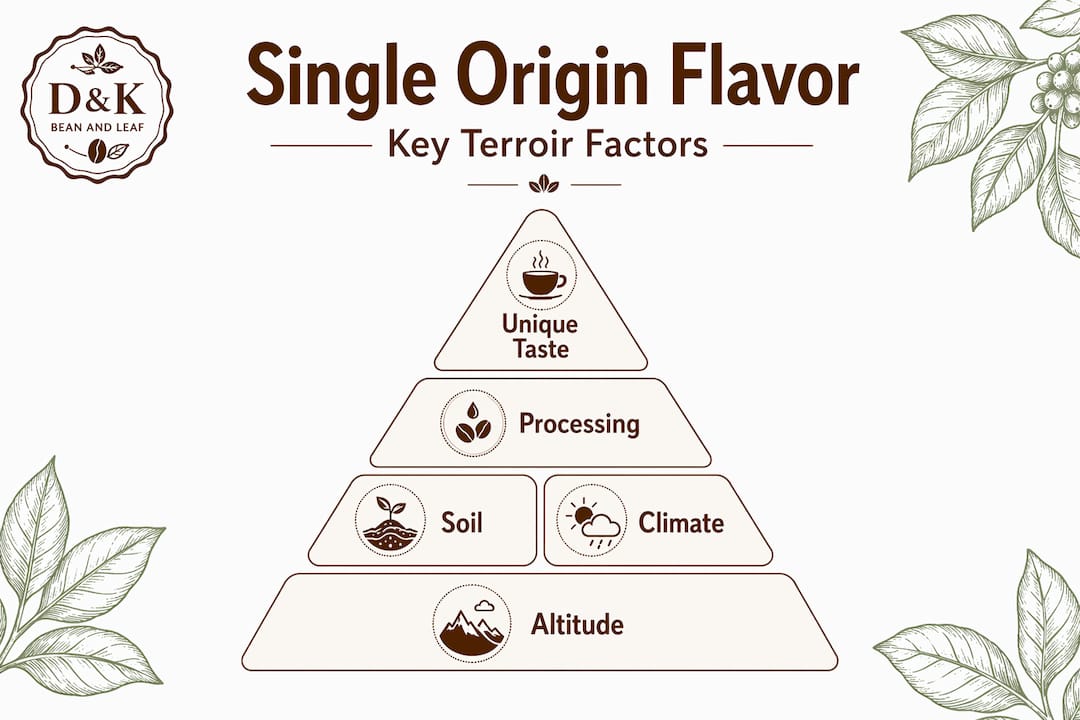
Terroir is the concept that ties all of this together. Borrowed from the wine world, terroir refers to how altitude, soil composition, rainfall patterns, and local processing traditions all leave fingerprints on the final flavor. A coffee grown at 2,000 meters above sea level in the highlands of Ethiopia will taste fundamentally different from one grown at 900 meters in lowland Brazil, even if they’re the same variety of plant.
Flavor profiles of single origin coffee
This is where single origin gets genuinely exciting. Because the flavor in your cup is a direct reflection of a specific place, you can start to build a mental map of how different origins taste. Terroir shapes these unique flavor profiles, and the differences between regions are more dramatic than most new coffee drinkers expect.
Here’s a rough guide to what you can expect from some major growing regions:
- Ethiopia: Bright, fruity, and floral. Think jasmine, blueberry, and lemon zest. Yirgacheffe is the most celebrated sub-region for this profile.
- Colombia: Smooth and balanced, with mild acidity and notes of caramel, red apple, and hazelnut. One of the most approachable single origins for newcomers.
- Kenya: Bold and juicy with blackcurrant, tomato, and a wine-like complexity that polarizes people in the best way.
- Guatemala: Rich chocolate and brown sugar with a heavier body than Colombian coffees, often with a subtle smokiness.
- Brazil: Low acidity, full body, and nutty or chocolatey flavors. Brazil is the workhorse of the coffee world, and its single origins are approachable and consistent.
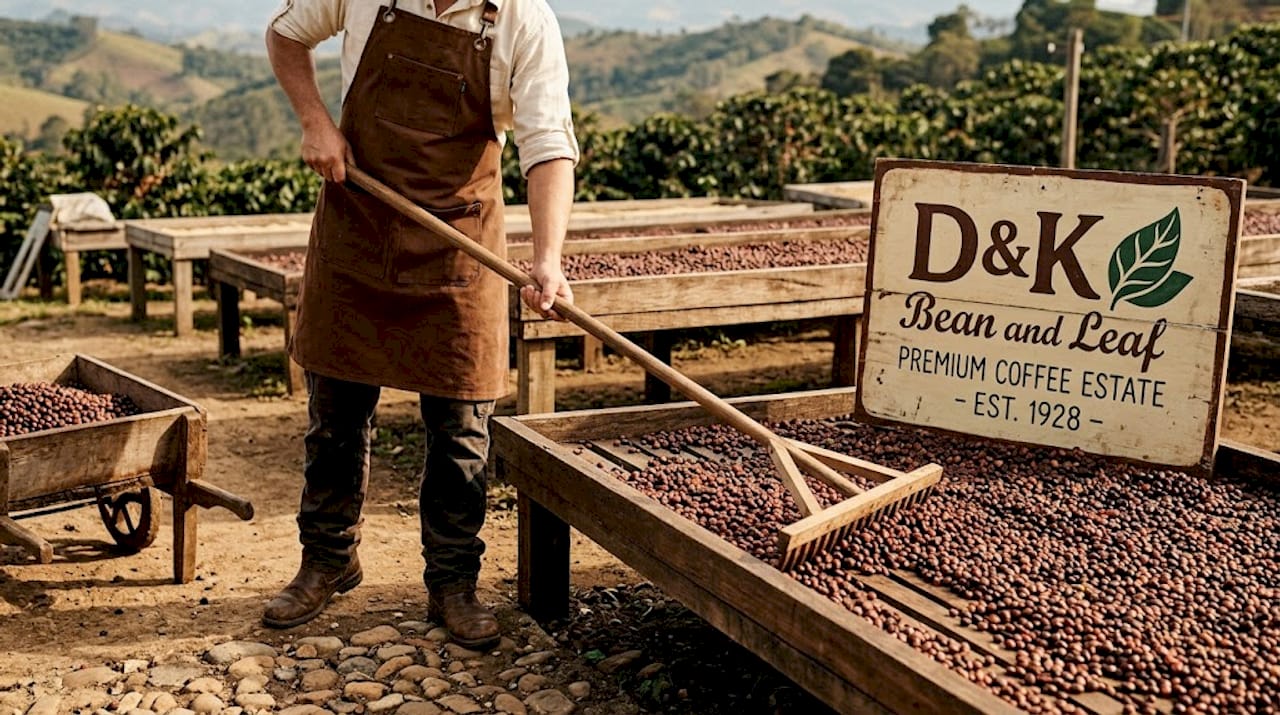
Processing method plays an equally significant role. Natural-processed coffees, where the cherry dries around the bean, produce sweeter and fruitier cups. Washed coffees, where the cherry is removed before drying, tend to be cleaner and brighter. Honey-processed coffees fall somewhere in between. When you see these terms on a single origin bag, they’re telling you something real about what you’re about to taste.
Roast level also matters more with single origin than with blends. A light roast preserves the fruit-forward and floral notes that define Ethiopian coffees. Roasting that same bean darker starts to overwhelm the origin character with roast character. For exploring roast levels and tasting notes, starting with light to medium roasts gives you the clearest window into what makes a single origin special.
Pro Tip: When tasting a new single origin, try it black first. No milk, no sugar. Give your palate a chance to register the actual flavors before you add anything that might mask them.
Benefits and challenges of single origin coffee
The case for single origin coffee goes beyond flavor. There are real, practical reasons why enthusiasts and specialty roasters gravitate toward it. But there are trade-offs worth knowing about too.
| Factor | Single origin | Blend |
|---|---|---|
| Flavor complexity | Distinct, origin-driven | Balanced, consistent |
| Traceability | High, farm to cup | Low to moderate |
| Seasonal availability | Limited, harvest-dependent | Year-round consistent |
| Price | Often higher | Typically lower |
| Ethical sourcing | Stronger direct trade ties | Harder to verify |
| Best for | Black coffee, pour-over | Espresso, milk drinks |
One of the strongest arguments for single origin is what it does for the people who grow the coffee. Single origin supports direct trade and smallholder farmers more effectively than blended sourcing, because the relationship between roaster and producer is visible and verifiable. When a roaster knows exactly which farm a lot came from, they can pay that farmer directly and fairly, without the price ambiguity that comes with blended commodity purchasing.
Quality control is also tighter. 55% of coffee consumers now prefer specialty coffee scoring 80 or more points on professional tasting scales, and single origin coffees are disproportionately represented in that category. When a roaster knows exactly where the beans came from, they can calibrate their roast to highlight the best of that specific lot.
The honest challenge is availability and price. A micro-lot from a single harvest is finite. Once it’s gone, it’s gone. You might find a Colombian coffee you love and then discover it’s sold out six months later. And yes, single origin coffees tend to cost more per bag, because the traceability and small-batch sourcing that makes them special requires more effort and investment at every step.
Pro Tip: If price is a concern, start with country-level single origins from larger growing regions like Colombia or Brazil. You still get traceability and flavor clarity at a more accessible price point than micro-lots.
How to brew single origin coffee for best results
Getting the most out of a single origin coffee is less about mastering a complicated technique and more about not getting in the way of what’s already there. The goal is to let the origin speak.
-
Choose the right brewing method. Pour-over methods like the Hario V60 or Chemex are considered the gold standard for single origin because they highlight clarity and nuance. Aeropress is another excellent option with more flexibility. Espresso can work well with naturally-processed single origins that have enough sweetness and body, but it tends to compress flavor complexity.
-
Grind fresh, every time. Pre-ground coffee starts losing its volatile aromatics within minutes of grinding. Freshness and roasting date are critical to experiencing single origin flavor at its best. Buy whole beans and grind just before brewing.
-
Use filtered water at the right temperature. Tap water with heavy chlorination or mineral content can distort delicate origin flavors. Aim for water between 195°F and 205°F (just off boiling). Too hot and you extract bitterness; too cool and the coffee tastes flat and underdeveloped.
-
Keep your ratio consistent. A good starting point is 1:15, meaning one gram of coffee to every 15 grams of water. This is not a rigid rule, but it gives you a reliable baseline to start tasting from.
-
Take notes. Single origin coffee rewards attention. After your first cup, write down what you taste. Then adjust your grind or water temperature slightly and taste again. This is how you actually learn to distinguish flavors, not by reading about them.
Pro Tip: Check the roast date on your bag before brewing. Single origin coffee is typically at its peak between 7 and 21 days after roasting. Brewing it too soon or too late can flatten the very flavors that made you buy it.
Market trends worth knowing
The specialty coffee market is not slowing down. The UK single origin flavored coffee market is projected to grow between 9 and 12% annually through 2035, significantly outpacing broader coffee market growth. That’s not a niche trend. That’s a structural shift in how consumers relate to coffee.
In the US, 70 to 80% of single origin flavored coffee volume is consumed at home, with roughly one-third of that in single-serve pod formats. That last number is particularly interesting. It signals that convenience and quality are no longer mutually exclusive in the minds of consumers.
| Market | Key data point | Growth signal |
|---|---|---|
| United Kingdom | Market valued at £3.7–4.2 billion in 2025 | 9–12% annual projected growth through 2035 |
| United States | 70–80% consumed at home | One-third in single-serve pod formats |
| Specialty segment | 55% of consumers prefer 80+ point coffees | Driving premium and traceable sourcing demand |
A newer development worth watching is single origin flavored coffee, which combines traceable beans with natural or synthetic flavor infusions applied after roasting. This format appeals to consumers who want the ethical sourcing story of single origin but prefer a more familiar or accessible flavor profile. It’s a genuine bridge between the specialty and mainstream markets.
My take on single origin coffee
I’ve tasted a lot of coffee over the years, and the thing that keeps drawing me back to single origin isn’t just the flavor. It’s the specificity. When I drink a washed Ethiopian from a particular cooperative in Gedeo, I’m tasting the result of that farmer’s decisions: when to pick the cherries, how long to ferment, what elevation their trees grow at. That’s not something a blend can give you.
The part people underestimate is how much single origin coffee teaches you. Every time you try a new origin, you recalibrate your understanding of what coffee can be. I used to think I didn’t like bright, acidic coffee. Then I tried a Kenyan AA brewed properly, and I completely changed my mind.
My honest advice? Don’t treat single origin as an intimidating thing reserved for coffee experts. Treat it as an invitation to curiosity. Yes, some micro-lots are expensive. Yes, the seasonal availability can be frustrating. But even a straightforward Colombian single origin, brewed well and tasted carefully, will show you something a commodity blend never could. The story behind the cup is half the experience, and that story is worth paying attention to.
— Kristopher
Explore single origin coffee with Dkbeanleaf
Ready to put this knowledge to work in your own kitchen? Dkbeanleaf offers a curated range of single origin coffees sourced for flavor clarity and traceability, from bright Ethiopian naturals to smooth Colombian washed lots. Whether you’re new to single origin or looking to expand your palate, the Single Origin Favorites Sample Pack is one of the best ways to taste multiple origins side by side and figure out what excites you most.
If convenience is your priority, Dkbeanleaf also carries single-serve coffee capsules that preserve the flavor integrity of single origin beans without sacrificing your morning routine. And if you’re going to drink exceptional coffee, you might as well drink it from an exceptional mug. Dkbeanleaf’s collection has you covered there too.
FAQ
What is single origin coffee in simple terms?
Single origin coffee comes from one specific geographic location, which can range from a whole country down to a single farm or micro-lot. It gives you a direct flavor connection to where and how the coffee was grown.
What is the difference between single origin and blend?
A blend combines beans from multiple origins to create a consistent, balanced cup year-round. Single origin uses beans from one place, which produces more distinct and seasonally variable flavors but less consistency.
Why does single origin coffee cost more?
The higher price reflects the traceability, small-batch sourcing, and quality control required at every step from farm to bag. Micro-lot coffees are the most expensive because they involve limited harvests with exceptional flavor clarity.
How should I brew single origin coffee at home?
Pour-over methods like the V60 or Chemex work best for highlighting the origin’s unique flavors. Use freshly ground whole beans, filtered water between 195°F and 205°F, and a 1:15 coffee to water ratio as your starting point.
Which countries produce the best single origin coffee?
Ethiopia, Colombia, Kenya, Guatemala, and Brazil are among the most celebrated single origin sources. Each country produces distinct flavor profiles shaped by altitude, soil, and processing traditions, so the best choice depends entirely on what flavors appeal to you.