

What Sweatshirt Fabric Composition Actually Tells You
Sweatshirt fabric composition is the list of fibers, expressed as percentages, plus the fabric construction that together determine how warm a sweatshirt feels, how long it lasts, how much it stretches, and how you’ll need to wash it. Read the tag before you read the price tag: a 60/40 cotton/polyester blend at 320 GSM behaves completely differently from a 100% cotton fleece at 280 GSM, even if they look identical on a hanger.
Here’s the quick version for anyone standing in front of a rack or scrolling a product page:
- For everyday warmth and softness: look for 60 to 80% cotton with 20 to 40% polyester.
- For shape retention and easy care: higher polyester content resists shrinking and holds its form wash after wash.
- For real winter warmth: prioritize weight over fiber ratio. Look for GSM (grams per square meter) on the tag or product description.
- For low-toxicity assurance: check for an OEKO-TEX certification, which confirms the fabric was tested for harmful substances.
Dkbeanleaf’s own Unisex organic sweatshirt is a useful real-world reference point for what a well-specified organic cotton garment looks like on a label, and we’ll come back to it later.
Key Takeaways
Sweatshirt fabric composition combines fiber percentages and knit construction, and both determine warmth, durability, stretch, and how you should wash the garment.
| Point | Details |
|---|---|
| Composition is two-part | Fiber percentages plus construction (fleece, terry, ribbing) together determine performance, not percentage alone. |
| GSM signals warmth | Sweatshirts commonly range from 280 to 400 GSM; heavier brushed fleece traps more warmth than lighter French terry. |
| Yarn quality affects pilling | Spinning method, such as MVS Air spinning, can reduce pilling independent of the fiber ratio on the tag. |
| Care follows composition | Cotton-heavy blends need cold washes and low heat; polyester-heavy blends tolerate warmer washes but resist staining less. |
| Check the organic option | Dkbeanleaf’s Unisex organic sweatshirt lists its fiber sourcing and certification directly on the product page. |
Table of Contents
- What Materials Are In Sweatshirts? The Common Fibers Explained
- Fabric Construction: Fleece, French Terry, and Ribbing Explained
- How to Read a Sweatshirt Fabric Composition Label
- How Fiber Content Shapes Warmth, Stretch, and Pilling
- Washing and Drying Rules by Fabric Composition
- Sustainability Signals Worth Checking on a Sweatshirt Label
- Four Steps to Picking the Right Sweatshirt
- What Most Shoppers Get Wrong About Fabric Percentages
- Try a Sweatshirt Built on a Transparent Fabric Spec
- Frequently Asked Questions About Sweatshirt Fabric Composition
- Sources
What Materials Are In Sweatshirts? The Common Fibers Explained
Cotton is still the backbone of most sweatshirts, and for good reason. It breathes, it softens with washing, and it takes dye evenly. The catch: 100% cotton sweatshirts shrink more in the wash than blends do, and they lose crispness faster because cotton fibers relax under heat and moisture. A cotton-heavy garment that fits snug out of the bag can end up loose and thin after a season of washing.
Polyester solves the problems cotton creates. It resists shrinking, dries fast, and holds its shape through repeated washing. Recycled polyester (often labeled RPET) does the same job while using reclaimed plastic instead of virgin petroleum. When a sweatshirt leans polyester heavy, that’s usually a deliberate trade of softness for durability.
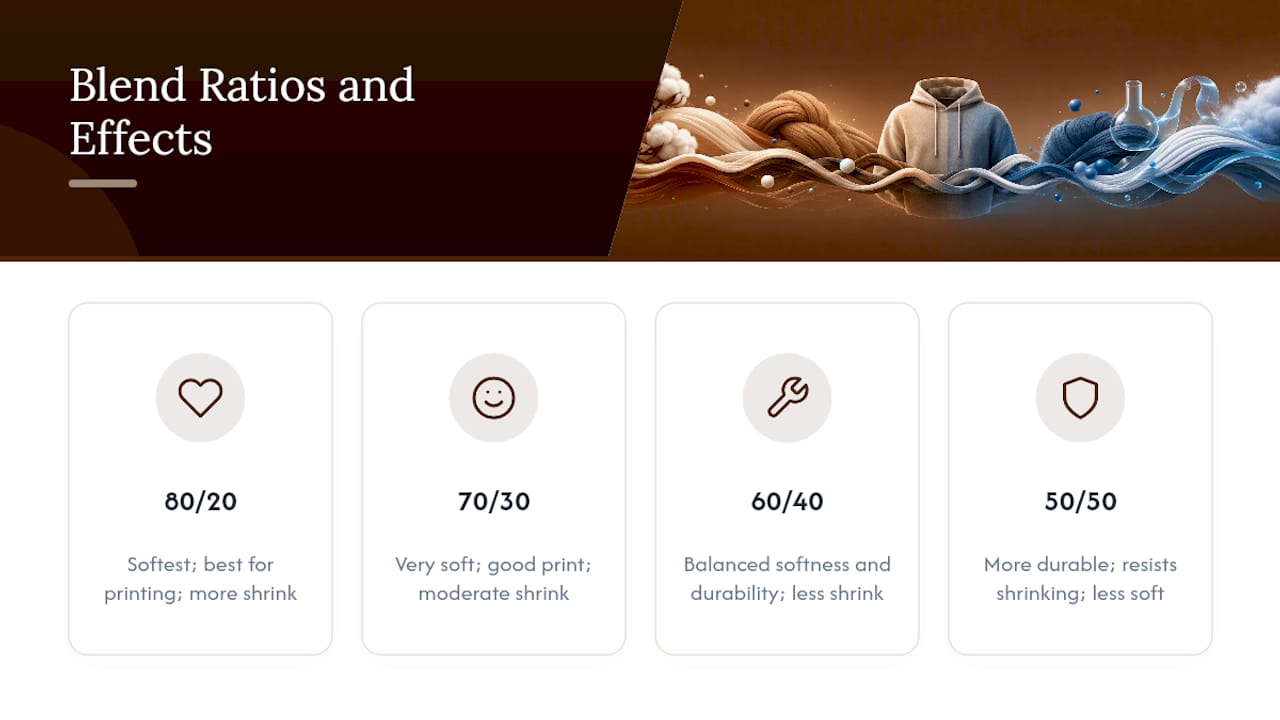
Blends split the difference, and the specific ratio matters more than most shoppers realize. Common combinations include 80/20, 70/30, 60/40, and 50/50 cotton to polyester, and each one is chosen for a reason. Higher cotton ratios feel softer and print better with certain techniques; higher polyester ratios shrink less and survive commercial laundering. Tri-blends add a third fiber, usually rayon or modal, for extra drape and a lived-in hand feel straight out of the package. Dkbeanleaf’s DryBlend® T-Shirt is a good example of a blended construction built specifically to manage moisture and hold its shape better than a pure cotton tee.
Small percentages of spandex or Lycra, typically 1 to 5%, show up in fitted sweatshirts and cropped styles where recovery matters. Without it, a snug garment stretches out at the elbows and never bounces back.
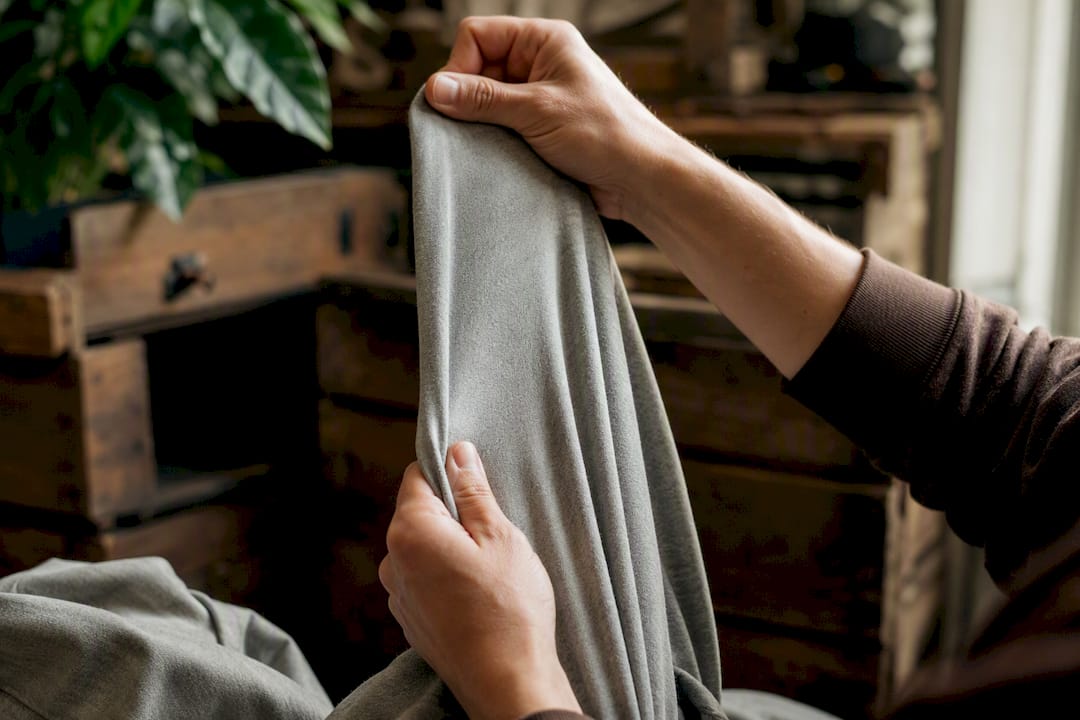
Pro Tip: Pinch the fabric and stretch it gently on the bias (diagonally). If it springs back quickly, there’s likely some spandex or a tight knit construction at work. If it stays stretched, you’re probably looking at a loose-knit, cotton-dominant fabric that will loosen further with wear.
Fabric Construction: Fleece, French Terry, and Ribbing Explained
Fiber percentage is only half the story. How those fibers are knitted matters just as much, sometimes more.
Brushed fleece has an inner surface that’s been mechanically brushed to raise a soft nap, which traps air and adds warmth. French terry, sometimes called loopback, keeps its interior loops intact and untouched, which makes it lighter and more breathable. You can usually tell them apart just by feeling inside a garment: fuzzy means brushed fleece, looped and slightly nubby means French terry.
Weight ranges typically fall out along construction lines. French terry generally runs 5 to 8 ounces per square yard, while brushed fleece runs heavier at 8 to 12 ounces. In GSM terms, production data from sweatshirt manufacturers shows finished garments ranging from roughly 280 to 400 GSM depending on style and intended climate.
- Brushed fleece: warmer, denser, best for cold-weather wear.
- French terry: lighter, more breathable, better for layering or mild climates.
- Ribbed cuffs and hem: not decorative filler. The tighter knit at the wrist and waist seals in warmth and keeps the garment’s shape after repeated wear, preventing the sleeves from stretching out over time.
Construction also affects printability. Smoother, tighter knits like French terry generally hold screen prints and embroidery more cleanly, while heavily brushed fleece can soften fine print detail because of its raised nap.
How to Read a Sweatshirt Fabric Composition Label
Reading a tag is simpler than it looks once you know the order matters.
- Read percentages left to right, largest first. A tag listing “70% cotton, 30% polyester” means cotton is the dominant fiber, driving softness and shrink behavior, while polyester is there to add durability and reduce shrinkage.
- Match the ratio to your priority. An 80/20 blend favors softness and breathability; a 50/50 blend favors shape retention and easy care. A specification sheet for one popular hooded sweatshirt lists a 70% cotton and 30% polyester build at 300 grams per square meter, which is a fairly typical mid-weight spec for everyday wear.
- Check the care shorthand. Composition usually dictates the wash symbols: cotton-heavy blends often call for cold water and low tumble dry, while high-polyester blends tolerate warmer washes but can hold onto oil-based stains longer.
- Ask the seller what the tag doesn’t say. Reputable manufacturers can confirm whether fabric is pre-shrunk, where it was sourced, and whether it carries a certification like OEKO-TEX or GOTS. If a swatch is available before you buy, ask for one.
How Fiber Content Shapes Warmth, Stretch, and Pilling
Composition and construction work together to decide how a sweatshirt performs day to day, and the effects show up in ways that aren’t obvious from a hangtag alone.
Warmth tracks more closely with GSM and nap than with fiber ratio alone. A heavier, brushed 320 GSM fabric traps more air than a lighter 260 GSM fabric, regardless of whether it’s cotton or polyester dominant. Breathability runs the opposite direction: cotton-heavy fabrics move moisture and air more freely, while polyester-heavy fabrics trap heat and can feel clammy during activity.
Durability comes down to shrink behavior and shape retention. Cotton fibers relax and can shrink several percentage points after repeated hot washes, while polyester barely moves. That’s why a 100% cotton crewneck that fit perfectly on day one sometimes feels baggier by month six, while a poly-blend version holds its cut.
Pilling is where manufacturing quality shows up independent of the fiber ratio on the tag. Two 60/40 cotton-poly sweatshirts can pill at completely different rates depending on how the yarn was spun. Research on MVS Air spinning technology shows this spinning method reduces surface friction and produces smoother yarn, which meaningfully cuts pilling in polyester-cotton blends compared to conventional spinning.
Pro Tip: If you’re buying for active wear or frequent washing, weigh spinning quality and construction as heavily as the fiber percentage. A well-spun 60/40 blend often outlasts a poorly finished 80/20 blend, pill for pill.
Washing and Drying Rules by Fabric Composition
Getting the care routine wrong is the single fastest way to ruin a good sweatshirt, and the right routine depends entirely on what’s in the fabric.
- 100% cotton: wash cold, tumble dry low or air dry, and reshape while slightly damp to correct minor shrinkage.
- Cotton/poly blends (60/40 to 80/20): wash cold to warm, tumble dry low. The polyester content forgives a warmer wash better than pure cotton does.
- High-polyester blends: machine wash warm, tumble dry low, but watch for oil-based stains that bond more stubbornly to synthetic fibers.
- Tri-blends with rayon or modal: wash cold, avoid high heat entirely, since rayon loses strength when wet and heat can distort the drape.
- Garments with spandex: avoid high heat and skip the dryer’s high setting, since heat breaks down elastane fibers over time and kills stretch recovery.
If a sweatshirt pills, a fabric shaver handles surface fuzz without damaging the knit underneath. Mild shrinkage in cotton-heavy garments often reverses partially if you soak the item in lukewarm water and stretch it gently back into shape while damp, then lay it flat to dry.
Pro Tip: Brushed fleece holds moisture longer than French terry because of its dense nap, so give it extra time on a low dryer setting or an air-dry rack rather than assuming it’s done when the surface feels dry.
Sustainability Signals Worth Checking on a Sweatshirt Label
Not every “eco-friendly” claim on a hangtag means the same thing, so it helps to know what specific certifications actually verify.
OEKO-TEX certification confirms a fabric has been tested for harmful substances at every stage of production, which matters if you’re buying for sensitive skin or kids. GOTS (Global Organic Textile Standard) goes further, verifying organic fiber content plus environmentally responsible processing.
- Recycled polyester (RPET) reduces reliance on virgin plastic without sacrificing durability.
- Fiber treatments like CiCLO are marketed as a way to help synthetic fibers biodegrade faster, cutting down on microfiber pollution that sheds during washing.
- Ask for mill certificates or check the product page for named certifications rather than trusting a vague “eco” label with no backing.
A responsibly sourced organic sweatshirt, like Dkbeanleaf’s own Unisex organic sweatshirt, should list its certification status directly on the product page rather than making the claim in marketing copy alone.
Four Steps to Picking the Right Sweatshirt
- Decide your priority first. Warmth, stretch, or low-maintenance care each point toward a different fiber ratio, so know which one matters most before you shop.
- Check the GSM and construction. Brushed fleece in the 8 to 12 ounce range suits cold climates; French terry in the 5 to 8 ounce range suits layering and milder weather.
- Look for certifications and care notes. Confirm pre-shrunk status, and request a swatch if you’re buying in bulk or unsure how a fabric will feel.
- Compare real examples before you decide. Handle a few in person or read full spec details online, such as Dkbeanleaf’s Unisex organic sweatshirt, to calibrate what a given GSM and blend actually feels like.
What Most Shoppers Get Wrong About Fabric Percentages
Most people treat the fiber percentage as the whole story, and it isn’t. Two sweatshirts can carry the identical 70/30 cotton-poly ratio and perform completely differently because one was knitted at 260 GSM with cheap yarn and the other at 320 GSM with better-spun fiber. The tag tells you what the fabric is made of. It doesn’t tell you how well it was made.
If you only remember one thing from this, remember to look past the percentage to the weight and the construction name. A brushed fleece at a lower cotton ratio can outperform a “purer” cotton French terry in daily durability, simply because the finishing and yarn quality do more work than the ratio implies. That’s a detail most product listings still leave out entirely.
Try a Sweatshirt Built on a Transparent Fabric Spec
Everything above only matters if the sweatshirt you actually buy lives up to its label. Dkbeanleaf’s Unisex organic sweatshirt is built around organic cotton sourcing with the composition and construction details available right on the product page, so you’re not guessing at GSM or fiber ratio after the fact.

If you’ve read this far, you already know what to check: fiber percentage, weight, construction, and certification. Pull up the product page, compare those four details against what you learned here, and add it to your cart if it fits what you’re looking for in everyday warmth and organic sourcing. Browse the full hoodies and sweatshirts collection if you want to compare fits and weights side by side before you decide.
Frequently Asked Questions About Sweatshirt Fabric Composition
What is sweatshirt fabric composition, exactly? It’s the combination of fiber types and their percentages, plus the knit construction, that together determine how a sweatshirt feels, wears, and needs to be cared for.
Is cotton or polyester better for a sweatshirt? Neither is universally better. Cotton offers softness and breathability but shrinks more; polyester resists shrinking and holds shape but breathes less. Most everyday sweatshirts blend the two for balance.
What GSM is considered warm for a sweatshirt? Anything above 300 GSM in a brushed fleece construction generally reads as warm for cold-weather wear, while 260 to 300 GSM French terry suits milder conditions or layering.
Does a higher cotton percentage mean higher quality? Not necessarily. A high cotton ratio can mean more softness but also more shrinkage, and yarn spinning quality often matters more for long-term durability than the raw percentage.
How do I stop a sweatshirt from pilling? Wash it inside out on a gentle cycle, avoid high heat, and consider a fabric shaver for existing pills. Blends with better-spun yarn pill less to begin with.