

200 mg or 96 mg? Coffee vs Energy Drinks: What’s Safer
Coffee is generally the safer everyday caffeine source because it usually skips the added sugar, extra stimulants, and unpredictable “energy blends” that many energy drinks pack in. The two beverages can deliver similar milligrams of caffeine, but energy drinks often layer on ingredients that appear to raise cardiovascular risk beyond what caffeine alone would cause. Most healthy adults can handle a moderate amount of caffeine a day within generally recognized safety guidelines. What follows breaks down the actual mg counts, the ingredient differences and the clinical evidence behind that guidance.
TL;DR:
- Energy drinks can contain over 300 mg of caffeine per large can, significantly exceeding a standard 8-ounce coffee, which typically has around 96 mg.
- Many energy drinks include added sugar, guarana, taurine, and undisclosed stimulant blends, which can increase cardiovascular risks beyond caffeine alone.
- Matching caffeine content in studies shows energy drinks sharply raise heart stress markers, unlike coffee, suggesting added ingredients drive adverse effects.
- People with heart conditions, anxiety, or on certain medications should limit or avoid energy drinks due to their higher stimulant load.
- Choosing beverages based on caffeine milligrams and ingredient transparency helps manage health risks, favoring plain coffee or tea over opaque energy blends.
Table of Contents
- Coffee vs Energy Drinks Caffeine: The Real Milligram Numbers
- What Energy Drinks Add That Coffee Usually Doesn’t
- Health Effects and Evidence: Coffee vs Energy Drinks
- How to Choose Between Coffee and an Energy Drink
- Why You Can Trust This Comparison
- A Straightforward Take on Coffee vs Energy Drinks
- Try a Lower-Additive Way to Get Your Caffeine
- Sources
Coffee vs Energy Drinks Caffeine: The Real Milligram Numbers
Ounce for ounce, coffee and energy drinks are closer in caffeine content than most people assume. According to Mayo Clinic’s caffeine chart, an 8-ounce cup of brewed coffee runs about 96 mg, with a typical range of 80 to 115 mg depending on the beans and brew method. A single shot of espresso packs roughly 63 mg into just one ounce, and 8 ounces of instant coffee lands around 62 mg. An 8-ounce energy drink averages about 79 mg, close to brewed coffee, but that number gets misleading fast once you look at real can sizes.
The variability problem shows up hardest with energy drinks and shots. EatingWell’s comparison notes that energy-drink caffeine can range from 80 mg to more than 300 mg per serving, and some 16-ounce cans push past that upper number entirely. A 2-ounce energy shot alone can carry around 200 mg, more caffeine than two full cups of brewed coffee, packed into a container smaller than a shot glass.
Coffeehouse cups create a similar trap in the other direction. A large 20-ounce brewed coffee isn’t one serving. It’s closer to two and a half, which means the actual caffeine load can run north of 200 mg before you’ve added anything. The same logic applies to espresso-based drinks, where a double or triple shot quietly doubles or triples the caffeine math.
| Beverage | Typical serving | Approximate caffeine |
|---|---|---|
| Brewed coffee | 8 oz | 96 mg (80–115 mg range) |
| Espresso | 1 oz (single shot) | 63 mg |
| Instant coffee | 8 oz | 62 mg |
| Energy drink | 8 oz | 79 mg |
| Energy drink (large can) | 16 oz | Up to 300+ mg |
| Energy shot | 2 oz | ~200 mg |
The takeaway: compare milligrams, not container size. A “small” 2-ounce energy shot can out-caffeinate a large mug of drip coffee, and brew strength itself changes the math on the coffee side too.
What Energy Drinks Add That Coffee Usually Doesn’t
Caffeine content only tells part of the story. The bigger difference between coffee and energy drinks is what rides along with it. A plain cup of black coffee is typically just water, coffee solids, and naturally occurring antioxidants called polyphenols. There’s no added sugar unless you put it there yourself.
Energy drinks are a different formula entirely. According to a University of Rochester Medicine review, many cans contain 25 to 50 grams of added sugar, plus extra stimulant compounds layered on top of the caffeine itself.
- Guarana: a plant extract that contains its own caffeine, often stacked on top of the caffeine already listed separately.
- Taurine: an amino acid included at doses far above what’s found naturally in food, with effects on the cardiovascular system still not fully mapped in combination with high caffeine.
- Added sugar: frequently 25 to 50 grams per can, which can amplify blood sugar swings on top of the stimulant load.
- “Energy blend” labeling: a catch-all term that groups several stimulants under one number, making it hard to know the real total dose.
That last point is the one worth remembering. EatingWell points out that when a label lists an “energy blend” without breaking out each ingredient’s amount, you have no way to calculate your actual stimulant intake. Guarana or yerba mate on the ingredient list is a signal that the printed caffeine number may not be the full picture.
Pro Tip: Flip the can over before you drink it. Check the “Caffeine (mg)” line first, then scan the ingredient list for guarana, yerba mate, or an unlisted “energy blend,” and finally check the Nutrition Facts panel for grams of added sugar. Thirty seconds of label reading tells you more than the brand name ever will.
Health Effects and Evidence: Coffee vs Energy Drinks
The clearest evidence separating coffee from energy drinks isn’t about caffeine at all. It’s about what happens to your heart’s electrical activity after each drink.
A controlled interventional study measured a heart rhythm marker called periodic repolarization dynamics (PRD), an indicator of cardiac sympathetic activity, before and after participants drank either coffee or an energy drink with matched caffeine content. The PMC-published study found PRD rose sharply after the energy drink (from 3.64 to 5.85 deg², a statistically significant jump), while coffee with the same caffeine dose caused essentially no change (3.47 to 3.16 deg²). Same caffeine, very different cardiac response. That gap points toward the non-caffeine ingredients in energy drinks as the likely driver of the sympathetic activation researchers measured.
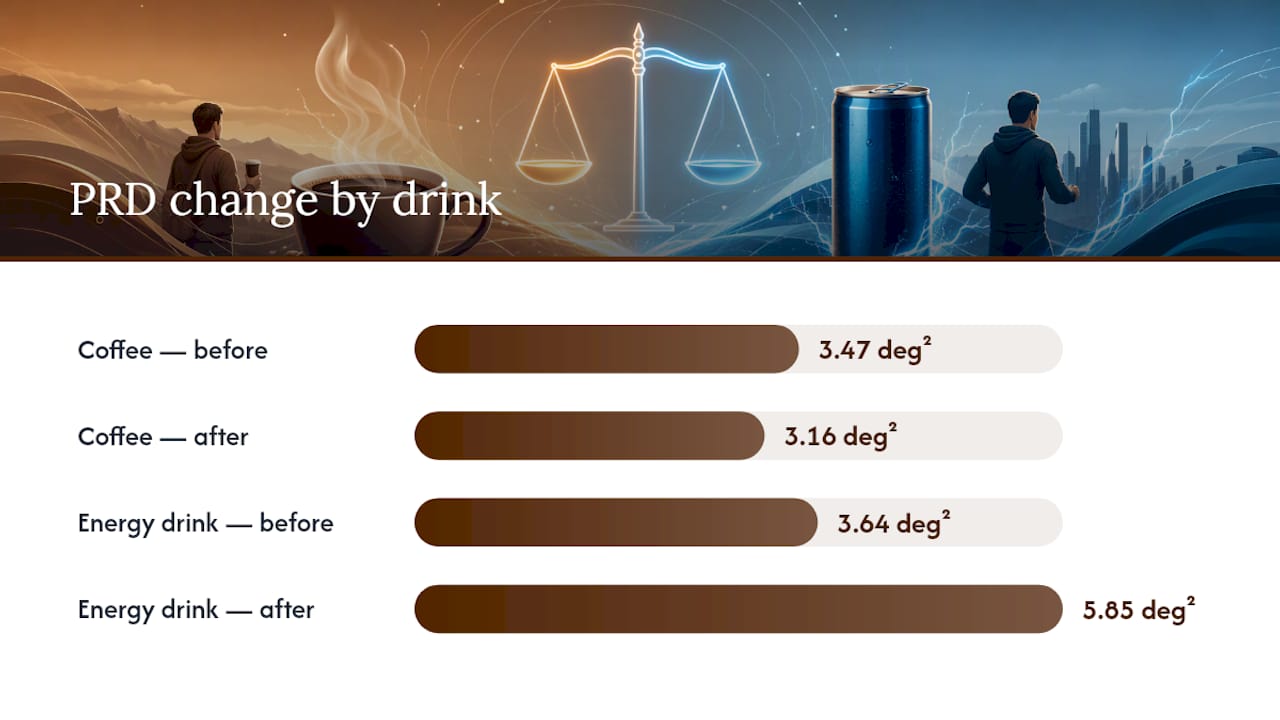
That mechanistic finding lines up with the broader clinical picture. The University of Rochester Medicine review links energy drinks’ sugar and stimulant combination to a higher chance of tachycardia, irregular heartbeats, and elevated blood pressure. An acute rise in PRD doesn’t prove long-term harm on its own, and how that translates into real-world outcomes over years still isn’t fully settled. But it’s a concrete signal that the two beverages don’t sit on equal footing physiologically, even at matched caffeine doses.
Some groups face higher stakes from either drink and should be more cautious with stimulant intake generally:
- Pregnant or breastfeeding individuals
- Adolescents and younger people still developing cardiovascular regulation
- Anyone with existing heart disease, arrhythmia history, or hypertension
- People managing anxiety disorders, where stimulants can intensify symptoms
- Anyone taking medications that interact with stimulants, including certain antidepressants and asthma drugs
Mayo Clinic advises extra caution for these groups specifically around energy drinks, given the added stimulant load on top of caffeine. Anyone in one of these categories should talk to a clinician before making either beverage a daily habit.
How to Choose Between Coffee and an Energy Drink
Deciding isn’t really about taste preference. It comes down to what you need, what you can tolerate, and how much caffeine you’ve already had that day.
- Identify what you actually need. Sustained focus for hours favors coffee’s slower, steadier caffeine delivery. A short burst before a workout is closer to what energy drinks are designed for.
- Track your daily total in milligrams, not cups or cans. Most healthy adults can handle up to 400 mg a day, but that ceiling gets hit fast once you count a large coffeehouse cup plus an afternoon energy drink.
- If you do choose an energy drink, set limits. Dietitians commonly suggest capping occasional energy-drink choices at under 10 grams of added sugar and no more than 150 mg of caffeine per serving.
- Cut off caffeine at least six hours before bed. Caffeine’s effects peak around 30 to 45 minutes after drinking it and linger for hours afterward, which is long enough to disrupt sleep if timed poorly.
- Never mix either one with alcohol, and never stack multiple cans. Both habits multiply cardiovascular strain without adding any real benefit.
Pro Tip: If you’re managing a heart condition, anxiety disorder, or take medication that interacts with stimulants, bring your actual daily caffeine total (not your guess) to your next appointment. A clinician can tell you far more with real numbers than with “I drink a lot of coffee.”
Why You Can Trust This Comparison
This comparison is built on Mayo Clinic’s reference caffeine chart, the PMC interventional study on cardiac repolarization, and the University of Rochester Medicine’s clinical review of energy-drink risks, not brand marketing. For more on how brewing choices change caffeine per cup, see Coffee Dose Ratio Explained for Home Brewers and Light vs Dark Roast: Which to Drink and When. None of this replaces a conversation with your own doctor about your specific health history.
A Straightforward Take on Coffee vs Energy Drinks
I’d rather drink a straightforward cup of unsweetened coffee every day than gamble on an “energy blend” I can’t fully decode. That’s not anti-energy-drink dogma. Rare situations, like needing a fast, small dose before a short physical push, are exactly what a low-sugar energy drink was built for. Clarity about what’s actually in your cup, not brand loyalty, should drive the choice. It’s the same principle Dkbeanleaf builds into every bag of coffee and every tin of loose leaf tea.
— Kristopher
Try a Lower-Additive Way to Get Your Caffeine
If this comparison left you rethinking what’s actually in your afternoon pick-me-up, the fix doesn’t have to be complicated. Dkbeanleaf sells fresh roasted coffee and loose leaf tea with nothing hiding behind an “energy blend” label. What you see on the bag is what’s in the cup: no added sugar, no proprietary stimulant stack, no guesswork about your real caffeine total.

Loose leaf tea in particular gives you a gentler, more predictable caffeine curve than either energy drinks or strong coffee, which makes it a solid option if you’re trying to space out your doses through the day. Pair that with steady energy habits like the ones covered in this guide to sustained-energy food choices, and you’ve got a caffeine routine you can actually account for, milligram by milligram. Start with a sample pack from the Dkbeanleaf tea collection and see how a cleaner ingredient list changes how your afternoon actually feels.
This article is general information, not a substitute for advice from a qualified doctor. Consult a qualified healthcare professional about your own circumstances before acting on anything here.
Sources
- Caffeine content for coffee, tea, soda and more - Mayo Clinic
- Impact of energy drink versus coffee consumption on periodic repolarization dynamics: an interventional study - PMC
- Are Energy Drinks Bad for You? | University of Rochester Medicine