

Skip Metallic Taste: Insulated Ceramic Mugs with Replaceable Inserts
If you care more about your coffee tasting like coffee than about squeezing out one extra hour of heat, a ceramic-lined or ceramic-insert insulated mug is the right pick. It beats bare stainless on flavor every time. What you give up is a little top-end performance: ceramic designs typically hold peak heat for fewer hours than the heaviest stainless vacuum tumblers. Choose ceramic for outings measured in hours, not a full workday, and check for a replaceable insert, stated vacuum insulation, and honest hour claims before you buy.
TL;DR:
- Ceramic-insulated mugs typically hold heat for fewer hours than heavy stainless vacuum tumblers, making them suitable for shorter outings.
- Construction details such as full ceramic inserts, ceramic coatings, and vacuum insulation significantly impact heat retention and flavor preservation.
- Proper cleaning involves hand washing, checking seals regularly, and avoiding thermal shock to prolong the mug’s lifespan.
- Smaller sizes between 10 to 12 ounces are ideal for personal use, while 14 to 17 ounces suit commuters, with shape and material affecting fit and weight.
- Durability depends heavily on glazing quality and firing process; buying brands that sell replacement parts indicates better longevity.
Table of Contents
- What to Check Before Buying an Insulated Ceramic Mug
- How Does Ceramic Insulation Actually Work?
- Ceramic Mugs: The Real Trade-offs
- How to Clean and Care for an Insulated Ceramic Mug
- Which Insulated Ceramic Mug Fits Your Routine?
- What Size and Style Should You Get?
- Craft Notes: Why Some Ceramic Mugs Outlast Others
- Where to Find a Taste-First Ceramic Mug
- Sources
What to Check Before Buying an Insulated Ceramic Mug
Shopping for an insulated ceramic mug gets a lot easier once you know which specs actually predict performance. Manufacturers bury the important stuff in product descriptions, so scan for these seven things before you add anything to your cart.
- Construction type. Is it a full ceramic insert, a ceramic coating over metal, or a ceramic-lined stainless body? Each behaves differently under heat and impact.
- Heat-retention claims. Look for specific hour ranges (hot and cold separately), and treat vague marketing copy skeptically.
- Lid design. Leakproof, slider, or flip top, and whether the gasket comes out for cleaning or replacement.
- Capacity and fit. Confirm it clears standard car cup holders, and note the weight, since ceramic adds heft; glass and plastic don’t.
- Care instructions. Microwave and dishwasher guidance should be explicit, not implied. Removable inserts change the answer.
- Spare parts and warranty. A brand that sells replacement lids or inserts is telling you it expects the product to last for years.
- Trust signals on the page. Clear, specific care language is usually a sign the brand actually understands its own product.
Skip any listing that dodges these points. A mug worth your money will answer all seven without you having to dig.
How Does Ceramic Insulation Actually Work?
A “ceramic mug” can mean three very different things: a double-wall ceramic body (ceramic inside and out, with an air or vacuum gap), a thin ceramic coating baked onto a metal interior, or a removable ceramic insert that drops into a stainless outer shell. Only the first and third put ceramic in direct contact with your drink.
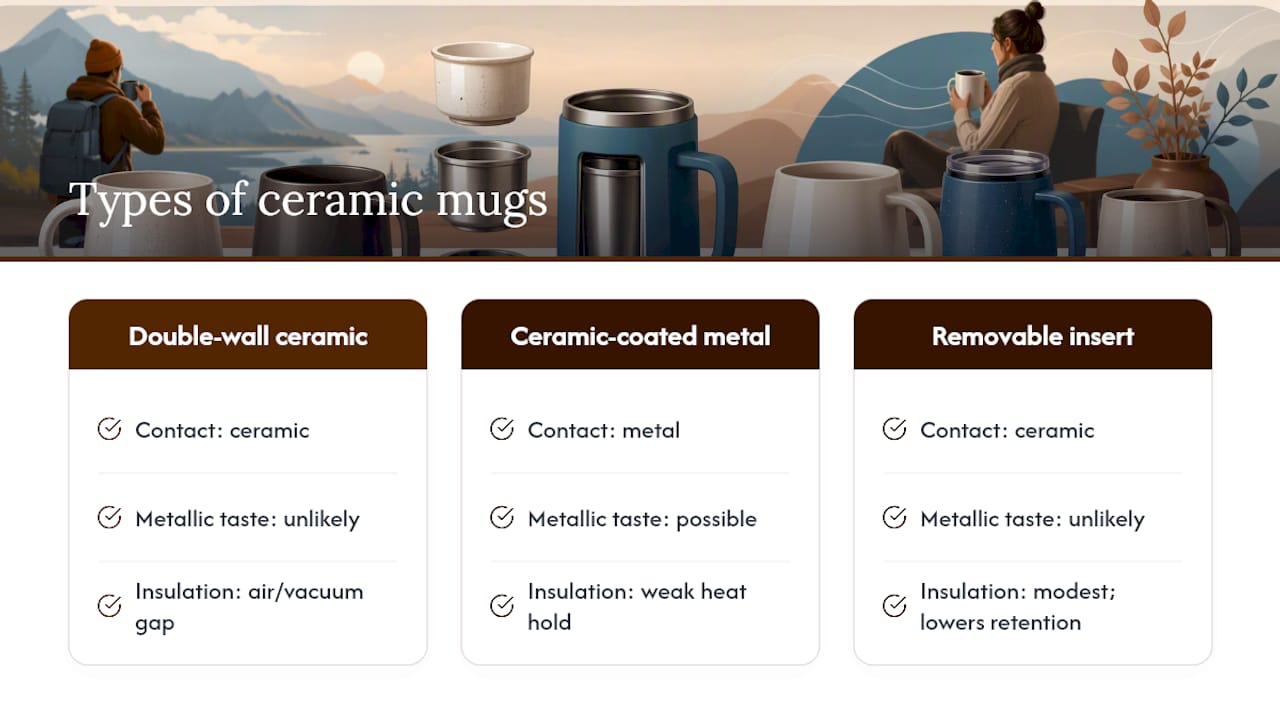
That contact matters. Bare stainless interiors can carry a faint metallic edge, especially with acidic coffee or tea. Ceramic doesn’t react that way, which is why manufacturer product pages market ceramic interiors specifically as a fix for metallic aftertaste rather than as a heat-retention feature.
Vacuum insulation is a separate layer of engineering, and it’s what actually holds temperature. It works by removing air between two walls so heat has almost nothing to conduct through. When a brand pairs vacuum insulation with a ceramic interior, you get flavor protection plus decent heat hold, though rarely the longest hold on the market. Independent testing puts the best stainless vacuum tumblers for much longer heat retention than ceramic-insert models, while ceramic-insert designs tend to land lower, often for fewer hours of heat retention depending on the specific build. A removable insert, as one maker’s product listing shows, can trim hot retention further because the insert itself absorbs some heat before your drink gets to keep it.
Ceramic Mugs: The Real Trade-offs
The upside is straightforward: ceramic gives you a neutral sip surface, no metallic bite, and in many designs, an insert you can pull out and replace if it ever gets stained or chipped.
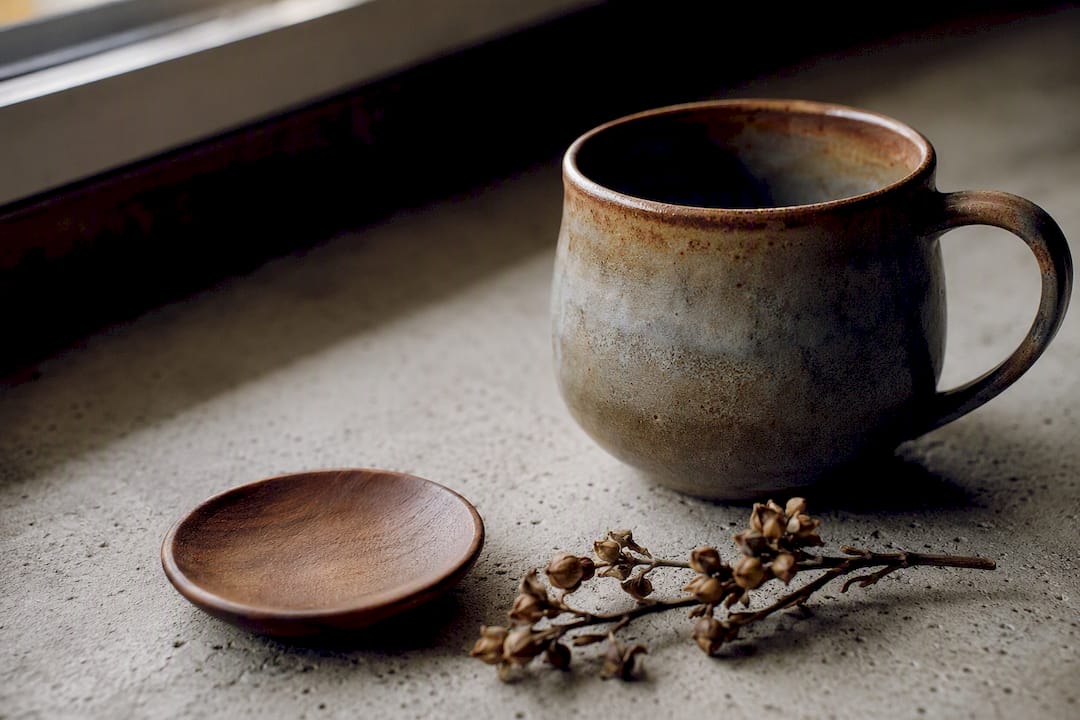
The downside is just as real. Ceramic is more fragile than stainless steel, full stop. Cleaning takes more thought, since handmade stoneware travel mugs often need hand-washing to protect the glaze, and some ceramic-insert designs cap out at lower peak heat than a heavy vacuum tumbler.
Pros:
- Neutral flavor, no metallic aftertaste
- Often includes a replaceable insert
- Feels more like drinking from a real mug
Cons:
- More fragile than stainless-only builds
- Usually needs gentler cleaning
- Can trail top stainless tumblers on maximum heat hours
Glazing quality and how well the piece was fired in the kiln make a bigger difference in chip resistance than most buyers realize. A cheaply glazed mug chips at the rim within weeks; a properly fired one can take years of daily knocks.
Pro Tip: If you’re torn between two ceramic mugs, pick the one that sells a replacement insert or lid separately. That single detail tells you the brand expects the product to outlast a chip or a lost gasket, not get tossed the first time something breaks.
How to Clean and Care for an Insulated Ceramic Mug
Getting care wrong is the fastest way to wreck a good mug. Follow these steps and yours will outlast the cheap stuff by years.
- Check before microwaving. Mugs with a stainless outer body and a ceramic interior liner generally should not go in the microwave; the metal shell can spark or heat unevenly. Pure ceramic-only pieces are sometimes microwave safe, but only when the maker says so explicitly.
- Hand-wash when in doubt. High-heat dishwasher cycles and abrasive scrubbers can degrade vacuum seals over time and dull artisanal glazes, so hand-washing protects both. Some double-wall ceramic designs, like certain De’Longhi models, are built and labeled as dishwasher safe, so always defer to the specific product’s instructions.
- Disassemble lids regularly. Pop out gaskets and rinse them separately at least once a week to stop mildew and coffee residue from building up in the seams.
- Inspect seals every few months. A gasket that’s cracked or lost its grip needs replacing before it starts leaking in your bag.
- Avoid thermal shock. Don’t pour boiling water into a cold ceramic mug straight from the fridge. Rapid swings in temperature can stress and eventually crack the glaze.
D&K Bean and Leaf’s guide to dishwasher-safe mugs walks through this in more depth if you want the full breakdown by material type.
Which Insulated Ceramic Mug Fits Your Routine?
Run through these six questions before you commit to a specific model.
- How long do you actually need heat retention? A two-hour commute needs far less than an all-day job site.
- Do you care more about taste or maximum temperature? Ceramic wins on taste; heavy stainless wins on duration.
- Will you run it through the microwave or dishwasher often? If yes, confirm the exact construction handles both.
- Do you need a leakproof lid for a bag or one-handed sipping while driving? Not every ceramic design nails this.
- Are you okay trading some weight and fragility for a real ceramic sip surface? If not, a coated interior might suit you better.
- Does the brand sell spare parts and stand behind a warranty? That’s your safety net when something inevitably breaks.
Answer honestly and the right mug usually becomes obvious. Someone hauling a mug through airport security needs different features than someone who leaves theirs on a desk all day.
What Size and Style Should You Get?
Size decisions come down to how you actually drink, not how much a mug can technically hold.
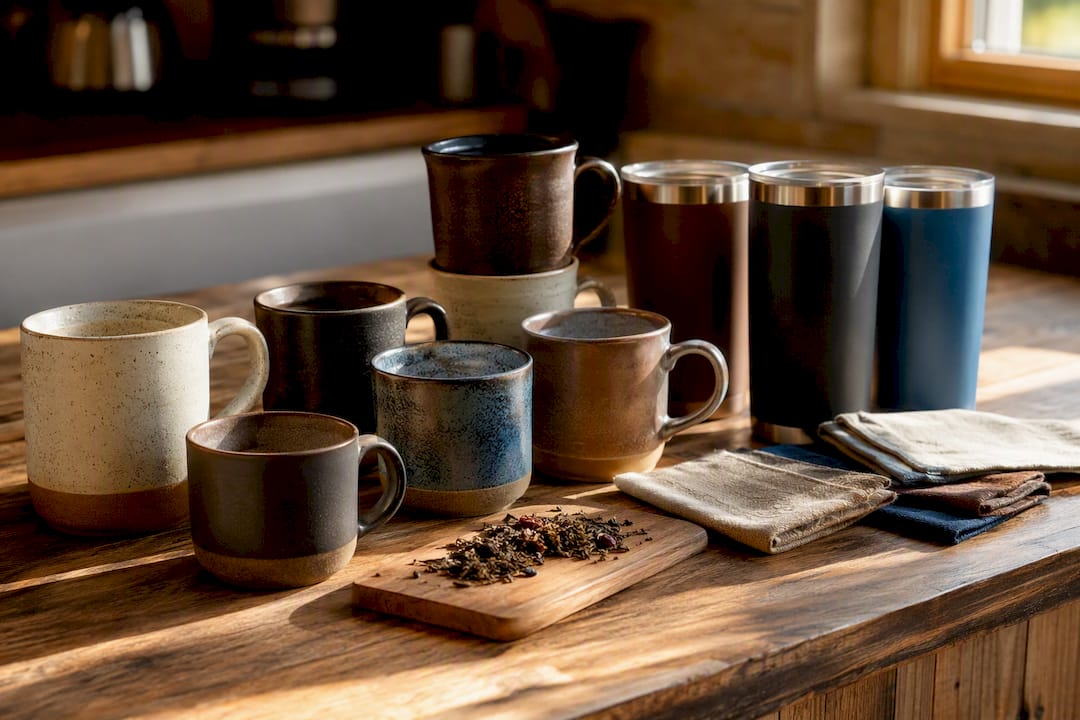
A 10 to 12 oz mug suits home or office use and espresso-based drinks where you’re not chasing volume. 14 to 17 oz is the sweet spot for commuters. It balances enough liquid for a real coffee with a shape that still fits most car cup holders. Slim, tall builds squeeze into tighter holders in compact cars, while wide-mouthed tumblers work better for iced drinks and are easier to scrub out by hand. If you’re buying as a gift, a hand-finished glaze and solid packaging read as far more thoughtful than a generic tumbler, and a ceramic-lined double-wall mug tends to feel more like an actual present.
Craft Notes: Why Some Ceramic Mugs Outlast Others
Most buying guides skip the manufacturing side entirely, and that’s a mistake. Glazing and kiln firing temperature determine whether a ceramic insert survives daily drops or chips on contact. A rushed firing leaves microscopic weaknesses in the glaze that show up as hairline cracks within months.
Dkbeanleaf leans toward ceramic-insert designs over simple coatings whenever taste is the priority, because a genuine insert gives a full ceramic sip surface rather than a thin layer over metal. Coated interiors still make sense for buyers who want lighter weight and don’t mind a slightly less pure flavor profile. For more on how the process actually shapes durability, see how ceramic mugs are made.
— Kristopher
Where to Find a Taste-First Ceramic Mug
Dkbeanleaf built its mug lineup around the same priority this guide keeps circling back to: your coffee should taste like coffee, not like the inside of a tumbler. Our ceramic-lined pieces skip the metallic edge that bothers a lot of stainless-only drinkers, and every listing spells out care instructions plainly so you’re never guessing about the dishwasher or the microwave.

We’re upfront about the trade-off, too. If you need a mug to hold scorching heat for a full twelve-hour shift, a heavy stainless vacuum tumbler will out-perform ours on that one metric. But for a morning commute, a few hours at a desk, or a weekend road trip, taste usually wins out, and that’s exactly where our designs are built to perform. Pair one with a bag of freshly roasted beans or a loose-leaf tea from our tea collection and you’ve got a setup that actually tastes the way it’s supposed to, cup after cup. If stainless still tempts you for longer trips, partner options like the DRINCO 22oz sport water bottle cover that different need well.
Sources
Claims here draw on manufacturer specs, independent travel mug testing, and Dkbeanleaf’s own guide on why mugs keep drinks warm.
- The 7 Best Travel Mugs of 2026, Tested & Reviewed
- Twist Top Ceramic Insulated Travel Mug - Kyocera (product page)
- Roamwild Cerami Cup | Ceramic Insulated Travel Mug