

What Is a Porcelain Mug: Benefits, Care, and Uses
A porcelain mug is a high-fired ceramic cup made from refined kaolin clay, prized for its dense, non-porous surface and ability to preserve the true flavor of coffee and tea. Unlike standard earthenware or stoneware, porcelain undergoes vitrification during firing, which transforms the clay body into a glass-like material that neither absorbs odors nor reacts with your beverage. The result is a cup that delivers a clean, neutral sip every time. Whether you drink espresso, pour-over, or loose-leaf tea, the porcelain mug definition centers on one core promise: what goes in tastes exactly as intended.
What is a porcelain mug made of?
Porcelain starts with three raw materials: kaolin clay, feldspar, and quartz. Each ingredient plays a specific role. Kaolin gives the body its white color and workability. Feldspar acts as a flux, lowering the melting point so the materials fuse together. Quartz adds structural strength and hardness.
The mixture is fired at 1200°C to 1450°C, a temperature range that triggers vitrification. Vitrification means the silica in the clay melts and reseals as a glass-like matrix, closing every microscopic pore. That sealed surface is what makes porcelain chemically inert and non-absorbent.
To understand how this compares to other ceramics, the differences come down to firing temperature and clay composition. You can see how ceramic mugs are made for a deeper look at the production process across material types.
| Material | Firing temperature | Porosity | Wall thickness |
|---|---|---|---|
| Porcelain | 1200°C–1450°C | Non-porous | Thin |
| Stoneware | 1200°C–1300°C | Low porosity | Medium to thick |
| Earthenware | 900°C–1150°C | Porous | Thick |
Earthenware fires at the lowest temperature and stays porous unless heavily glazed. Stoneware fires at a similar range to porcelain but uses coarser clay, producing a thicker, heavier body. Porcelain sits at the top of the density and hardness scale among all three.
What are the advantages of porcelain mugs for coffee and tea?
The biggest advantage of a porcelain mug is chemical neutrality. Porcelain does not absorb odors or react with the compounds in coffee or tea. Metal mugs can introduce a faint metallic taste. Porous ceramics trap old flavors and release them into the next drink. Porcelain does neither.
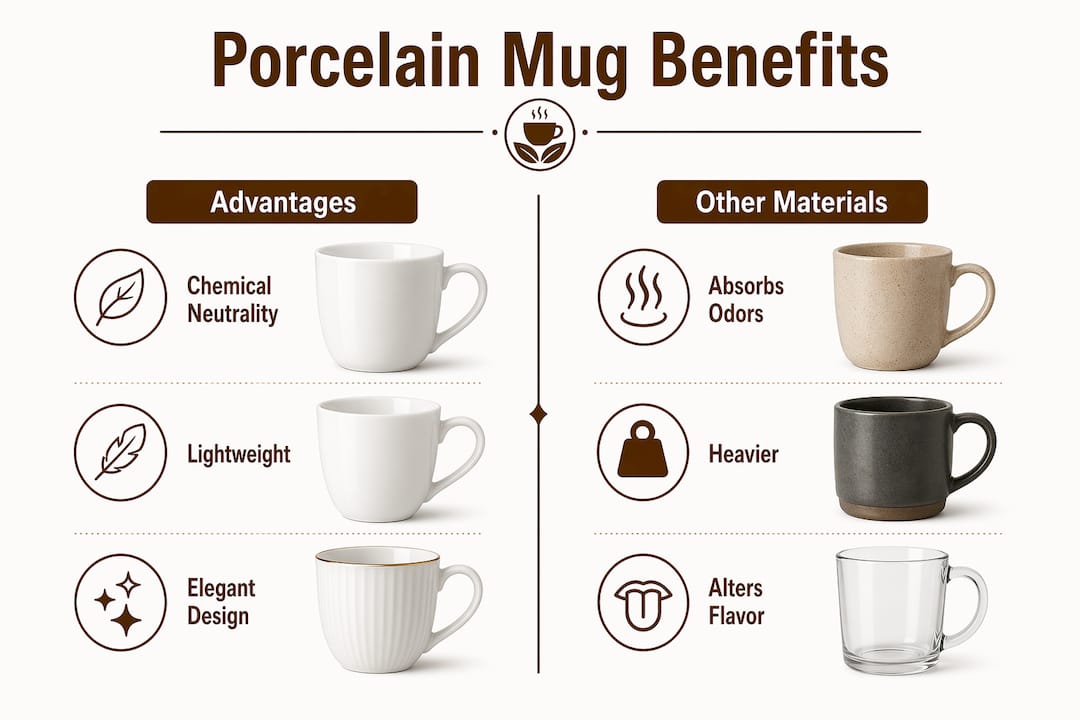
Coffee sensory experts rely on porcelain for this exact reason. During professional coffee cupping, tasters use porcelain vessels because the material does not interfere with flavor evaluation. That same neutrality applies to your morning cup at home.
The physical design of a porcelain mug also improves the drinking experience. Thin rims concentrate aroma and allow espresso crema to reach the tongue faster, which intensifies the tasting experience. A thick stoneware rim creates more distance between the liquid and your palate.
Here is a summary of the key advantages:
- Flavor neutrality: No off-flavors from material absorption or chemical reaction
- Lightweight body: Porcelain mugs weigh 30–100g, far lighter than stoneware at 150–350g
- Thin rim design: Enhances aroma delivery and mouthfeel for espresso and tea
- Smooth surface: Easy to clean and resistant to staining over time
- Elegant appearance: Crisp white finish suits both casual and formal settings
Pro Tip: If you drink single-origin pour-over or specialty loose-leaf tea, use a porcelain mug with a thin rim. You will notice flavor nuances that a thicker-walled mug tends to mute.
The lightweight nature of porcelain also matters for daily use. Holding a 50g porcelain mug for 20 minutes feels noticeably different from gripping a 300g stoneware vessel. Over multiple cups a day, that difference adds up.
How do porcelain mugs compare to other mug materials?
The most common comparison is porcelain vs ceramic mugs, specifically porcelain versus stoneware. Both are ceramics, but they behave differently in your hands and in your cabinet.
Stoneware retains heat longer because its thicker walls act as a thermal buffer. Porcelain cools more quickly due to thinner walls, which means your drink reaches a comfortable sipping temperature faster. For espresso, that is a benefit. For a slow morning tea session, stoneware may hold warmth longer. You can read more about heat retention in mugs to understand the science behind wall thickness and thermal performance.
| Feature | Porcelain | Stoneware | Metal |
|---|---|---|---|
| Weight | Light (30–100g) | Heavy (150–350g) | Varies |
| Heat retention | Moderate | High | High |
| Flavor neutrality | Excellent | Good | Poor |
| Durability | Hard but shatters on impact | Tough and chip-resistant | Very durable |
| Aesthetics | Smooth, white, refined | Earthy, textured, rustic | Industrial |
Metal mugs conduct heat aggressively and can alter the taste of delicate teas or light-roast coffees. Porcelain stays chemically inert throughout the drink. Glass offers similar neutrality but lacks the warmth and tactile quality that porcelain provides.
Porcelain is harder than earthenware but more prone to shattering on a hard floor drop. Stoneware absorbs impact better because its thicker walls flex slightly before breaking. Porcelain’s hardness makes it chip-resistant under normal use, but a direct fall onto tile is often fatal for the mug. For a full breakdown of stoneware’s strengths, the stoneware mug guide covers the material in detail.
How to clean porcelain mugs properly
Cleaning a porcelain mug correctly preserves both its glaze and its appearance over years of use. The non-porous surface resists staining, but harsh abrasives can scratch the glaze and create micro-grooves where residue builds up.
Follow these steps for safe, effective cleaning:
- Rinse immediately after use. Coffee and tea compounds bond to surfaces as they dry. A quick rinse prevents staining before it starts.
- Use mild dish soap and a soft sponge. Avoid steel wool, abrasive scrubbers, or powdered cleansers. These scratch the glaze.
- For stubborn stains, use baking soda paste. Apply a small amount to the stain, let it sit for five minutes, then rinse. Baking soda is mildly abrasive but safe for glazed porcelain.
- Check dishwasher compatibility before loading. Properly glazed porcelain is dishwasher safe, but unglazed or hand-painted mugs may not be. Check the manufacturer’s label.
- Avoid thermal shock. Never pour boiling water into a cold porcelain mug straight from the refrigerator. The sudden temperature change can cause cracking. Warm the mug first with hot tap water.
Pro Tip: Store porcelain mugs with a small gap between them or use felt mug separators. Stacking them directly causes rim chips over time, which is the most common damage pattern for porcelain.
Thermal shock is the leading cause of porcelain damage in home kitchens. The fix is simple: let the mug reach room temperature before exposing it to extreme heat or cold.
What are the common uses and style choices for porcelain mugs?
Porcelain mugs fit naturally into specialty coffee and tea rituals. Their chemical neutrality makes them the preferred vessel for espresso, pour-over, Aeropress, and loose-leaf tea brewing. Baristas and tea masters both reach for porcelain when flavor accuracy matters most.
Porcelain’s smooth white finish suits minimalist and formal table settings equally well. The crisp glaze reflects light cleanly, which is why porcelain appears in fine dining, hotel breakfast service, and specialty coffee shops. At home, a white porcelain mug works with any kitchen color scheme.
Style choices in porcelain mugs include:
- Classic white: The standard for flavor-focused drinkers and minimalist aesthetics
- Patterned and printed: Screen-printed or decal designs for personal expression
- Artisan hand-thrown: Slight variations in shape and glaze for a handcrafted feel
- Demitasse size: Small 2–3 oz cups designed specifically for espresso
- Oversized mugs: 14–16 oz versions for large lattes or full tea steeps
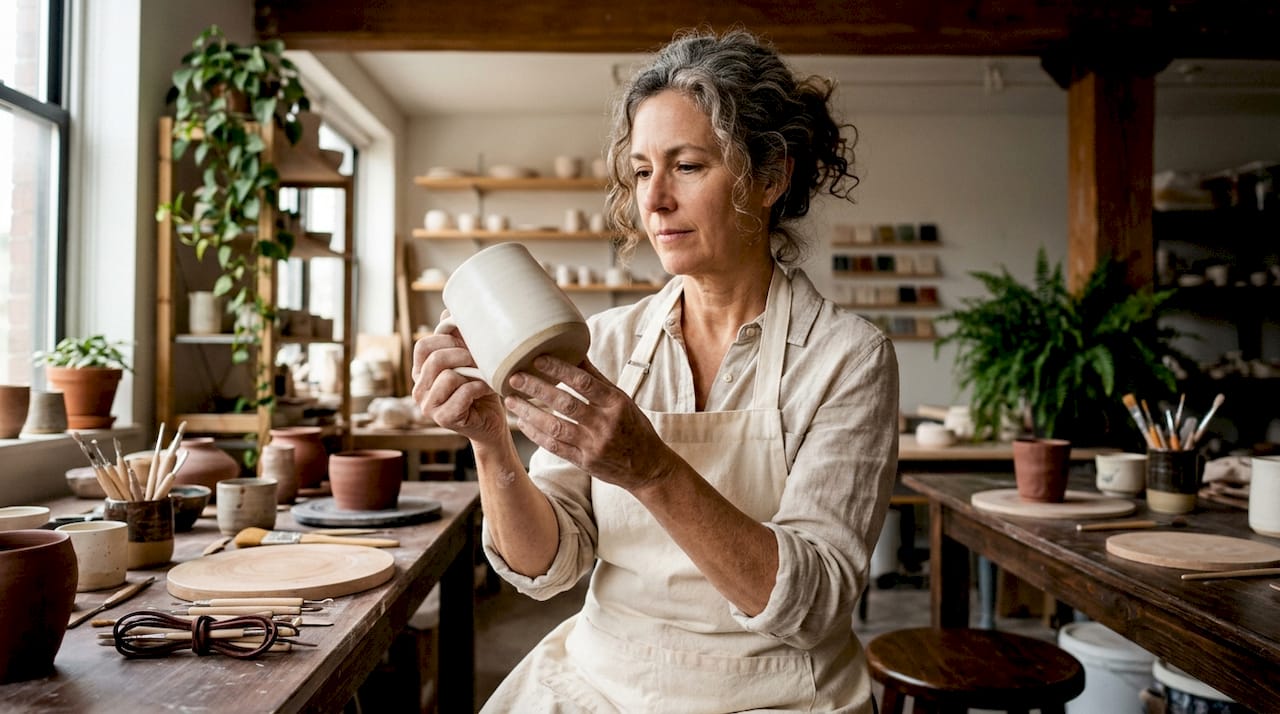
Porcelain mugs also make strong gifts. Their refined appearance reads as thoughtful and considered, and they pair naturally with specialty teas or single-origin coffees. Artisan-produced porcelain mugs, where a potter shapes and glazes each piece individually, carry a tactile quality that mass-produced mugs cannot replicate.
Key Takeaways
A porcelain mug is the best choice for flavor-focused coffee and tea drinkers because its non-porous, chemically inert surface preserves beverage taste, aroma, and quality better than stoneware, metal, or earthenware alternatives.
| Point | Details |
|---|---|
| Material composition | Porcelain is made from kaolin clay, feldspar, and quartz fired at 1200°C–1450°C. |
| Flavor neutrality | The non-porous surface does not absorb odors or alter beverage taste. |
| Weight advantage | Porcelain mugs weigh 30–100g, significantly lighter than stoneware at 150–350g. |
| Care essentials | Avoid abrasives, prevent thermal shock, and confirm glaze type before dishwashing. |
| Best use cases | Espresso, pour-over, and loose-leaf tea benefit most from porcelain’s thin rim and neutral surface. |
Why porcelain mugs changed how I drink coffee
I spent years drinking coffee from stoneware mugs without questioning the choice. They felt substantial, held heat well, and looked good on the shelf. Then I switched to a thin-walled porcelain cup for a pour-over tasting session, and the difference was immediate.
The coffee tasted cleaner. Not dramatically different, but noticeably more accurate. The floral notes in a light Ethiopian roast came through in a way they never had before. I initially credited the brewing method, but after testing the same coffee in both mug types back to back, the porcelain consistently delivered a cleaner cup.
The weight surprised me too. A 50g porcelain mug feels almost fragile at first. Most people assume lighter means cheaper. The opposite is true here. The light weight comes from the density of the fired clay body, not from cutting corners on material quality.
The one misconception I hear most often is that porcelain is too delicate for daily use. It is not. Handle it with reasonable care, avoid dropping it on tile, and a quality porcelain mug lasts years. The thin rim chips before the body cracks, and that is usually a storage problem, not a material flaw.
My recommendation: if you drink specialty coffee or loose-leaf tea and you have never tried a quality porcelain mug, start there. The flavor difference is real, and the experience of holding something light and well-made changes the ritual in a small but genuine way.
— Kristopher
Porcelain mugs and premium tea at Dkbeanleaf
Dkbeanleaf carries a white glossy porcelain mug built for exactly the kind of drinking experience described in this article. The glaze is smooth, the walls are thin, and the finish is clean enough to let your coffee or tea speak for itself.

Pair it with something worth tasting. The premium loose-leaf tea collection at Dkbeanleaf includes options that reward the flavor neutrality porcelain provides. From delicate white teas to full-bodied black blends, each variety shows up differently in a porcelain cup than it does in a heavier vessel. If you want to get more from every cup, the mug and the tea both matter.
FAQ
What is a porcelain mug exactly?
A porcelain mug is a drinking vessel made from kaolin clay, feldspar, and quartz, fired at high temperatures to create a dense, non-porous, glass-like surface. It is lighter and thinner than stoneware and chemically neutral, meaning it does not alter the taste of beverages.
Are porcelain mugs better than ceramic mugs for coffee?
Porcelain is a type of ceramic, but its non-porous surface and thin rim design make it superior for flavor-sensitive drinks like specialty coffee and loose-leaf tea. Standard earthenware ceramics can absorb odors and introduce off-flavors over time.
How do I know if my porcelain mug is dishwasher safe?
Properly glazed porcelain mugs are generally dishwasher safe, but hand-painted or unglazed pieces may not be. Check the manufacturer’s label or bottom stamp before placing any porcelain mug in the dishwasher.
Why does porcelain cool faster than stoneware?
Porcelain mugs have thinner walls than stoneware, which means they hold less thermal mass. Less thermal mass means the drink reaches a comfortable sipping temperature faster, though it also means the beverage cools more quickly overall.
Can porcelain mugs crack from hot liquids?
Porcelain mugs can crack from thermal shock, which happens when a cold mug is exposed to boiling liquid suddenly. Warm the mug with hot tap water first, and avoid moving it directly from a refrigerator to a hot drink.