

What Is a Latte Mug Size? Your Full Guide
Most people assume that grabbing the biggest mug in the cabinet makes for a better latte. It doesn’t. Understanding what is a latte mug size actually means can change how your coffee tastes, looks, and feels every single morning. The wrong size dilutes your espresso, kills latte art, and cools your drink faster than you’d expect. This guide breaks down standard latte cup size across cafes and home setups, explains how latte mug dimensions affect flavor, and gives you a clear path to choosing the right one for your needs.
Table of Contents
- Key takeaways
- What is a latte mug size in most cafes
- How chain cafes and artisan shops differ on size
- How mug shape affects your latte
- Choosing the right latte mug size for home use
- My take on mug size and why it changed how I drink coffee
- Find your perfect latte mug at Dkbeanleaf
- FAQ
Key takeaways
| Point | Details |
|---|---|
| Standard cafe size is 12 oz | Most cafes serve lattes in 12 oz (355 ml) mugs as the default size. |
| 8–10 oz is the sweet spot | Baristas favor this range for the best espresso-to-milk flavor balance and latte art. |
| Bigger mugs dilute flavor | Mugs above 12–14 oz can weaken espresso taste when milk volume scales up. |
| Shape matters as much as volume | Wide, shallow mugs outperform tall, narrow ones for latte art and milk flow. |
| Home use drives size preference | Your add-ins and coffee strength preference should guide your mug capacity choice. |
What is a latte mug size in most cafes
Walk into almost any cafe in the U.S. and order a latte, and you will likely receive it in a mug holding between 8 and 12 ounces. The standard latte mug size sits in the 8 to 12 oz range (240 to 355 ml), with 12 oz being the most common choice behind the counter.
Why 12 oz? It gives the barista enough room to pull a single or double espresso shot and layer in steamed milk with a proper microfoam cap without the drink feeling crowded or overfull. At this capacity, the espresso flavor stays forward and the milk adds sweetness without taking over.
The relationship between shot volume and milk volume is where latte mug size gets interesting. A standard single shot is about 1 oz. A double is about 2 oz. In a 12 oz mug, you get roughly 10 oz of steamed milk around a double shot. That ratio keeps things balanced. Drop below 8 oz and the milk volume gets cramped. Push above 14 oz and you either need extra shots or you start tasting mostly warm milk.
Here is a quick breakdown of common latte sizes and their typical espresso content:
| Latte size | Volume | Typical espresso shots |
|---|---|---|
| Small | 8 oz (240 ml) | 1 shot |
| Standard | 10 oz (300 ml) | 1–2 shots |
| Large (cafe default) | 12 oz (355 ml) | 2 shots |
| Oversized | 16 oz (473 ml) | 2 shots |
| Extra large | 20 oz (591 ml) | 2–3 shots |
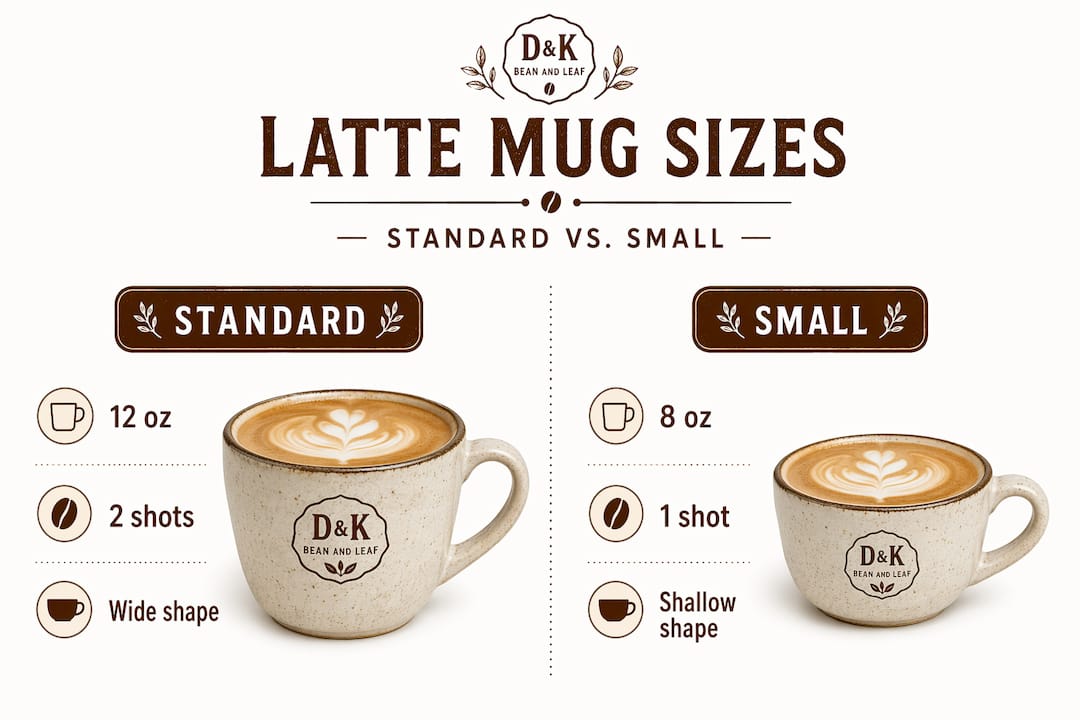
Notice that the espresso shot count does not double just because the mug size does. That gap in ratio is exactly where flavor dilution happens. Exceeding 12 to 14 ounces can noticeably weaken the espresso character of your drink.
Pro Tip: Baristas consider the 8 to 10 oz range the ideal zone for latte art and flavor integration. At this volume, microfoam behaves predictably and espresso cuts through the milk cleanly. If you care about latte art at home, start here.
How chain cafes and artisan shops differ on size
Chain cafes and independent shops think about latte mug size in almost opposite ways, and that gap tells you a lot about what each prioritizes.
At Starbucks, hot latte sizes run from 8 oz (Short) to 12 oz (Tall), 16 oz (Grande), and 20 oz (Venti). That Venti hot latte is a full 20 oz. For context, that is nearly two and a half times the volume of a traditional cafe latte. The espresso dosing does not come close to keeping pace. A Tall gets one shot, a Grande two shots, and a Venti still just two shots. More milk, same espresso. The math means that flavor intensity drops as the cup size climbs.
Artisan cafes take a different approach. They cap their lattes at 8 to 12 oz in most cases because the goal is coffee quality, not volume. A smaller cup forces the ratio to stay honest. You taste the espresso. You taste the milk’s natural sweetness. Nothing gets lost.
Here is a side-by-side comparison:
| Venue type | Typical latte size range | Espresso approach |
|---|---|---|
| Chain cafes (e.g., Starbucks) | 8–20+ oz | Fixed shots per size tier |
| Artisan or specialty cafes | 8–12 oz | Dialed to cup size |
| Home use (balanced) | 8–10 oz | 1–2 shots |
| Home use (indulgent) | 16–20+ oz | 2–3 shots with add-ins |
For home coffee lovers, the split is similar. Home users tend to favor 8 to 10 oz mugs for a balanced espresso-to-milk ratio. If your morning latte includes vanilla syrup, caramel, and whipped cream, a 16 to 20 oz mug makes practical sense. But if you want to taste the coffee itself, keep it under 12 oz.
Here are the real tradeoffs between larger and smaller latte mugs:
- Smaller mugs (8–10 oz): More intense espresso flavor, better heat retention, easier latte art, less milk required.
- Larger mugs (16–20 oz): Room for add-ins and toppings, better for indulgent drinks, more forgiving of brew inconsistency, but risk of flavor dilution is higher.
- Mid-range mugs (12 oz): The practical sweet spot for most drinkers, balancing flavor and volume without compromise.
If you are still figuring out which size fits your routine, the perfect mug size guide from Dkbeanleaf walks through exactly that.
How mug shape affects your latte
Volume is only half the story. The shape of your latte mug changes how the drink actually tastes and looks, and most people never think about it.
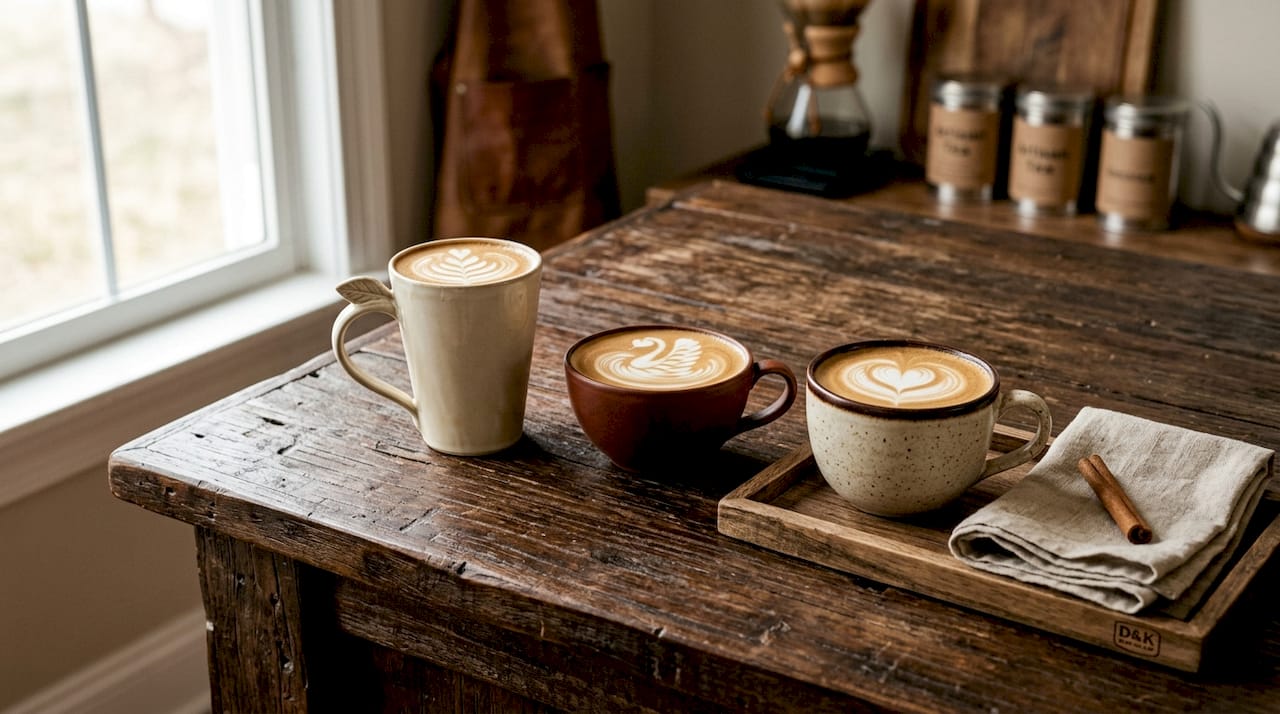
Wide, shallow mugs are the preferred choice for latte art because the wider opening gives you more surface area to work with. When a barista pours steamed milk into a wide mug, the stream has room to spread and form patterns. A tall, narrow mug forces that same pour through a tight opening, making control nearly impossible. The art disappears and the milk does not integrate as smoothly.
Beyond aesthetics, mug shape affects the way you experience flavor and aroma. A wide mouth lets more volatile aromatic compounds escape toward your nose as you drink, which makes the coffee taste more complex. A tall, narrow cup concentrates those aromas differently, sometimes muting them. Mug material also plays a role. Thick ceramic holds heat longer than thin porcelain, and smaller mugs retain heat better than larger ones simply because there is less surface area losing warmth.
Pro Tip: When choosing a mug shape for home latte making, look for a mug with a wider opening than its base. That slight outward taper is what gives you control during pouring and creates the surface for latte art, even at 8 or 10 oz. For expert guidance on shapes, the coffee mug ultimate guide from Dkbeanleaf is worth bookmarking.
Key shape considerations at a glance:
- Wide and shallow opening: Best for latte art, better aroma release, ideal for espresso-based drinks.
- Tall and narrow: Better for drinks meant to stay hot a long time, but limits latte art ability.
- Thick walls: Retain heat well, slow cooling, protect hand from heat.
- Thin porcelain: Lighter, often preferred in traditional European espresso culture, cools faster.
Choosing the right latte mug size for home use
Knowing the standard sizes is useful. Knowing which one works for your specific routine is what actually matters.
Start by thinking about how strong you like your coffee. If you want to taste the espresso clearly and you pull a standard double shot, a 10 oz mug keeps the ratio tight and the flavor punchy. Go up to 12 oz and you still have a satisfying drink. Push above 14 oz with only two shots and you will probably find the coffee tastes thin, almost milky.
Next, factor in your add-ins. Syrups, sugar, and whipped cream take up physical space in the mug and add sweetness that can clash with strong espresso in a small cup. If your daily latte includes two pumps of syrup and a foam top, plan for a 14 to 16 oz mug minimum so the proportions stay comfortable.
Temperature is another underrated factor. Smaller mugs maintain coffee temperature more effectively than large ones. A 20 oz latte cooling in a thin oversized mug can drop below the ideal drinking temperature (around 130 to 160°F) before you are halfway through. If you drink your coffee slowly, smaller and thicker is a smarter choice.
Practical questions to guide your decision:
- Do you pull single or double espresso shots? Single shots work best in 8 oz mugs. Doubles fit 10 to 12 oz well.
- Do you drink quickly or slowly? Fast drinkers can use thinner, larger mugs. Slower drinkers should lean toward thick ceramic in smaller sizes.
- Do you care about latte art? Go wide and stay in the 8 to 10 oz range.
- Are you making specialty drinks with add-ins? Scale up to 14 to 16 oz and add an extra shot to compensate.
Building a collection of two or three different sizes covers nearly every scenario. For ideas on how to approach that, building a mug collection is a genuinely useful read from Dkbeanleaf.
My take on mug size and why it changed how I drink coffee
I spent years grabbing whatever mug was clean. Big ones, small ones, oversized travel cups. It was not until I started paying attention to how my espresso actually tasted in different vessels that I realized the mug was doing more work than I gave it credit for.
Here is what I learned firsthand. When I switched from a 16 oz mug to a 10 oz mug for my morning double shot latte, the coffee tasted noticeably stronger and more satisfying. Same beans. Same grind. Same machine. The only variable was the cup. The espresso-to-milk ratio was simply better.
I also used to think wide mugs were purely a barista affectation. Something for Instagram photos. But after trying a properly wide 10 oz ceramic mug, my milk pours improved in the first week. The surface area genuinely matters.
My honest recommendation: most home drinkers do not need anything bigger than 12 oz for a standard latte. If you regularly load your cup with syrups or specialty toppings, go to 14 or 16 oz and pull an extra shot. But if your goal is to actually taste the coffee you bought and brewed, the 8 to 10 oz range will serve you far better than you expect.
The mug size truly shapes your coffee experience in ways most people overlook. Choosing intentionally instead of grabbing whatever is in the cabinet is one of the lowest-effort, highest-impact changes you can make to your daily coffee ritual.
— Kristopher
Find your perfect latte mug at Dkbeanleaf
If this article got you thinking about upgrading your home setup, Dkbeanleaf has a curated lineup built for exactly this kind of coffee intentionality.

The mug collection at Dkbeanleaf includes options across the full range of latte mug sizes and styles, from wide ceramic mugs designed for latte art to classic glossy mugs that fit the standard 10 to 12 oz sweet spot. Whether you are outfitting a home espresso station or replacing a mug that has overstayed its welcome, you will find something that matches both your size preference and your aesthetic. The white glossy mug is a perennial favorite for everyday lattes, clean enough to show off latte art and sized to keep your espresso tasting the way it should. Explore the full collection and find the cup that earns a permanent spot in your morning routine.
FAQ
What is the standard latte mug size?
The standard latte cup size in most cafes is 12 oz (355 ml), though the typical range spans 8 to 12 oz depending on the venue and serving style.
How big is a latte mug compared to a regular coffee mug?
A latte mug is generally slightly larger than a standard drip coffee mug. Most drip mugs hold 8 to 10 oz, while latte mugs typically run 10 to 12 oz to accommodate both espresso and a substantial layer of steamed milk.
Does latte mug size affect the taste of the coffee?
Yes, significantly. Larger mugs above 12 to 14 oz can dilute espresso flavor because the milk volume scales up faster than the espresso does. A smaller mug keeps the ratio tighter and the flavor more intense.
What size latte mug is best for latte art?
Baristas prefer 8 to 10 oz mugs with wide, shallow openings for latte art. That combination of size and shape gives the best surface area for pouring microfoam and creating patterns.
What latte mug size should I use at home?
For most home setups, a 10 to 12 oz mug with a wide opening works best for a double shot latte. If you regularly add syrups or toppings, step up to 14 to 16 oz and consider pulling an extra espresso shot to maintain flavor balance.