

What Is Coffee Cherry Fruit and Why It Matters
Every coffee drinker has heard the word “bean,” but what is coffee cherry fruit? The answer changes everything you think you know about your morning cup. Coffee beans are not beans at all. They are seeds found inside a small, fleshy fruit called the coffee cherry. That fruit grows on the Coffea plant, ripens over months, and carries the seeds that eventually become your espresso, cold brew, or pour-over. Understanding the coffee cherry means understanding where coffee flavor actually starts, which is long before any roasting ever happens.
Table of Contents
- Key takeaways
- What is coffee cherry fruit, layer by layer
- From fruit to green bean: harvesting and processing
- Coffee cherry uses beyond the bean
- Common questions about coffee cherries
- My take on what the coffee cherry reveals
- Explore coffee culture further with Dkbeanleaf
- FAQ
Key takeaways
| Point | Details |
|---|---|
| Coffee beans are seeds | Each coffee cherry holds two seeds, and those seeds are what we roast and brew. |
| Layers shape flavor | The mucilage and pulp surrounding the seed directly influence the sweetness and fruitiness in your cup. |
| Processing method matters | Washed, natural, and honey methods each treat the cherry differently, producing distinct flavor profiles. |
| The whole fruit is usable | Cascara tea brewed from dried coffee cherry husks offers a fruity, low-caffeine alternative to coffee. |
| Nutritional value is real | Coffee cherries contain polyphenols, antioxidants, and mild caffeine that deliver energy without the intensity of brewed coffee. |
What is coffee cherry fruit, layer by layer
The coffee cherry is more than packaging for a seed. Every layer has a biological job, and every layer influences what lands in your cup.
Start from the outside. The exocarp is the outer skin, the bright red, yellow, or even purple shell you see on the plant. Color signals ripeness, and most farmers use it as their harvest indicator. Green means unripe. Fully saturated red or yellow means it is time to pick.
Beneath the skin sits the mesocarp, commonly called the pulp. This is the fruit flesh itself. It tastes sweet and mildly tart, similar to watermelon rind with a faint cranberry note. Thin but flavorful, the pulp clings to the next layer: the mucilage.
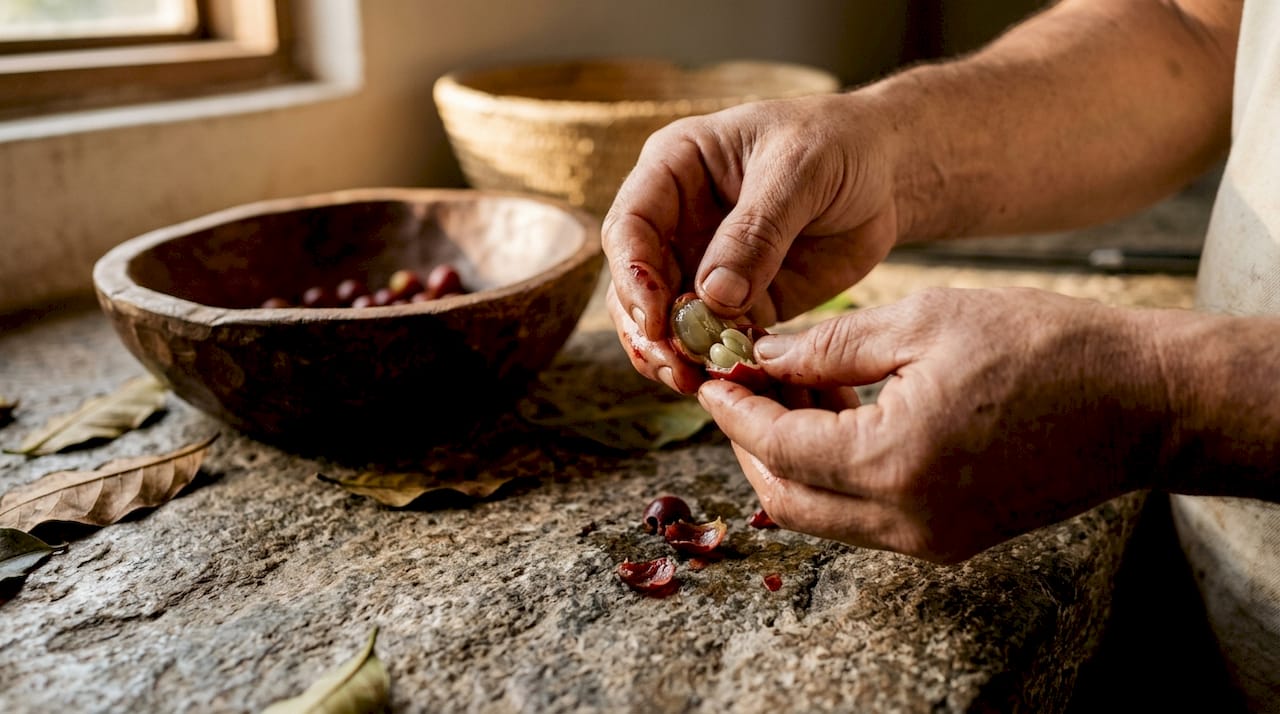
The mucilage is where flavor science gets genuinely interesting. This sticky, sugar-rich layer registers at 15 to 22 Brix, which puts it in the same range as wine grapes. Those sugars ferment during drying and create the volatile esters and organic acids that give naturally processed coffees their distinct, jammy fruitiness. Below the mucilage sits the parchment (endocarp), a papery protective shell that is removed during milling. Wrapped around the bean itself is the silver skin, a thin membrane that often flakes off during roasting.
At the center: two seeds pressed flat side to flat side. Those seeds are the coffee beans used for brewing.
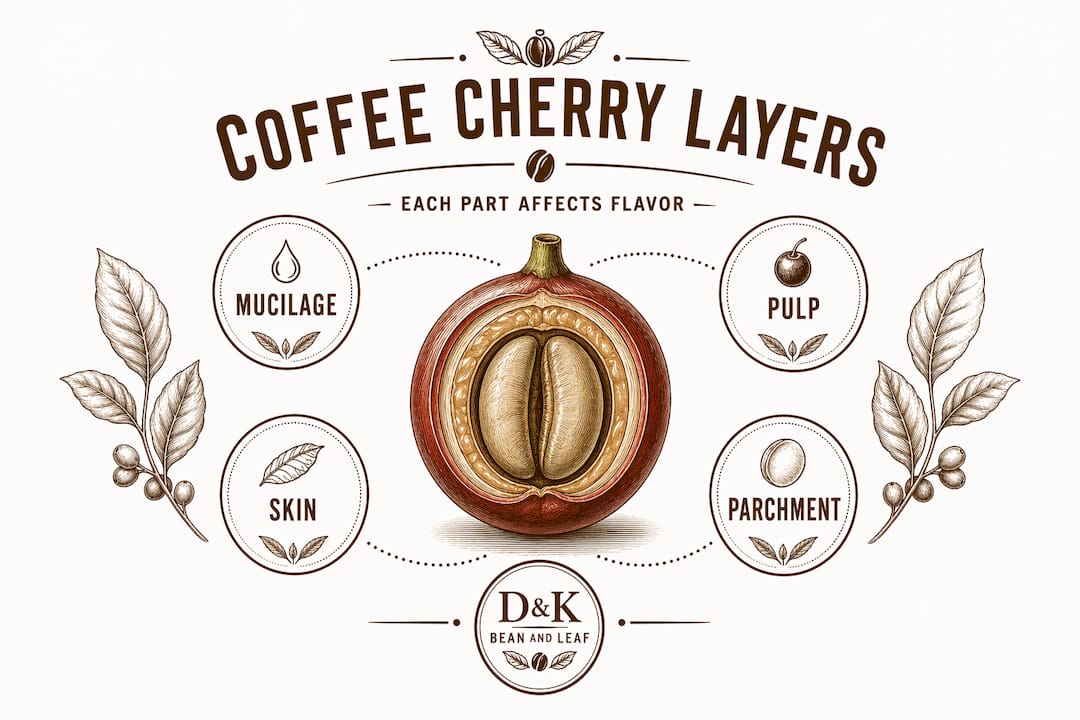
Here is a quick reference for the layers and their roles:
| Layer | Common name | Primary role |
|---|---|---|
| Exocarp | Skin | Protects fruit, signals ripeness |
| Mesocarp | Pulp | Fleshy fruit layer, edible |
| Mucilage | Mucilage | Sugar-rich, drives fermentation flavor |
| Endocarp | Parchment | Protects seed during drying |
| Silver skin | Silver skin | Thin membrane around the seed |
| Seed | Coffee bean | Roasted and brewed |
Pro Tip: When you taste a coffee described as “fruity” or “wine-like,” the mucilage layer from the original cherry is largely responsible. That character did not come from roasting. It came from how the fruit was processed.
From fruit to green bean: harvesting and processing
The journey from flower to harvestable cherry takes about eight months. The plant flowers, fruit develops, and farmers wait. Timing is everything.
Picking: selective vs. strip
Selective hand picking means workers move through rows targeting only ripe cherries. This is labor-intensive but produces the most consistent quality. Strip picking, mechanical or manual, pulls all cherries from a branch at once regardless of ripeness. It is faster and cheaper, but ripe cherries end up mixed with unripe ones, which hurts cup quality.
The three main processing methods
Once the cherries are off the plant, producers have a critical choice to make. That choice shapes the flavor profile more than almost anything else.
-
Washed (wet) processing. Farmers remove the skin and pulp mechanically, then wash away remaining mucilage through fermentation tanks and water. Beans dry clean. The result is a crisp, bright cup where origin characteristics like terroir and bean variety come through clearly because processing removes most mucilage before drying.
-
Natural (dry) processing. The whole cherry, skin and all, dries in the sun for weeks. Sugars from the fruit seep into the bean as it dries. You get heavy body, low acidity, and big fruity or chocolatey flavors. Ethiopian naturals are the classic example.
-
Honey processing. Producers remove the skin but leave varying amounts of mucilage on the bean during drying. White honey leaves very little mucilage. Black honey leaves most of it. The flavor lands between washed and natural: more sweetness and body than washed, more clarity than natural.
After drying, cherries go through hulling to strip the parchment layer, then grading and sorting before export as green coffee.
Pro Tip: Next time you read a coffee bag, find the processing method listed on the label. That one word tells you more about the cup’s flavor profile than the roast level does.
Coffee cherry uses beyond the bean
Most of the coffee cherry gets discarded during processing. The skin, pulp, and parchment are treated as byproduct. That is a waste problem the specialty coffee world is actively working to fix, and the solutions are genuinely delicious.
Cascara is the most well-known coffee cherry product. Dried coffee cherry husks are steeped in hot water to produce a tea-like drink with a fruity, floral flavor and far less caffeine than brewed coffee. Cascara contains roughly 5 to 10 mg of caffeine per 100ml, compared to 80 to 100 mg in a typical espresso shot. If you enjoy fruit tisanes or hibiscus tea, cascara falls right into that category. It even pairs well alongside something like Hibiscus Berry Tea if you enjoy fruit-forward brews.
Beyond cascara, coffee cherries offer a genuine nutritional profile worth paying attention to:
- Rich in polyphenols and antioxidants
- Mild caffeine that provides steady energy without the intensity of brewed coffee
- Bioactive compounds tied to cellular health
- Historically consumed in Yemen as qishr and in Ethiopia as hashara long before brewing became standard
Coffee flour is another emerging product. Ground dried coffee cherry pulp functions as a flour substitute with a faintly fruity, earthy flavor. Food manufacturers have started incorporating it into protein bars, baked goods, and superfood blends. The tropical fruit beverage trend has also pushed coffee cherry extracts into the functional drink category, marketed alongside other exotic fruit ingredients for their antioxidant content.
From a sustainability standpoint, using the whole fruit reduces the massive waste stream that coffee processing generates. Millions of tons of coffee pulp are discarded globally each year. Products like cascara, coffee flour, and cherry extracts give that material value instead of letting it rot.
Common questions about coffee cherries
Can you eat a coffee cherry directly off the plant?
Yes, and they taste better than most people expect. Coffee cherries are sweet and slightly tart, somewhere between a cranberry and watermelon rind with a floral undertone. The flesh is thin, so there is not much of it per cherry, but the flavor is genuinely pleasant. Coffee producing communities in Ethiopia and Yemen have eaten or brewed them for centuries.
Are coffee cherries related to actual cherries?
No. Despite the name, coffee cherries have nothing to do with the cherries you buy at the grocery store. The “cherry” label comes from visual similarity. Both are small, round, and red. Coffee cherries belong to the Rubiaceae plant family, while common cherries are stone fruits in the Prunus genus.
What is a peaberry, and why do people pay more for it?
Most coffee cherries hold two seeds. Occasionally, one seed fails to develop and the other absorbs all available space, forming a single, round, dense seed. That is a peaberry. They represent roughly 5 to 10% of any harvest and are sorted out separately. The round shape allows them to roll more evenly in a roasting drum, producing more consistent heat distribution. Many roasters and tasters describe peaberry coffee as brighter and more concentrated, though opinions vary.
Does ripeness actually affect flavor quality?
Significantly. A ripe cherry has developed full sugar content in the pulp and mucilage. An underripe cherry is astringent and harsh. An overripe cherry ferments incorrectly and introduces unpleasant sour or rotten notes. This is why selective hand picking, though expensive, consistently produces higher quality coffee than strip harvesting. Harvesting consistency is one of the most underappreciated quality factors in the entire supply chain.
Pro Tip: If you want to taste the difference processing makes without buying multiple bags, find a natural processed and a washed processed coffee from the same country, like Ethiopia. Brew them side by side. The contrast is dramatic and educational.
My take on what the coffee cherry reveals
I have spent years learning about coffee, and the coffee cherry is still the piece of the puzzle most enthusiasts skip over. That is a real loss. When I started paying attention to processing methods and thinking about the cherry as a whole fruit rather than a seed delivery system, my ability to taste and describe coffee changed completely.
The mucilage layer is not a technical footnote. It is the reason a naturally processed Ethiopian coffee tastes like blueberry jam. The ripeness of the cherry at harvest is not a farm logistics issue. It is the reason one bag from the same region tastes bright and clean while another tastes flat and papery. These connections are not abstract. They are present in every cup you drink.
What I keep coming back to is cascara. If you have explored single origin coffees and want to push your appreciation further, try brewing the fruit itself. It takes the same plant and reveals a completely different dimension of flavor. It is also a reminder that coffee culture has been broader than just the bean for centuries. We are catching up to what people in Yemen and Ethiopia already knew.
The coffee cherry is not a curiosity. It is the origin point of everything you taste.
— Kristopher
Explore coffee culture further with Dkbeanleaf

If this look at the coffee cherry has you thinking differently about what is in your cup, Dkbeanleaf has the gear to match that curiosity. A great cup deserves the right vessel, and our coffee mug collection is built for people who take their brew seriously. If the cascara angle caught your attention, our tea collection includes fruit-forward options worth exploring alongside it. Try the Hibiscus Berry Tea for a fruity, low-caffeine brew that sits in the same flavor neighborhood as cascara. Coffee culture runs deeper than the bean. Dkbeanleaf is here for the whole experience.
FAQ
What is coffee cherry fruit exactly?
Coffee cherry fruit is the small, fleshy fruit that grows on the Coffea plant and contains the seeds we call coffee beans. The fruit has multiple layers including skin, pulp, mucilage, parchment, and the seed at the center.
What does a coffee cherry taste like?
Coffee cherries taste sweet and slightly tart, with notes similar to cranberry, watermelon rind, and a faint floral quality. The flesh is thin but flavorful, and the fruit has been consumed directly in Ethiopia and Yemen for generations.
How is coffee cherry used beyond making coffee?
Coffee cherries are brewed as cascara tea using dried husks, ground into coffee flour for baking, and processed into antioxidant-rich extracts used in energy drinks and supplements. These uses reduce waste from coffee processing while delivering real nutritional value.
What are the main coffee cherry processing methods?
The three main methods are washed, natural, and honey processing. Washed removes the mucilage before drying for a clean cup, natural dries the whole fruit for big fruity flavor, and honey processing leaves varying amounts of mucilage for a profile between the two.
Do coffee cherries have health benefits?
Coffee cherries contain polyphenols, antioxidants, and mild caffeine that deliver a gentle energy boost without the intensity of brewed coffee. The bioactive compounds in the fruit support cellular health and make coffee cherry products a genuine functional food option.