

What Is Second Crack Roasting: a Home Roaster's Guide
Second crack roasting is defined as the second audible cracking event during coffee roasting, occurring when bean temperatures reach 224–232°C (435–450°F) and the cellulose matrix inside the bean collapses under intense internal gas pressure. This stage marks a fundamental shift in the bean’s chemistry, structure, and flavor potential. Where first crack signals the start of drinkable coffee, second crack signals the territory of dark, bold, and smoke-forward roast profiles. Understanding what happens during second crack roasting gives home roasters the knowledge to make deliberate choices rather than guessing at the drum.
What is second crack roasting, physically and chemically?
Second crack is caused by the structural collapse of the bean’s cellulose matrix combined with the buildup of carbon dioxide pressure inside the bean. The result is a sharp, rapid snapping sound that roasters often describe as a matchstick breaking, or a fast series of brittle clicks. This is distinctly different from the slower, fuller popcorn-like pops of first crack.
Several physical and chemical changes happen simultaneously at this stage:
- Cellulose collapse. The bean’s internal structure breaks down, making the bean more porous and fragile.
- Oil migration. Internal lipids begin pushing toward the bean’s surface due to pressure. This is what eventually creates the shiny, oily appearance on dark roast beans.
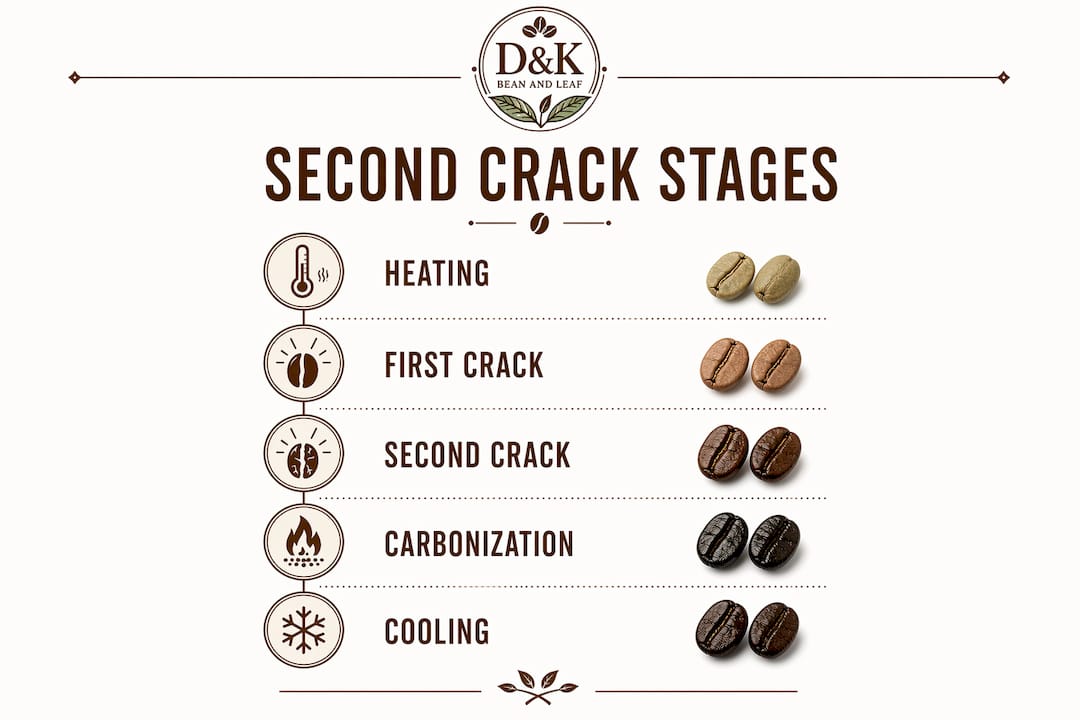
- Carbonization begins. The roast crosses from caramelization into early carbonization, where flavor complexity declines and roast character takes over.
- Increased porosity. The bean’s open structure accelerates CO2 release, which directly speeds up staling after roasting.
The transition from caramelization to carbonization is the most consequential change at this stage. Once carbonization starts, the roaster cannot reverse it. Every second past this point pushes the bean further toward bitterness and ash.
Pro Tip: Listen for the rhythm, not just the sound. Second crack arrives faster and more erratically than first crack. If the snapping sounds are quickening and tightening together, you are well into second crack territory and need to act immediately.
How does second crack roasting change the flavor?
Second crack produces a decisive flavor shift. Origin character, the regional notes that define a Kenyan or Ethiopian bean, fades significantly. What replaces it is a dominant roast-driven flavor profile built around cocoa, cedar, and smoke.
The sensory changes are consistent and predictable:
- Acidity drops sharply. The bright, fruity notes that define lighter roasts are largely gone by second crack.
- Body increases. The cup feels heavier and thicker on the palate.
- Bitterness rises. Darker roast compounds dominate the finish.
- Aroma turns smoky. The fragrance shifts from floral or fruity to toasted, woody, or charred.
Roast styles associated with second crack include French roast, Italian roast, and deep dark roasts. These profiles are defined by roasting into or through second crack. A Full City Plus roast sits right at the beginning of second crack, offering a balance of roast character with some remaining origin notes. French roast pushes deeper, and Italian roast goes further still.
One detail that surprises many home roasters: bean oiliness is delayed. Beans often look dry right after roasting but appear noticeably shinier 12–24 hours later as internal lipids continue migrating to the surface. This is a post-roast development, not a sign of what happened in the drum.
Specialty filter roasters avoid second crack entirely because it masks the terroir and regional nuances that define high-quality single-origin coffee. If you are roasting for espresso or dark blends, second crack is your target zone. If you are roasting for a delicate pour-over, stop well before it.
How to identify second crack vs. first crack
Telling the two cracks apart is a skill that takes practice, but the differences are clear once you know what to listen for.
- First crack sounds like popcorn. It is loud, irregular, and spaced out. Individual pops are distinct and full-bodied. Temperature typically ranges from 196–205°C (385–401°F).
- Second crack sounds like snapping twigs. The sounds are sharper, faster, and more brittle. They arrive in quicker succession and feel more urgent. Temperature sits at 224–232°C.
- The gap between cracks matters. After first crack ends, there is a development phase before second crack begins. Rushing through this gap by applying too much heat compresses the roast and reduces flavor complexity.
- Sound pattern is more reliable than temperature alone. Listening for rhythm and crispness gives more consistent results than relying solely on a probe thermometer, especially in home drum roasters where probe placement varies.
Common mistakes home roasters make include confusing the sound of evaporating surface oils with second crack, or mistaking a late straggler pop from first crack as the beginning of second crack. The key distinction is pattern. Second crack arrives as a tightening, accelerating series of snaps, not isolated individual pops.
Pro Tip: Record your roast sessions with your phone placed near the roaster. Listening back to the audio after the roast helps you train your ear to recognize the exact moment second crack begins, without the pressure of real-time decision-making.
Practical risks and challenges of roasting into second crack
Second crack is the most unforgiving stage in the coffee roasting process. The margin for error is extremely narrow. Over-roasting can occur within 10–30 seconds, producing ashy, bitter, or flat flavors that no brewing method can fix.
Key risks and best practices at this stage:
- Exothermic acceleration. The bean generates its own heat during second crack. This means the roast can run away even if you reduce your heat source. Anticipate this and drop heat earlier than you think you need to.
- Rate of Rise (RoR) monitoring. Tracking how fast the bean temperature climbs per minute gives you advance warning before second crack arrives. A rising RoR heading into second crack signals the need to reduce heat immediately.
- Quick cooling is non-negotiable. Roasters must cool beans quickly after reaching the target development point. Leaving beans in a hot environment even after the heat source is off continues the roast.
- Batch stability decreases. Beans roasted into second crack are more porous and fragile. They break down faster during grinding and lose freshness more quickly.
- Staling accelerates. Dark roasts peak in flavor within 1–3 days after roasting, compared to 5–10 days for lighter roasts. Plan your brewing schedule accordingly and buy or roast in smaller quantities.
Chasing a shiny bean during the roast is a classic novice error. Because oil migration is a post-roast process, waiting for beans to look oily in the drum means you have already gone too far. Judge your roast by sound, temperature, and time, not by surface appearance.
Where does second crack fit in the roast level spectrum?
Roast levels run from light (stopping before or just after first crack) to dark (roasting into or through second crack). Understanding where second crack sits helps you match roast profiles to brewing methods and personal taste. You can explore the full spectrum in this roast levels guide from Dkbeanleaf.
| Roast Level | Relation to Second Crack | Flavor Character | Best Brewing Method |
|---|---|---|---|
| Light / City | Before second crack | Bright, fruity, high acidity | Pour-over, Chemex |
| Full City | At the onset of second crack | Balanced, cocoa, mild bitterness | Drip, AeroPress |
| Full City Plus | Just into second crack | Dark chocolate, low acidity | Espresso, drip |
| French | Well into second crack | Smoky, bold, heavy body | French press, espresso |
| Italian | Deep into second crack | Charred, very bitter, minimal origin | Espresso only |
Vienna roast sits between Full City Plus and French, entering second crack but stopping before the deep carbonization of French or Italian profiles. For home roasters, Full City Plus is often the most forgiving entry point into second crack territory. It delivers dark roast character without the risk of ashiness that comes with pushing further.
Espresso roasts frequently target this zone because the high pressure of espresso extraction amplifies bitterness. A bean roasted to Full City Plus produces a rich, low-acid shot. Lighter roasts can work for espresso, but they require more careful dialing in. If you want to choose the right roast level for your brewing setup, starting with your preferred brewing method and working backward is the most practical approach.
Key Takeaways
Second crack roasting is the point where coffee crosses from caramelization into carbonization, making sound monitoring, heat control, and fast cooling the three non-negotiable skills for any home roaster working in this zone.
| Point | Details |
|---|---|
| Temperature and sound define second crack | Second crack occurs at 224–232°C and produces a sharp, rapid snapping sound distinct from first crack. |
| Flavor shifts decisively | Origin notes fade and roast character (cocoa, smoke, cedar) dominates; acidity drops and bitterness rises. |
| Oil appearance is delayed | Beans look dry after roasting but turn shiny 12–24 hours later as lipids migrate to the surface. |
| Dark roasts stale faster | Second crack beans peak in flavor within 1–3 days and stale quickly due to increased porosity. |
| Margin for error is tiny | Over-roasting can happen in 10–30 seconds; reduce heat early and cool beans immediately after the target point. |
What I’ve learned from chasing second crack
The first time I roasted into second crack, I missed it entirely. I was listening for something dramatic and got a quiet, fast series of snaps that I almost wrote off as noise. By the time I recognized what had happened, the beans were already past French roast and heading toward charcoal.
What I’ve found after many roast sessions is that second crack rewards patience before the roast, not during it. The real work happens in the development phase between first and second crack. If you rush that phase with too much heat, you compress the flavor development and arrive at second crack with a flat, underdeveloped base. The dark roast notes then have nothing interesting to sit on top of.
The other thing most articles won’t tell you: not every bean handles second crack the same way. Denser beans from high-altitude origins take longer to reach second crack and give you a slightly wider window. Lower-density beans move through it fast. Knowing your bean’s density before you roast changes how aggressively you manage heat in the final minutes.
My honest advice is to stop aiming for a roast level and start aiming for a sound. When you hear second crack begin, decide in that moment how far you want to go. That real-time decision, made with your ears, is what separates a deliberate dark roast from a burnt one.
— Kristopher
Gear and apparel for the coffee-obsessed roaster
Roasting coffee is a craft, and the people who take it seriously tend to build a whole lifestyle around it. At Dkbeanleaf, you’ll find products that match that energy, from quality coffee and tea selections to apparel built for people who take their cup seriously.

Whether you’re pulling shots after a dark roast session or settling in for a slow pour-over morning, Dkbeanleaf has the gear to match. The hoodies and sweatshirts are made for comfort, and the tees and hats round out a collection that speaks to coffee culture without trying too hard. Good coffee deserves good company. Dkbeanleaf is built for roasters and drinkers who know the difference.
FAQ
What temperature does second crack occur at?
Second crack occurs at 224–232°C (435–450°F). This temperature range triggers the collapse of the bean’s cellulose matrix and the release of internal CO2 pressure.
How does second crack sound different from first crack?
First crack sounds like slow, spaced-out popcorn pops. Second crack sounds like rapid, brittle snapping, similar to breaking a matchstick, and arrives in a faster, tighter pattern.
Do all dark roasts go through second crack?
French, Italian, and deep dark roasts are roasted into or through second crack. Full City roast stops just at the onset, while lighter roasts stop well before second crack begins.
Why do dark roast beans look oily?
The oiliness on dark roast beans comes from internal lipids migrating to the surface after roasting. This process is delayed and typically becomes visible 12–24 hours post-roast, not during the roast itself.
How quickly do second crack roasts go stale?
Second crack roasts peak in flavor within 1–3 days after roasting and stale faster than lighter roasts due to increased bean porosity and accelerated CO2 release. Store them in an airtight container and brew within the first few days for best results.