

What Is Coffee Cupping: a Beginner's Guide
Most people assume coffee cupping is something reserved for roasters in lab coats and Q-graders with calibrated palates. It isn’t. What is coffee cupping, really? It’s a structured tasting method used to evaluate coffee’s aroma, flavor, body, and finish under controlled conditions. Professionals rely on it daily. But the same process that helps a buyer select beans from Ethiopia also sharpens your ability to tell a bright, fruity light roast from a smooth, chocolatey dark one. If you drink coffee, cupping has something to offer you.
Table of Contents
- Key takeaways
- What is coffee cupping and how the process works
- Sensory elements assessed during coffee cupping
- The science and quality control behind cupping
- How to start cupping coffee at home
- Why cupping changed the way I think about coffee
- Gear up for cupping with Dkbeanleaf
- FAQ
Key takeaways
| Point | Details |
|---|---|
| Cupping is accessible | You don’t need professional training to start cupping coffee at home with basic equipment. |
| Process follows set steps | The coffee cupping process moves from dry fragrance to wet aroma to slurping and scoring. |
| Sensory evaluation is structured | Tasters assess fragrance, aroma, flavor, acidity, body, balance, and aftertaste using standard criteria. |
| Numbers back up taste | Specialty coffee scores at least 80 out of 100 points when evaluated through professional cupping. |
| Cupping builds your palate | Regular cupping practice sharpens your ability to recognize flavors and make smarter coffee choices. |
What is coffee cupping and how the process works
Coffee cupping is a standardized tasting method used by roasters, buyers, and coffee professionals to compare multiple coffees accurately and consistently. The beauty of it is that nothing is left to chance. Every variable is controlled so that what you taste reflects the coffee itself, not the brewing method.
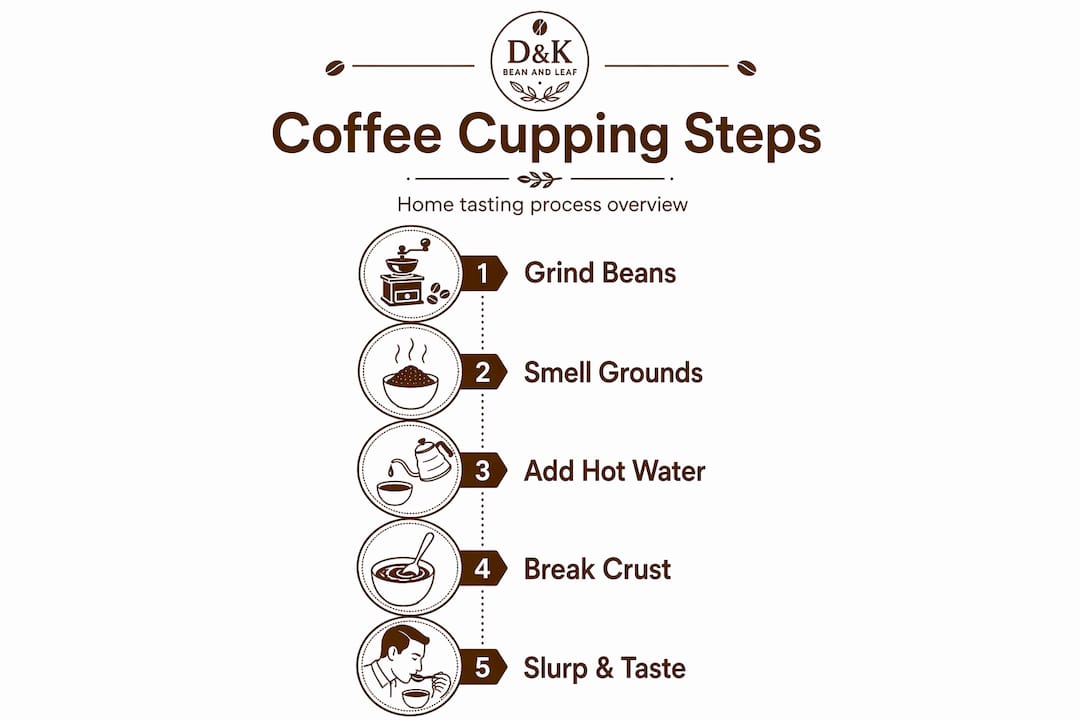
Here is how the coffee cupping process works, step by step:
- Grind the coffee fresh. Use a medium-coarse grind, typically around 8.25 grams of coffee per 150 milliliters of water. The grind size and coffee-to-water ratio stay the same across every sample you evaluate.
- Smell the dry grounds (fragrance). Before adding water, you lean in and take a deep, deliberate sniff of the dry grounds. This is your first data point. Fragrance tells you a lot about origin and roast before a single drop of water touches the coffee.
- Add hot water and wait. Pour water at around 200°F (just off the boil) directly over the grounds and let the coffee steep for four minutes. A crust of grounds will form on the surface.
- Break the crust and smell the wet aroma. Use a spoon to gently push through the floating grounds while keeping your nose close. This releases a concentrated burst of aroma. The shift from dry fragrance to wet aroma often reveals entirely new notes.
- Remove the grounds and let it cool. Skim the remaining grounds from the surface with two spoons. Then wait. Tasting too hot masks flavor, so give it a few minutes to drop to around 160°F or lower.
- Slurp the coffee. This is the part that surprises newcomers. Slurping spreads coffee across the tongue and forces it to aerate, which dramatically amplifies flavor. It looks informal. It works.
- Score and take notes. You evaluate and record fragrance, aroma, flavor, acidity, body, balance, and aftertaste. Professional cuppers use a scoring sheet. Beginners can use a simple notebook.
Pro Tip: Set up at least three different coffees side by side during your first cupping session. Contrast makes it far easier to identify differences in body, acidity, and flavor than tasting a single coffee alone.
The equipment needed is minimal. You need cupping bowls or wide-mouthed mugs, a kettle, a grinder, cupping spoons, and a timer. That’s it. No espresso machine, no pour-over gear. The simplicity of the setup is the whole point.
Sensory elements assessed during coffee cupping
This is where coffee cupping gets genuinely fascinating. The coffee cupping process isn’t just about deciding whether a coffee tastes good. It breaks the experience into distinct sensory categories, each measured separately.
Here’s what tasters evaluate:
- Fragrance: The smell of the dry grounds before brewing. Often the most accurate preview of a coffee’s character.
- Aroma: The smell after hot water is added. Wet aroma is frequently more complex than dry fragrance and reveals processing notes.
- Flavor: The overall taste impression. This is where most people focus, but it’s only one piece of the picture.
- Acidity: Not sourness. Acidity in coffee refers to brightness and liveliness, the quality that makes a coffee feel alive on your palate rather than flat.
- Body: How heavy or light the coffee feels in your mouth. A Sumatran coffee often has a dense, syrupy body. A washed Ethiopian may feel silky and light.
- Balance: Whether all the elements work together without one overpowering the others.
- Aftertaste: The finish that lingers after you swallow. Long, pleasant aftertaste is a strong indicator of quality.
Roast level plays a significant role in what you’ll find in each category. Lighter roasts preserve unique origin characteristics like floral notes and bright acidity, while darker roasts shift the profile toward chocolate, caramel, and smoke. This is why understanding coffee roast levels matters before you cup. The roast tells you what range of flavors to expect before the cup ever reaches your nose.
| Sensory attribute | What it measures | Example descriptors |
|---|---|---|
| Fragrance / Aroma | Smell of dry and wet grounds | Floral, fruity, nutty, smoky |
| Flavor | Overall taste experience | Berry, chocolate, citrus, caramel |
| Acidity | Brightness and liveliness | Bright, crisp, tangy, mellow |
| Body | Mouthfeel and weight | Light, silky, heavy, syrupy |
| Aftertaste | Finish after swallowing | Clean, lingering, bitter, sweet |
To communicate what you’re tasting, flavor wheels and aroma descriptors give you a common vocabulary. The Specialty Coffee Association’s flavor wheel breaks coffee’s sensory experience into dozens of categories, from fruity and floral to nutty and spicy. You can also learn more about why coffee’s aroma hits so differently than its taste by reading about sensory perception at the biological level.
Pro Tip: Don’t chase complexity on your first cupping attempt. Focus only on body and acidity. Those two attributes create the most noticeable contrast between coffees and give you an immediate frame of reference to build on.
The science and quality control behind cupping
Coffee cupping isn’t just a sensory exercise. It’s a quality control tool that assigns objective numbers to what might otherwise be purely subjective impressions. Cupping assigns numerical values to characteristics like aroma, flavor, balance, and aftertaste, turning a tasting session into measurable data.
The scoring system used by the Specialty Coffee Association places any coffee scoring at least 80 out of 100 points into the specialty coffee category. That score reflects balance, flavor clarity, aroma quality, and overall impression assessed during a formal cupping. Below that threshold and the coffee is considered commodity grade regardless of how it’s marketed.
| Cupping variable | Why it matters |
|---|---|
| Coffee mass | Standardizes concentration across samples |
| Water temperature | Affects extraction rate and flavor clarity |
| Grind setting | Controls surface area and extraction consistency |
| Brew time | Ensures equal extraction across all cups |
| Water mass | Keeps the brew ratio identical across samples |
Science is also advancing how we analyze flavor beyond human perception. Five variables affect coffee flavor in any brewing context: coffee mass, water mass, water temperature, grind setting, and brew time. Researchers have now developed electrochemical measurement techniques that can detect flavor profile differences correlated with roast level, giving labs a quantitative tool that complements the human taster’s assessment.
“Cupping is both a sensory and analytical technique accessible for educational and enjoyment purposes.” — Home Grounds
This matters for you as a consumer because it means the scores on a specialty coffee bag aren’t marketing. They’re the result of a structured, repeatable evaluation process. When you see a cupping score of 87 or 92, someone sat down, brewed that coffee under controlled conditions, and rated it attribute by attribute.
How to start cupping coffee at home
The good news is that cupping coffee at home requires almost nothing you don’t already have. Home enthusiasts and baristas can learn to cup coffee to build a sharper palate and deepen their appreciation for what’s in the cup. Here’s how to get started:
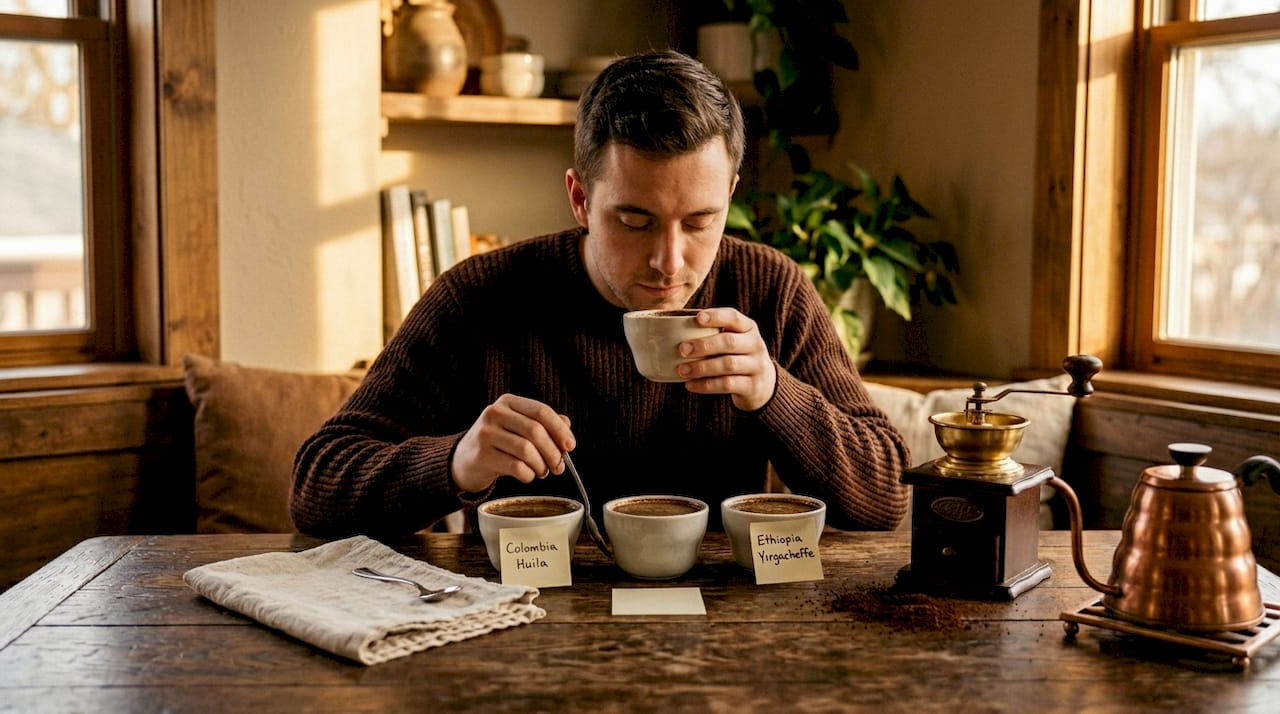
- Choose two or three contrasting coffees. Pick coffees from different origins or roast levels. A washed Colombian next to a natural Ethiopian will reveal dramatic differences in body and aroma that make evaluation much easier for beginners.
- Grind fresh and measure consistently. Use about 8 to 9 grams of coffee per 150 milliliters of water for every sample. Weigh everything. Guessing undermines the whole point of controlled comparison.
- Set up your space. Lay out labeled bowls or wide mugs for each coffee. Have a kettle, two cupping spoons, and a notebook ready. Remove strong scents from the room. Perfume, food smells, and candles interfere more than you’d think.
- Follow the cupping sequence. Dry fragrance first, then add water, then break the crust and assess wet aroma, then taste. Follow the steps in order. Skipping ahead disrupts the progression of evaluation.
- Write down everything. Even if your notes feel vague at first (“smells kind of fruity, not sure why”), write them down. Your notes will get more precise with each session. Understanding how coffee blooms during brewing also helps you get more consistent results when you pour.
Pro Tip: After tasting, go back and smell the dry grounds again. Your nose picks up new details once your palate has context from the cup. It’s one of the quickest ways to train your sense of smell for coffee.
Attending a cupping at a local specialty roaster is another strong option, especially for beginners. Most roasters that host cuppings welcome the public. You’ll taste four to eight coffees side by side, guided by someone with experience. That kind of exposure accelerates learning in ways that solo home sessions can’t match.
Why cupping changed the way I think about coffee
I’ll be honest. My first cupping session felt like theater. Smelling dry grounds, making dramatic slurping noises over bowls of coffee, scribbling notes about “stone fruit” and “clean finish.” It seemed excessive for something people drink out of a travel mug at 7am.
Then I tasted a natural-processed Ethiopian next to a Colombian washed roast from the same week, and something clicked. The difference wasn’t subtle. The Ethiopian was almost wine-like, thick-bodied with berry and ferment. The Colombian was crisp, light, and citrusy. I had been drinking coffee every day for years without ever actually tasting it at that level.
What I’ve learned since then is that cupping doesn’t just teach you about coffee. It teaches you how you taste. You start noticing that certain coffees linger longer on the back of your palate. You realize some bodies coat your mouth while others disappear. You begin to recognize origin characteristics the same way you recognize a familiar voice.
In my experience, the biggest shift happens after your third or fourth session. That’s when the language stops feeling borrowed and starts feeling descriptive. You’re not just saying “fruity” because the flavor wheel says fruity. You’re saying it because you actually taste raspberry and you know that’s what raspberry tastes like in a cup.
My honest advice: don’t treat cupping as a test. Treat it as a conversation with coffee. The more you listen, the more it tells you.
— Kristopher
Gear up for cupping with Dkbeanleaf
Whether you’re setting up your first home cupping session or looking to expand your coffee collection, Dkbeanleaf has you covered.

Start by picking up a few specialty coffees to compare side by side. Variety is what makes cupping rewarding, and exploring different origins is the fastest way to train your palate. Pair your tasting setup with one of the wide, sturdy cupping mugs from Dkbeanleaf, which work just as well for home cuppings as they do for everyday drinking. And if your coffee habit follows you out the door, the travel mug with a handle keeps your favorite roast ready wherever you go. Good coffee deserves the right vessel.
FAQ
What is coffee cupping in simple terms?
Coffee cupping is a structured method for tasting and evaluating coffee by smelling dry and wet grounds, then slurping and scoring the brew. It’s used by professionals to assess quality but is fully accessible to beginners at home.
How is coffee cupping different from regular coffee tasting?
Regular coffee tasting is casual and unstructured. Coffee cupping follows a standardized process with controlled variables, specific steps, and a scoring system that measures attributes like aroma, body, acidity, and aftertaste separately.
What score makes a coffee specialty grade?
A coffee must score at least 80 out of 100 points during a formal cupping evaluation to qualify as specialty grade, based on standards set by the Specialty Coffee Association.
Can beginners cup coffee at home?
Yes. Home cupping requires only a grinder, kettle, wide bowls, cupping spoons, and two or three different coffees. Following the standard cupping sequence gives beginners a genuine evaluation experience without professional equipment.
What does slurping do during a cupping session?
Slurping aerates the coffee as it enters your mouth, which spreads it across the entire tongue and amplifies flavor. It’s one of the most effective techniques in the coffee cupping process for detecting subtle taste differences.