

Why Coffee Tastes Bitter and How to Fix It
That first sip hits wrong. Not rich or bold. Just sharp, dry, and unpleasant. If you’ve ever wondered why coffee tastes bitter in a way that ruins the cup rather than defining it, you’re asking exactly the right question. The answer isn’t simply “bad beans” or “too much caffeine.” It goes deeper, into chemistry, grind size, water temperature, and roast level. Once you understand what’s actually driving that bitterness, you get real control over your brew.
Table of Contents
- Key takeaways
- Why coffee tastes bitter: the chemistry behind it
- How over-extraction turns bitter flavor into harshness
- Roast level and bean type: what makes coffee taste strong
- How to reduce coffee bitterness starting today
- My honest take on chasing bitterness out of coffee
- Upgrade your coffee experience with Dkbeanleaf
- FAQ
Key takeaways
| Point | Details |
|---|---|
| Caffeine isn’t the main culprit | Chlorogenic acid lactones and phenylindanes from roasting cause most of coffee’s bitter flavor. |
| Over-extraction is the top brewing mistake | Pulling past 22% extraction yield drags harsh, dry compounds into your cup. |
| Grind size matters more than most realize | A finer grind increases extraction speed and is one of the easiest causes of bitter coffee to fix. |
| Dark roasts need gentler brewing | They are more soluble than light roasts and require coarser grinds or shorter brew times. |
| Small adjustments make big differences | Grind size, water temp, and brew time are your three main tools for reducing bitterness. |
Why coffee tastes bitter: the chemistry behind it
Most people blame caffeine. It makes sense intuitively. Caffeine is the stimulant, and stimulants feel intense. But caffeine actually accounts for only 10 to 30% of coffee’s total bitterness. The real drivers are compounds formed during the roasting process itself.
Here’s what’s actually happening. When green coffee beans are roasted, chlorogenic acids break down into smaller molecules called chlorogenic acid lactones. Roast those beans further, into medium dark and dark territory, and those lactones degrade further into phenylindanes. Phenylindanes are harsh. They produce the dry, almost metallic bitterness you get from a strongly roasted espresso or a dark French roast brewed too long.
The roast level connection is direct. The darker you go, the more phenylindanes you create. That’s why dark roast coffee has a distinctly harsher bitter profile compared to a medium roast, which retains more of the balanced, sweeter bitter compounds.
Your taste buds aren’t passive in this process either. The TAS2R43 receptor is the primary biological detector for coffee’s bitter compounds. Recent cryo-EM imaging has shown exactly how this receptor binds to coffee molecules, which explains why some people are dramatically more sensitive to bitterness than others. If coffee tastes overwhelmingly bitter to you even when it doesn’t to someone else, your receptor sensitivity may genuinely be higher.
Pro Tip: If dark roast coffee consistently tastes too harsh, it’s not your brewing. The phenylindane load in the bean itself may simply be too high for your palate. Try a medium roast before changing any other variable.
Here’s a quick breakdown of the main bitter compounds and their behavior:
- Chlorogenic acids (present in green and lightly roasted beans): mildly bitter, contribute to brightness and complexity
- Chlorogenic acid lactones (formed in light to medium roasts): the “pleasant bitter” layer most coffee lovers appreciate
- Phenylindanes (formed in dark roasts): harsh, lingering, metallic bitterness that many find unpleasant
- Caffeine: real but minor contributor, roughly 10 to 30% of perceived bitterness
How over-extraction turns bitter flavor into harshness
Extraction is the process of water pulling flavor compounds out of coffee grounds. Not all compounds release at the same time. The chemical progression of extraction follows a clear sequence: acids come out first, then sugars and balanced bitters, and finally harsh dry compounds at the end. This sequence is everything.
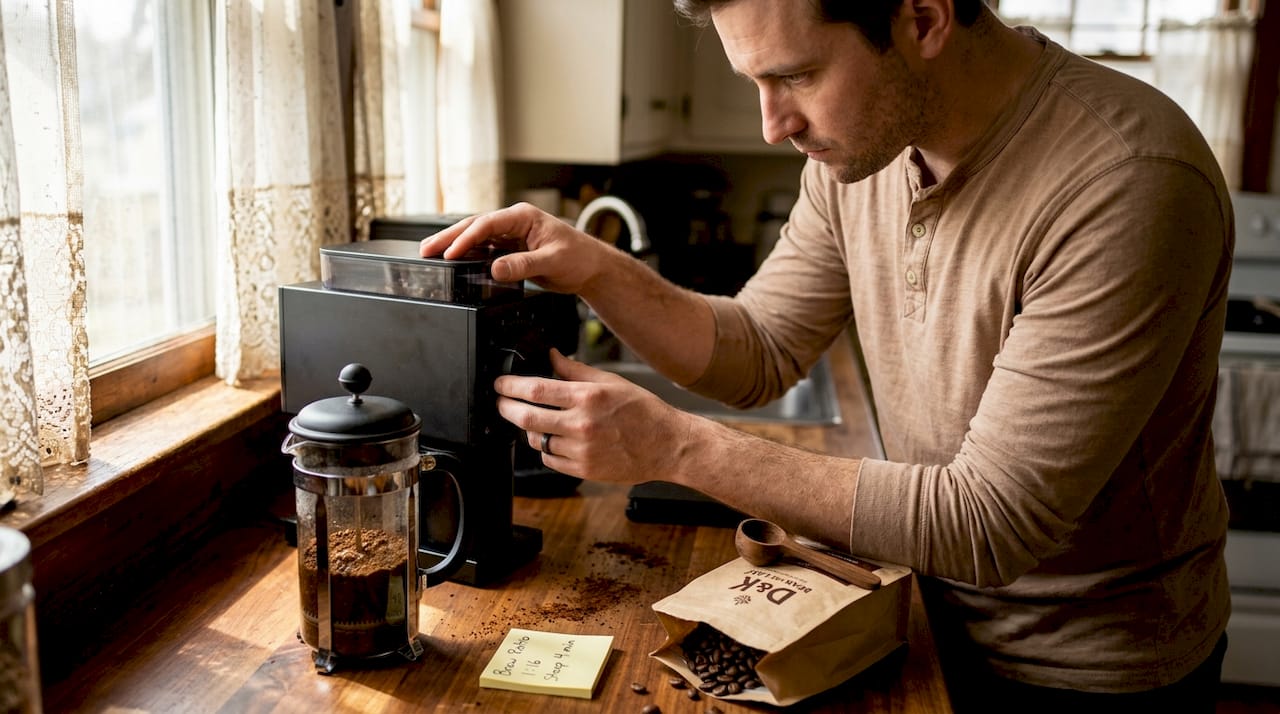
The ideal extraction yield sits between 18% and 22% of the coffee’s soluble mass. Below 18%, you’re under-extracted. The cup tastes sour, weak, and hollow. Above 22%, you’ve pulled too far into the harsh compound territory. That’s over-extraction, and it’s the most common cause of truly unpleasant bitterness in home brewing.
What pushes extraction too far
| Brewing variable | Under-extraction result | Over-extraction result |
|---|---|---|
| Grind too fine | N/A | Bitter, harsh, dry |
| Grind too coarse | Sour, watery, flat | N/A |
| Water too hot | N/A | Bitter, astringent |
| Brew time too long | N/A | Harsh, hollow bitterness |
| Brew time too short | Sour, underdeveloped | N/A |
There’s also a less obvious issue: grind inconsistency. When your grinder produces both very fine particles and large chunks at the same time, you get simultaneous under- and over-extraction in the same brew. The fine particles over-extract and go bitter. The large chunks under-extract and stay sour. You end up with a cup that tastes simultaneously off in both directions. This is exactly why investing in a consistent burr grinder makes a bigger difference than most brewing upgrades.
Pro Tip: If your coffee tastes both sour and bitter at the same time, the problem is almost certainly grind inconsistency, not your recipe. A better grinder fixes this faster than any other adjustment.
The water temperature piece is underappreciated. Water that’s too hot speeds up extraction dramatically and drags out harsh compounds before you can stop it. Most specialty coffee guides recommend brewing between 195°F and 205°F. Letting freshly boiled water sit for 30 seconds before pouring brings it into range without needing a thermometer.
Roast level and bean type: what makes coffee taste strong
There’s a persistent myth worth addressing directly. Many people believe dark roast coffee is “stronger” and therefore needs more extraction or more grounds to show up properly in the cup. The opposite is true. Dark roasts are more soluble than light roasts because the cell structure of the bean has been broken down further during roasting. They extract faster and with less resistance.
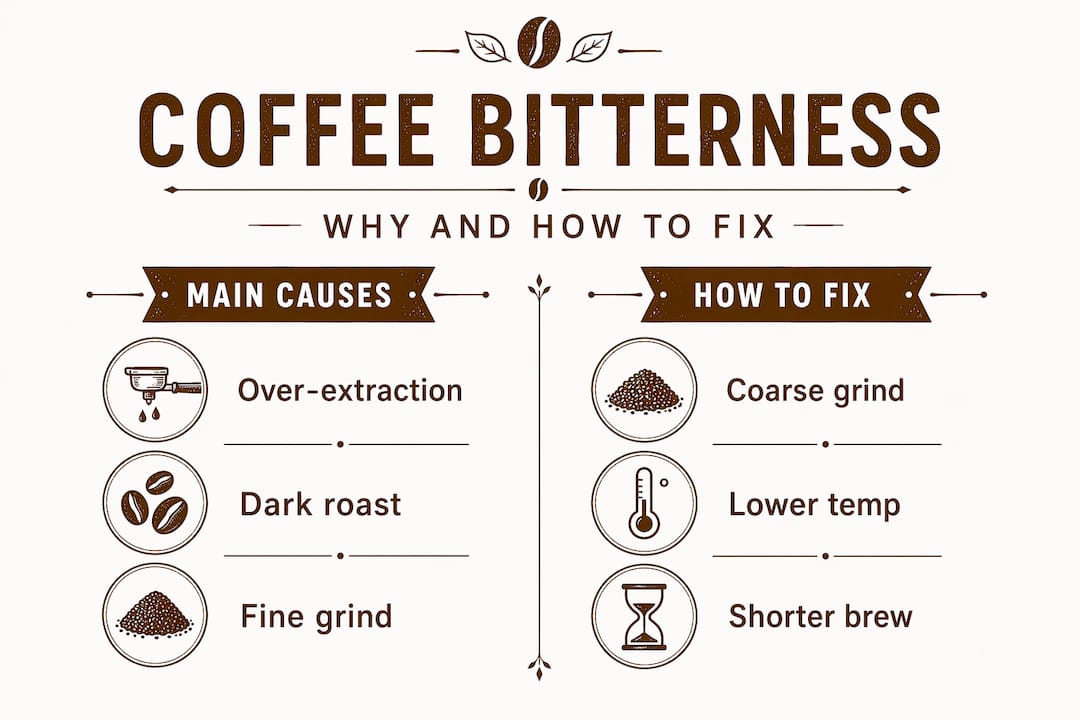
Brewing a dark roast the same way you brew a light roast is one of the most reliable routes to an unpleasantly bitter cup. You can also explore roast level brewing differences at Dkbeanleaf to understand exactly how tasting notes shift between roast profiles.
Here’s how to adjust your brewing approach by roast:
- Light roast: Uses higher water temperature (up to 205°F) and a finer grind to coax out the bright, fruity, or floral notes. Light roasts are less bitter but can taste sour when under-extracted.
- Medium roast: The most forgiving. Brews well across a wide temperature and grind range. Balanced bitter, sweet, and acidic notes.
- Dark roast: Needs a coarser grind and often a shorter brew time to avoid harsh phenylindane extraction. Water temperature can be slightly lower, around 195°F to 200°F.
Decaf is its own category and often gets treated carelessly. Because the decaffeination process removes some soluble material from the bean, decaf often requires a finer grind than its caffeinated equivalent to achieve balanced extraction. Compensating with a longer brew time instead tends to push extraction into bitter territory without actually improving flavor.
The origin of the bean matters too, though it interacts with roast level. A naturally processed Ethiopian bean has more residual fruit sugars that balance bitterness beautifully at a medium roast. The same bean taken to a dark roast loses those sugars and exposes the harsh compounds underneath.
How to reduce coffee bitterness starting today
You don’t need expensive equipment or a complete overhaul. Most bitterness problems come down to a few variables, and each one has a direct fix.
-
Adjust your grind size first. If your coffee is too bitter, go coarser by one step and brew again before changing anything else. Grind size is the most immediate lever you have on extraction speed.
-
Lower your water temperature. Let your kettle sit for 30 to 45 seconds after boiling. This brings water below 205°F and slows down extraction enough to avoid pulling harsh compounds. You don’t need a gooseneck kettle with a thermometer to do this well.
-
Shorten your brew time. If you’re using a French press or doing a pour-over, cutting 30 seconds off your total brew time can eliminate that final bitter surge. This pairs naturally with a slightly coarser grind.
-
Try a pinch of salt. This one surprises people. Adding a small amount of salt to your grounds before brewing can reduce the perception of bitterness significantly. Salt doesn’t change the chemistry of extraction. It tricks your taste receptors into perceiving less bitterness by enhancing sweet and umami signals.
-
Use the bloom technique. Before pouring your full brew water, add a small amount (about twice the weight of your grounds) and let it sit for 30 to 45 seconds. This releases trapped CO2 from fresh beans that otherwise creates uneven extraction and inconsistent bitterness. A proper coffee bloom technique makes a noticeable difference, especially with freshly roasted beans.
-
Try cold brew when you want something smooth. Cold water extracts fewer bitter compounds, letting the sweeter and more floral notes dominate. The result is a cup with dramatically lower perceived bitterness, not because the beans are different, but because the extraction temperature changes which compounds are pulled.
-
Keep your equipment clean. Stale coffee oils built up in your grinder, portafilter, or French press add rancid bitterness to every brew. Clean your equipment weekly at minimum.
Pro Tip: Fresh beans are not optional if you want to control bitterness accurately. Stale beans off-gas inconsistently and extract unevenly, making your grind and temperature adjustments unreliable. Buy smaller bags more frequently rather than one large bag that sits for weeks.
My honest take on chasing bitterness out of coffee
I’ve watched a lot of coffee drinkers try to eliminate bitterness entirely, and it almost always goes wrong. You start chasing a cup that’s too soft, too flat, missing the depth that makes coffee worth drinking. Bitterness isn’t the enemy. Bitterness is structural to what coffee is. It’s the counterbalance to sweetness and acidity that gives the flavor something to push against.
What I’ve learned from years of adjusting grind settings, swapping roast levels, and experimenting with brew ratios is that the goal is balance, not absence. The best cups I’ve made have a clear bitter note that feels intentional rather than accidental. It’s present but it doesn’t dominate. It fades cleanly rather than lingering harshly.
The mistake most people make is treating bitterness as a single problem with a single fix. It’s not. Sometimes it’s the roast. Sometimes it’s the grind. Sometimes it’s both, compounded by dirty equipment and water that’s boiling too hot. I’d tell anyone starting out: change one variable at a time, taste carefully, and resist the urge to compensate for bitterness by just adding more milk or sugar. Those mask the problem. They don’t help you learn what your coffee is actually doing.
Trust your palate over any formula. The right extraction for your beans and your taste buds is the one that produces a cup you want to finish.
— Kristopher
Upgrade your coffee experience with Dkbeanleaf
Once you start dialing in your brew, the cup you’re drinking from matters more than you’d think. Dkbeanleaf carries specialty coffee mugs designed to hold heat properly and make that balanced, carefully brewed cup feel like it belongs in your hands. There’s also a white glossy mug that’s become a favorite for daily coffee rituals.

If you’re exploring lower-bitterness options or want something to alternate with your morning coffee, the tea collection at Dkbeanleaf offers a range of flavors that let you stay in the hot-beverage ritual without any of the extraction variables. Whether you’re deepening your brewing knowledge or just building out your cup collection, Dkbeanleaf has the gear to match where you are in your coffee journey.
FAQ
Why does my coffee taste so bitter every morning?
The most common cause is over-extraction from a grind that’s too fine, water that’s too hot, or a brew time that runs too long. Try coarsening your grind one step and lowering your water temperature slightly before changing anything else.
Is coffee supposed to be bitter?
Yes, some bitterness is natural and necessary in coffee. Bitterness is part of the flavor structure and balances sweetness and acidity. The problem is uncontrolled or excessive bitterness from over-extraction or very dark roasts brewed too aggressively.
Does dark roast coffee have more caffeine?
No. Dark roast coffee actually has slightly less caffeine than light roast by weight because caffeine degrades slightly during prolonged roasting. The stronger, more bitter flavor of dark roast creates the perception of more intensity, but caffeine content is comparable across roast levels.
What is the difference between bite and bitterness in coffee?
Bite refers to a sharp, bright acidity that you feel quickly on the sides of your tongue, often from lighter roasts or slightly under-extracted coffee. Bitterness is a dry, lingering sensation at the back of the palate, typically caused by phenylindanes from dark roasting or over-extraction. They feel distinctly different once you know what to notice.
Does adding salt actually fix bitter coffee?
Yes, within reason. A pinch of salt suppresses bitter taste perception by activating competing taste signals on your palate. It won’t fix a fundamentally over-extracted brew, but it softens harsh bitterness noticeably, especially in dark roast coffee.
Recommended
- Why coffee smells better than it tastes: a sensory guide – D&K Bean and Leaf
- Coffee roast levels explained: tasting notes and brewing tips – D&K Bean and Leaf
- What is coffee bloom: your complete brewing guide – D&K Bean and Leaf
- Explore every coffee roast: types, tastes, and brewing tips – D&K Bean and Leaf