

Why Espresso Tastes Stronger Than Drip Coffee
Espresso tastes stronger than drip coffee because of one thing above all else: concentration. A shot of espresso contains a much higher concentration of total dissolved solids compared to a cup of drip coffee. That gap is not subtle. Every acid, sugar, oil, and bitter compound that exists in the coffee bean gets compressed into roughly one ounce of liquid. Drip spreads those same compounds across eight ounces of water. The result feels like the difference between a shout and a whisper.
Several forces work together to create that intensity:
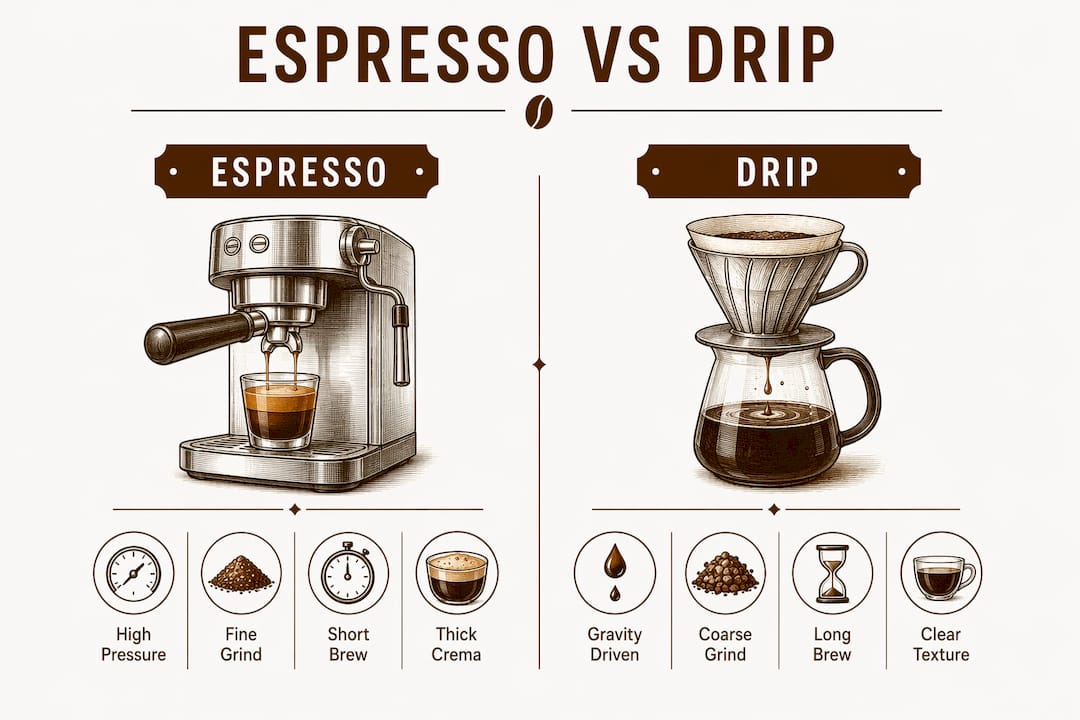
- Pressure: Espresso machines push water through finely ground coffee at 9 bars of pressure (approximately 130 psi), forcing emulsified oils and CO2 out of the grounds. Drip brewing uses only gravity.
- Extraction time: Espresso pulls in 25–30 seconds; drip takes 4–5 minutes. Shorter time under higher pressure extracts a different chemical fingerprint entirely.
- Grind size: Espresso requires a grind between table salt and flour in fineness. Drip uses a medium to coarse grind that water passes through slowly.
- Crema: The golden foam on top of a shot traps aromatic compounds and adds a velvety texture that drip coffee simply cannot produce.
- Mouthfeel: Emulsified oils give espresso a syrupy, coating texture that drip’s lighter body lacks, and that viscosity amplifies how strong the flavor registers on your palate.
Together, these factors explain why espresso tastes bolder, richer, and more intense than drip coffee, even when both drinks start with the same beans.
Why espresso tastes stronger than drip: pressure versus gravity
The single biggest reason espresso and drip coffee taste so different comes down to how water moves through the grounds. Espresso machines force water through a tightly packed puck of finely ground coffee in about 25–30 seconds using high pressure. Drip brewers, whether a standard countertop machine or a Hario V60 pour-over, rely entirely on gravity, letting hot water seep through coarser grounds over 4–5 minutes.
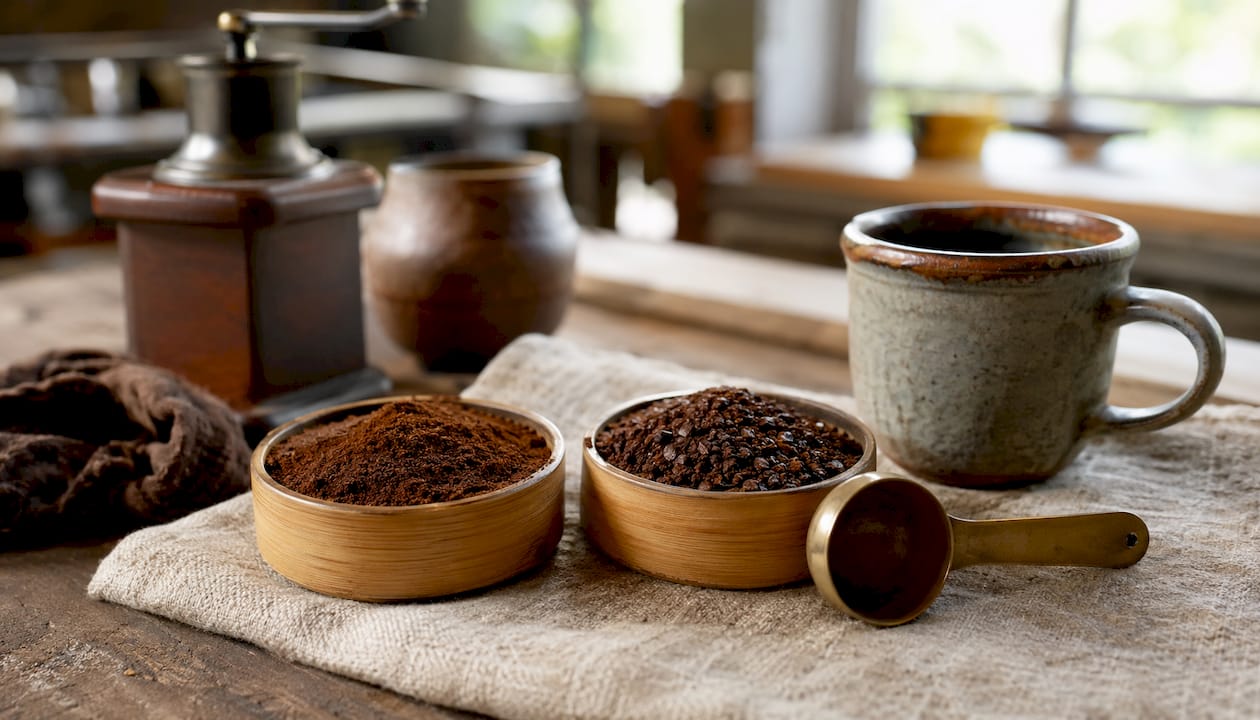
That pressure difference changes everything about what ends up in your cup. At 9 bars, water extracts compounds that gravity-fed brewing leaves behind entirely: emulsified lipids, CO2, and a dense concentration of dissolved solids. Those emulsified oils are what form crema, the tan foam layer that sits on top of a well-pulled shot. Drip coffee has no crema because it has no pressure to force those oils out of the grounds.
The extraction time gap matters just as much as the pressure. Twenty-five seconds under intense pressure pulls a specific set of flavor compounds: more lipids, more dissolved solids, and a concentrated hit of acids, sugars, and bitters. Four to five minutes of gravity extraction pulls a wider range of compounds at much lower concentration, which is why drip coffee often tastes cleaner and more tea-like, with brighter acidity and more delicate origin notes. Neither method is better in an absolute sense. They produce genuinely different drinks from the same raw material.
Pro Tip: If you want to understand the pressure difference physically, 9 bars is roughly the pressure inside a road bicycle tire. Your espresso machine is doing serious mechanical work every time it pulls a shot.
How grind size and roast profile shape espresso’s bolder taste
Grind size: the surface area equation
Espresso’s fine grind creates far more surface area for water to contact in a short time. That fineness, somewhere between table salt and flour in texture, is what allows 25 seconds of high-pressure extraction to pull as much dissolved material as it does. Use a coarser grind in an espresso machine and the water rushes through too fast, producing a weak, watery shot. The tight pack of fine grounds creates resistance that forces water to extract aggressively.
Drip coffee uses a medium to coarse grind because water has 4–5 minutes to do its work. The larger particle size lets water flow through at a pace that extracts flavor without over-extracting bitterness. Grind coarser than that and you get a thin, sour cup. Grind finer and you choke the filter and over-extract. The grind size for each method is calibrated precisely to its extraction time and pressure.
Roast profile: why espresso blends go darker
Espresso blends tend to be roasted darker to highlight chocolatey, nutty, and caramel notes that hold up under high-pressure extraction. Lighter roasts can taste sour or thin when pulled as espresso because the high-pressure environment amplifies every flaw in the bean. Darker roasts reduce acidity, deepen body, and produce the bittersweet, roasty character most people associate with a classic espresso shot.
Drip coffee, especially pour-over, often uses lighter roasts to showcase origin-specific notes: florals, stone fruit, citrus, and terroir nuance that would blur into a single intense impression under espresso pressure. A high-altitude Ethiopian washed coffee might give you jasmine and stone fruit in a pour-over. Pull it as espresso and those distinct notes collapse into one bright, fruity intensity. You can learn more about how roast levels change flavor in depth, but the short version is this: darker roasts were built for espresso, and lighter roasts were built for drip.
Grind and roast comparison at a glance
| Factor | Espresso | Drip coffee |
|---|---|---|
| Grind size | Fine (between table salt and flour) | Medium to coarse |
| Typical roast | Medium-dark to dark | Light to medium |
| Primary flavor notes | Chocolate, caramel, roasted nuts, bittersweet | Citrus, floral, stone fruit, bright acidity |
| Perceived acidity | Lower (pressure changes acid extraction) | Higher, especially with light roasts |
| Body | Thick, syrupy, full | Light, clean, tea-like |
Key differences between espresso and drip coffee by grind and roast:
- Espresso’s fine grind maximizes surface contact in a short extraction window, pulling more dissolved solids per ounce.
- Darker espresso roasts reduce acidity and amplify body, making the flavor stand up to concentrated extraction.
- Drip’s coarser grind slows extraction, allowing water to pull flavor gently over several minutes without over-extracting.
- Lighter drip roasts preserve delicate origin notes that high-pressure brewing would overwhelm.
Why espresso’s texture and mouthfeel make it feel so much more intense
Espresso’s mouthfeel is one of the most underrated reasons it registers as stronger. The emulsified oils that pressure forces out of the grounds give espresso a thick, syrupy body that coats your palate and lingers. Baristas often describe it as similar to warm honey: dense, smooth, and slow to leave. Drip coffee, even a well-made pour-over, feels comparatively thin and watery once you have tasted both side by side.
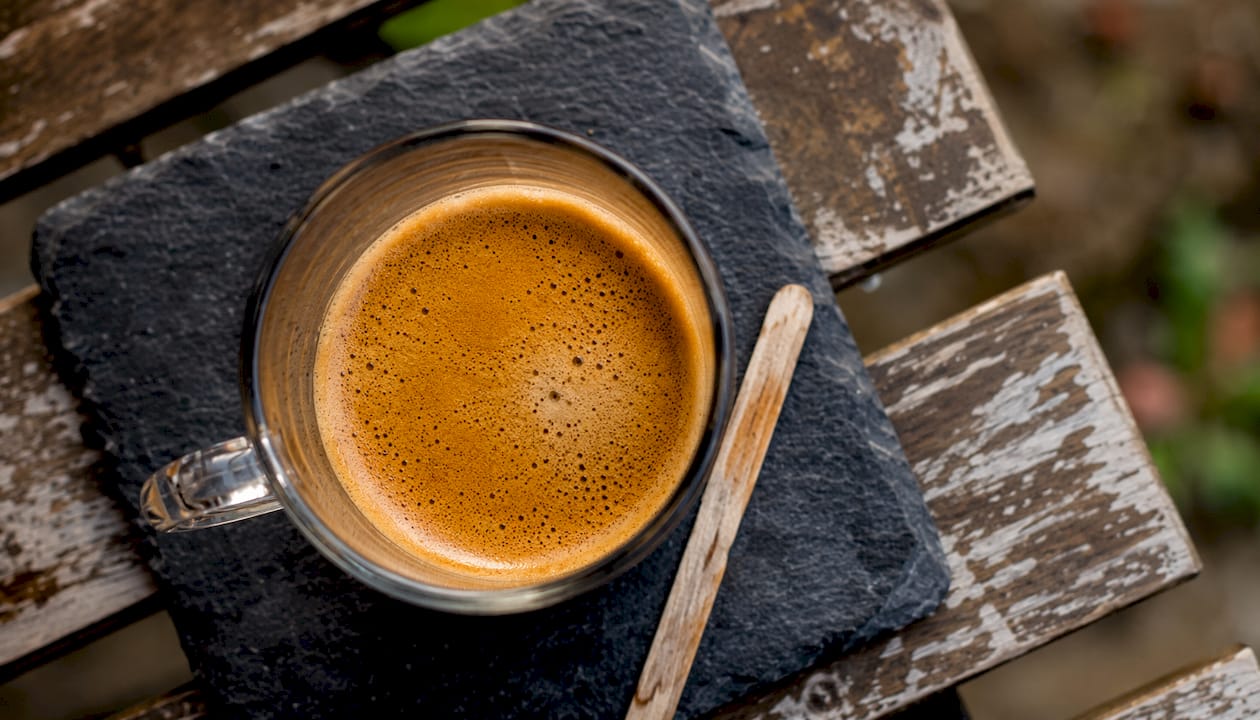
That coating effect changes how your brain processes flavor intensity. When a liquid clings to your palate, flavor compounds stay in contact with your taste receptors longer. A drip coffee’s flavor arrives and moves on quickly. Espresso’s flavor arrives, settles in, and lingers for 30 seconds or more after you swallow. The finish on a well-pulled shot often evolves: bright and acidic on the first sip, then sweet and chocolatey as it cools.
Crema plays its own role in this. The golden foam on top of a shot traps volatile aromatic compounds that would otherwise escape into the air. When you drink espresso, those aromatics release directly against your nose and palate simultaneously, amplifying the sensory experience. Drip coffee has no equivalent mechanism. Its aromatics dissipate into the air as the cup sits, which is part of why a drip coffee smells wonderful brewing but tastes less intense than it smells.
Pro Tip: Mouthfeel can genuinely trick your brain into perceiving more strength than caffeine alone would produce. A thick, viscous liquid registers as “strong” neurologically, even before your body processes the caffeine. This is why a well-made espresso feels powerful in a way that a diluted shot of the same volume does not.
The flavor profile differences tied to texture are real and specific. Espresso’s chocolatey, caramel, and bittersweet notes feel bold partly because they arrive in a dense, concentrated medium. Those same notes in a drip cup, spread across eight ounces of lighter-bodied liquid, register as background character rather than foreground intensity. For more on how bitterness and extraction interact, the relationship between grind, pressure, and over-extraction is worth understanding.
Caffeine in espresso versus drip coffee: what the numbers actually mean
The caffeine story in espresso versus drip coffee is one of the most commonly misunderstood topics in coffee. Espresso has more caffeine per ounce than drip coffee, while a full cup of drip coffee usually contains more total caffeine due to larger volume. So per ounce, espresso wins by a wide margin. Per serving, drip coffee usually delivers more total caffeine, simply because you drink so much more of it.
| Metric | Espresso (1 oz shot) | Drip coffee (8 oz cup) |
|---|---|---|
| Caffeine per ounce | ~63 mg | ~12-16 mg |
| Caffeine per serving | ~63 mg | ~95–130 mg |
| TDS (dissolved solids) | 8–12% | ~1.2–1.5% |
| Serving volume | ~1 oz | ~8 oz |
| Body | Thick, syrupy | Light, clean |
The reason espresso feels stronger despite often delivering less total caffeine per serving comes down to delivery speed and concentration. Espresso is consumed in one or two quick sips, so caffeine enters your bloodstream fast. Drip coffee is sipped over 15–20 minutes, spreading the caffeine delivery across a longer window. The quick hit from espresso produces a more immediate, noticeable effect, which the brain interprets as greater strength.
Espresso’s sensory strength comes from flavor concentration, viscosity, crema presence, and the speed of caffeine delivery, not simply from caffeine quantity. A 12-ounce drip coffee could contain more total caffeine than a double espresso, yet the espresso will feel stronger because of how it tastes, how it feels in the mouth, and how quickly it hits. Understanding the difference between coffee strength and caffeine content is the key to making sense of why concentration and serving size tell two very different stories.
The Specialty Coffee Association’s brewing framework treats strength and extraction as distinct concepts. A coffee can be strong in flavor because it is concentrated, even if another drink contains more total caffeine. Espresso is the clearest example of that principle in practice.
What coffee experts say about espresso’s intensity
Coffee professionals who work with both brewing methods consistently point to the same factors: pressure, concentration, and the ritual of consumption. The 9-bar standard for espresso is not arbitrary. Decades of research and professional practice established that this pressure level produces the optimal combination of dissolved solids, emulsified oils, and CO2. Too little pressure and the shot under-extracts. Too much and you push harsh, bitter compounds into the cup that no amount of milk or sugar can fix.
The sensory science behind this is well-documented. The human tongue detects bitterness, sweetness, and mouthfeel as primary signals. Many of coffee’s more complex flavors actually come through the sense of smell, which is why crema matters so much: it delivers aromatics directly to your nose as you drink. A well-extracted espresso shot is rich and complex, with its flavor linked tightly to its aroma in a way that a drip cup, with its aromatics dissipating into the air, cannot replicate as precisely.
- Pressure creates unique compounds. Nine bars forces lipids and CO2 out of grounds that gravity brewing leaves behind, producing crema and a thicker body.
- TDS is the measurable backbone of strength. Espresso’s 8–12% TDS versus drip’s 1.2–1.5% explains the intensity gap more clearly than any other single metric.
- Roast amplifies the effect. Darker espresso roasts reduce acidity and deepen body, making high-pressure extraction produce a bolder, more cohesive flavor.
- Ritual shapes perception. Espresso is consumed quickly, as a concentrated sip or the base for a milk drink. That immediate, intense experience is part of what makes it feel so much stronger than a slowly sipped mug of drip.
- Bad coffee gets worse under pressure. Specialty roasters often note that espresso is unforgiving. A coffee with subtle flaws in a drip cup becomes obviously flawed when concentrated tenfold. This is why quality sourcing matters more for espresso than for drip.
At Dkbeanleaf, the D&K Bean and Leaf philosophy treats coffee education as part of the experience. Understanding why your espresso tastes the way it does, from the pressure mechanics to the roast profile to the mouthfeel, is what separates a good cup from a great one. Exploring the full range of espresso drink variations shows how that concentrated base transforms into everything from a cortado to a flat white, each one built on the same principles of pressure, concentration, and bold flavor.
Key Takeaways
Espresso tastes stronger than drip coffee because its 8–12% TDS concentration compresses every flavor compound into one ounce, while pressure, grind, roast, and mouthfeel amplify that intensity far beyond what caffeine content alone explains.
| Point | Details |
|---|---|
| Concentration drives intensity | Espresso’s TDS of 8–12% versus drip’s 1.2–1.5% is the primary reason espresso tastes so much bolder. |
| Pressure extracts unique compounds | Nine bars forces emulsified oils and CO2 out of grounds, creating crema and a syrupy body drip cannot replicate. |
| Caffeine per serving is often lower | Espresso has about 63 mg per shot, but an 8 oz drip cup typically contains 95–130 mg total due to volume. |
| Mouthfeel amplifies perceived strength | Espresso’s thick, coating texture keeps flavor compounds on the palate longer, making it feel more intense. |
| Roast and grind reinforce boldness | Darker espresso roasts and finer grinds work together to maximize flavor intensity under high-pressure extraction. |
Wear your coffee passion every day

At Dkbeanleaf, coffee is more than a morning habit. It is a craft worth celebrating. Whether you pull a tight, syrupy shot before sunrise or settle into a slow pour-over on a weekend morning, the ritual deserves gear that matches the moment. Browse the full Dkbeanleaf tea and beverage collection for quality you can taste, and grab a classic unisex tee that lets you wear your coffee culture wherever the day takes you.