How to Clean Coffee Mug Stains Naturally at Home
The fastest way to clean coffee mug stains naturally is a thick paste of baking soda and water, left to sit for five to ten minutes, then scrubbed away with a soft sponge. No harsh chemicals, no special equipment. Just pantry staples that are safe for you, your mug, and the drain.
Here is a quick look at the most effective natural methods:
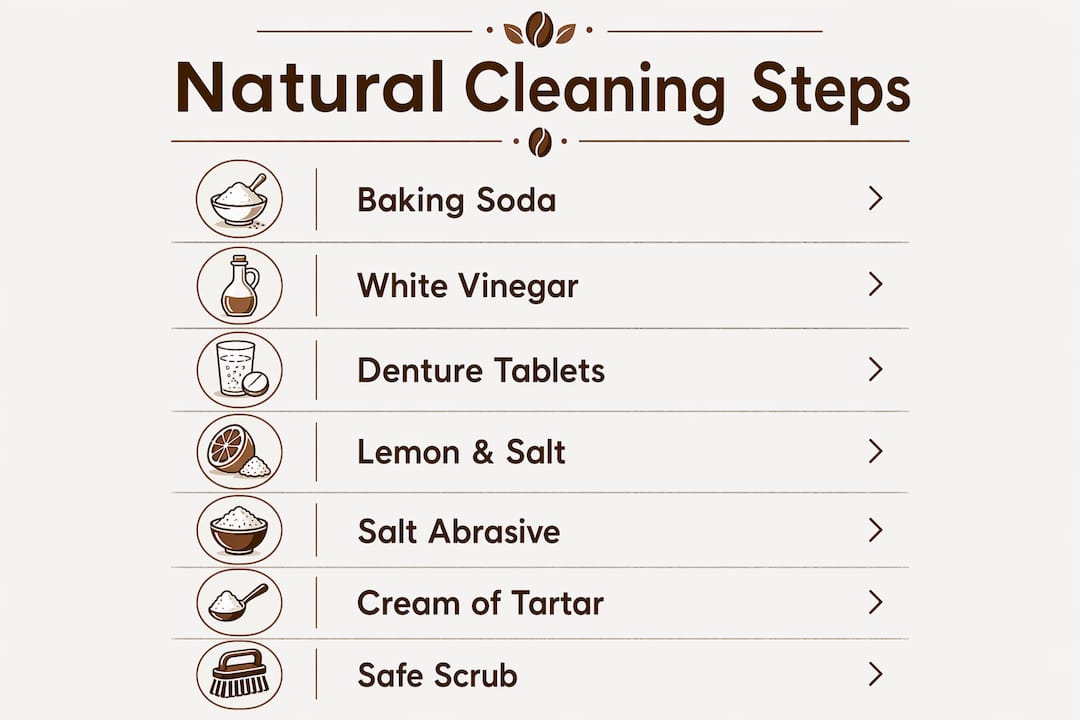
- Baking soda paste: Mix one to two tablespoons with enough water to form a thick paste. Apply, wait five to ten minutes, scrub gently, and rinse.
- White vinegar soak: Fill the mug halfway with white vinegar, top with hot water, and let it soak for one to two hours before scrubbing.
- Denture tablets: Drop one tablet into warm water in the mug and let it fizz for 15–30 minutes before rinsing.
- Lemon and salt: Squeeze fresh lemon juice into the mug, add a tablespoon of salt, and scrub with the lemon half for a fresh-scented clean.
- Cream of tartar: Mix with a little water into a paste and apply the same way as baking soda for a mild acid-based treatment.
- Salt alone: Use as a gentle abrasive with a damp sponge to lift surface stains without scratching.
Rinse your mug immediately after each use whenever you can. That single habit disrupts tannin bonding before stains have a chance to form. Bleach is off the table entirely: it can damage ceramic glaze and leave behind residues you do not want near your morning coffee.
Table of Contents
- How to clean coffee mug stains naturally, step by step
- Expert advice on preventing stains and cleaning safely
- Key Takeaways
- The case for keeping it simple
How to clean coffee mug stains naturally, step by step
The methods below move from gentlest to most intensive. Start at the top and work your way down only if the stain holds on.
1. Baking soda paste
Baking soda removes over 85% of tannin stains from ceramic mugs in under ten minutes, making it the go-to first move for most people. Add one tablespoon of baking soda to the mug, pour in just enough water to form a thick paste (think soft toothpaste, not a runny slurry), and spread it over the stained areas. Let it sit for five to ten minutes, then scrub with a soft sponge using small circular motions. Rinse thoroughly.
- For deep stains, extend the sitting time to 15 minutes before scrubbing.
- You can mix the paste directly in the mug to avoid dirtying another dish.
- Baking soda leaves no lingering odor, so your next cup tastes exactly as it should.
2. White vinegar soak
White vinegar breaks down tannins by dissolving coffee residue, but it needs time. Fill the mug halfway with white vinegar, then top it off with hot water. Let it soak for one to two hours for the best result. Pour out the mixture, scrub gently with a soft sponge, and rinse well to clear the smell.
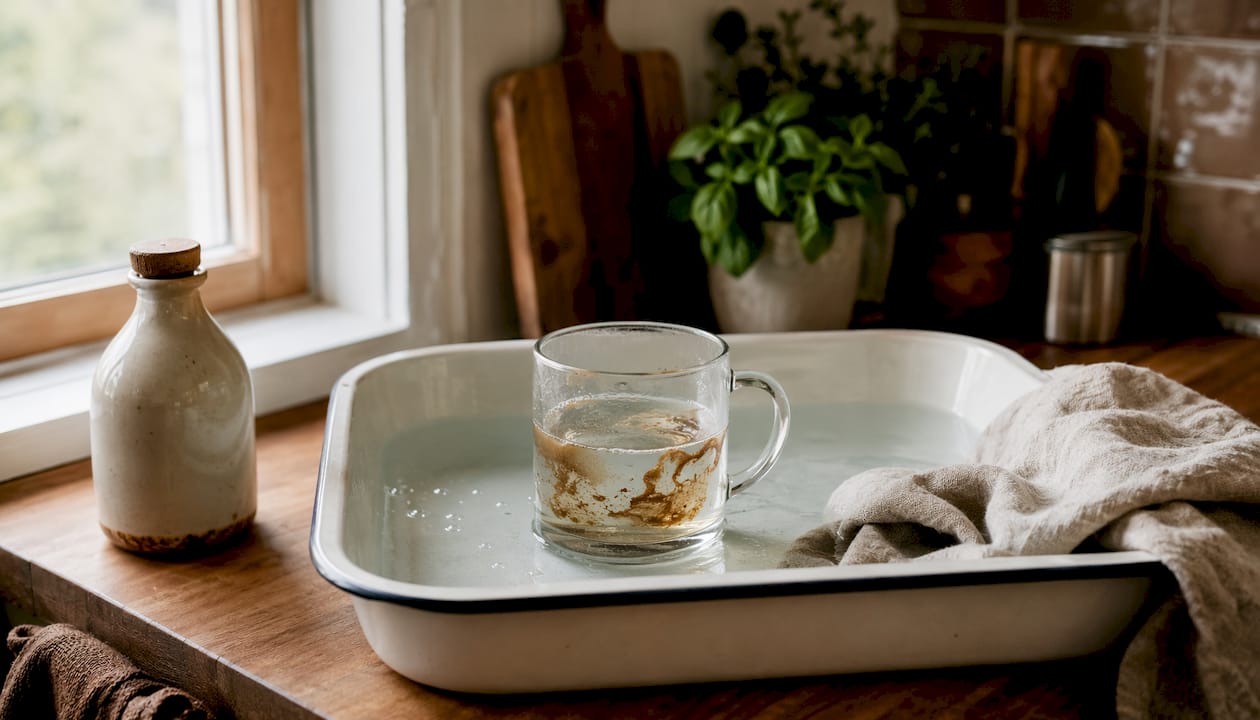
Vinegar works well on ceramic, porcelain, and glass. Skip it on mugs with metallic accents or decorative glazes, where prolonged acid contact can cause damage. If the smell lingers after rinsing, a quick wash with mild dish soap takes care of it.
3. Denture tablets
Drop one effervescent denture cleaning tablet into the mug, fill it with warm water, and let the fizzing action do the work. The effervescence loosens stain particles without any scrubbing. After 15–30 minutes, or up to two hours for stubborn buildup, rinse and give the mug a light wipe with a soft cloth.
Professional cleaner Sara Aparacio of Homeaglow calls this method surprisingly effective for mugs and coffee pots alike. It is especially useful for decorative or delicate mugs where you want to avoid any abrasive contact with the surface.
4. Lemon and salt
Cut a lemon in half, squeeze the juice into the mug, and add a tablespoon of salt. Use the lemon half itself to scrub the inside, letting the citric acid and salt work together as a natural acid-abrasive pair. Let the mixture sit for 15 minutes, then rinse and wash with a drop of dish soap to clear the citrus scent.
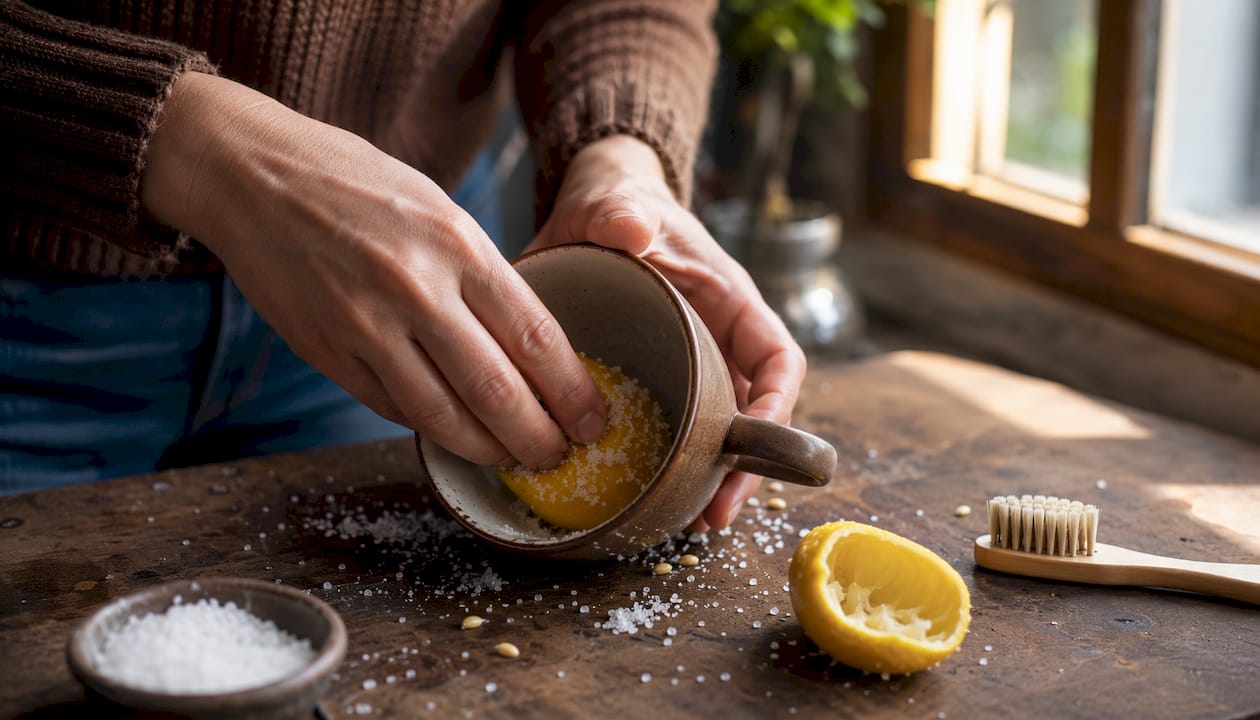
This method leaves the mug smelling genuinely fresh. The one catch: lemon scent can linger, so the final soap rinse matters if you are brewing something delicate next.
5. Salt as a standalone abrasive
Salt’s mild abrasiveness lifts surface stains without harsh chemicals. Dampen the mug, add a tablespoon of coarse or table salt, and scrub with a soft sponge. It works best on fresh or light stains rather than deeply set rings. Pair it with a squeeze of lemon juice for extra stain-fighting power, or use it alone as a quick daily scrub.
6. Cream of tartar paste
Cream of tartar, a mild acid found in most baking aisles, works similarly to baking soda but from the acidic side of the chemistry. Mix a small amount with water to form a paste, apply it to stained areas, and let it sit for five to ten minutes before scrubbing and rinsing. It is a good option when you have run out of baking soda and want something gentler than vinegar.
7. Safe scrubbing technique
The tool you scrub with matters as much as the cleaner. Soft sponges or microfiber cloths prevent the micro-scratches that make future stains grip harder. Steel wool and rough scrubbing pads damage glaze, creating rough patches where tannins settle in and refuse to budge. Use circular motions with light pressure, and let the cleaning agent do most of the work.
Pro Tip: If a stain clings to the handle area or the bottom edge, a soft-bristled toothbrush reaches those spots without scratching.
Expert advice on preventing stains and cleaning safely
Tannins, the natural polyphenols in coffee and tea, are the real culprit behind those brown rings. They bind readily to microscopic scratches and rough spots on mug surfaces, which is why an older, lightly scuffed mug stains faster than a new one. Protecting the glaze through gentle scrubbing is not just about aesthetics; it actively slows down how quickly stains return.
Rinsing immediately after use is the single most effective prevention habit. Professional cleaner Sara Aparacio puts it plainly: if you wash your mug soon after using it and do not let coffee residue sit, you can delay stain buildup significantly. A quick rinse with warm water takes ten seconds and saves you a deep-clean session later.
Pro Tip: Let coffee cool in the pot rather than in the mug. Heat speeds up tannin bonding, so a mug sitting with hot coffee for an hour stains faster than one rinsed right after drinking.
A few more habits worth keeping:
- Dry mugs before storing. Moisture trapped in a stored mug can intensify stain buildup over time.
- Avoid bleach entirely. It degrades ceramic glaze and leaves chemical residues that are unsafe near food and drink.
- Use food-grade cleaners only. Baking soda, white vinegar, lemon juice, and salt are all food-safe and biodegradable.
- Handle decorative mugs with extra care. For mugs with painted designs or delicate glazes, stick to soaking methods like denture tablets or a diluted vinegar soak rather than any abrasive paste.
- Hydrogen peroxide is an option, but only for plain white or very light-colored mugs. It has a mild bleaching effect that can fade patterns or dark finishes, so test a hidden area first if you choose to use it.
Regular gentle cleaning, done weekly for heavy coffee drinkers, keeps stains from compounding. Once stains layer on top of each other, even baking soda needs more time and effort to cut through. A quick weekly scrub is far easier than a monthly restoration project.
If you are curious about how your ceramic mug’s construction affects staining, the glaze quality and firing temperature both play a role in how porous the surface is and how readily tannins grip it. A handmade stoneware coffee mug with a well-fired, dense glaze tends to resist staining better than lower-fired alternatives.
Key Takeaways
Baking soda paste is the most effective and accessible natural method for removing coffee mug stains, working on most ceramic, glass, and porcelain surfaces in under ten minutes.
| Point | Details |
|---|---|
| Baking soda is the top choice | A thick paste removes over 85% of tannin stains from ceramic mugs in under ten minutes. |
| Rinse immediately after use | Flushing the mug right after drinking disrupts tannin bonding before stains can set. |
| Avoid bleach and abrasive scrubbers | Bleach damages glaze and leaves unsafe residues; rough pads create scratches that attract more stains. |
| Denture tablets work without scrubbing | A 15–30 minute fizzing soak loosens stains on delicate or decorative mugs with no abrasive contact. |
| Regular cleaning prevents buildup | A gentle weekly scrub is far easier than tackling deeply layered stains that have built up over weeks. |
The case for keeping it simple
Most people overcomplicate mug cleaning. They reach for specialty products, soak mugs overnight, or scrub so hard they dull the finish, when a tablespoon of baking soda and two minutes of gentle effort would have done the job on day one.
The natural methods here work because they address the actual chemistry of the problem. Tannins are organic compounds, and they respond to mild abrasives and acids. Baking soda, vinegar, lemon juice, and salt all fit that description. They are also things you already own, cost almost nothing, and rinse away completely without leaving chemical traces in a vessel you drink from every single day.
What gets overlooked most often is the prevention side. Cleaning a stained mug feels like a task. Rinsing a mug immediately after use feels like nothing, because it takes no effort. But that ten-second rinse is doing more work than any cleaning session you will ever run. The mugs that never need deep cleaning are the ones that get rinsed right away, dried before storage, and scrubbed gently once a week. That is the whole system.
If you care about what goes into your body and what goes down your drain, natural cleaning is not a compromise. It is the better option.
At Dkbeanleaf, we believe your mug deserves the same care as what goes inside it. If you are building a collection worth keeping clean, explore our premium tea selection and find the perfect brew to pour into a mug you love.