

How Coffee Fermentation Affects Flavor: A Brewer's Guide
Coffee fermentation is the biochemical process that reshapes precursor compounds inside coffee beans, directly determining the sweetness, acidity, and aroma complexity in your cup. Understanding how coffee fermentation affects flavor means understanding what happens before the roaster ever touches the bean. Microbial activity during fermentation modifies sugars, amino acids, and organic acids in ways that set the ceiling for every flavor the roast can develop. The Specialty Coffee Association (SCA) uses standardized cupping protocols to measure these outcomes, and recent biomimetic fermentation research confirms the connection between precursor chemistry and cup quality is both predictable and controllable.
How does coffee fermentation affect flavor at the chemical level?
Fermentation modifies flavor mainly by reshaping chemical precursor pools that participate later in roasting reactions, impacting ester and Maillard chemistry. This is the core mechanism behind every fruity, floral, or wine-like note you read on a specialty coffee bag. The microbes consuming mucilage during fermentation are not just breaking down sugars. They are actively building the raw materials that roasting will later transform into aroma compounds.
The specific changes are measurable. Biomimetic fermentation increases free amino acids by 1.89x and triples ester generation during medium roasting, which means the flavor complexity in the cup scales directly with precursor availability. More amino acids available at the roasting stage translates to more Maillard reaction products, including the nutty, caramel, and chocolatey notes that define well-developed coffees.
Here is what fermentation is actually changing inside the bean:
- Sugars are consumed and converted by microbes into organic acids and alcohols, reducing sweetness in the raw bean but building acid complexity that brightens the roasted cup.
- Amino acids accumulate as proteins break down, feeding the Maillard reaction during roasting and generating hundreds of aroma compounds.
- Organic acids including lactic, acetic, and citric acids shift the pH of the bean and contribute directly to perceived acidity and brightness.
- Esters and alcohols produced by yeast fermentation create fruity and floral volatile compounds that survive into the roasted bean.
- Chlorogenic acids are partially degraded during fermentation, which affects bitterness and astringency in the final brew.
Pro Tip: When you taste a coffee described as “wine-like” or “fermented fruit,” that character is not added during roasting. It is built during fermentation through ester biosynthesis and preserved through careful processing.
The activation energy for critical roasting reactions is lowered by approximately 8.5 kcal/mol in fermented beans, due to organic acid-salt complexes acting as pseudo-catalysts. This means fermented beans develop flavor complexity at lower roast temperatures and faster rates than unfermented equivalents, which is why roasters who work with naturally processed coffees often adjust their roast profiles accordingly.
How do different fermentation methods shape flavor profiles?
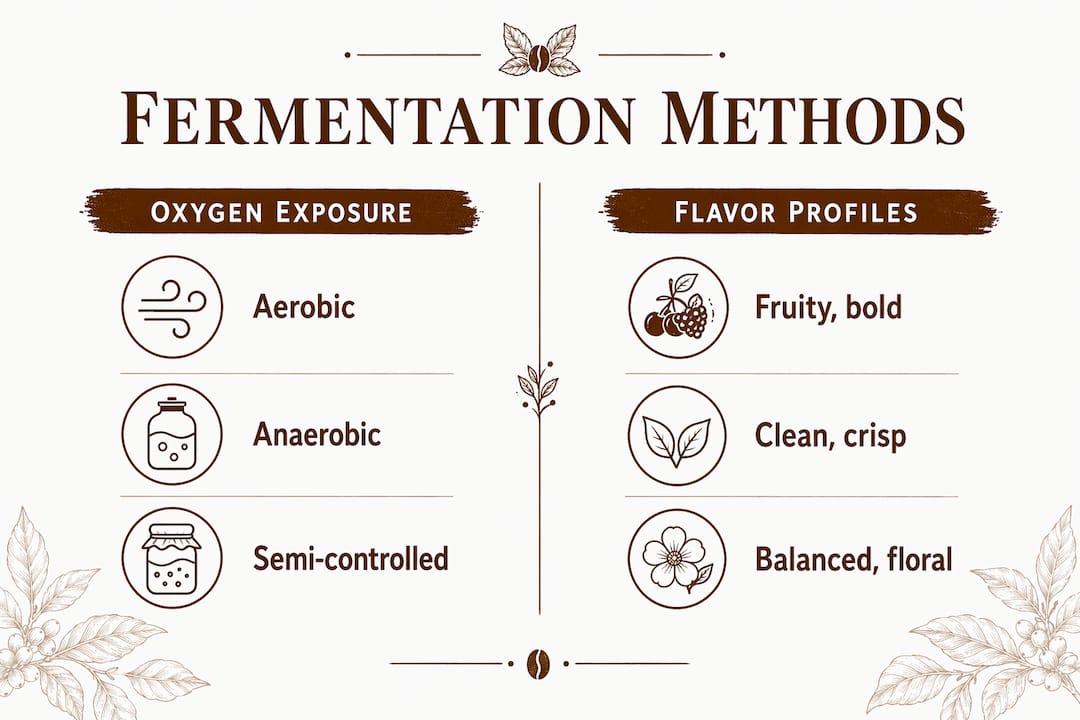
Not all fermentation is the same, and the method used at origin is the single biggest variable in the flavor profiles of fermented coffee. Natural, washed, and experimentally controlled methods each produce distinct sensory outcomes because they expose the bean to different microbial communities, oxygen levels, and fermentation durations.
| Fermentation method | Oxygen exposure | Fermentation duration | Typical flavor profile |
|---|---|---|---|
| Natural (dry process) | High | 2 to 6 weeks | Bold fruit, wine, berry, heavy body |
| Washed (wet process) | Low | 12 to 72 hours | Clean, bright acidity, floral, lighter body |
| Modified atmosphere (sealed CO2) | None | Controlled | Balanced acidity, preserved chlorogenic acids, reduced defects |
| Kombucha inoculated | Controlled | Variable | Sweet, floral, fruity with elevated ester complexity |
| Lactic acid bacteria and yeast | Controlled | Variable | Bright acidity, complex aroma, consistent quality |
Natural processing produces bold, fruit-forward coffees because prolonged fermentation generates high concentrations of esters and alcohols. The bean sits inside the whole cherry for weeks, giving microbes extended access to sugars and time to build volatile compounds. The trade-off is inconsistency. Without controlled conditions, natural fermentation can produce defects including over-fermented or “barnyard” notes.
Modified atmosphere fermentation, where coffee cherries ferment in sealed CO2 environments, inhibits sucrose consumption and preserves chlorogenic acids, improving sensory scores and reducing defect risk. This approach gives producers precise control over the fermentation environment without requiring microbial inoculation, making it practical at scale.
Kombucha-inoculated fermentation takes control further. Phenethyl acetate increases by 200% and ethyl isovalerate by 89% in kombucha-inoculated batches compared to uninoculated controls, correlating directly with elevated sweet, floral, and fruity sensory scores. These are not subtle differences. They represent a fundamentally different cup character driven by targeted microbial activity.
Semi-controlled fermentation using commercial lactic acid bacteria and yeast improves consistency and sensory profiles, yielding superior aroma and flavor complexity across SCA scoring categories including fragrance, acidity, body, and balance. For producers who want the flavor benefits of fermentation without the risk of defects, inoculated fermentation is the most reliable path.
What sensory effects should home brewers expect from fermentation differences?
When you brew two coffees processed with different fermentation methods side by side, the differences are not subtle. Fermentation enhances sweetness, acidity, body, and complexity in ways that are immediately perceptible to anyone who has spent time developing tasting notes with intention.
Here is what to expect across the main sensory dimensions:
- Sweetness increases when fermentation builds sugar-derived esters and reduces harsh chlorogenic acids. Natural process coffees often taste sweeter than their washed counterparts even at identical roast levels.
- Acidity shifts in character depending on which organic acids dominate. Lactic acid produces a soft, creamy acidity. Acetic acid produces a sharper, wine-like brightness. Citric acid contributes a clean, fruit-forward lift.
- Body tends to be heavier in naturally processed coffees because higher lipid and ester concentrations increase mouthfeel. Higher concentrations of linoleic acid correlate with improved sensory quality, while elaidic acid correlates negatively.
- Aroma complexity is the most direct expression of fermentation quality. Fruity and floral notes result from esterification and Maillard reactions enhanced by fermentation-induced precursor remodeling.
- Aftertaste length and cleanliness reflect fermentation control. Well-managed fermentation produces a long, clean finish. Poorly managed fermentation leaves astringent or sour defects.
The SCA cupping protocol scores coffee across these dimensions on a 100-point scale, and reliable sensory evaluation demands standardized protocols alongside controlled roast and brew parameters to isolate fermentation effects. If you change your grind size or water temperature between two cups, you cannot attribute taste differences to fermentation. Control the variables you can control, and the fermentation signal becomes clear. You can also read about why coffee smells better than it tastes to understand how aroma compounds from fermentation behave differently in the nose versus the cup.
Practical tips for home brewers exploring fermentation variables
Most home brewers cannot control fermentation at origin, but you can make informed purchasing decisions and evaluate fermentation effects systematically. The goal is to isolate fermentation as a variable rather than attributing every flavor difference to the wrong cause.
- Buy coffees with documented processing information. Roasters who specify natural, washed, honey, or experimental fermentation methods give you the data you need to connect processing to flavor. Vague “single origin” labeling tells you nothing about fermentation.
- Compare processing methods side by side. Brew a natural process and a washed process from the same origin, same roast level, and same roaster. Keep brew parameters identical. The flavor differences you taste are fermentation effects.
- Control your roast and brew variables first. Imprecise comparisons without standardized brewing controls can misattribute flavor differences to fermentation rather than roast or extraction variability. Use the same grind, dose, water temperature, and brew time for every comparison.
- Document your results. Write tasting notes immediately after brewing. Note acidity type, sweetness level, body weight, and specific aroma descriptors. Over time, patterns emerge that connect processing methods to predictable flavor outcomes.
- Understand that fermentation duration is not the only variable. Metabolic direction via oxygen availability, temperature, and microbial inoculation exerts stronger control on flavor outcomes than fermentation duration alone. A 48-hour washed fermentation in a sealed CO2 environment produces a completely different cup than a 48-hour open-air fermentation.
Pro Tip: When evaluating fermented coffees, brew at a consistent water temperature of 200°F and use a fixed brew ratio of 1:15 coffee to water. This removes extraction as a variable and lets fermentation character come through clearly.
Yeast fermentation enhances fruity and floral notes via organic acid and volatile compound synthesis, while lactic acid bacteria contribute to acidity and freshness. Knowing which microbes were used in a coffee’s fermentation tells you what flavor direction to expect before you even open the bag.
What science links fermentation chemistry to roasting and cup quality?
The connection between fermentation and roasting is not two separate processes. They are one integrated flavor system. Fermentation-induced ester production increases during medium roasting due to lowered activation energy, meaning the roast amplifies what fermentation built rather than replacing it.
| Fermentation input | Roasting outcome | Cup character |
|---|---|---|
| Elevated free amino acids | Enhanced Maillard reaction | Nutty, caramel, chocolate notes |
| Increased esters | Amplified ester volatilization | Fruity, floral, wine-like aromas |
| Organic acid-salt complexes | Lowered activation energy for reactions | Greater flavor complexity at medium roast |
| Preserved chlorogenic acids | Reduced bitterness development | Cleaner, more balanced cup |
| Lactic and acetic acid accumulation | Acidity modulation during roasting | Bright, layered acidity in the cup |
Microbial community composition drives the metabolic pathways that determine which precursors accumulate. A fermentation dominated by Saccharomyces cerevisiae produces a different precursor pool than one dominated by Lactobacillus species, and the roaster works with whatever the fermentation left behind. This is why understanding coffee roast levels matters when evaluating fermented coffees. A light roast preserves fermentation-derived acids and esters. A dark roast burns them off and replaces them with roast-derived compounds.
SCA sensory evaluation and chemical analyses confirm that increased esters and aroma complexity are directly linked to precursor reshaping during fermentation. The science is not theoretical. It is measurable in the cup with standardized protocols, and it gives home brewers a framework for understanding why two coffees from the same farm can taste completely different based on processing alone.
Key takeaways
Fermentation is the primary driver of flavor complexity in specialty coffee, and controlling microbial environment matters more than controlling fermentation time.
| Point | Details |
|---|---|
| Fermentation reshapes precursors | Microbial activity builds amino acids and esters that roasting later converts into aroma compounds. |
| Method determines flavor direction | Natural, washed, and inoculated fermentations produce fundamentally different sensory profiles. |
| Microbial control beats duration | Oxygen, temperature, and microbial species exert stronger flavor control than fermentation time alone. |
| Standardized evaluation is required | Controlling roast and brew variables is necessary to accurately attribute flavor differences to fermentation. |
| Roasting amplifies fermentation | Medium roasting increases ester production from fermentation-built precursors, integrating both processes into one flavor system. |
Why fermentation is the variable most home brewers underestimate
Here is what I have come to believe after spending years tasting coffees from dozens of origins and processing methods: most home brewers obsess over grind size and water temperature while treating the coffee itself as a fixed input. Fermentation is where the real flavor decisions were made, often months before the bag reached your shelf.
The research on biomimetic fermentation changed how I think about this. When free amino acids triple and ester generation increases threefold through controlled fermentation, that is not a marginal difference. That is a fundamentally different coffee. The roaster did not create that complexity. The fermentation did.
What I find most useful in practice is buying from roasters who publish detailed processing information. Not just “natural process” but which microbes were used, what the fermentation environment looked like, and how long it ran. That information tells you more about what is in the bag than any tasting note. Tasting notes describe the outcome. Processing information describes the cause.
The other thing I keep coming back to is that fermentation is variable in ways that duration alone cannot explain. A coffee fermented for 72 hours in a sealed CO2 environment and a coffee fermented for 72 hours in open air are not the same coffee. The atmosphere, the microbial community, and the temperature all matter more than the clock. Once you internalize that, you stop asking “how long was it fermented?” and start asking “how was the fermentation managed?” That is the right question.
— Kristopher
Taste fermentation’s impact in every cup
The flavor complexity that fermentation builds deserves a cup worth drinking from. At Dkbeanleaf, you will find specialty coffees sourced with processing transparency, so you can taste the difference between natural, washed, and experimentally fermented origins for yourself. If you want to expand your palate beyond coffee, the specialty tea collection offers fermented and oxidized teas that show the same precursor chemistry at work in a completely different plant.

Pair your next fermentation experiment with a white glossy mug designed to let the aroma open up before the first sip. Dkbeanleaf carries the gear and the knowledge to help you taste with intention, not just habit.
FAQ
What does fermentation do to coffee flavor?
Fermentation modifies sugars, amino acids, and organic acids inside the coffee bean, building precursor compounds that roasting later converts into fruity, floral, and complex aroma notes. The microbial activity during fermentation sets the flavor ceiling for everything the roast can develop.
Which fermentation method produces the most complex flavor?
Kombucha-inoculated and semi-controlled fermentations using lactic acid bacteria and yeast produce the highest flavor complexity, with phenethyl acetate increasing by 200% compared to uninoculated controls. Natural process fermentation also produces bold complexity but with higher defect risk.
How does fermentation affect coffee acidity?
Fermentation generates lactic, acetic, and citric acids through microbial metabolism, each contributing a different acidity character. Lactic acid produces soft, creamy acidity, while acetic acid creates a sharper, wine-like brightness in the cup.
Can home brewers influence fermentation flavor?
Home brewers cannot control fermentation at origin, but they can compare processing methods systematically by holding roast level and brew parameters constant. Buying from roasters who publish detailed fermentation data is the most direct way to explore how fermentation changes coffee flavor.
Why does fermentation time matter less than people think?
Oxygen availability, temperature, and microbial species exert stronger control over flavor outcomes than fermentation duration alone. A 48-hour sealed CO2 fermentation and a 48-hour open-air fermentation produce completely different precursor profiles and cup characters.