

How Coffee Acidity Affects Taste: a Flavor Guide
Coffee acidity is defined as the sensory quality that gives coffee its brightness, liveliness, and complexity. It is not the same as stomach acidity or pH level. Understanding how coffee acidity affects taste means recognizing it as a flavor attribute, not a chemical measurement. The key acids in coffee, including citric, malic, acetic, and lactic, each shape what you taste in the cup. Professional tasters and the Specialty Coffee Association both recognize acidity as a positive, desirable trait in high-quality coffee. Once you understand what drives it, every cup becomes easier to read.
How coffee acidity affects taste: the acid chemistry behind every sip
Citric acid is the dominant acid in brewed coffee and the only organic acid that consistently exceeds sensory detection thresholds. Every other acid, including malic, acetic, lactic, and chlorogenic, works below that threshold. They contribute to the overall flavor through synergism, meaning their combined effect is greater than any single acid alone.
Here is what each major acid brings to the cup:
- Citric acid delivers the bright, lemon-like sharpness you notice in light-roasted Ethiopian or Kenyan coffees.
- Malic acid adds a softer, apple-like tartness common in washed Central American coffees.
- Acetic acid at low levels contributes a wine-like complexity. At high levels, it reads as vinegar.
- Lactic acid creates a creamy, smooth mouthfeel found in naturally processed coffees.
- Chlorogenic acids are the most abundant acids in green coffee. They break down during roasting and contribute to bitterness in darker roasts.
Citric acid starts at 8–13 g/kg in green coffee and drops to 1–3 g/kg in dark roasts. That dramatic decline explains why a dark roast tastes so different from a light roast, even when brewed the same way.
Pro Tip: If your coffee tastes flat and one-dimensional, low citric acid from over-roasting is often the cause. Try a light or medium roast from a high-altitude origin to restore brightness.
Perceived acidity is shaped by chemical composition and how sensory elements interact, not just pH. A coffee can have a low pH and still taste smooth if its acid types favor lactic over citric. The reverse is also true.
How does roasting level change acidity and flavor?
Roast level is the single biggest variable in controlling acidity. Lighter roasts preserve more natural acids, resulting in higher perceived acidity and fruit-forward flavor. Darker roasts degrade those acids and increase bitterness.
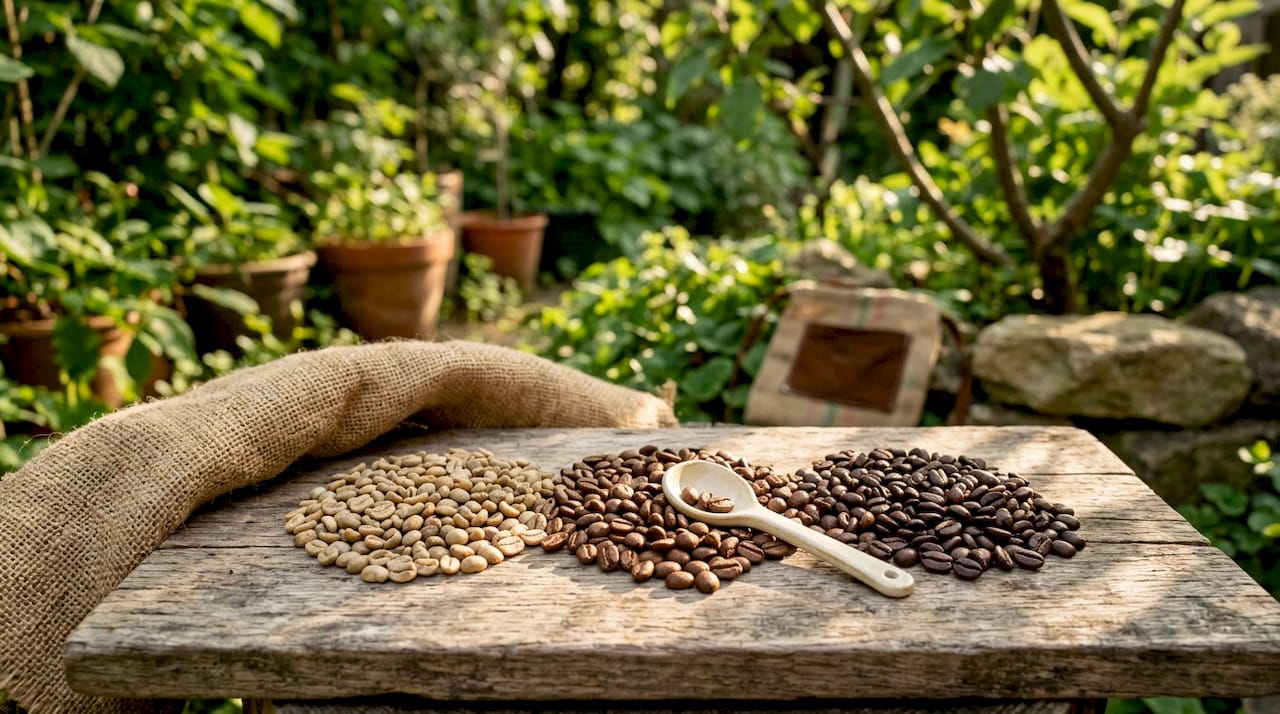
The shift happens in stages. Light roasts retain most of the citric and malic acids from the green bean. The cup tastes bright, sometimes tart, with floral or fruity notes. Medium roasts reduce those acids moderately. The result is a more balanced cup with less sharpness and more caramel or nutty character. Dark roasts break down citric and malic acids almost entirely. Chlorogenic acids decompose into bitter compounds, which is why a dark espresso roast tastes bold and bitter rather than bright.
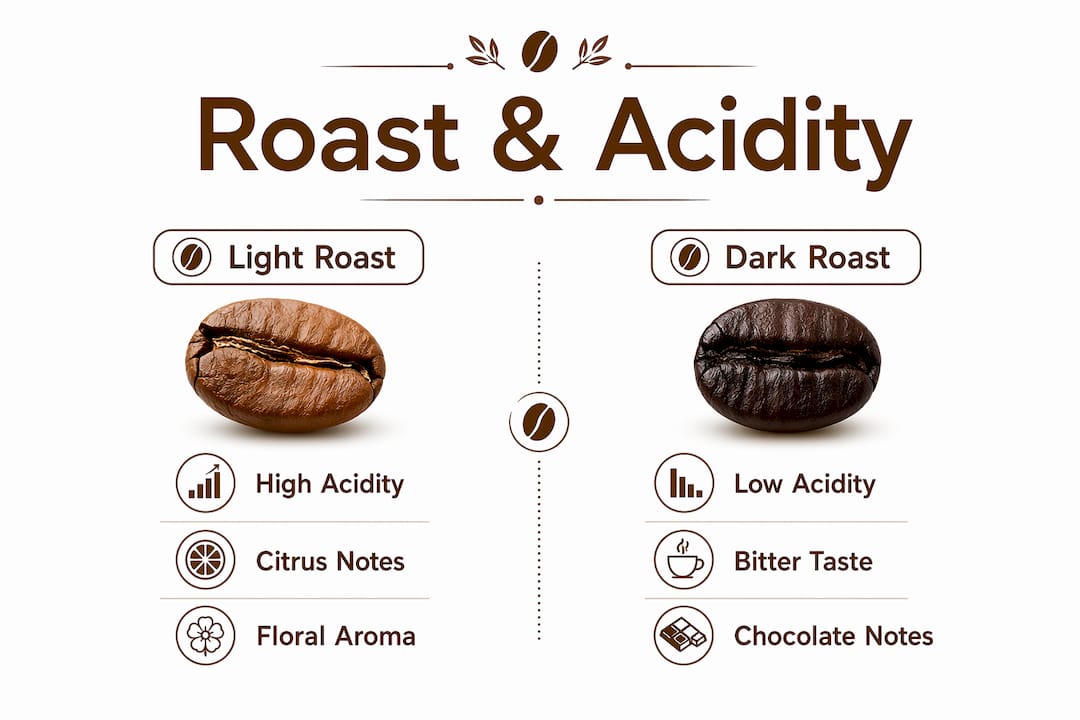
Dark roasting reduces perceived acidity because heat degrades fruit-forward acids while increasing bitterness from chlorogenic acid breakdown products. That bitterness is not a flaw. It is a chemical outcome of the roasting process.
| Roast level | Acidity level | Dominant flavor notes |
|---|---|---|
| Light | High | Citrus, berry, floral, tea-like |
| Medium | Moderate | Caramel, stone fruit, mild brightness |
| Dark | Low | Bitter, chocolate, smoky, bold |
Pro Tip: If you want to taste acidity clearly, brew a light roast as a pour-over or drip. Those methods highlight brightness better than espresso, which compresses the flavor range.
For a deeper look at how heat reshapes flavor compounds, the Dkbeanleaf guide on roasting and flavor science covers the full chemistry in plain language.
How do brewing methods and water chemistry affect acidity?
Brewing choices shape how much acidity you actually taste, even when the roast level stays the same. Acids dissolve early in the extraction sequence, meaning brightness peaks before sweetness and bitterness fully develop. A short brew time or coarse grind pulls more acid and less of everything else.
Water chemistry matters just as much as brew time. Two key minerals change the experience significantly:
- Magnesium enhances flavor clarity and increases perceived acidity without changing the actual acid content in the cup. Water with higher magnesium levels makes the same coffee taste brighter and more defined.
- Bicarbonate buffers acid. High bicarbonate water neutralizes acids chemically, reducing perceived acidity regardless of how much acid the coffee contains. Many municipal water supplies are high in bicarbonate, which is why the same coffee can taste flat at home and vibrant at a specialty café.
Magnesium enhances flavor clarity, increasing acidity perception without increasing actual acid content. Bicarbonate buffers actual acid levels, reducing chemical acidity. These two minerals pull in opposite directions, and your tap water likely favors one of them.
Cold brew is the most dramatic example of how method changes acidity. Cold brew shows 28–50% lower titratable acidity compared to hot brewing. That lower acidity is why cold brew tastes smoother and less sharp, not because the beans are different, but because cold water extracts fewer acids over time.
Pro Tip: If your water is heavily treated or tastes mineral-heavy, try filtered water with a target bicarbonate level below 50 mg/L. The difference in cup brightness can be significant.
What tasting cues tell you about acidity levels?
Acidity is one of the most useful diagnostic tools a home brewer has. Once you know what to look for, the cup tells you exactly what went wrong or right.
-
Sharp, thin, and sour. This is the signature of under-extraction. Under-extracted coffee exhibits sharp acidity without balance, because acids dissolve first and the sweetness never catches up. The fix is a finer grind, longer brew time, or hotter water.
-
Flat, bitter, and hollow. This signals over-extraction. Over-extracted coffee tastes bitter and hollow, masking both sweetness and acidity. The acids were there, but the bitter compounds overwhelmed them. Coarser grind or shorter brew time corrects this.
-
Vibrant and bright with sweetness underneath. This is the target. Professional cuppers evaluate acidity intensity and quality separately. High intensity with good quality reads as vibrant and complex. High intensity with poor quality reads as sour and unpleasant. The difference is balance.
-
Smooth and low-key. This is typical of dark roasts or cold brew. Not a flaw, but a deliberate outcome of roast level or brew method.
Acidity helps diagnose extraction: sharp, thin cups usually indicate under-extraction, while flat or bitter cups often show over-extraction or excessive roasting. That single principle gives you a clear direction every time a cup disappoints.
A common misconception is that low acidity means stomach-friendly coffee. Perceived brightness differs from the compounds that cause digestive sensitivity. A smooth-tasting dark roast can still irritate the stomach, while a bright light roast may not.
Acidity functions similarly to brightness in dry white wine or the snap of fresh fruit. It adds complexity and prevents a flat, one-dimensional taste. Without it, coffee loses the quality that makes it interesting.
For more on how growing conditions set the acid baseline before roasting even begins, the Dkbeanleaf article on altitude and coffee flavor explains how elevation shapes acid content in the green bean.
Key Takeaways
Acidity is the defining flavor attribute that separates a bright, complex cup from a flat or bitter one, and roast level, brewing method, and water chemistry all control how much of it you taste.
| Point | Details |
|---|---|
| Acidity is a flavor attribute | Sensory acidity differs from pH and digestive acidity. It signals brightness and complexity. |
| Citric acid drives brightness | Citric acid is the only coffee acid exceeding sensory thresholds. It drops sharply in dark roasts. |
| Roast level controls acid content | Light roasts preserve acids. Dark roasts degrade them and increase bitterness instead. |
| Water chemistry shifts perception | Magnesium boosts perceived acidity. Bicarbonate buffers it, making coffee taste flatter. |
| Extraction balance is the goal | Under-extraction produces sour sharpness. Over-extraction produces bitter flatness. Aim for the middle. |
Why acidity changed how I taste every cup
I spent years thinking acidity in coffee was a flaw. If a cup tasted sharp, I assumed something was wrong with the beans or the brew. It took one well-made Ethiopian pour-over to flip that assumption completely.
The brightness in that cup was not sourness. It had sweetness underneath it, a clean finish, and layers that unfolded as it cooled. That is what good acidity does. It adds dimension the way a squeeze of lemon lifts a dish without making it taste like citrus.
The most useful shift I made was treating acidity as a diagnostic signal rather than a preference. When a cup tastes sour and thin, I know to adjust extraction. When it tastes flat and heavy, I know the roast went too dark or the brew ran too long. Acidity tells you where you are in the process.
The other thing worth knowing is that water matters more than most people realize. I switched to filtered water with lower bicarbonate, and the same beans I had been drinking for months suddenly tasted brighter and more defined. No new equipment, no new technique. Just water.
My advice is to start with a light roast from a single origin, brew it as a pour-over, and pay attention to where the flavor lands. If it tastes sour, adjust. If it tastes vibrant with sweetness behind it, you have found the target. That experience teaches you more about coffee flavor than any chart or guide.
— Kristopher
Bright cups start with the right beans and the right mug
Tasting acidity at its best means starting with quality coffee and brewing it in a way that lets the flavor speak. At Dkbeanleaf, the tea collection features selections with nuanced brightness and clean flavor profiles, ideal for drinkers who appreciate the same complexity they find in a well-made light roast.

For coffee drinkers who want to explore different roast levels and flavor profiles, Dkbeanleaf carries mugs and cups designed to hold heat evenly and let you focus on what is in the cup. The white glossy mug is a clean, practical choice for tasting sessions at home. Good flavor starts with good beans, good water, and a cup that does not get in the way.
FAQ
What is coffee acidity in terms of flavor?
Coffee acidity is a sensory quality that creates brightness, liveliness, and complexity in the cup. It is not the same as pH or stomach acidity.
Does dark roast coffee have less acidity?
Yes. Dark roasting degrades citric and malic acids, reducing perceived brightness and increasing bitterness from chlorogenic acid breakdown.
Why does my coffee taste sour?
Sour taste usually signals under-extraction. Acids dissolve first during brewing, and without enough extraction, sweetness never develops to balance them.
Does water affect how acidic coffee tastes?
Yes. Magnesium-rich water increases perceived acidity. High-bicarbonate water buffers acids and makes coffee taste flatter, regardless of the actual acid content.
Is low-acidity coffee easier on the stomach?
Not necessarily. Perceived brightness differs from the compounds that cause digestive sensitivity. A smooth-tasting dark roast can still irritate the stomach.