

How to Pair Coffee with Breakfast Foods Like a Pro
Pairing coffee with breakfast foods is the practice of matching a coffee’s roast level, origin, and flavor profile to a specific dish so both taste better together. A dark roast Colombian espresso next to eggs Benedict is not an accident. It is a deliberate choice that uses coffee’s bitterness to cut through hollandaise fat and reset the palate between bites. The right coffee breakfast combination turns a routine morning into something worth slowing down for. This guide covers the specific pairings, sensory principles, and step-by-step methods you need to do it well.
How to pair coffee with breakfast foods using roast and origin
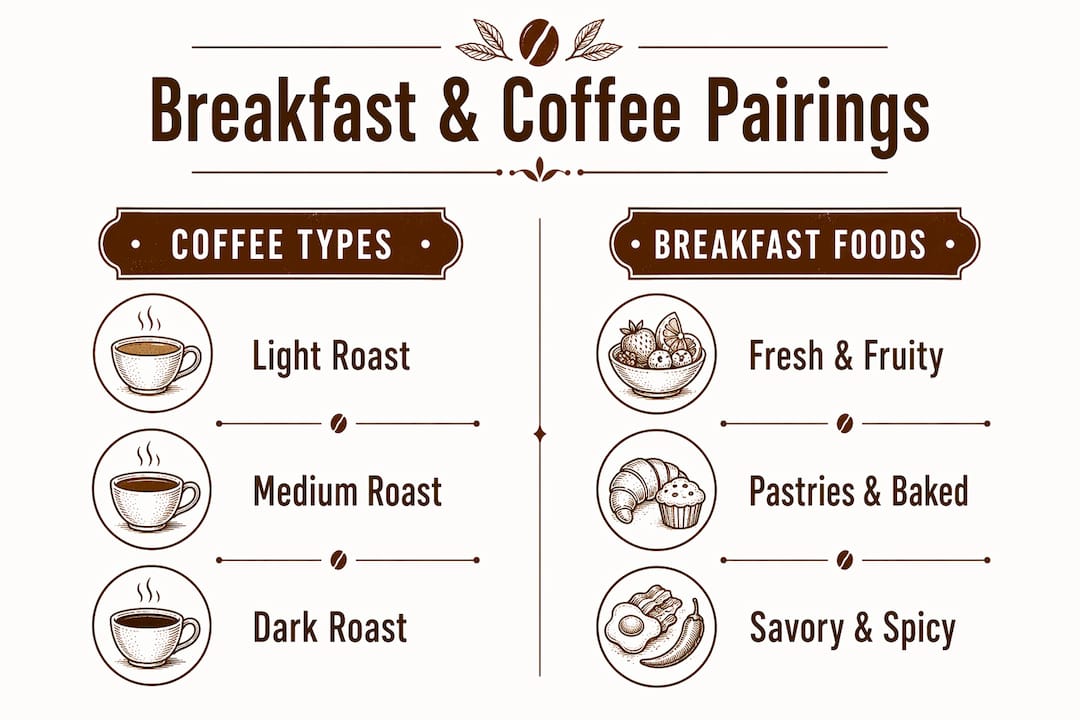
The roast level is the single most useful starting point for any breakfast pairing. Light roasts are bright and acidic with floral or citrus notes. Medium roasts are balanced, often nutty or caramel-forward. Dark roasts are bold, bitter, and low in acidity.
Regional origin is the most significant indicator of a coffee’s pairing potential because geography shapes flavor more than almost any other factor. Ethiopian and Kenyan coffees carry fruity acidity that echoes fresh fruit dishes. Colombian and Brazilian beans bring chocolate and nutty notes that work across a wide range of breakfast foods.
Understanding these traits before you brew changes everything. A light roast Ethiopian coffee with berry notes will clash with a rich, cheesy omelet. That same coffee alongside a fresh fruit bowl with yogurt is a natural match because the fruity acidity mirrors the dish rather than fights it.
- Light roast (Ethiopian, Kenyan): Bright, floral, citrus or berry notes. Best with fresh fruit, yogurt parfaits, and light pastries.
- Medium roast (Central American, Colombian): Nutty, caramel, mild chocolate. Best with pancakes, croissants, and breakfast sandwiches.
- Dark roast (Brazilian, Sumatran): Bold, smoky, low acidity. Best with savory dishes, bacon, and rich egg preparations.
- Espresso: Concentrated and intense. Best with buttery, flaky textures that absorb its strength without being overwhelmed.
Pro Tip: Read the tasting notes on your coffee bag before choosing a breakfast. If the bag says “blueberry and jasmine,” reach for yogurt and granola. If it says “dark chocolate and walnut,” reach for a croissant or a breakfast sandwich.
Which breakfast foods pair best with different coffee types?
The best coffee and food pairings work because the flavors either mirror each other or create a productive contrast. Neither element should overpower the other. The goal of pairing is a tasting experience where coffee and food elevate each other, with no single flavor dominating.
Pastries and baked goods
Croissants and danishes are the most forgiving breakfast items to pair with coffee. Their buttery, layered texture absorbs intensity without losing character. A medium roast Central American coffee with caramel notes is the classic match. Espresso-based drinks like cappuccinos work especially well here because the creamy texture contrasts the flaky, dry layers of a croissant, creating a sensory balance that neither drink nor pastry achieves alone.
Savory breakfast dishes
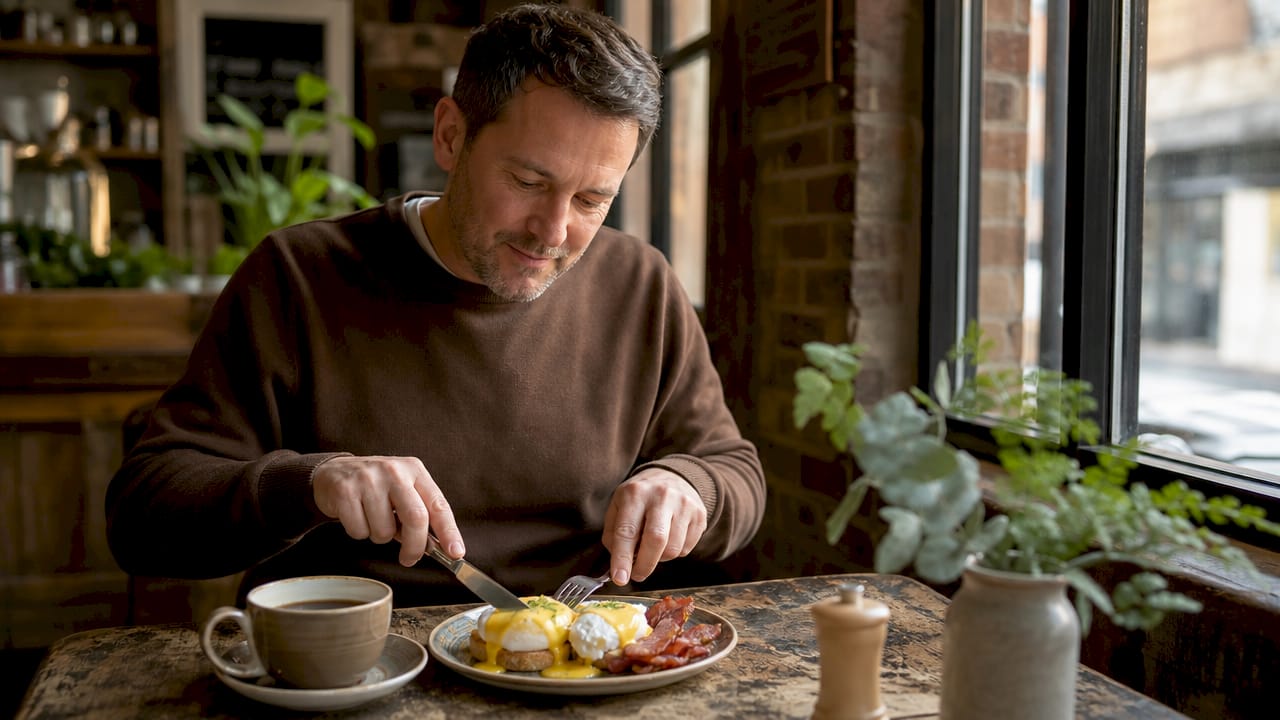
Eggs Benedict, bacon, and breakfast sandwiches call for a coffee that can cut through fat. Coffee acidity acts as a palate cleanser that prevents oily flavors from building up on the tongue. A medium roast Colombian or a dark roast Brazilian handles this job well. Urban cafés like La Sandwicherie in Miami’s Brickell neighborhood serve espresso with savory croissant sandwiches filled with ham and cheese, a combination where the coffee’s acidity complements the fat in the cheese and meat directly.
Sweet breakfast items
Pancakes with maple syrup need a coffee that matches their sweetness without amplifying it into excess. Central American medium roast coffees with nutty or caramel notes are the optimal choice here. Their natural sweetness echoes the maple syrup while their mild acidity keeps the pairing from feeling heavy.
Here is a quick reference for the most common coffee breakfast combinations:
| Breakfast food | Best coffee match | Why it works |
|---|---|---|
| Croissant | Cappuccino or medium roast | Creamy texture contrasts flaky layers |
| Pancakes with maple syrup | Central American medium roast | Caramel notes echo syrup sweetness |
| Eggs Benedict | Medium or dark roast Colombian | Acidity cuts hollandaise richness |
| Bacon and eggs | French press dark roast | Full-bodied flavor matches savory intensity |
| Fresh fruit bowl | Light roast Ethiopian | Fruity acidity mirrors the dish |
| Danish or sweet pastry | Dark roast espresso | Bitterness balances sweetness |
How do you balance flavor and texture in coffee and food pairings?
Flavor balance in coffee and food pairing follows two rules: complement or contrast. Complementing means choosing a coffee whose flavor notes echo the dish. Contrasting means choosing a coffee whose character pushes back against the dish to create tension that makes both more interesting.
Texture is equally important and often overlooked. Texture in coffee and food pairing is as critical as flavor. A creamy cappuccino next to a buttery croissant creates contrast because the wet, smooth coffee meets the dry, airy pastry. That contrast is what makes the combination feel complete.
The most common mistake is using a light roast acidic coffee with delicate egg dishes. Pairing light roast acidic coffee with eggs can cause bitter clashes that make both the coffee and the eggs taste off. Medium roasts offer better harmony with eggs because their lower acidity does not compete with the sulfur notes in cooked eggs.
- Use acidity to cut fat. A bright medium roast next to hollandaise or a cheese-heavy omelet cleanses the palate between bites.
- Use bitterness to balance sweetness. Bitter coffee balances sweet pastries by contrast, making the pastry taste sweeter without adding sugar.
- Match body to richness. A full-bodied French press coffee belongs next to a rich, savory breakfast. A delicate pour-over belongs next to lighter fare.
- Avoid acidity overload. Two highly acidic elements, like a light roast Ethiopian and a citrus fruit salad, can overwhelm the palate rather than complement it.
Pro Tip: Before committing to a pairing, take a sip of your coffee, eat one bite of your food, then sip again. If the second sip tastes better than the first, the pairing is working.
How to build your own coffee and breakfast pairings at home
Building your own pairings at home requires a small investment in variety. Stock at least one light roast, one medium roast, and one dark roast. Having a range lets you test and compare rather than guess.
Follow these steps to build pairings with confidence:
- Identify your coffee’s flavor profile. Read the bag’s tasting notes or use a coffee tasting notes guide to identify the dominant notes. Write them down.
- Identify your breakfast’s dominant flavors. Is it sweet, savory, fatty, acidic, or neutral? A pancake is sweet and starchy. Bacon is salty, fatty, and smoky.
- Match or contrast intentionally. Sweet breakfast plus bitter coffee equals contrast pairing. Fruity coffee plus fresh fruit equals complement pairing.
- Consider texture. A thick, creamy drink like a latte works better with dry, crunchy, or flaky foods. A thin, bright pour-over works better with creamy or soft foods.
- Taste and adjust. Brew a small amount, taste the pairing, and note what works. If the coffee overpowers the food, try a lighter roast. If the food overpowers the coffee, try a darker or more concentrated brew.
Here is a simple framework for home pairing decisions:
| Breakfast character | Coffee direction | Example |
|---|---|---|
| Very sweet | Bitter or dark roast | Cinnamon roll with dark espresso |
| Rich and fatty | Medium roast with acidity | Bacon with Colombian medium roast |
| Light and fresh | Light roast, fruity | Yogurt parfait with Ethiopian light roast |
| Neutral (toast, oatmeal) | Any medium roast | Oatmeal with Central American medium roast |
| Smoky or savory | Full-bodied dark roast | Smoked salmon with French press dark roast |
The most common mistake at home is brewing the same coffee every day regardless of what you are eating. Rotating your coffee bean origins based on your breakfast plan is the fastest way to notice how much the pairing changes your experience.
Key Takeaways
The most effective way to pair coffee with breakfast foods is to match the coffee’s roast level and origin to the dominant flavor and texture of the dish.
| Point | Details |
|---|---|
| Roast level drives pairing direction | Light roasts suit fresh and fruity dishes; dark roasts suit savory and sweet-heavy breakfasts. |
| Origin shapes flavor more than most factors | Ethiopian and Kenyan coffees echo fruit; Colombian and Brazilian beans work with rich, savory foods. |
| Bitterness balances sweetness | A dark roast or espresso next to a sweet pastry makes the pastry taste sweeter by contrast. |
| Acidity cuts fat | Medium roast acidity cleanses the palate when paired with hollandaise, bacon, or cheese. |
| Texture matters as much as flavor | Creamy drinks contrast dry, flaky foods; thin, bright coffees complement soft or creamy dishes. |
What I have learned from years of pairing coffee at breakfast
The pairing that changed how I think about morning coffee was a single-origin Ethiopian light roast next to a bowl of fresh strawberries and Greek yogurt. The coffee’s berry notes did not just complement the fruit. They made the strawberries taste more like strawberries. That kind of amplification is what good pairing actually does, and it is not complicated to achieve once you understand the logic.
The lesson I keep coming back to is that most people under-pair their coffee. They drink the same medium roast every morning regardless of whether they are eating a sweet Danish or a plate of scrambled eggs. Both pairings feel fine in isolation, but neither reaches its potential. The Danish would taste better with a dark espresso. The eggs would taste better with a medium Colombian.
My honest recommendation is to start with one intentional swap per week. Pick a breakfast you make regularly, then choose a coffee roast that either contrasts or complements its dominant flavor. Take notes. After a month, you will have a personal pairing map that reflects your actual taste preferences, not a generic guide. That personal map is worth more than any chart because it is built on what you actually enjoy eating and drinking.
— Kristopher
The right mug and coffee for your morning ritual
A great pairing starts with great coffee, and the vessel you drink it from matters more than most people expect.

At Dkbeanleaf, you will find coffee mugs and cups built for the kind of slow, intentional morning that good pairings deserve. The white glossy mug keeps your coffee at the right temperature long enough to work through a full breakfast without rushing. If you prefer something more durable for weekend mornings, the enamel mug is a solid choice. Dkbeanleaf also carries a curated tea collection for mornings when you want something lighter alongside your meal. The right cup does not just hold your coffee. It sets the pace for the whole morning.
FAQ
What coffee roast is best for a sweet breakfast?
A dark roast or espresso is the best match for very sweet breakfasts like cinnamon rolls or maple pancakes. The bitterness contrasts the sweetness, making the food taste sweeter without adding sugar.
Does coffee origin really affect breakfast pairings?
Yes. Regional origin is the most significant indicator of a coffee’s pairing potential. Ethiopian and Kenyan coffees suit fruity and light dishes; Colombian and Brazilian beans suit rich, savory, or chocolate-forward breakfasts.
What goes well with coffee at a savory breakfast?
Medium or dark roast coffees pair best with savory breakfasts like eggs Benedict, bacon, and breakfast sandwiches. Coffee acidity cuts through fat and prevents rich flavors from building up on the palate.
Can I pair espresso with food at breakfast?
Espresso pairs well with buttery, flaky pastries like croissants and with savory sandwiches. Urban cafés regularly serve espresso alongside croissant sandwiches filled with ham and cheese, where the coffee’s acidity complements the fat in the filling.
What is the biggest mistake in coffee and food pairing?
The most common mistake is pairing a light roast acidic coffee with delicate egg dishes. The acidity clashes with eggs and makes both taste off. A medium roast offers better harmony with egg-based breakfasts.