

Pour-Over Mug Shape: What It Means for Your Brew
A pour-over mug shape is defined by the geometry of the coffee dripper, not the cup itself. The three primary dripper shapes are conical, flat-bottomed, and wedge-shaped, and each one controls how water flows through your coffee grounds and what ends up in your cup. Understanding what is a pour-over mug shape means recognizing that the Hario V60, Kalita Wave, and Melitta each produce fundamentally different brews because of their physical form. Shape is not a cosmetic choice. It is a brewing variable with real flavor consequences.
What are the main pour-over dripper shapes?
The three standard dripper shapes each have distinct physical characteristics that separate them structurally and functionally. Knowing what sets them apart is the first step toward brewing with intention.
Conical (V-shaped): The Hario V60 is the most recognized conical dripper, built at a precise 60-degree angle with a single large drainage hole at the bottom. Water flows straight down through the center of the coffee bed, creating a fast, vertical extraction path. This design gives you maximum control over brew time, but it also means your pouring technique directly shapes the flavor.
Flat-bottomed: The Kalita Wave uses a flat base with three small drainage holes and a wavy filter that keeps coffee off the dripper walls. Water spreads laterally across the entire coffee bed before draining. This lateral water spread produces a more even extraction and a consistently sweet, balanced cup.
Wedge-shaped: The Melitta dripper uses a tapered wedge form with a single small hole at the bottom. It sits between conical and flat-bottomed in terms of flow rate and control. The Melitta is widely available and works well for brewers who want a slower, more forgiving extraction without committing to a specialty dripper.
| Shape | Example | Flow Rate | Flavor Profile |
|---|---|---|---|
| Conical | Hario V60 | Fast | Bright, acidic, complex |
| Flat-bottomed | Kalita Wave | Moderate | Sweet, balanced, consistent |
| Wedge-shaped | Melitta | Slow to moderate | Full-bodied, forgiving |
Each shape is a different tool. Choosing the right one depends on what you want from your cup and how much technique you want to invest.
How does dripper shape affect flavor and technique?
Dripper geometry is the primary control mechanism for water flow and extraction. The angle, ribs, and hole size of a dripper determine how long water stays in contact with coffee grounds and how evenly it saturates the bed.
Conical drippers like the Hario V60 promote fast, vertical water movement. That speed highlights bright acidity and floral or fruity notes in light roasts. The tradeoff is sensitivity. A slow pour produces a different cup than a fast one, so the V60 rewards practiced technique.
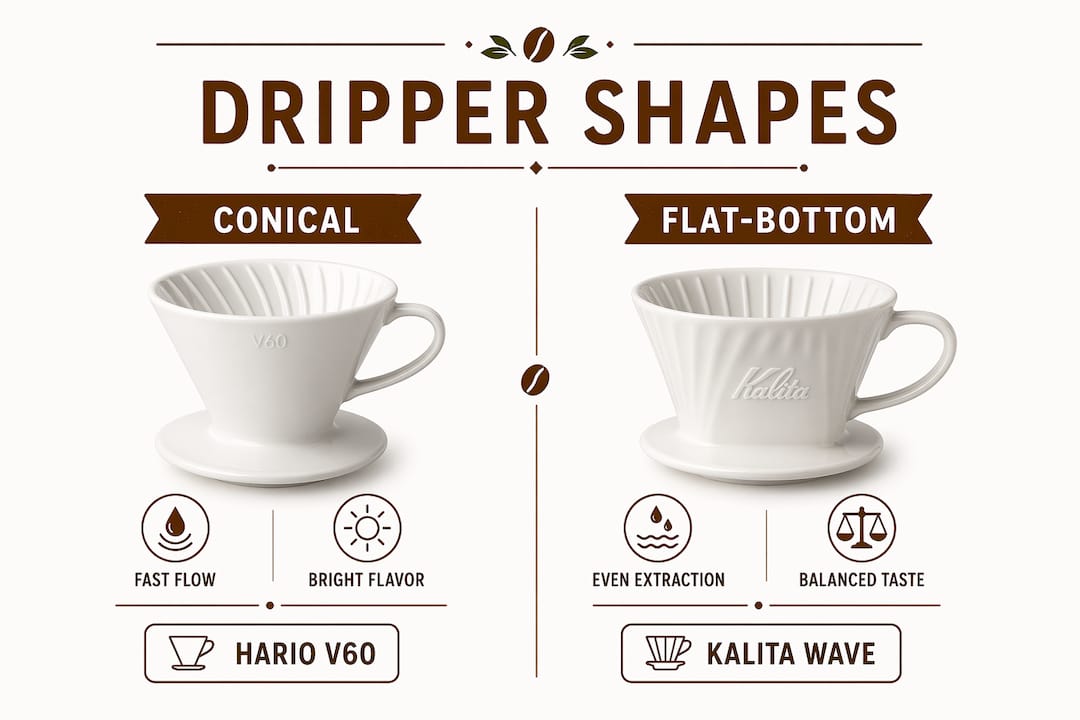
Flat-bottomed drippers like the Kalita Wave reduce bypass water, forcing all water through the coffee bed rather than along the filter sides. This produces uniform extraction and a sweeter, rounder flavor. Beginners consistently get better results with flat-bottomed designs because the margin for error is wider.
Key brewing variables directly shaped by dripper geometry:
- Extraction time: Conical drains faster; flat-bottomed holds water longer
- Channeling risk: Higher in conical drippers with uneven pours
- Flavor clarity: Conical highlights individual notes; flat-bottomed blends them
- Skill requirement: Conical demands precision; flat-bottomed rewards consistency
- Coffee type match: Light roasts shine in conical; medium and dark roasts favor flat-bottomed
Pro Tip: If you are new to pour-over brewing, start with a Kalita Wave or similar flat-bottomed dripper. Once you understand how grind size and water temperature affect your cup, move to a Hario V60 to explore flavor control. Read more about pour-over best practices before switching drippers.
What role does the actual mug shape play?
Most brewers focus entirely on the dripper and ignore the mug. That is a mistake. Mug rim curvature and wall thickness guide coffee flow onto the palate and steer aroma toward the nose, shaping the sensory experience in ways most people never notice.
The physical geometry of your mug changes what you taste and smell. Here is how:
- Rim thickness: A thin rim delivers coffee cleanly to the front of the palate. A thick rim spreads the flow and mutes precision.
- Bowl shape: Wide, open bowls release aroma freely but cool faster. Narrow, tall mugs concentrate aroma and hold heat longer.
- Mug height: Taller mugs direct your nose closer to the coffee surface, intensifying perceived aroma before you even take a sip.
- Wall angle: Outward-flaring walls spread coffee across the tongue. Straight walls concentrate it toward the center.
Wider mugs cool faster because of increased surface area, which accelerates oxidation and mutes delicate aromas. A narrow mug retains heat longer and preserves the flavor compounds that make a well-brewed cup worth drinking. This is not a minor difference. A light roast poured into a wide, shallow mug will taste noticeably flatter than the same coffee in a tall, narrow vessel.
Pro Tip: Pair a conical dripper brew with a narrow, tall mug to preserve the bright acidity and floral notes. Use a wider bowl mug with flat-bottomed dripper coffee to let the sweeter, rounder flavors open up as it cools. Learn more about choosing your mug size for the best sensory match.
How to choose the best pour-over dripper and mug shape
Matching your dripper and mug to your brewing goals is a practical decision, not a philosophical one. The right combination depends on three factors: your skill level, your preferred flavor profile, and how much time you want to spend on technique.
Brewers who value control should choose a conical dripper like the Hario V60. It rewards precision and produces the clearest expression of a coffee’s origin character. Brewers who value consistency should choose a flat-bottomed dripper like the Kalita Wave. It produces a reliable, sweet cup even when your technique is not perfect.
| Dripper Shape | Best For | Mug Pairing | Flavor Outcome |
|---|---|---|---|
| Conical (Hario V60) | Experienced brewers, light roasts | Tall, narrow mug | Bright, complex, acidic |
| Flat-bottomed (Kalita Wave) | Beginners, medium roasts | Wide bowl mug | Sweet, balanced, consistent |
| Wedge-shaped (Melitta) | Everyday brewing, dark roasts | Standard ceramic mug | Full-bodied, forgiving |
The mug material also matters. Ceramic retains heat well and does not transfer any flavor to the coffee. Enamel mugs are durable and hold temperature reliably, making them a strong choice for outdoor brewing or longer drinking sessions. Glass mugs let you see the color of your brew but lose heat quickly.
Pro Tip: Try the same coffee in a conical dripper paired with two different mugs: one wide and one narrow. The flavor difference will surprise you. This single experiment teaches you more about mug shape than any amount of reading. Explore the sensory side of coffee aroma to understand why the difference is so pronounced.
Common misconceptions about pour-over shapes
The biggest misconception in pour-over coffee is that the dripper shape alone determines cup quality. It does not. No shape is universally better. The outcome depends on how you use the dripper, what coffee you put in it, and how you drink the result.
Common errors home brewers make when choosing and using drippers and mugs:
- Choosing a dripper based on looks: The Hario V60 is visually striking, but it is the wrong tool for a brewer who does not want to practice technique.
- Ignoring filter type: Paper filters produce a cleaner cup than metal filters regardless of dripper shape. Switching filters changes the flavor more than switching drippers.
- Overlooking grind size: A coarse grind in a conical dripper produces under-extracted, weak coffee. Shape cannot compensate for wrong grind.
- Using the wrong mug: Pouring a delicate light roast into a wide, shallow mug wastes the work you put into brewing it.
- Assuming one shape fits all coffees: A dark roast brewed in a Hario V60 often tastes harsh. The same coffee in a Kalita Wave tastes smooth and approachable.
The terminology confusion is also real. Many people searching for “pour-over mug shape” are actually looking for dripper shape information. The industry term is dripper geometry, and it covers angle, rib design, and drainage hole configuration. Understanding that distinction helps you search for the right information and buy the right equipment.
Key takeaways
The dripper shape controls extraction; the mug shape controls the sensory experience, and both decisions matter for a great pour-over cup.
| Point | Details |
|---|---|
| Dripper shape drives flavor | Conical drippers highlight acidity; flat-bottomed drippers produce sweeter, balanced cups. |
| Mug geometry affects taste | Narrow mugs retain heat and concentrate aroma; wide mugs cool faster and mute delicate notes. |
| No shape is universally best | Match dripper shape to your skill level and target flavor profile for consistent results. |
| Filter and grind matter too | Shape cannot compensate for wrong grind size or mismatched filter type. |
| Experiment to learn fastest | Brewing the same coffee in different dripper and mug combinations reveals more than theory alone. |
Shape is where the ritual lives
by Kristopher
I spent two years brewing exclusively on a Hario V60 before I tried a Kalita Wave. My assumption was that the V60 was simply better because serious coffee people used it. That assumption was wrong. The Kalita Wave produced a more consistent cup for the coffees I was actually buying, which were medium roasts from Central America, not the delicate Ethiopian naturals the V60 is built to showcase.
What I learned is that shape is not a hierarchy. It is a conversation between the brewer, the coffee, and the cup. The V60 asks more of you. The Kalita Wave asks more of your coffee. Neither is superior. They are different instruments.
The mug side of this equation gets ignored almost entirely, and that bothers me. I switched from a wide ceramic bowl to a taller, narrower mug for my morning V60 brew and the aroma difference was immediate. The same coffee smelled more complex and tasted brighter. Nothing changed except the vessel. That is the kind of detail that separates a good cup from a great one.
My practical advice: buy one flat-bottomed dripper and one conical dripper. Brew the same coffee on both in the same week. Then try the same brew in two different mugs. You will stop thinking about shape as a technical variable and start thinking about it as a creative one. That shift is where home brewing gets genuinely interesting.
— Kristopher
Upgrade your pour-over setup with Dkbeanleaf
If you are ready to put shape theory into practice, the right mug makes a real difference from the first sip.

Dkbeanleaf carries a white glossy mug designed with the pour-over drinker in mind, offering clean heat retention and a rim profile that lets your coffee’s aroma reach you before you even drink. For brewers who want durability alongside performance, the enamel mug holds temperature reliably through long tasting sessions. Dkbeanleaf also offers a curated tea collection for those mornings when you want to step away from coffee without stepping away from the ritual. Every product is chosen to complement the way serious home brewers actually drink.
FAQ
What is a pour-over mug shape exactly?
A pour-over mug shape refers to the geometry of the coffee dripper, which is the filter holder used in pour-over brewing. The three main dripper shapes are conical, flat-bottomed, and wedge-shaped, each producing different flavor outcomes.
Does the hario v60 or kalita wave make better coffee?
Neither is objectively better. The Hario V60 produces brighter, more complex cups but requires precise technique, while the Kalita Wave delivers consistent, sweet results and suits beginners and medium roasts.
How does mug shape affect coffee flavor?
Mug rim thickness and bowl shape direct coffee flow onto the palate and steer aroma toward the nose. Narrow mugs retain heat longer and concentrate aroma; wide mugs cool faster and mute delicate flavor notes.
What is the best dripper shape for beginners?
A flat-bottomed dripper like the Kalita Wave is the best starting point. It reduces channeling risk, forces even water distribution through the coffee bed, and produces a forgiving, balanced cup even with imperfect technique.
Does filter type matter as much as dripper shape?
Filter type significantly affects cup clarity and body regardless of dripper shape. Paper filters remove oils and fine particles for a clean cup, while metal filters allow more body and texture through. Matching filter type to your flavor goals is as important as choosing the right dripper.