

Wet Processed Coffee: Flavor, Method, and Quality
Wet processed coffee is defined as coffee where the skin and pulp of the cherry are mechanically removed within hours of harvest, followed by fermentation and washing to strip away the remaining mucilage before drying. The industry standard term for this method is washed coffee, and the two names are used interchangeably across specialty coffee. The result is a cup that is cleaner, brighter, and more consistent than coffee processed by any other method. Regions like Ethiopia, Kenya, Colombia, and Guatemala produce some of the most celebrated washed coffees in the world, often showcasing varietals such as Bourbon, Typica, and SL28 with striking clarity.
What is wet processed coffee, step by step?
The wet coffee processing method begins at harvest. Ripe cherries must reach the wet mill and be pulped within 24 hours of picking. Delaying this step allows the fruit to begin fermenting unevenly on the bean, which creates off-flavors that no amount of roasting can fix.
- Harvesting. Only ripe, red cherries are selected. Selective hand-picking is standard at high-quality farms in Ethiopia and Colombia, where workers pass through the same trees multiple times during harvest season.
- Mechanical depulping. A pulping machine strips the outer skin and most of the pulp from the seed. The gap setting on the pulper is critical. An incorrect gap causes nicks or crushed beans, which leads to unpleasant fermented flavors in the final cup.
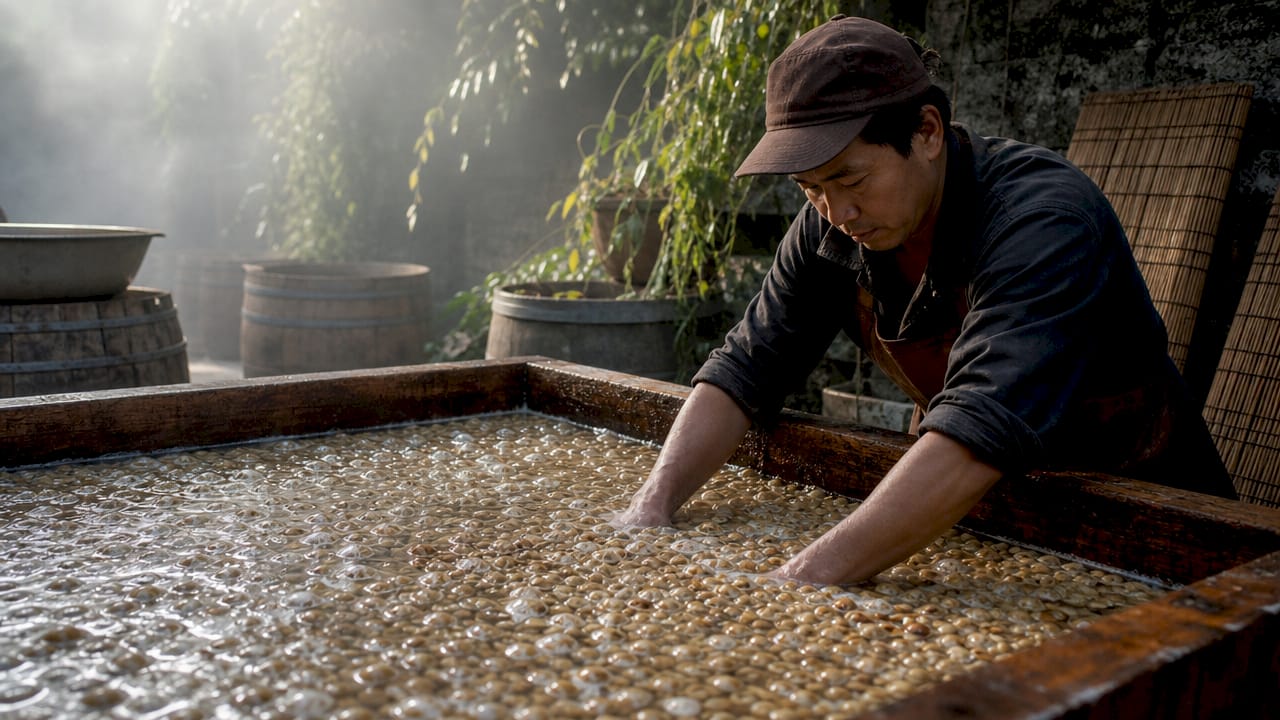
- Fermentation. The depulped beans, still coated in a sticky layer called mucilage, go into water tanks. Fermentation lasts 12–36 hours, during which naturally occurring microbes break down the mucilage enzymatically. The duration depends on altitude, ambient temperature, and the desired flavor outcome.
- Washing. After fermentation, the beans are flushed with clean water to remove all residual mucilage. This step is where the “washed” name comes from. Thorough washing prevents any sticky residue from causing inconsistency during drying.
- Drying. Beans dry on raised beds or patios until they reach 10–12% moisture content. Hitting that target is non-negotiable for storage stability and consistent roasting behavior.
Pro Tip: Calibrate your pulper gap before every harvest season. Even a small misalignment creates mechanical defects that show up as sour or fermented notes in the cup, and those defects are irreversible once the bean is damaged.
Understanding how fermentation affects flavor at each stage helps both producers and coffee enthusiasts appreciate why precision in this step matters so much.
How does wet processing change coffee flavor?
Washed coffee produces a flavor profile that is clean, bright, and high in defined acidity. Common tasting notes include jasmine, black tea, lemon, and lime, with a crisp, lingering finish. These descriptors are not marketing language. They reflect the actual chemical compounds that emerge when fruit contact is minimized during drying.
The contrast with dry processed coffee is significant. Natural or dry processed coffee dries with the entire cherry intact. The bean sits in contact with the fruit sugars for weeks, absorbing sweetness and body. The result is a heavier, fruitier cup, often described as blueberry, strawberry, or tropical fruit. That profile is appealing, but it masks the bean’s inherent character.
Washed coffee does the opposite. By removing the fruit early, the method highlights terroir and varietal traits without fruit-derived interference. A Kenyan SL28 processed as a washed coffee will express the volcanic soil and high altitude of its origin far more clearly than the same bean processed naturally. This is why washed coffees are the standard for origin evaluation in specialty coffee competitions and Q-grading sessions.
| Attribute | Wet processed (washed) | Dry processed (natural) |
|---|---|---|
| Flavor clarity | High | Lower |
| Acidity | Bright, defined | Softer, rounded |
| Body | Light to medium | Full, heavy |
| Typical notes | Jasmine, lemon, black tea | Blueberry, strawberry, chocolate |
| Drying time | 7–14 days | 14–42 days |
| Terroir expression | Strong | Moderate |
| Consistency | High | Variable |
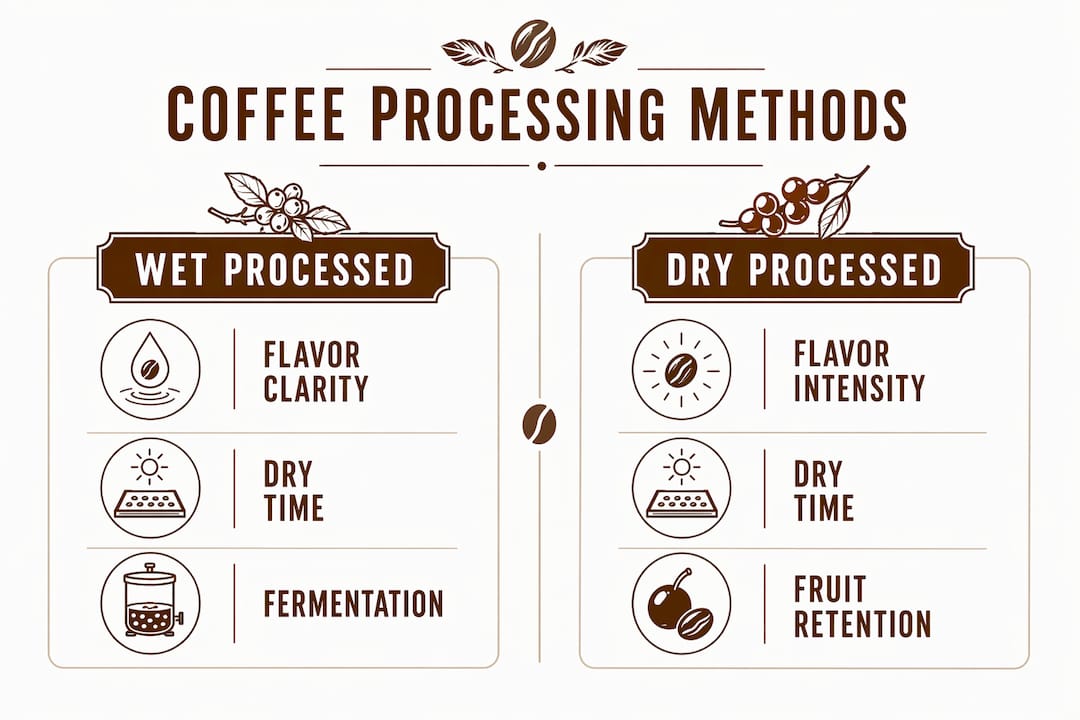
Washed coffee is also the preferred baseline for roasters learning a new origin. The clean profile makes it easier to read tasting notes accurately and identify what the bean itself is contributing versus what the processing added.
What are the benefits and challenges of wet processing?
The advantages of wet coffee processing center on speed, consistency, and quality control. Washed coffee dries in 7–14 days, compared to 14–42 days for naturally processed coffee. Faster drying reduces the window for mold, over-fermentation, and weather-related damage. That speed translates directly into a more predictable product.
Wet processing also produces more consistent roast profiles than natural processing. Removing the fruit before drying eliminates the main source of batch-to-batch variation. Roasters who buy washed coffees from reliable producers can dial in their roast curves with confidence and replicate results across multiple batches.
The challenges are real, though. The main ones are:
- Water consumption. Traditional wet mills use large volumes of water for fermentation tanks and washing channels. This is a serious concern in water-scarce growing regions.
- Wastewater management. The liquid runoff from fermentation and washing, called pulping effluent, is highly acidic and toxic to local waterways if discharged untreated.
- Infrastructure requirements. Wet mills need pulping machines, fermentation tanks, raised drying beds, and water management systems. The upfront investment is substantial for smallholder farmers.
- Skill demands. Every stage requires monitoring. Fermentation that runs too long produces a sour, vinegary cup. Drying that stops too early causes mold in storage.
Modern mills adopt mechanical demucilaging and settling tanks to cut water use and reduce environmental impact. Mechanical demucilagers use friction to strip mucilage without extended water fermentation, which shortens processing time and dramatically lowers water consumption.
Pro Tip: When sourcing washed coffees, ask producers about their water management practices. Mills using settling tanks or mechanical demucilagers are making a real investment in sustainability, and that commitment often reflects the same care they apply to cup quality.
How can you identify and appreciate washed coffee?
Washed coffee is easy to spot on specialty coffee packaging. Roasters who prioritize transparency list the processing method directly on the bag, often alongside the farm name, altitude, and varietal. Look for the words “washed” or “wet processed” in the tasting notes section or origin details.
At the sensory level, washed coffees announce themselves through brightness. The acidity hits early and cleanly, without the syrupy sweetness that signals a natural process. The cup feels transparent, meaning individual flavor notes are distinct rather than blended together. Understanding why coffee smells and tastes differently helps you connect those sensory signals to what happened at the processing stage.
For brewing, washed coffees reward methods that highlight clarity:
- Pour-over methods like Hario V60 or Chemex amplify the clean acidity and floral notes that define washed profiles.
- Aeropress with a shorter brew time and medium grind brings out citrus and tea-like qualities without muddying the cup.
- Filter coffee at a slightly lower brew temperature (around 195°F) preserves delicate floral notes that high heat can mute.
- Espresso from washed beans produces a bright, complex shot that works well as a straight pull or in milk drinks where clarity cuts through.
Washed coffees are often the first offering from specialty roasters because they serve as a reliable reference point. A well-processed Ethiopian Yirgacheffe or Colombian Huila washed coffee gives you a direct line to the origin, the soil, and the altitude. That is the core appeal of the washed method, and it is why specialty grade coffee so frequently relies on it as a quality standard.
Key takeaways
Wet processed coffee is the most reliable method for producing clean, consistent, origin-expressive cups, and it remains the benchmark for specialty coffee quality worldwide.
| Point | Details |
|---|---|
| Core definition | Washed coffee removes skin and pulp mechanically before fermentation and drying. |
| Fermentation window | Beans ferment for 12–36 hours in water tanks to break down mucilage naturally. |
| Flavor profile | Expect bright acidity, floral notes, and clarity compared to heavier natural process cups. |
| Drying speed | Washed coffee dries in 7–14 days, far faster than natural processing at 14–42 days. |
| Sustainability trade-off | Water use is high, but mechanical demucilaging and settling tanks reduce environmental impact. |
Why washed coffee still earns its place at the top
I have tasted a lot of coffee across a lot of processing methods, and washed coffee keeps pulling me back for one reason: honesty. A well-executed washed Ethiopian or Kenyan tells you exactly what the land, the altitude, and the farmer’s skill produced. There is nowhere to hide. If the fermentation was sloppy or the drying was rushed, the cup will say so.
What I find underappreciated is how much skill a clean washed coffee actually demands. The fermentation window is narrow. The pulper calibration is unforgiving. The drying conditions have to be monitored daily. Roasters and consumers who reach for a natural process because it seems more exciting are sometimes missing the point. A perfectly processed washed coffee from Yirgacheffe or Huila is not simple. It is disciplined.
The trend toward mechanical demucilaging is one I watch with genuine interest. It reduces water use without sacrificing the clean profile that makes washed coffee worth drinking. Producers who invest in that infrastructure are not cutting corners. They are solving a real problem while protecting the quality standard that defines the category. That combination of precision and responsibility is what makes washed coffee the backbone of specialty coffee, not just a default option.
— Kristopher
Gear worth drinking from at Dkbeanleaf
Appreciating a bright, clean washed coffee starts with what is in your cup.

Dkbeanleaf carries mugs built for the kind of coffee that deserves attention. The white glossy mug is a clean, classic choice for pour-over mornings when you want nothing between you and the flavor. If you prefer something more durable for outdoor use, the enamel mug holds up without compromising the experience. And when you want something floral and bright that complements a washed coffee session, the Hibiscus Berry Tea from Dkbeanleaf’s tea collection is worth keeping on the shelf.
FAQ
What is washed coffee in simple terms?
Washed coffee is coffee where the fruit skin and pulp are removed before drying, leaving only the seed to ferment briefly and then dry. The result is a cleaner, brighter cup compared to naturally processed coffee.
How long does wet coffee fermentation take?
Fermentation in wet processing lasts 12–36 hours in water tanks, depending on altitude and ambient temperature. Longer fermentation at lower temperatures can add complexity while retaining clarity.
Is washed coffee better than natural processed coffee?
Neither method is objectively better. Washed coffee excels at clarity, consistency, and terroir expression, while natural processed coffee delivers more fruit-forward sweetness and body. The best choice depends on what flavor profile you prefer.
Why does washed coffee dry faster than natural processed coffee?
Removing the fruit before drying eliminates the thick, moisture-retaining cherry flesh. Washed coffee reaches stable moisture content in 7–14 days, while natural processed coffee takes 14–42 days because the entire cherry must dry around the seed.
Can you taste the difference between wet and dry processed coffee?
Yes, and the difference is clear. Washed coffees taste bright and clean with defined acidity, while natural coffees taste sweeter and heavier with prominent fruit notes. Side-by-side tasting of the same origin processed both ways makes the contrast immediately obvious.