

What Is a Pint Mug? Size, Uses, and Types Explained
A pint mug is defined as a heavy-duty, handled drinking vessel built to hold a standard pint of liquid, most commonly beer or coffee. The handle and thick walls set it apart from a standard pint glass, making it the go-to choice in British and Irish pubs for centuries. Whether you’re a beer enthusiast chasing cold retention or a coffee lover who wants a generous pour, understanding the pint mug’s size standards, materials, and design differences helps you pick the right vessel every time.
What is a pint mug, and how big is it?
A pint mug holds either 568 ml or 473 ml, depending on where you are in the world. That single fact explains most of the confusion people run into when ordering a “pint” abroad.
The UK Imperial pint equals 568 ml, or 20 Imperial fluid ounces. The US pint equals 473 ml, or 16 US fluid ounces. That is a difference of nearly 95 ml per serving, which adds up fast across a night out.
Commercial pint mugs sometimes deviate from both standards. Some manufacturers produce mugs at 500 ml or slightly over 568 ml, which can mislead buyers who expect a precise regulated volume. Always check the stated capacity before purchasing, especially for home bar use.
Regional size standards at a glance
| Region | Volume | Fluid Ounces |
|---|---|---|
| United Kingdom | 568 ml | 20 Imperial fl oz |
| United States | 473 ml | 16 US fl oz |
| Common commercial variant | 500 ml | ~16.9 US fl oz |
| Oversized commercial variant | 570 ml+ | ~19.3 US fl oz+ |
The key takeaway: always confirm the mug’s actual capacity. A mug labeled “pint” in a US shop will hold noticeably less than one sold in a UK pub supply store.
Pro Tip: If you’re buying a pint mug as a gift for a beer enthusiast in the UK, look for mugs stamped with the CE or UKCA mark, which certifies the vessel meets the 568 ml legal standard for pub use.
How does a pint mug differ from a pint glass?
The defining difference between a pint mug and a pint glass is the handle. A pint mug features a thick, sturdy handle and thicker glass walls, while a pint glass is typically thinner, handle-free, and built for visual presentation of the beverage.

That design gap has real consequences for your drinking experience. The thick walls of a pint mug provide thermal insulation, keeping beer colder for longer and preventing heat transfer from your hand. A standard pint glass sacrifices that insulation for a cleaner look and easier stacking.
Design and function compared
| Feature | Pint mug | Pint glass |
|---|---|---|
| Handle | Yes, sturdy grip | None |
| Wall thickness | Thick, insulating | Thin, presentational |
| Stackability | Low, bulky | High, space-efficient |
| Temperature retention | Strong | Moderate |
| Traditional appeal | High, pub-classic | Modern, minimalist |
| Best use | Beer, coffee, hot drinks | Cold beer, lager presentation |
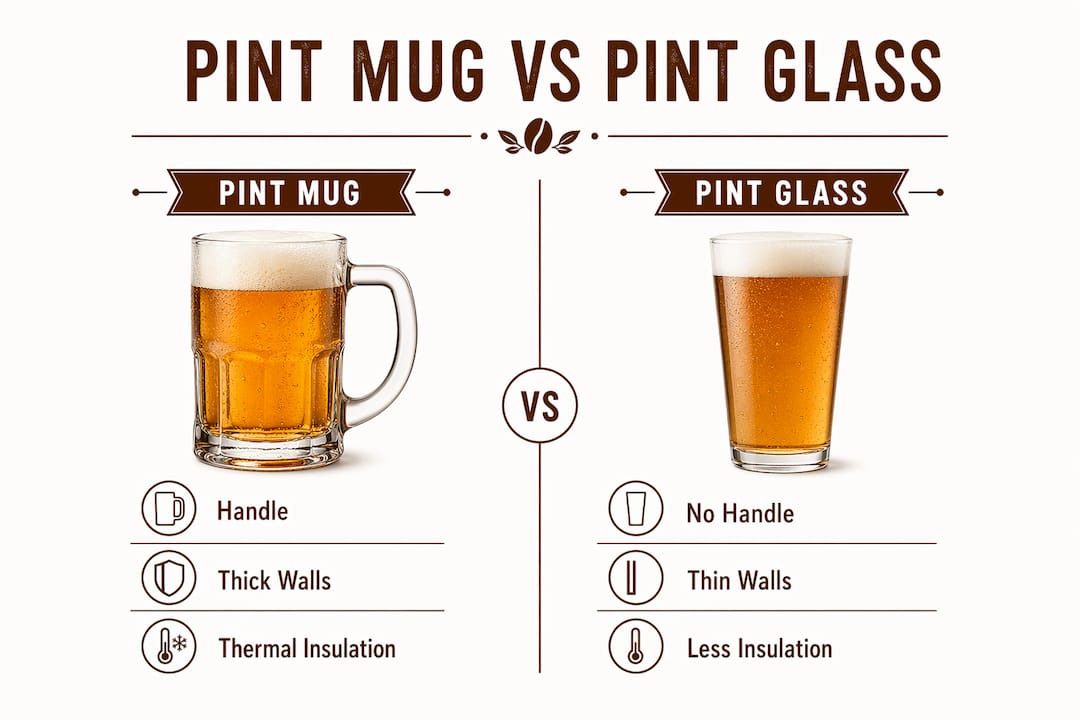
Design experts recommend pint mugs for durability and handle comfort but note that they occupy significantly more cabinet space than stackable pint glasses. That trade-off matters if you have a small kitchen or a packed bar shelf.
The thicker glass walls serve a dual purpose: they increase durability against chips and drops, and they act as a thermal barrier. A thin pint glass looks great on a bar top but warms up faster in your hand. Understanding why mugs keep drinks warm comes down to wall mass and material density, both of which pint mugs have in abundance.
Pro Tip: For coffee served in a pint mug, ceramic beats glass every time. Ceramic retains heat longer and does not affect flavor the way some glass coatings can.
What are the uses and cultural meanings of pint mugs?
Pint mugs carry strong cultural weight, particularly in British and Irish pub culture. They are the standard serving vessel in traditional pubs across England, Scotland, Wales, and Ireland, where the handled mug signals a proper pour and a no-nonsense drinking experience.
Pint mugs are favored in pubs and for gifting due to their traditional aesthetic and robustness. A personalized pint mug is one of the most common pub-themed gifts in the UK market, often engraved with names, crests, or humor. That gifting culture has spread well beyond Britain, making pint mugs a staple in American home bars and man caves.
The uses of a pint mug extend beyond beer. Coffee drinkers who want a large, satisfying pour without refilling use pint mugs daily. Hot chocolate, cider, and even soup work well in a pint mug because the handle keeps your hands comfortable and the thick walls hold temperature.
“In some international markets frequented by British tourists, ‘pint’ can colloquially refer to any large beer glass, including a dimple mug, which may not hold the exact 568 ml volume. Travelers should verify the actual volume served when ordering a pint abroad.”
That point matters practically. Volume confusion in tourist areas is common because local bars adopt the word “pint” to signal a large serving without committing to a regulated measurement. You may get 400 ml or 600 ml depending on the establishment.
The cultural symbolism of the handle also runs deep. A handle signals warmth, hospitality, and a relaxed pace. Handle-less glasses feel modern and efficient. Pint mugs feel like an invitation to sit down and stay a while.
How should you choose, care for, and use a pint mug?
Choosing the right pint mug starts with size. If you drink primarily beer, match the mug to your regional standard: 568 ml for UK-style pours, 473 ml for US-style pours. If you use it for coffee, a perfect coffee mug size guide can help you decide whether a full pint volume suits your drinking pace or whether a smaller mug keeps your brew hotter longer.
Material matters just as much as size. Here are the main options ranked by use case:
- Thick glass: Best for beer. Keeps the drink cold, shows off the color and carbonation, and feels authentic to the pub experience.
- Ceramic: Best for coffee and hot drinks. Superior heat retention, no flavor interference, and available in a wide range of designs.
- Stoneware: A middle ground. Heavier than standard ceramic, excellent insulation, and very durable. Popular for home use.
- Enamel: Lightweight and durable, often used for outdoor or camping settings. Less effective at temperature retention than ceramic.
- Stainless steel: Best for travel. Pairs well with insulated designs, though it changes the tactile experience of drinking beer.
Handle comfort is the most overlooked factor. A handle that is too small forces you to pinch rather than grip, which becomes uncomfortable over a long session. Test the handle width before buying, especially if you have larger hands.
Pro Tip: Hand-wash pint mugs with thick glass or ceramic glazing. Repeated dishwasher cycles can degrade the glaze over time, dulling the finish and weakening the rim.
Storage is a real consideration. Pint mugs are bulky and do not stack. If cabinet space is limited, plan for dedicated hooks or a mug rack. A wall-mounted mug display solves the storage problem while turning your collection into a visual feature.
For care, avoid sudden temperature changes with glass pint mugs. Pouring boiling liquid into a cold glass mug can cause thermal shock and cracking. Warm the mug first with hot water, then pour your drink.
Key Takeaways
A pint mug is the most practical vessel for anyone who values temperature retention, grip comfort, and generous volume in a single piece of drinkware.
| Point | Details |
|---|---|
| Size varies by region | UK pint mugs hold 568 ml; US pint mugs hold 473 ml. Always check the stated capacity. |
| Handle is the key distinction | A pint mug has a thick handle and walls; a pint glass does not, prioritizing stackability instead. |
| Material affects performance | Ceramic suits coffee best; thick glass suits cold beer; stoneware works well for both. |
| Cultural weight is real | Pint mugs signal traditional pub culture and remain a top gifting choice in British and American markets. |
| Care extends lifespan | Hand-wash glazed mugs, avoid thermal shock, and store on hooks to protect the rim and finish. |
Why I still reach for a pint mug over everything else
Kristopher here. I have used pint mugs for both beer and coffee for years, and the honest reason I keep coming back is simple: the handle changes everything. When a beer is ice cold, the last thing you want is your warm hand wrapped around the glass raising the temperature. The pint mug solves that without any fuss.
For morning coffee, a full pint mug means fewer trips to the kitchen during a long work session. The thick ceramic walls hold heat well enough that the last third of the mug is still worth drinking, which is not something I can say for a thin-walled cup.
The one trade-off I acknowledge is space. My cabinet has a dedicated row for pint mugs, and they take up real estate. But the payoff in daily use makes that worthwhile. A good pint mug is not a specialty item. It is a workhorse that earns its place every single day.
— Kristopher
Dkbeanleaf mugs worth adding to your collection
Dkbeanleaf carries mugs built for exactly this kind of daily use, whether you’re pulling a morning coffee or pouring a cold one after work.

The white glossy mug from Dkbeanleaf is a clean, durable option that works for coffee, tea, or any hot beverage you want to keep warm longer. If you’re building out a full beverage setup at home, the tea collection pairs well with a quality mug and gives you something worth filling it with. Dkbeanleaf also carries apparel for the coffee and tea crowd, making the brand a natural fit for anyone who takes their drinkware seriously.
FAQ
What is a pint mug used for?
A pint mug is used primarily for serving beer, but it works equally well for coffee, cider, hot chocolate, and other beverages. Its handle and thick walls make it comfortable for both hot and cold drinks.
How many ounces does a pint mug hold?
A UK pint mug holds 20 Imperial fluid ounces (568 ml). A US pint mug holds 16 US fluid ounces (473 ml). Commercial mugs sometimes vary from these standards, so always check the stated capacity.
What is the difference between a pint mug and a pint glass?
A pint mug has a handle and thicker walls, which improve grip and temperature retention. A pint glass is handle-free, thinner, and designed for stackability and visual presentation of the drink.
Can you use a pint mug for coffee?
A pint mug works well for coffee, especially ceramic versions that retain heat effectively. The large volume suits long drinking sessions, and the handle keeps your hands comfortable with hot beverages.
Why do pint mugs have handles?
The handle prevents heat transfer from your hand to a cold drink, or from a hot drink to your hand. It also improves grip during long sessions, which is why traditional pub culture adopted the handled mug as the standard serving vessel.