

What Is Honey Processed Coffee? Flavor and Method Guide
Honey processed coffee is defined as a post-harvest method where the outer cherry skin is removed but the sticky mucilage layer remains on the bean during drying. The term “honey” refers to that mucilage, which is rich in natural sugars like glucose and fructose. No actual honey is added. The result sits between a washed coffee and a natural coffee in both production complexity and flavor. Variants include Yellow, Red, and Black honey, each named by how much mucilage stays on the bean and how long it dries.
What is honey processed coffee and how does it work?
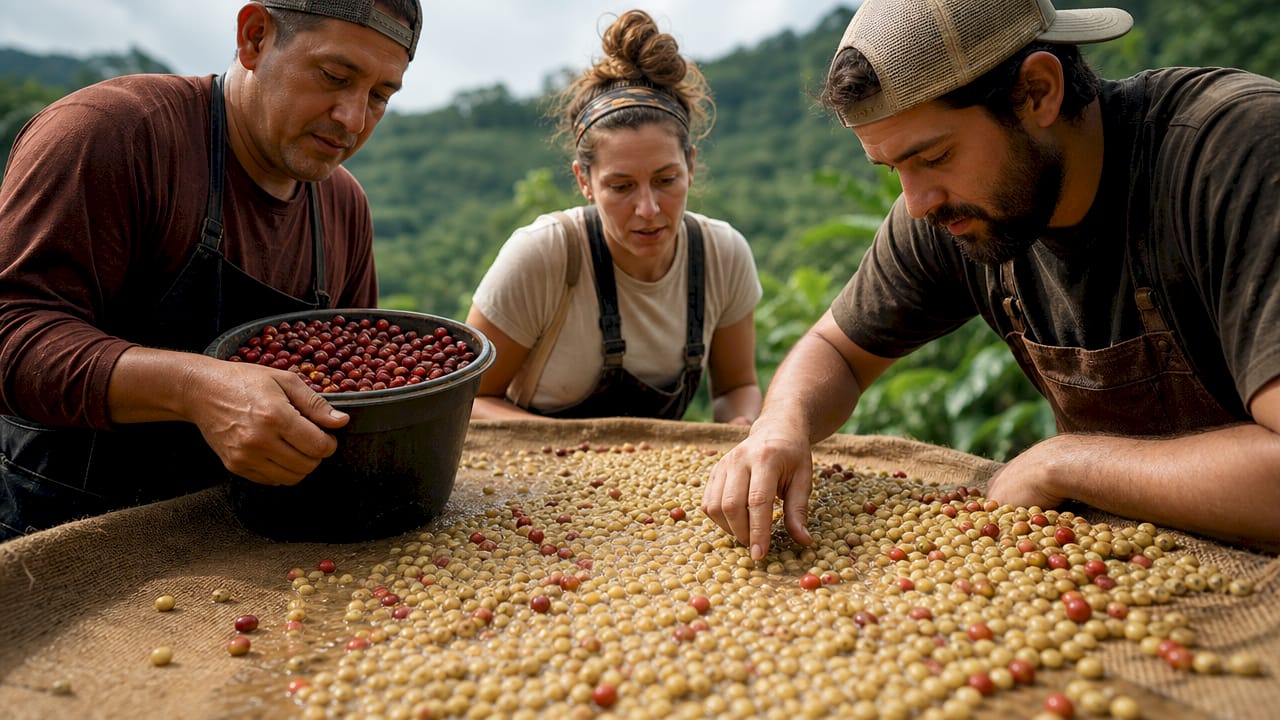
Honey processed coffee is a partial-mucilage method where 25–100% of the sticky layer surrounding the coffee seed is left intact during drying. That mucilage is not just texture. It contains glucose and fructose that ferment slowly as the bean dries, feeding flavor development at the cellular level. The color categories, Yellow, Red, and Black, tell you how much mucilage was retained and how long the drying took. Black honey sits closest to a natural process. Yellow honey sits closest to washed.
The honey process originated in Costa Rica in the early 2000s. Government water restrictions pushed producers to find alternatives to traditional washed processing, which requires large volumes of water to remove all mucilage. What started as a conservation workaround became one of specialty coffee’s most celebrated methods. Today, producers across Central America, Ethiopia, and Southeast Asia use it intentionally for its flavor advantages, not just its water savings.
Color designations are not globally standardized. They serve as useful shorthand between producers and buyers to estimate flavor style and drying intensity, but two farms using the label “Red honey” may produce noticeably different results.
How is honey coffee made? Step-by-step production
The honey process follows a precise sequence. Each step shapes the final cup.
- Selective harvesting. Producers pick only ripe, red cherries by hand. Unripe cherries carry less sugar in the mucilage, which weakens the flavor development that defines this method.
- Depulping. A mechanical depulper strips the outer cherry skin. Unlike washed processing, the machine is calibrated to leave the mucilage layer on the bean. The percentage left behind determines the honey color category.
- Drying on patios or raised beds. Beans spread in thin layers and dry for 10–20 days under sun or partial shade. Black honey dries slower, often under shade, to build deeper, syrupy flavors. Yellow honey dries faster in full sun.
- Turning the beans. Workers turn the beans multiple times daily. Regular turning distributes heat evenly and regulates fermentation. Skip this step and you risk hot spots that breed mold or create “stinker” beans, which are defective beans with fermentation gone wrong.
- Moisture monitoring. The target moisture content is 10–12% before the beans move to hulling. Reaching that window too fast or too slow both cause quality problems.
- Hulling and sorting. Once dry, the parchment layer is removed mechanically. Beans are sorted by density and size before export.
Pro Tip: If you are sourcing honey processed green coffee, ask the producer for their turning log and daily moisture readings. Farms that track these numbers consistently produce far more reliable batches.
Understanding how fermentation shapes flavor during this drying window explains why two honey processed coffees from the same region can taste dramatically different.
What flavor profile does honey processed coffee deliver?
Honey processed coffee combines the cleanliness of washed coffee with the fruitiness and body of natural coffee. That balance is its defining quality. The retained mucilage sugars caramelize during drying and roasting, producing a naturally sweet cup without added flavoring.
The flavor experience shifts across the color spectrum:
- Yellow honey delivers lighter sweetness, higher acidity, and a cleaner finish. Expect stone fruit notes like peach or apricot with a crisp body.
- Red honey sits in the middle. Expect more body, lower acidity, and notes of red berries, brown sugar, or mild chocolate.
- Black honey produces the most intense sweetness and the heaviest body. Flavor notes lean toward dried fruit, dark caramel, and molasses. The cup can feel almost syrupy.
The controlled fermentation during drying adds complexity that neither washed nor natural processing replicates in the same way. Washed coffees are cleaner but can feel thin. Natural coffees are fruity but can feel wild or fermented. Honey sits in between, offering sweetness with structure.
Pro Tip: When tasting a honey processed coffee for the first time, brew it as a pour-over before trying it as espresso. The pour-over format preserves the delicate sweetness and lets you identify the specific fruit and sugar notes before heat and pressure change the equation.
Roasters should adjust their roast profiles for honey processed beans because higher sugar content and residual moisture influence roast behavior. A roast that works for a washed bean will often under-develop or scorch a honey processed bean at the same settings. Learning about roast level effects on flavor helps you get the most from these beans.
Honey vs. washed vs. natural: how do they compare?
The three main coffee processing methods differ in mucilage retention, water use, drying time, and the flavor they produce.
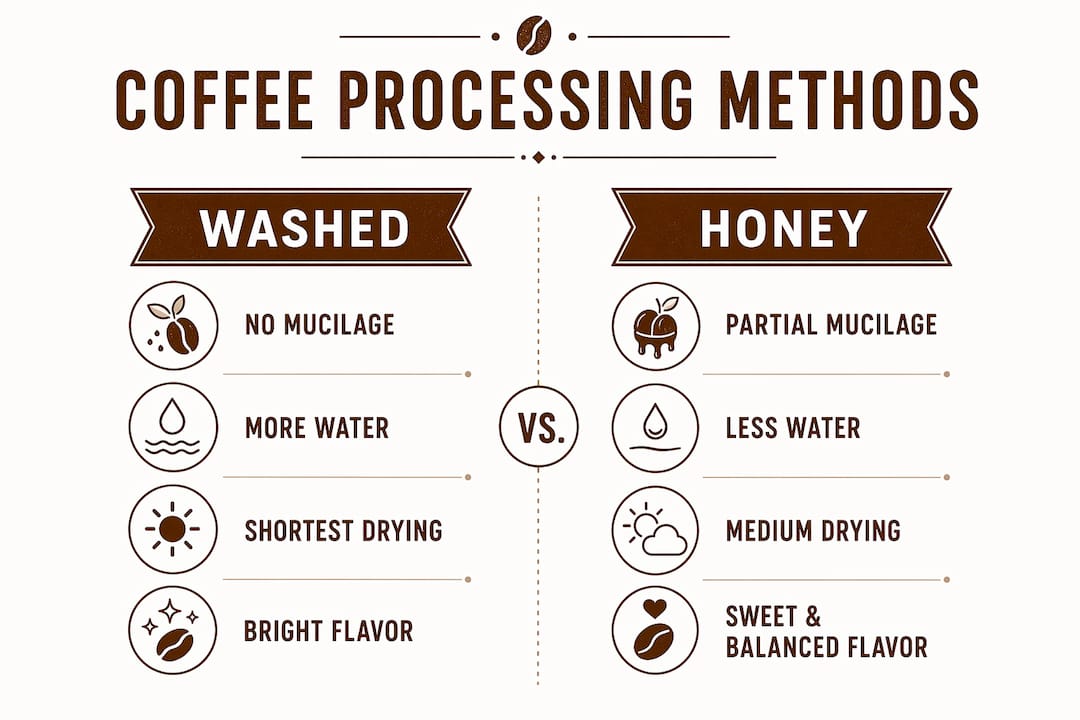
| Factor | Washed | Honey | Natural |
|---|---|---|---|
| Mucilage retained | None | 25–100% | 100% (full cherry) |
| Water usage | High | Medium | Minimal |
| Drying time | 7–14 days | 10–20 days | 20–30 days |
| Flavor profile | Clean, bright, acidic | Sweet, balanced, complex | Fruity, full body, earthy |
| Fermentation control | High | Moderate | Lower |
| Production difficulty | Moderate | High | Low to moderate |
Honey processing uses less water than washed while still giving producers more control over fermentation than the natural method. That middle position is exactly why producers choose it. It is not the easiest method. Turning schedules, moisture monitoring, and weather all affect the outcome. But the flavor reward is a cup that appeals to a wide range of palates.
Washed coffee rewards drinkers who want clarity and brightness. Natural coffee rewards those who want intensity and fruit. Honey processed coffee rewards those who want both in the same cup.
How to brew honey processed coffee for the best results
Honey processed coffee responds well to specific brewing choices. Getting those choices right means a noticeably better cup.
- Water temperature matters. Brew at 198–202°F to highlight sweetness without pulling bitter compounds. The retained sugars in honey processed beans extract faster than in washed beans, so cooler water protects the cup.
- Avoid over-extraction. Residual sugars can turn sharp and unpleasant if you grind too fine or brew too long. Start with a medium grind and adjust from there.
- Choose the right brewing method. Pour-over methods like the Hario V60 or Chemex let the sweetness and fruit notes shine. French press adds body but can muddy the clarity. Espresso works well with Red and Black honey beans, where the heavier body holds up under pressure.
- Use fresh beans. Honey processed coffees are best within 4–8 weeks of roast. The sugars that make these beans special degrade faster than in washed coffees.
- Match your roast to your method. Light to medium roasts preserve the fruit and sweetness. Dark roasts push those notes out and replace them with bitterness. If you want to taste what the honey process actually did, stay light.
Coffee cupping is the best way to train your palate to identify the specific notes that honey processing creates. Tasting side by side with a washed version of the same origin makes the difference immediately clear.
Key takeaways
Honey processed coffee delivers a uniquely sweet, balanced cup because retained mucilage sugars ferment during drying, creating complexity that neither washed nor natural processing can replicate.
| Point | Details |
|---|---|
| Mucilage defines the method | Honey processing leaves 25–100% of the sticky mucilage on the bean during drying. |
| Color signals flavor intensity | Yellow, Red, and Black honey indicate mucilage level and drying time, not added ingredients. |
| Water use is lower | Honey processing uses less water than washed coffee, making it a more sustainable choice. |
| Brew cooler to protect sweetness | Use 198–202°F water to avoid over-extracting the residual sugars in honey processed beans. |
| Fermentation control is critical | Daily turning and moisture monitoring prevent defects and determine final cup quality. |
Why honey processing deserves more attention than it gets
Kristopher here. I have tasted a lot of honey processed coffees over the years, and the one thing that surprises people most is how approachable they are. Washed coffees can feel austere to newer drinkers. Natural coffees can feel overwhelming. Honey processed coffees land in a place that almost everyone enjoys on the first sip.
What I find underappreciated is the skill involved. Producers who do this well are managing fermentation in real time, outdoors, across weeks. A single day of bad weather or a missed turning can ruin a batch. When you drink a well-made Black honey from Costa Rica or a Yellow honey from El Salvador, you are tasting the result of daily decisions made by someone who knows their drying beds the way a baker knows their oven.
The growth of honey processing in specialty coffee is not a trend. It is a recognition that the method produces something genuinely distinct. My honest recommendation: if you have only ever drunk washed coffees, a Red honey is the best entry point. It gives you sweetness and body without the fermented intensity that throws some people off natural coffees.
— Kristopher
Honey processed coffee and the gear to enjoy it right
Dkbeanleaf carries mugs built for the kind of slow, attentive drinking that honey processed coffee deserves. These are not grab-and-go cups. They are the kind you hold while you actually taste what is in them.

A white glossy mug from Dkbeanleaf lets you see the color of your brew and keeps the temperature stable long enough to catch the flavor as it evolves in the cup. For outdoor brewing sessions or camping pour-overs, the enamel mug holds up to heat and travel without sacrificing the experience. Good coffee deserves the right vessel. Dkbeanleaf makes both.
FAQ
What does “honey” mean in honey processed coffee?
“Honey” refers to the sticky mucilage layer left on the coffee bean during drying, not to any added ingredient. That mucilage is rich in glucose and fructose, which give the coffee its natural sweetness.
What is the difference between honey and washed coffee?
Washed coffee removes all mucilage before drying, producing a clean and bright cup. Honey processed coffee retains part of the mucilage, adding sweetness and body that washed coffee does not have.
Which honey coffee type is sweetest?
Black honey is the sweetest and heaviest of the three types. It retains the most mucilage and dries the slowest, producing intense, syrupy flavor notes like dried fruit and dark caramel.
Where did the honey process originate?
The honey process originated in Costa Rica in the early 2000s as a response to government water conservation restrictions. It has since spread to coffee-producing regions across Central America, Africa, and Asia.
Is honey processed coffee harder to brew than washed coffee?
Honey processed coffee requires slightly more attention to water temperature and extraction time. Brewing at 198–202°F and using a medium grind prevents the residual sugars from turning bitter in the cup.