

How Turkish Coffee Is Prepared: A Complete Home Guide
Turkish coffee is defined as an unfiltered brewing method where ultra-fine ground coffee and cold water are heated slowly together in a small pot called a cezve, producing a rich, foam-topped cup unlike any other brewing style. The foam, called köpük, is not optional. It is the mark of a properly made brew and the first thing any experienced drinker checks. Understanding how Turkish coffee is prepared means mastering four variables: grind fineness, coffee-to-water ratio, heat control, and timing. Get those right, and the rest follows naturally.
What are the essential ingredients and tools for authentic Turkish coffee?
The cezve is the non-negotiable starting point. This small, long-handled pot has a wide bottom and narrow neck that concentrates heat and traps foam as the coffee rises. That shape is functional, not decorative. Copper and brass cezves conduct heat evenly and remain the traditional choice, though stainless steel versions work well for home use.
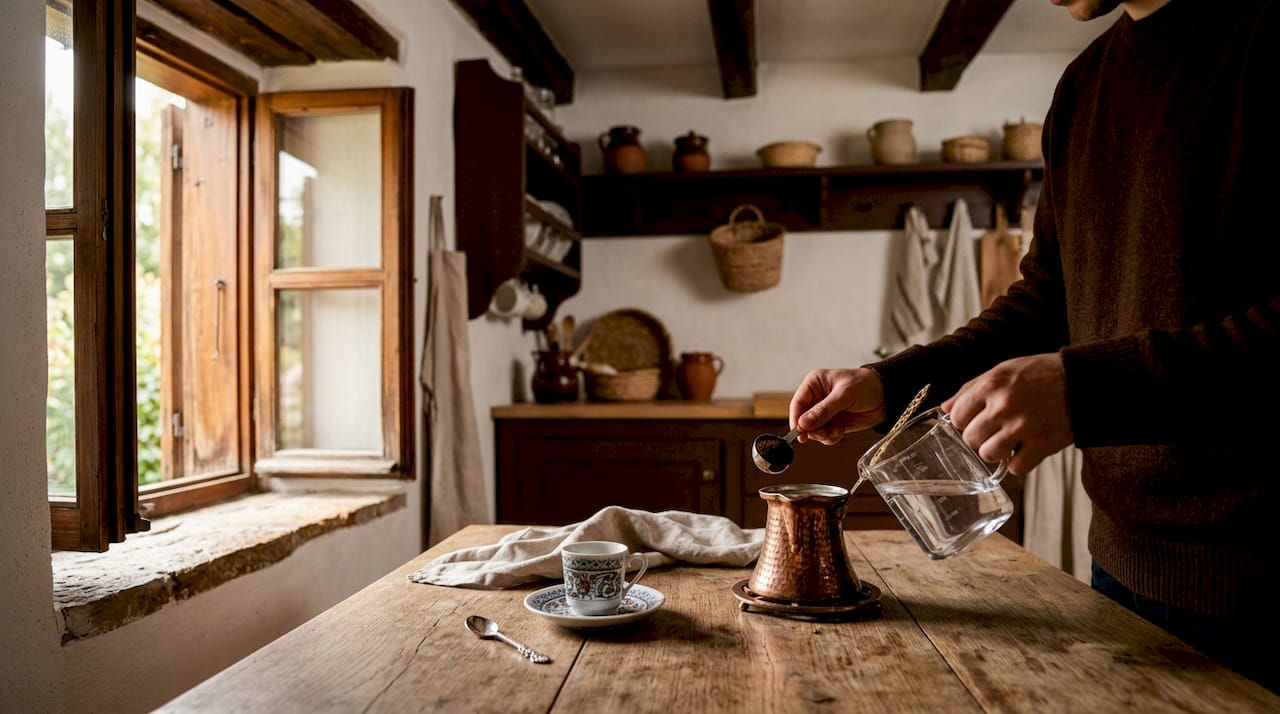
The grind must be powder fine. Turkish coffee requires a grind finer than espresso, closer to the texture of flour or cocoa powder. Standard blade grinders and most burr grinders cannot reach this level. A dedicated hand mill with Turkish burrs, or a specialty electric grinder built for this purpose, is the right tool. Using a coarse grind produces a flat, weak cup with no foam.
The core ingredients for one serving:
- Coffee: approximately 7g of ultra-fine ground coffee per cup
- Water: 60–75ml of cold, clean water, measured using the serving cup itself
- Sugar: decided before brewing, not added after. Options are unsweetened (sade), lightly sweet (az şekerli), medium (orta), or very sweet (çok şekerli)
- Optional flavorings: cardamom is the most traditional addition, added directly to the cezve with the coffee
Water quality matters more than most home brewers expect. Hard tap water dulls the flavor. Filtered or spring water produces a noticeably cleaner, brighter cup. Cold water is required from the start because the slow temperature rise is what builds the foam.
Pro Tip: Measure your water by filling the cup you plan to serve in, then pouring it into the cezve. This guarantees the right ratio every time without needing a scale.
Step-by-step Turkish coffee brewing process explained
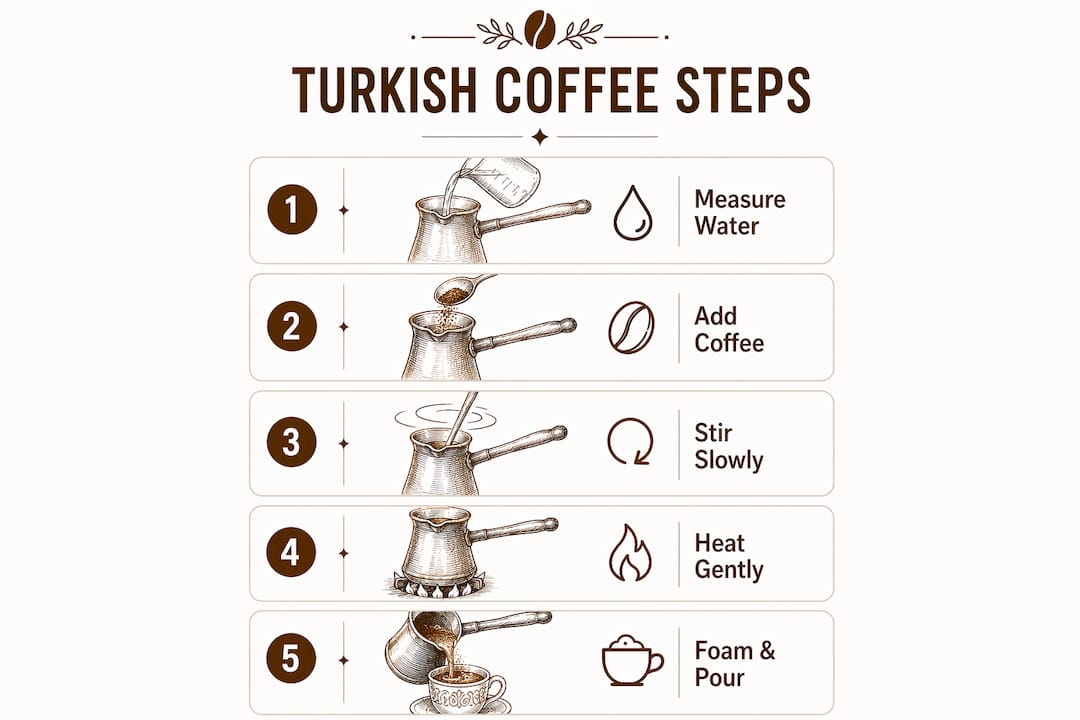
The Turkish coffee brewing method rewards patience. Rushing any step collapses the foam and flattens the flavor. The full process runs 3–5 minutes from cold start to pour.
-
Measure your water first. Fill your serving cup with cold water and pour it into the cezve. This sets the ratio before anything else.
-
Add coffee and sugar to the cold water. Place the cezve on the counter and add your 7g of ground coffee. If you are using sugar, add it now. Do not stir yet.
-
Wait 30–60 seconds before stirring once. Letting the grounds float on the surface before a single gentle stir improves foam formation and extraction quality. Vigorous stirring at this stage disrupts the process.
-
Place the cezve over the lowest possible heat. Medium or high heat is the most common mistake home brewers make. Low heat is not a suggestion. The 3–5 minute slow heating window is what allows the köpük to form correctly. Brewing under two minutes does not give the foam time to develop.
-
Watch the foam, not the clock. As the coffee heats, a dark foam ring will begin forming around the edges and slowly rise toward the center. This is the köpük building. Do not walk away.
-
Remove the cezve just as the foam swells to the rim. The moment the foam rises and threatens to overflow, pull the cezve from the heat. Letting it boil destroys the foam and releases bitter compounds that ruin the cup. This is the single most critical moment in the entire process.
-
Spoon the foam into your cup first. Use a small spoon to transfer the foam into the serving cup before returning the cezve to the heat. This preserves the köpük while you complete the brew.
-
Return to low heat for a second rise. Place the cezve back on the heat and allow the coffee to rise again. This second pass deepens the flavor and adds more body.
-
Pour slowly and deliberately. Tilt the cezve and pour in a slow, steady stream directly onto the foam already in the cup. Pouring too fast disturbs the grounds and breaks the foam layer.
-
Rest for 60–90 seconds before drinking. Turkish coffee is served unfiltered. The grounds need 60–90 seconds to settle to the bottom of the cup. Drinking before they settle means a mouthful of grit.
Pro Tip: If you want a thicker foam layer, repeat the heat-and-pull step a third time before the final pour. Each cycle adds density to the köpük.
The coffee-to-water ratio is fixed at roughly 1:10 by weight. Adjusting the amount of coffee changes body and intensity, but the ratio stays consistent.
What are the common mistakes and expert tips for perfect Turkish coffee?
Most failed attempts at making Turkish coffee share the same root cause: too much heat, too fast. The following mistakes account for the majority of flat, bitter, or foamless results.
Mistakes to avoid:
- Boiling the coffee. A rolling boil collapses the köpük instantly and pushes bitter compounds into the cup. The cezve should never reach a full boil.
- Stirring repeatedly. One gentle stir after the initial 30–60 second rest is enough. Stirring during heating breaks the foam structure as it forms.
- Using a coarse grind. A powder-fine grind is not negotiable. If your grinder cannot reach that level, the result will always be underwhelming regardless of technique.
- Using hot or warm water. Starting with cold water is part of the method. Hot water skips the slow extraction phase that builds flavor and foam.
- Pouring too quickly. A fast pour disturbs the settled grounds in the cezve and sends them into the cup before the rest period can do its job.
Expert tips that separate good from great:
- Sand brewing is the traditional professional method. Placing the cezve in a tray of hot sand gives the most even, controllable heat available. Home cooks can approximate this with a heat diffuser on a gas burner.
- Judge readiness by the foam, not by time. A properly formed köpük is dark, dense, and covers the full surface of the liquid.
- Serve with a glass of cold water. The water clears the palate before the first sip, which is the traditional Turkish serving custom.
Pro Tip: Preheat your serving cup with hot water for 30 seconds before pouring. A cold cup shocks the coffee and accelerates grounds rising back to the surface.
How does Turkish coffee connect to culture, flavor, and bean selection?
Turkish coffee is recognized by UNESCO as an intangible cultural heritage, a designation it received in 2013. That status reflects what the brewing ritual represents: hospitality, conversation, and social connection. In Turkish culture, offering coffee to a guest carries weight. The quality of the foam signals the care of the host.
“Turkish coffee is not just a drink. It is a ritual of hospitality where the act of brewing and sharing carries as much meaning as the coffee itself. The slow preparation is intentional. It creates time for conversation before the first sip is taken.”
The bean choice matters, but not in the way most home brewers assume. Turkish coffee defines a brewing style, not a specific bean origin. Any coffee can be used, but beans with a rich body, low acidity, and a long finish perform best. Medium to dark roasts are the traditional choice because they hold up to the intense extraction without turning sharp or sour. Exploring coffee bean flavor profiles before selecting your beans pays off in a noticeably better cup.
| Characteristic | Traditional preference |
|---|---|
| Roast level | Medium to dark |
| Body | Full and rich |
| Acidity | Low |
| Finish | Long and smooth |
| Grind size | Powder fine |
The grounds reading tradition, called tasseography, adds another layer of cultural depth. After drinking, the cup is inverted on the saucer and the dried grounds are read for symbols. Whether you believe in the practice or not, it extends the social ritual well beyond the last sip.
Modern specialty coffee has brought technical precision to the Turkish brewing method, with baristas measuring extraction yield and experimenting with single-origin beans. The specialty coffee approach respects the unfiltered tradition while pushing flavor boundaries. For home brewers, this means the method is both ancient and actively evolving.
Key Takeaways
Authentic Turkish coffee requires ultra-fine ground coffee, cold water, a cezve, low heat, and the patience to pull the pot at the exact moment the foam rises.
| Point | Details |
|---|---|
| Grind fineness is non-negotiable | The grind must be powder fine, finer than espresso, requiring a dedicated Turkish grinder. |
| Cold water starts the process | Always begin with cold water to allow the slow extraction that builds foam and flavor. |
| Low heat for 3–5 minutes | Brewing too fast or too hot collapses the köpük and creates bitterness. |
| Pull before the boil | Remove the cezve the moment foam swells to the rim to preserve the köpük. |
| Rest 60–90 seconds before drinking | Unfiltered grounds need time to settle fully before the first sip. |
What I’ve learned from years of brewing Turkish coffee
The first time I made Turkish coffee, I boiled it. The foam disappeared in seconds and the cup tasted like burnt rubber. I thought the method was overhyped. I was wrong. The method was fine. My patience was the problem.
What nobody tells you upfront is that the heat control is more like cooking than brewing. You are watching a physical process unfold in real time, and your job is to intervene at exactly the right moment. That takes practice. The first five attempts will probably produce flat foam or no foam at all. That is normal.
The part that surprised me most was how much the social ritual changes the experience. Brewing Turkish coffee alone is pleasant. Brewing it for someone else, watching the foam rise, pouring carefully into two small cups, and sitting down to drink it slowly with cold water on the side is a genuinely different experience. The morning coffee ritual becomes something worth protecting when it carries that kind of intention.
My practical advice: start with a medium-dark single-origin bean, use filtered water, and accept that your first batch is a learning batch. Adjust heat down if the foam collapses before you can pull the cezve. Adjust grind finer if the foam never forms at all. The variables are few. The feedback is immediate.
— Kristopher
Gear and beans worth brewing with from Dkbeanleaf
Turkish coffee rewards the right setup. A proper cezve, a quality grind, and a cup that holds heat all make a measurable difference in the final result.

Dkbeanleaf carries a selection of products built for coffee drinkers who take the ritual seriously. The white glossy mug holds heat well and pairs naturally with the small-cup serving tradition of Turkish coffee. For home brewers ready to expand beyond coffee, Dkbeanleaf’s tea collection offers quality options that fit the same slow, intentional brewing mindset. Good equipment does not replace technique, but it removes friction from the process so you can focus on the brew.
FAQ
What grind size does Turkish coffee require?
Turkish coffee requires a powder-fine grind, finer than espresso. Most standard grinders cannot reach this level, so a dedicated Turkish hand mill or specialty grinder is recommended.
Can I use any coffee bean for Turkish coffee?
Yes. Turkish coffee refers to a brewing method, not a specific bean. Beans with full body, low acidity, and a long finish work best, typically medium to dark roasts.
Why did my Turkish coffee have no foam?
The most common causes are heat that is too high, a grind that is too coarse, or starting with warm water instead of cold. All three prevent proper köpük formation.
How long should I wait before drinking Turkish coffee?
Wait 60–90 seconds after pouring to allow the unfiltered grounds to settle fully to the bottom of the cup before taking the first sip.
What does UNESCO recognition mean for Turkish coffee culture?
UNESCO designated Turkish coffee culture as an intangible cultural heritage in 2013, recognizing its role as a social ritual centered on hospitality, conversation, and community.