

Blind Cuppings: Peaberry vs Regular Coffee
Peaberries are different and rarer, making up only about 5 to 10 percent of a harvest, but they are not automatically better than a well-sourced regular lot. Origin, processing, and roasting still decide most of what ends up in your cup. This comparison breaks down the taste evidence, the roasting quirks, the price logic, and how to brew both side by side.
TL;DR:
- Peaberries make up about 5 to 10 percent of a harvest and are separated from flat beans primarily for roasting consistency, not flavor advantage.
- Controlled tasting studies show inconsistent flavor differences, with some tasters perceiving brightness and sweetness while others cannot distinguish them.
- Roasting peaberries requires specific adjustments, such as lower temperature and closer monitoring of first crack, adding to labor costs.
- Peaberry coffee generally costs more due to rarity and sorting effort, but this does not guarantee a better cup.
- For best results, compare peaberry and regular beans from the same origin with slight grind adjustments, and prefer small tastings before buying large quantities.
Table of Contents
- Peaberry Coffee vs Regular: The Quick Comparison
- What Is Peaberry Coffee and How Does It Form?
- Does Peaberry Coffee Actually Taste Different?
- How Roasting Changes for Peaberry Beans
- Why Does Peaberry Coffee Cost More?
- How to Brew and Taste Peaberry Side by Side
- Who Should Actually Buy Peaberry?
- A Roaster’s Take on the Peaberry Hype
- Try It Yourself Without Overcommitting
- Sources
Peaberry Coffee vs Regular: The Quick Comparison
Before getting into the biology and the cupping data, here’s how the two stack up at a glance:
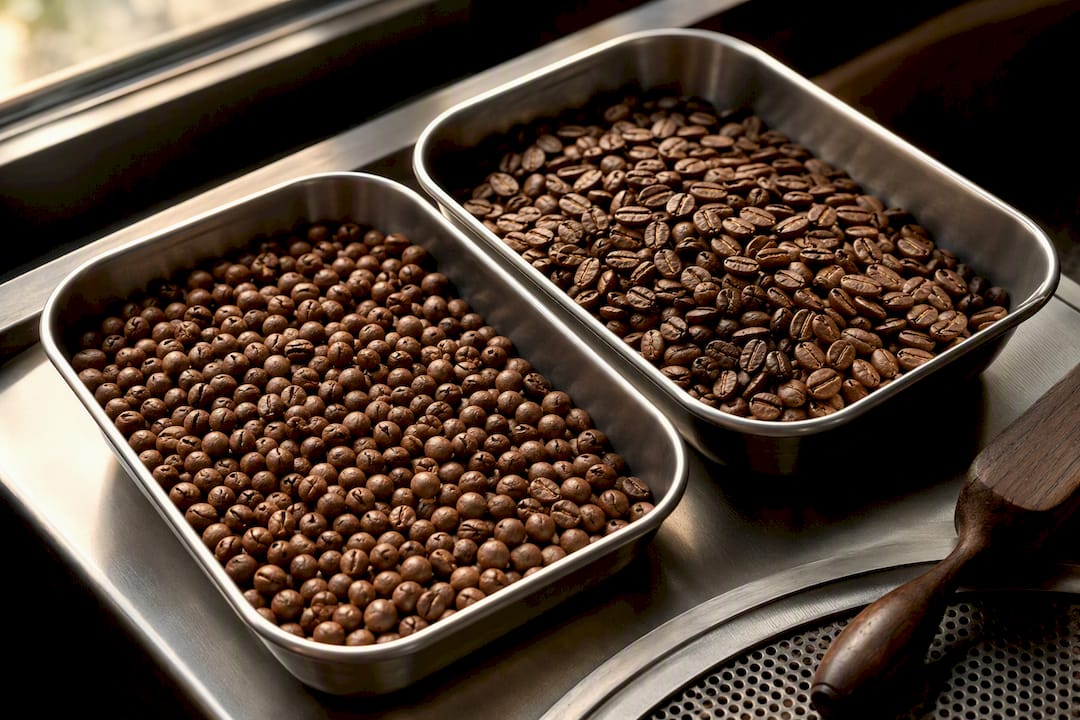
- Shape: Peaberries are small and round; regular beans are flat with a defined center crease.
- Density: Peaberries tend to be denser and more compact, which changes how they roast.
- Harvest share: Peaberries account for roughly 5 to 10 percent of any harvest; the rest is separated out as flat bean.
- Flavor descriptors: Often called brighter, sweeter, or more aromatic, though this varies by taster and lot.
- Roasting note: Roasters frequently run a separate profile because peaberries roll and heat differently in the drum.
- Price: Peaberry lots usually cost more, largely because of sorting labor rather than proven cup superiority.
Each of those bullets carries a caveat worth remembering: the flavor claims especially are inconsistent under controlled tasting, which the next few sections unpack in detail.
What Is Peaberry Coffee and How Does It Form?
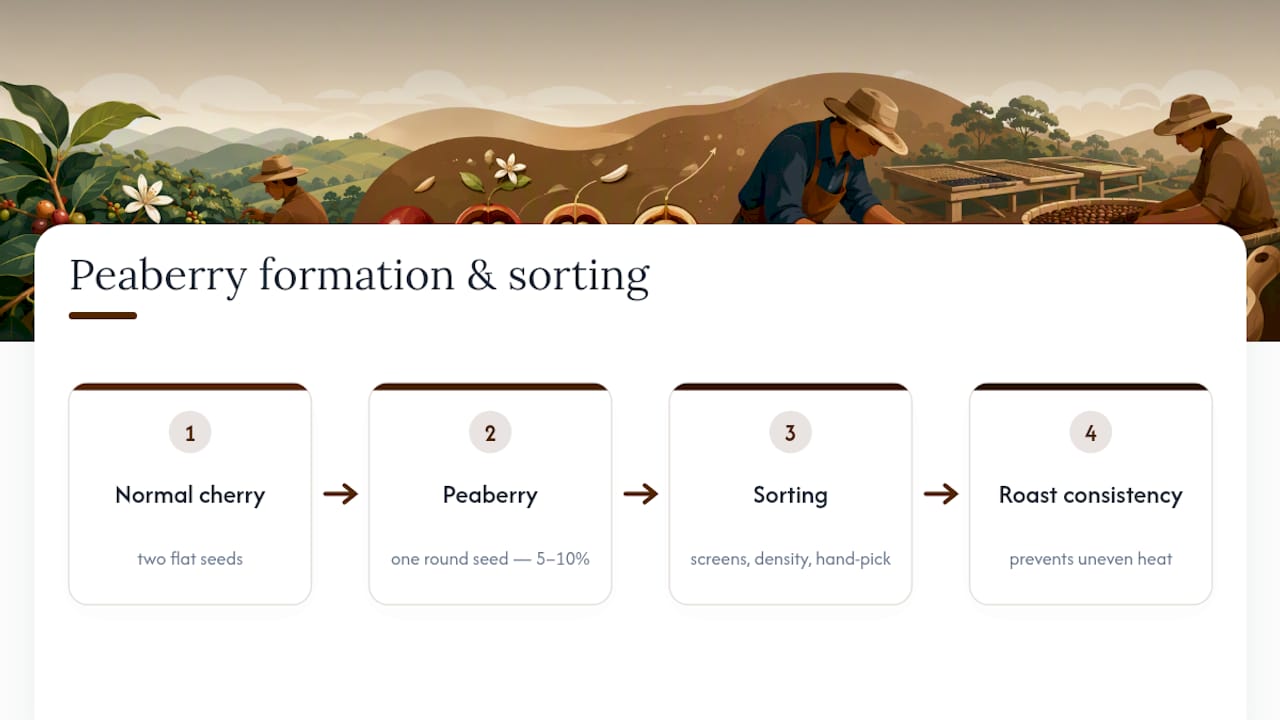
A coffee cherry normally develops two flat seeds pressed against each other, and that’s what becomes the standard bean shape you’re used to seeing in a bag. A peaberry, sometimes called caracolillo in Spanish-speaking growing regions, happens when only one seed develops inside the cherry instead of two. With no second bean to flatten against, that lone seed grows into a small, round shape.
This isn’t a defect and it isn’t a special varietal. It’s a natural mutation that shows up across nearly every coffee-growing region, and it typically accounts for 5 to 10 percent of a given harvest. Because the shape is so different from standard flat beans, mills separate peaberries out using screens, density sorting, or hand-picking. That separation matters for one big reason: mixing round and flat beans in the same roast batch creates uneven heat exposure, so keeping them apart preserves roast consistency on both sides.
Does Peaberry Coffee Actually Taste Different?
Tasters commonly describe peaberry as brighter, sweeter, or more aromatic than flat beans from the same farm. You’ll see this language on plenty of specialty bags, and it’s not fabricated. Some blind evaluations do report these characteristics. The catch is consistency.
The evidence: blind cuppings don’t agree. Controlled comparisons pitting peaberry against flat beans from the same crop show inconsistent results rather than a reliable pattern favoring peaberry. Some panels detect a real difference. Others can’t tell the beans apart once they’re roasted and brewed the same way. That inconsistency is the single most important fact in this entire comparison, and it’s the reason marketing claims deserve skepticism.
One study also found that peaberry extracts sometimes carry higher average caffeine concentrations than flat-bean extracts, though results shifted depending on brew method and origin. Higher caffeine isn’t the same as better flavor, so don’t read this as proof of superiority. What the data consistently supports is that origin, variety, and processing drive cup quality far more than the mutation itself.
How Roasting Changes for Peaberry Beans
Round beans behave differently in a drum roaster than flat ones, and that difference is not just marketing language. A roaster’s-eye view of the process notes that peaberries’ round shape tumbles more evenly inside the drum, which can spread heat more uniformly across the surface. But that same density can speed up internal development, sometimes masking a weak first crack that a roaster would normally use as a timing cue.
Specialty roasters typically make these adjustments when they run peaberry lots:
- Sample-roast a small batch first to map how the beans behave before committing a full batch.
- Build a dedicated profile rather than reusing the flat-bean curve for the same origin.
- Lower the charge temperature slightly to account for faster internal heat transfer.
- Watch first crack closely since it can arrive quieter or earlier than expected.
There’s also a labor cost most drinkers never see: sorting peaberries out of a lot, then running and monitoring a separate profile, adds real time on the roasting floor. Industry commentary treats peaberry as a sorting grade, not a guaranteed flavor tier, precisely because the extra handling is what changes, not necessarily the cup.
Pro Tip: If you roast at home, don’t blend peaberry and flat beans in the same batch even from the same farm. The shape mismatch alone will give you uneven roast color, regardless of how good the green coffee is.
Why Does Peaberry Coffee Cost More?
The math behind peaberry pricing is simple: it’s rare and it’s labor-intensive to isolate. At 5 to 10 percent of a harvest, mills either screen for size and density or hand-sort by eye, and that extra labor and scarcity gets built into the price before it ever reaches a roaster.
Specialty branding compounds that. Traceable, single-lot peaberries from places like Tanzania or Kona often carry a premium tied to scarcity and story as much as to any measurable cup advantage. That’s not a knock on those origins, which produce excellent coffee overall thanks to altitude and processing rather than the peaberry sort. The mutation rides along with good coffee; it doesn’t create it.
How to Brew and Taste Peaberry Side by Side
Denser beans extract a little differently, so a small grind adjustment helps you get a fair comparison instead of a skewed one. Here’s a simple way to test peaberry against regular beans from the same origin:
- Match the origin. Buy peaberry and flat-bean lots from the same farm or region if possible, so you’re isolating the bean shape as the variable.
- Adjust grind slightly finer for peaberry, since its density can slow water flow and under-extract at a coarser setting.
- Brew both the same way at the same time, whether that’s pour-over or espresso, keeping ratio and water temperature identical.
- Cup blind. Have someone else pour the two cups without telling you which is which, then compare sweetness, acidity, and body.
- Log your notes each time. One comparison tells you little; three or four sessions start to reveal a pattern, or the lack of one.
Who Should Actually Buy Peaberry?
If you like experimenting and want to taste subtle differences for yourself, peaberry is worth trying, especially from an origin you already enjoy in flat-bean form. Buy a small amount first rather than committing to a full bag at premium pricing, and run the blind comparison above before deciding it’s worth the extra cost every time.
If you mainly care about a reliably great cup and don’t want to pay a scarcity tax, a well-sourced single-origin regular bean will usually serve you just as well. The honest answer is that peaberry rewards curiosity more than it guarantees quality, so let your own cup, not the label, make the final call.
A Roaster’s Take on the Peaberry Hype
Cupped side by side, peaberry lots sometimes show a cleaner, slightly sweeter finish, and sometimes they don’t. That inconsistency lines up with what the blind cupping data shows, and it’s why treating peaberry as an automatic upgrade oversells the mutation. What actually separates a great cup from an average one is the same thing it’s always been: a well-managed farm, careful processing, and a roaster willing to build a dedicated profile instead of reusing an old curve.
When sourcing single-origin lots, including occasional peaberry batches, the sorting and roast-profile work happens before the bag ever reaches a shelf.
— Kristopher
Try It Yourself Without Overcommitting
The cheapest way to settle the peaberry debate for your own palate is to try a small amount side by side with a regular bean from a comparable origin, rather than betting on a full bag at premium pricing. Fresh roasted single-origin coffee is available alongside sample packs built for exactly this kind of comparison, plus loose-leaf tea if you want a break between cupping rounds.

Start with a sample pack sized for testing two or three origins without committing to full bags of each. If coffee gear is more your thing, browse the hoodies and sweatshirts collection for something to wear while you wait on your next pour-over to bloom. Either way, the goal is the same: taste it for yourself before deciding the premium is worth paying again.
Sources
- Journal of Coffee & Tea / related study (Jefferson)
- CoffeeStudies — Peaberry coffee overview
- Perfect Daily Grind — What Are Peaberry Coffee Beans? The Myths & The Reality