

Why Robusta Differs from Arabica: A Coffee Lover's Guide
Robusta and Arabica are the two dominant coffee species in the world, and why robusta differs from arabica comes down to three core factors: caffeine content, flavor chemistry, and growing conditions. Robusta carries nearly double the caffeine of Arabica, ranging from 2.2–2.7% versus 1.2–1.5% in Arabica. That single chemical fact ripples through everything: taste, aroma, pest resistance, and where each plant can grow. Understanding these differences helps you choose the right bean for your cup, your brewing method, and your palate.
Why robusta differs from arabica in chemistry and caffeine
The flavor gap between these two species starts at the molecular level. Arabica beans carry higher sugar content of 6–9% and lipid content of 15–17%, both measured in dry weight. Those numbers explain why Arabica brews taste sweet, layered, and aromatic. Robusta, by contrast, holds only 3–7% sugar and 10–11.5% lipids. Less sugar and fewer lipids mean a flatter, more one-dimensional cup.
Robusta’s caffeine does more than wake you up. At 2.2–2.7%, caffeine functions as a natural pesticide inside the bean, repelling insects and inhibiting fungal growth. That biological defense is a key reason Robusta plants survive in harsher, lower-altitude environments where Arabica would struggle. The tradeoff is a sharper, more bitter taste in the cup.
Chlorogenic acid levels also separate the two species. Robusta contains 7–10% chlorogenic acid, significantly more than Arabica. During roasting, these acids break down into bitter phenolic compounds. That reaction is the primary source of Robusta’s characteristic harshness, and no roast level fully eliminates it.
Key chemical differences at a glance:
- Caffeine: Robusta 2.2–2.7% vs. Arabica 1.2–1.5%
- Sugar: Robusta 3–7% vs. Arabica 6–9%
- Lipids: Robusta 10–11.5% vs. Arabica 15–17%
- Chlorogenic acid: Robusta 7–10% (higher bitterness precursor)
Pro Tip: If your espresso tastes flat and overly bitter, check whether your blend is heavy on Robusta. Shifting to a higher Arabica ratio often restores sweetness and aroma without sacrificing body.
How do growing conditions differ for Robusta and Arabica plants?
Where a coffee plant grows shapes everything about the bean it produces. Arabica requires higher elevations of 600–2,200 meters and cooler temperatures between 15–24°C. Robusta thrives at 0–800 meters with warmer temperatures of 24–30°C. Those altitude and temperature ranges are not arbitrary. They reflect each species’ distinct biological needs.
| Factor | Arabica | Robusta |
|---|---|---|
| Altitude | 600–2,200 meters | 0–800 meters |
| Temperature | 15–24°C | 24–30°C |
| Disease resistance | Lower | Higher |
| Cultivation cost | Higher | Lower |
| Primary regions | Ethiopia, Colombia, Brazil | Vietnam, Uganda, Indonesia |
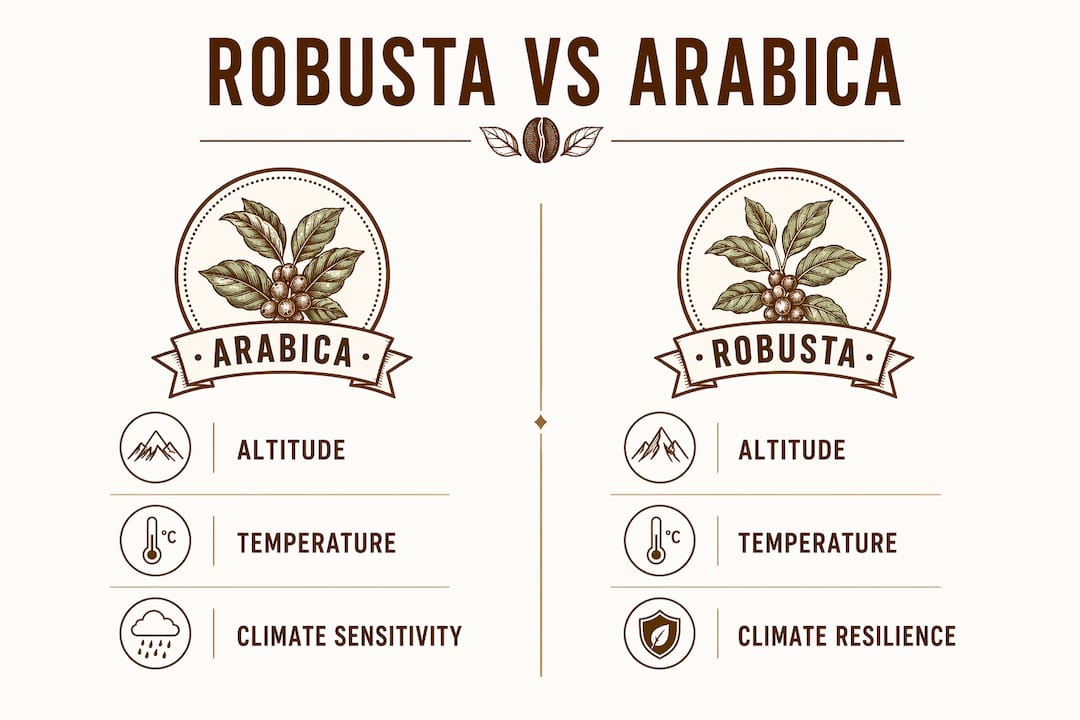
Altitude matters because cooler temperatures slow bean development. A slower maturation cycle allows more sugars and aromatic compounds to accumulate inside the bean. That is why high-grown Arabica from Ethiopia or Colombia tends to taste more complex than beans grown at sea level. You can read more about this relationship in Dkbeanleaf’s guide on how altitude shapes flavor.
Arabica’s sensitivity to climate also makes it more labor-intensive to grow. It is vulnerable to coffee leaf rust and other diseases, which drives up production costs and explains its higher retail price. Robusta’s caffeine-based defenses give it a natural shield against many of the same threats, making it cheaper and easier to cultivate at scale.
Pro Tip: When you see “single-origin” on a bag, it almost always means Arabica. Robusta single-origins exist but are rare because the flavor profile rarely rewards the premium price.
What sensory and physical differences distinguish Robusta from Arabica?
Pick up a handful of each bean and you can tell them apart before you even brew. Robusta beans are rounder and smaller with a straight center crease. Arabica beans are oval and larger with a curved crease. These physical traits are consistent enough that trained roasters use them to spot mislabeled blends.
The sensory gap is even more pronounced in the cup. Arabica delivers smooth, fruity, and floral notes with a clean finish. The arabica coffee flavor profile shifts depending on origin: Ethiopian Arabica often tastes of blueberry and jasmine, while Colombian Arabica leans toward caramel and citrus. Robusta coffee characteristics are far less variable. Expect strong, earthy, and bitter notes with a rubbery or burnt-cereal undertone.
That rubbery quality is not a roasting defect. Phenolic compounds in Robusta survive even aggressive roasting and remain intense in high-grade beans. This limits Robusta’s appeal as a specialty single-origin coffee, particularly at light roast levels where those compounds have nowhere to hide.
Roasting and brewing amplify these contrasts. A light roast Arabica opens up fruit and floral complexity. A light roast Robusta exposes its harshest phenolic edge. Dark roasting narrows the gap by burning off volatile aromatics in both species, which is why dark-roast blends often contain significant Robusta without drinkers noticing. If you have ever wondered why your coffee tastes bitter, Robusta content and roast level are the two most common culprits.
Arabica vs. Robusta sensory profile:
| Attribute | Arabica | Robusta |
|---|---|---|
| Flavor | Fruity, floral, sweet | Earthy, bitter, rubbery |
| Body | Medium, smooth | Heavy, thick |
| Acidity | Bright | Low |
| Crema | Lighter, less stable | Thicker, golden, longer-lasting |
| Bean shape | Oval, curved crease | Round, straight crease |
How do Robusta and Arabica fit different brewing methods?
Choosing between these two species is not just about taste preference. Brewing method matters just as much. Here is how each bean performs across common brewing styles:
-
Pour-over and drip coffee. Arabica excels here. The slow extraction process pulls out delicate fruit and floral notes that Robusta simply does not have. A single-origin Arabica brewed in a Chemex or V60 rewards patience with a clean, complex cup.
-
Espresso blends. Robusta earns its place in the espresso world through crema. Its higher lipid and caffeine content produces a thicker, golden, and longer-lasting crema than Arabica alone. Many Italian espresso traditions use a 10–20% Robusta blend specifically for this reason.
-
Cold brew. Arabica dominates cold brew because the long, cold extraction amplifies sweetness and reduces perceived acidity. Robusta in cold brew tends to produce a flat, harsh result.
-
Instant coffee. Robusta is the workhorse of the instant coffee industry. Its higher soluble solids content and lower cost make it ideal for mass production. Most commercial instant coffee is either pure Robusta or a Robusta-heavy blend.
-
Moka pot. This is where blending shines. A 70% Arabica and 30% Robusta ratio in a moka pot delivers the sweetness and aroma of Arabica with the body and crema boost of Robusta. Many home brewers find this ratio produces the most satisfying stovetop espresso.
Casual drinkers who add milk and sugar often prefer Robusta-heavy blends without realizing it. The bold, bitter base cuts through dairy better than a delicate Arabica. Coffee enthusiasts drinking black tend to gravitate toward Arabica for its complexity. Neither preference is wrong. They reflect what each species does best. Explore the full range of coffee bean types to find what fits your brewing style.
Key Takeaways
Robusta and Arabica differ fundamentally in caffeine content, flavor chemistry, and growing altitude, and knowing these differences helps you choose the right bean for your brewing method and taste preference.
| Point | Details |
|---|---|
| Caffeine gap is significant | Robusta holds 2.2–2.7% caffeine vs. Arabica’s 1.2–1.5%, affecting both taste and plant biology. |
| Sugar and lipids drive sweetness | Arabica’s higher sugar and lipid content produces the complex, sweet flavors casual drinkers prefer. |
| Altitude shapes quality | Arabica grown at 600–2,200 meters develops more aromatic compounds than low-altitude Robusta. |
| Robusta belongs in espresso blends | Its thicker crema and caffeine boost make it a functional ingredient, not just a cheap filler. |
| Phenolic compounds limit Robusta’s range | Rubbery, bitter notes from phenolics make Robusta poorly suited for light-roast single-origin brewing. |
Robusta deserves more credit than it gets
I have tasted a lot of pure Robusta over the years, and the honest truth is that most coffee drinkers dismiss it too fast. Yes, a single-origin Robusta brewed at medium roast without milk is a confrontational experience. The bitterness is real, the phenolic edge is unmistakable, and it does not taste like the coffee most people grew up loving. But that is exactly why you should try it at least once.
Tasting pure Robusta teaches you what bitterness actually is in coffee. Once you understand that baseline, you start to recognize how much of the “boldness” in your favorite dark roast comes from Robusta content, not just roast level. That knowledge changes how you shop for beans and how you talk about what you like.
The mistake most casual drinkers make is treating Arabica as automatically superior. Arabica is more complex, yes. But complexity is not always what you want. If you drink your coffee with oat milk and two pumps of vanilla syrup, a high-quality Arabica is largely wasted on that preparation. A well-sourced Robusta blend will hold up better and cost you less. Matching the bean to the preparation is the real skill, and it starts with understanding how these two species actually differ.
— Kristopher
Coffee gear worth brewing with at Dkbeanleaf
Whether you are pulling shots with a Robusta blend or savoring a single-origin Arabica pour-over, the right mug makes the experience complete.

Dkbeanleaf carries a white glossy mug built for everyday coffee rituals, from your morning espresso to a slow weekend pour-over. The clean design keeps the focus where it belongs: on the cup. Dkbeanleaf also stocks coffee-themed apparel, including hoodies, tees, and hats, for drinkers who want to wear their coffee obsession as comfortably as they live it. Good coffee deserves good company, and Dkbeanleaf is built for people who take both seriously.
FAQ
What is the main difference between Robusta and Arabica?
The main difference is caffeine and flavor chemistry. Robusta contains 2.2–2.7% caffeine and higher chlorogenic acid, producing a bitter, earthy taste, while Arabica has 1.2–1.5% caffeine with more sugar and lipids, creating a sweeter, more complex cup.
Why does Robusta taste more bitter than Arabica?
Robusta’s bitterness comes from two sources: higher caffeine and higher chlorogenic acid content of 7–10%. These acids break down into bitter phenolic compounds during roasting, a process that Arabica’s lower acid levels do not replicate to the same degree.
Is Arabica always better than Robusta?
Not always. Arabica offers more flavor complexity and is preferred for black coffee and pour-over brewing. Robusta performs better in espresso blends for crema production and holds up well in milk-based drinks where delicate Arabica notes would be masked anyway.
Why does Arabica cost more than Robusta?
Arabica requires higher altitudes, cooler temperatures, and more careful cultivation. Its sensitivity to disease and climate makes it more expensive to grow and harvest. Robusta’s natural caffeine-based pest resistance and tolerance for warmer, lower-altitude conditions make it significantly cheaper to produce at scale.
Can you taste Robusta in a blend?
Yes, if you know what to look for. Robusta adds body, a thicker crema, and a bitter edge to espresso blends. Brewing a blend at medium roast without milk reveals Robusta’s harsher, phenolic character, while dark roasts and dairy tend to mask it effectively.
Recommended
- Types of Coffee Beans Worldwide: Your Flavor Guide – D&K Bean and Leaf
- Coffee roast levels explained: tasting notes and brewing tips – D&K Bean and Leaf
- Explore every coffee roast: types, tastes, and brewing tips – D&K Bean and Leaf
- Why coffee smells better than it tastes: a sensory guide – D&K Bean and Leaf