

Moka Pot Brewing: How It Works and Why It's Worth It
What is moka pot brewing and how does it work?
Moka pot brewing is a stovetop coffee method that uses steam pressure to push hot water up through ground coffee and into a collection chamber above. The result is a strong, concentrated cup that sits somewhere between drip coffee and espresso in intensity, without requiring any electricity or expensive equipment.
The pot itself has three distinct parts working together:
- Bottom chamber (boiler): Holds cold or preheated water below a safety valve
- Filter basket: Sits in the middle and holds your ground coffee
- Upper chamber: Collects the finished brew as it rises through the grounds
When heat is applied, pressure builds in the lower chamber until water is forced upward through the coffee basket and into the top. The whole process takes several minutes on medium-low heat. What comes out is bold and aromatic, with a body noticeably heavier than drip coffee, though moka pot pressure tops out around 1–2 bars, far below what an espresso machine generates.
Table of Contents
- How to brew moka pot coffee step by step
- What are the real pros and cons of moka pot brewing?
- Why grind size and heat are the two things that matter most
- How does moka pot coffee actually compare to espresso?
- What is a moka pot?
- Key Takeaways
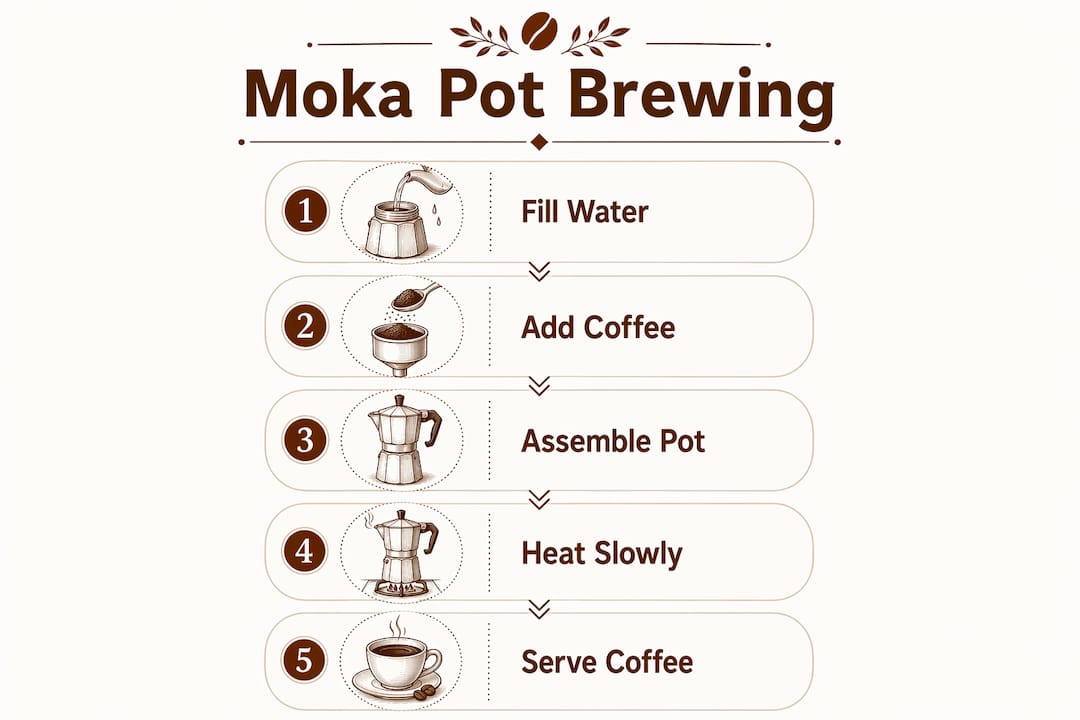
How to brew moka pot coffee step by step
Getting the process right the first time is mostly about heat control and timing. Follow these steps and you will avoid the most common pitfalls.
- Fill the bottom chamber with hot water up to just below the safety valve. Starting with preheated water shortens brew time and keeps the grounds from scorching during the warm-up phase.
- Grind your coffee to medium-fine, roughly the texture of table salt. Fill the basket level and even, without pressing down.
- Assemble the pot firmly. Screw the top and bottom together snugly, but use a towel if the bottom chamber is already hot.
- Place on medium-low heat with the lid open so you can watch the brew emerge.
- Watch for the coffee to flow. It should appear as a steady, dark amber stream. A sputtering or gurgling sound means the brew is nearly done.
- Remove from heat immediately when you hear light sputtering. Do not wait for the chamber to fill completely.
- Cool the base under cold running water for a few seconds to stop extraction right there.
- Stir the coffee in the upper chamber before pouring. The first liquid out is more concentrated than what follows, and a quick stir evens out the flavor.
Pro Tip: Preheat your water in a kettle before adding it to the boiler. This single habit, backed by brewing technique guidance, reduces bitterness by preventing the grounds from sitting over direct heat during the slow warm-up phase. Keep the burner on medium-low the entire time, no shortcuts with high heat.
What are the real pros and cons of moka pot brewing?
The moka pot earns its place in millions of kitchens, but it is not for everyone. Here is an honest look at both sides.
Advantages:
- Strong, rich coffee with a full body that drip machines rarely match
- Affordable entry point: a quality aluminum or stainless steel moka pot costs a fraction of an espresso machine
- No paper filters, no pods, no electricity needed, which makes it ideal for travel or camping
- Durable construction means a well-maintained pot can last decades
- Versatile base for lattes, cappuccinos, or iced coffee drinks when you want something closer to espresso-style
Disadvantages:
- Requires active monitoring throughout the brew; you cannot walk away like you would with a drip machine
- High heat or inattention leads quickly to over-extraction and a bitter, harsh cup
- Aluminum models can develop metallic flavors if they are not cleaned regularly or if acidic water sits in them
- The learning curve is steeper than pressing a button, and the first few brews often need adjustment
The moka pot rewards patience. Once you dial in your grind and heat, it produces coffee that genuinely surprises people who have only ever used automatic brewers. For a broader look at common brewing mistakes that apply across methods, that context helps too.
Why grind size and heat are the two things that matter most
Most bad moka pot coffee traces back to one of two errors: the wrong grind or too much heat. Getting both right is the difference between a bitter, harsh cup and something genuinely good.
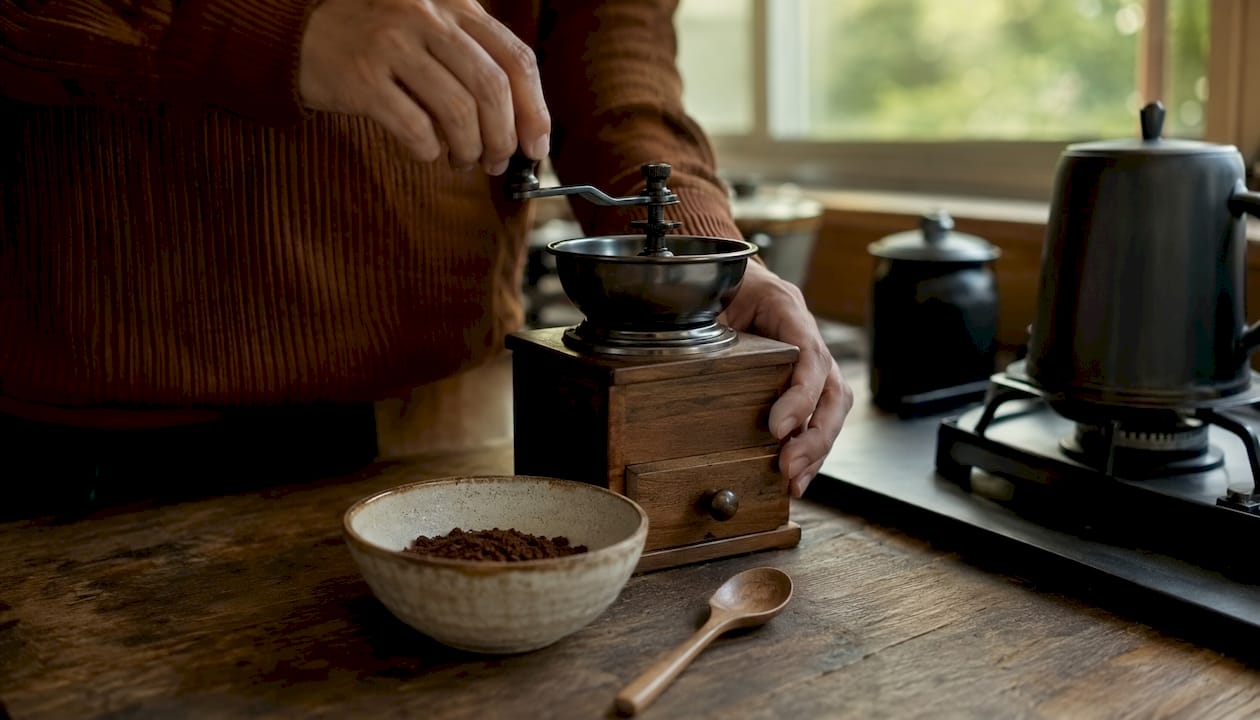
The target grind is medium-fine, roughly the texture of table salt. That is coarser than a true espresso grind. Going too fine creates excess resistance in the basket, which causes pressure to spike and forces bitter compounds into the brew. A medium-fine grind lets water move through at a controlled pace, extracting flavor without over-pulling harsh notes.
Common errors to avoid:
- Tamping the grounds: pressing the coffee down in the basket builds resistance and causes uneven extraction. Never tamp for moka brewing; just level the basket with your finger
- Using high heat: this is the single most common cause of poor flavor. Medium-low heat throughout the entire brew keeps pressure gradual and extraction even
- Letting it sputter past the finish: once gurgling starts, the water in the boiler is nearly gone and steam is pushing through. Every extra second adds bitterness
- Overfilling the basket: packing grounds above the rim prevents the lid from sealing properly and disrupts flow
Pro Tip: If your coffee consistently tastes bitter, try two things at once: coarsen the grind one step and drop to the lowest heat setting your burner allows. Most bitterness problems resolve with heat control rather than any other adjustment.
How does moka pot coffee actually compare to espresso?
The moka pot is often sold as a “stovetop espresso maker,” and that label creates real confusion. The two methods share a concentrated output, but the mechanics and results are meaningfully different.
Espresso machines operate at around 9 bars of pressure. A moka pot generates roughly 1–2 bars. That gap matters because pressure drives extraction efficiency. Espresso pulls a dense, emulsified shot with a crema layer. Moka pot coffee lacks that crema and has a different texture entirely.
| Feature | Moka Pot | Espresso Machine |
|---|---|---|
| Pressure | 1–2 bars | ~9 bars |
| Dissolved solids | ~3–4% by mass | ~9% by mass |
| Grind size | Medium-fine | Very fine |
| Crema | None | Present |
| Brew volume | 1–4 oz typically | 1–2 oz (single shot) |
| Brew style | Stovetop, manual | Machine-driven |
The dissolved solids comparison tells the story clearly: espresso extracts roughly two to three times more dissolved material per cup. That is why espresso has that thick, syrupy body and moka pot coffee, while strong, feels lighter by comparison. For more on why pressure changes the flavor profile so dramatically, the espresso vs. drip comparison covers the underlying mechanics well.
Neither is better. They are just different tools producing different results.
What is a moka pot?
The moka pot is a stovetop coffee brewer invented in Italy in 1933 by Alfonso Bialetti. The original design, the Bialetti Moka Express, became one of the most recognizable kitchen objects in the world and is still sold today largely unchanged. The name comes from the city of Mocha in Yemen, historically associated with high-quality coffee.
Most moka pots are made from aluminum or stainless steel and come in sizes ranging from one cup to twelve cups, where “cup” refers to a small espresso-sized serving of about 2 ounces. Stainless steel models work on induction stovetops; aluminum ones do not. The pot’s octagonal shape is not just aesthetic. It was engineered to distribute heat evenly up the sides of the lower chamber.
The moka pot remains one of the most practical and affordable ways to brew strong coffee at home. No subscription, no pods, no machine maintenance beyond a rinse and occasional deep clean.
Key Takeaways
The moka pot produces strong, concentrated coffee through steam pressure, and the quality of that coffee depends almost entirely on grind size and heat management.
| Point | Details |
|---|---|
| Pressure difference | Moka pots generate 1–2 bars of pressure versus espresso’s 9 bars, producing a different style of coffee. |
| Grind size matters | Use a medium-fine grind, similar to table salt, coarser than espresso to avoid pressure spikes and bitterness. |
| Heat control is critical | Medium-low heat throughout prevents over-extraction; high heat is the most common cause of poor flavor. |
| Dissolved solids gap | Moka pot coffee contains ~3–4% dissolved solids by mass compared to espresso’s ~9%. |
| Stop at the sputter | Remove from heat and cool the base immediately when gurgling begins to preserve taste quality. |