

Coffee Subscription Benefits: Your Complete 2026 Guide
A coffee subscription is defined as a recurring delivery service that ships freshly roasted beans directly to your door on a schedule you control. The core coffee subscription benefits are freshness, variety, convenience, and real cost savings. Subscription coffee is roasted within 24–48 hours of shipping, compared to supermarket stock that may sit 6–8 weeks past its roast date. That gap alone changes what ends up in your cup every morning. If you have ever wondered whether subscribing to coffee is worth it, the answer comes down to how much you value quality and how often you reach for your grinder.
1. Coffee subscription benefits start with unbeatable freshness
Freshness is the single biggest factor in coffee quality. Flavor compounds degrade significantly 2–3 weeks after roasting, which means most supermarket bags are already past their peak before you open them. Subscription roasters ship within 24–48 hours of roasting, so the coffee arrives at your door while its aromatics and flavor are still fully intact.
Supermarket coffee follows a different supply chain entirely. Beans are roasted in bulk, packaged, warehoused, shipped to distribution centers, and then stocked on shelves. By the time you brew a cup, the beans may be months old. The result is a flat, dull cup that no amount of brewing skill can fix.
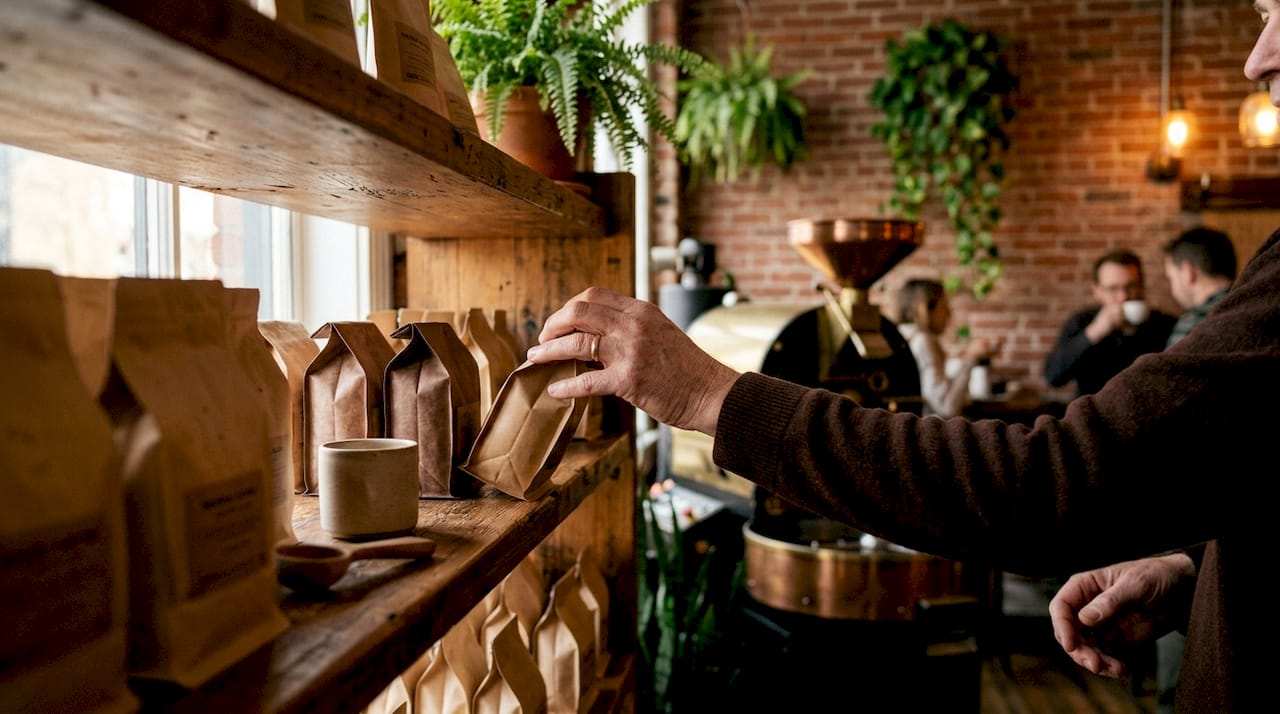
Understanding how roasting shapes flavor helps you appreciate why the roast date on a subscription bag matters so much. Roasters who print the exact roast date are giving you a quality guarantee that grocery store packaging rarely offers. Always check for a printed roast date, not just a “best by” date, when evaluating any subscription.
Pro Tip: Match your delivery frequency to how fast you drink coffee. One 12 oz. bag every two weeks works well for most solo drinkers and keeps beans within the optimal freshness window.
2. Convenience that removes the guesswork from your routine
Subscription models automate coffee purchasing, eliminating decision fatigue and turning a weekly errand into a background task. You set your preferences once and the coffee shows up. No last-minute grocery runs, no settling for whatever is on the shelf.
The customization available in most subscriptions goes well beyond just picking a roast level. You can typically control:
- Grind type: Whole bean, coarse for French press, medium for drip, fine for espresso
- Bag size: 6 oz., 12 oz., or 2 lb. options depending on household size
- Delivery frequency: Weekly, biweekly, or monthly based on consumption
- Roast preference: Light, medium, or dark, sometimes with flavor profile notes
- Single origin vs. blend: Choose consistency or variety with each delivery
That level of control means your subscription fits your life, not the other way around. Automated delivery also removes the mental overhead of tracking when you are running low. The coffee simply arrives before you run out.
3. Variety and exploration you cannot find at the grocery store
Subscriptions give you access to single-origin, micro-lot, and exotic coffees that most local stores never carry. Honey-processed Costa Rican beans, natural Ethiopian micro-lots, and washed Kenyan AA are examples of coffees that rarely reach retail shelves but appear regularly in subscription rotations.
Buying the same grocery store blend every week is the coffee equivalent of eating the same meal every day. A curated subscription introduces you to new producers, new regions, and new processing methods without requiring you to research and source each one yourself. The roaster does the curation work for you.
Exploring coffee bean origins worldwide reveals how dramatically terroir, altitude, and processing affect flavor. A subscription that rotates origins monthly can teach you more about coffee in six months than years of buying the same bag. The flavors and processes accessible through subscriptions include:
- Natural process: Fruity, wine-like, full-bodied
- Washed process: Clean, bright, high acidity
- Honey process: Sweet, balanced, complex
- Anaerobic fermentation: Funky, bold, experimental
- Single-origin espresso: Traceable to one farm or cooperative
- Micro-lot selections: Small-batch, high-scoring, limited availability
Each of these represents a distinct sensory experience. Understanding how altitude shapes coffee flavor adds another layer to appreciating what arrives in each shipment.
4. Real cost savings compared to cafés and retail
Home-brewed specialty coffee costs approximately $1–$1.40 per cup compared to $5–$7 per cup at a café. For habitual café buyers, switching to a subscription yields $460–$770 in yearly savings. That is a meaningful number for anyone buying coffee five days a week.
Subscriptions also offer direct discounts off retail pricing. Single-roaster plans typically discount 10–15% off retail, while multi-roaster platforms offer 5–10%. Some services apply up to 25% off the first order to encourage sign-ups. Annual savings can exceed $200 even without factoring in reduced café visits.
The table below compares the three main coffee purchasing options by cost per cup and annual spend for a one-cup-per-day habit.
| Purchase Method | Cost per Cup | Estimated Annual Spend |
|---|---|---|
| Café coffee | $5–$7 | $1,825–$2,555 |
| Supermarket coffee | $0.50–$0.80 | $183–$292 |
| Subscription specialty coffee | $1–$1.40 | $365–$511 |
Subscription coffee costs more per cup than supermarket coffee, but the quality difference is significant. You are paying for beans roasted within the last 48 hours, not 8 weeks ago. For café regulars, the savings are dramatic without any sacrifice in cup quality.
Pro Tip: If you currently buy café coffee three or more times per week, a subscription pays for itself within the first month. Run the math on your own weekly café spend before dismissing the subscription price.
5. Smarter subscription choices that match your habits
Choosing the right subscription comes down to a few key factors. Roast date transparency is the most important. A roaster who prints the exact roast date on every bag takes quality seriously. One who only lists a “best by” date is giving you less information than you need.
The choice between single-roaster and multi-roaster subscription platforms affects both variety and savings. Single-roaster plans offer deeper discounts (10–15%) and consistent quality from a roaster you trust. Multi-roaster platforms offer broader selection but slightly lower discounts (5–10%). Many experienced subscribers use one reliable single-roaster subscription for most of their coffee and reserve multi-roaster platforms for exploration.
Key features to evaluate when choosing a subscription:
- Roast date labeling: Exact date printed on the bag, not just a best-by date
- Pause and skip options: Flexibility to pause without canceling when traveling
- Grind customization: Whole bean is always best; grind options are a bonus
- Delivery frequency control: Ability to adjust timing without penalty
- Prepaid plans: Often offer additional savings over month-to-month billing
- Trial bags or starter boxes: Low-risk way to test a roaster before committing
Aligning delivery frequency with your consumption rate prevents two common problems: running out before the next shipment and accumulating stale beans. One 12 oz. bag every two weeks is the right starting point for most solo drinkers. Adjust from there based on how fast you actually brew.
Proper storage between deliveries also matters. Learning how to store coffee beans correctly extends the freshness window and protects the investment you made in quality beans.
6. How subscriptions build your coffee knowledge over time
A subscription is not just a delivery service. It is an ongoing education in coffee. Each new origin, roast profile, or processing method you receive gives you a reference point for understanding what you like and why. Over months, you develop a vocabulary for flavor that makes you a more confident buyer.
Many subscribers use a simple tasting practice called coffee cupping to evaluate each new bag. Cupping is the industry-standard method for assessing aroma, flavor, acidity, body, and finish. You do not need professional equipment to do a basic version at home. A spoon, hot water, and attention are enough to start noticing differences between origins and roasts.
The sensory side of coffee is deeper than most people realize. Understanding why coffee smells the way it does helps explain why freshly roasted beans from a subscription smell dramatically better than supermarket coffee. Aroma is the first signal of quality, and fresh beans deliver it in full.
Key Takeaways
Coffee subscription benefits are most valuable for enthusiasts who prioritize freshness, variety, and consistent quality over the lowest possible price per bag.
| Point | Details |
|---|---|
| Freshness is the top advantage | Subscription beans ship within 24–48 hours of roasting, far fresher than retail stock. |
| Cost savings are real | Home-brewed specialty coffee costs $1–$1.40 per cup versus $5–$7 at a café. |
| Variety expands your palate | Subscriptions rotate single-origin and micro-lot coffees rarely found in stores. |
| Convenience removes friction | Automated delivery eliminates decision fatigue and last-minute store runs. |
| Match frequency to consumption | One 12 oz. bag every two weeks keeps beans fresh and prevents waste. |
Why I think most people underestimate what a subscription actually does
The conversation around coffee subscriptions usually focuses on savings and convenience. Those are real, but they miss the deeper shift that happens after a few months of subscribing. You stop thinking of coffee as a commodity and start thinking of it as something worth paying attention to.
My first subscription introduced me to a natural-processed Ethiopian Yirgacheffe that tasted like blueberries and dark chocolate. I had been drinking coffee for years and had no idea a cup could taste like that. That single bag changed how I shop, how I brew, and how I talk about coffee. No grocery store shelf would have given me that experience.
The convenience factor is also more significant than it sounds. Removing one recurring decision from your week sounds trivial until you realize how much mental energy small decisions consume. My morning routine improved not because the coffee was better (though it was), but because I stopped thinking about whether I needed to buy coffee. It just arrived.
The cost argument is the easiest to make but the least interesting. Yes, you save money compared to daily café visits. The more compelling case is that you get better coffee, more consistently, with less effort. That combination is genuinely hard to replicate any other way. If you are serious about what is in your cup, a subscription is not a luxury. It is the logical next step.
— Kristopher
Dkbeanleaf and the art of the daily cup
Dkbeanleaf was built for people who take their coffee and tea seriously. Whether you are looking for your next favorite brew or the perfect vessel to drink it from, Dkbeanleaf brings quality and character to every part of the ritual.
A great subscription deserves a great cup to drink it from. Dkbeanleaf carries tea collections for those days when you want something different, along with mugs and drinkware built for daily use. The white glossy mug is a clean, satisfying match for any freshly brewed specialty coffee. Pair your next subscription delivery with gear that holds up to the quality in your cup.
FAQ
What are the main coffee subscription benefits?
Coffee subscriptions deliver freshly roasted beans within 24–48 hours of roasting, offer 10–15% discounts off retail, and automate purchasing to eliminate decision fatigue. The combined advantages of freshness, variety, and savings make subscriptions the best option for serious coffee drinkers.
Is a coffee subscription worth it for daily café buyers?
Yes. Home-brewed specialty coffee costs $1–$1.40 per cup versus $5–$7 at a café, yielding $460–$770 in yearly savings for habitual café buyers who switch to a subscription.
How often should I receive my coffee subscription delivery?
One 12 oz. bag every two weeks matches the consumption rate and freshness window for most solo drinkers. Adjust your frequency based on how fast you brew to avoid running out or accumulating stale beans.
What is the difference between single-roaster and multi-roaster subscriptions?
Single-roaster plans offer 10–15% discounts and consistent quality from one source. Multi-roaster platforms offer broader variety but slightly lower discounts of 5–10%. Many subscribers use one single-roaster plan as their daily driver and explore multi-roaster options occasionally.
How do I know if subscription coffee is fresh?
Look for a bag with an exact roast date printed on the label, not just a best-by date. Subscription roasters who print the roast date are committing to transparency about freshness, a standard that most supermarket coffee does not meet.